

Jiang Nan
Chinese · Chinatown-Two Bridges, New York City
Restaurant in New York City, United States
 Book with Pearl
The Read
Pan-Regional Chinese Precision
Price
$30–50per person
Dress
Smart Casual
Why go
Jiang Nan on Bowery holds a Michelin Bib Gourmand (2024) and at $$ pricing, making it the most credentialed value option for Chinese dining in Lower Manhattan. The menu spans multiple Chinese regional traditions — Peking duck, mapo tofu, sliced beef in golden pepper sauce — in a formally designed room that works for dates and business dinners alike.
About Jiang Nan
A, Michelin Bib Gourmand Chinese restaurant on Bowery that costs a fraction of what its downtown neighbors charge
Jiang Nan at 103 Bowery earned its Michelin Bib Gourmand in 2024, and that recognition matters here because it signals a specific value proposition: serious cooking at prices that don't require a corporate card. At $$, this is one of the most credentialed Chinese restaurants in New York City for the money. If you've been once and left impressed, come back with a larger group — the menu rewards it.
The Room
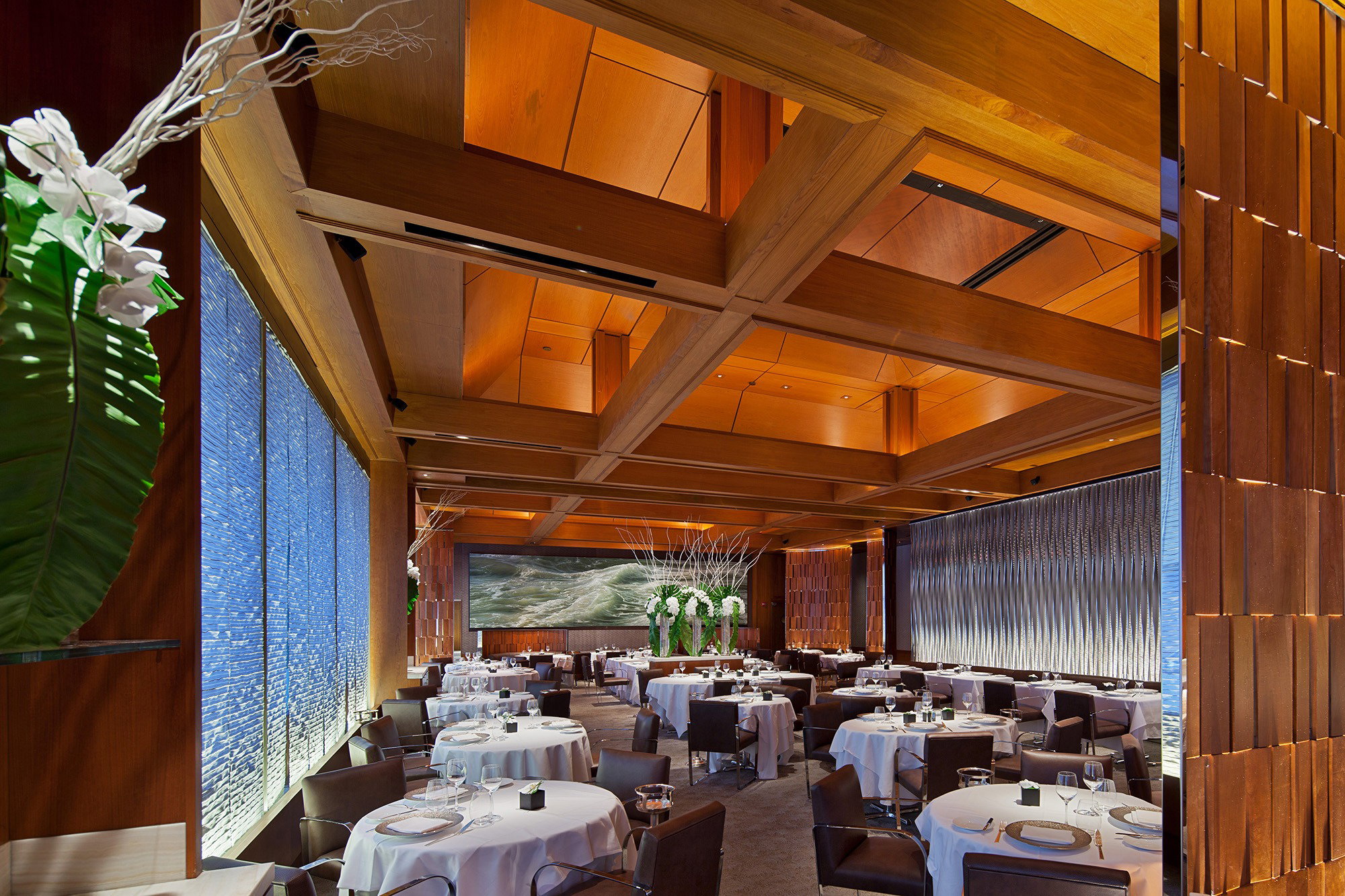
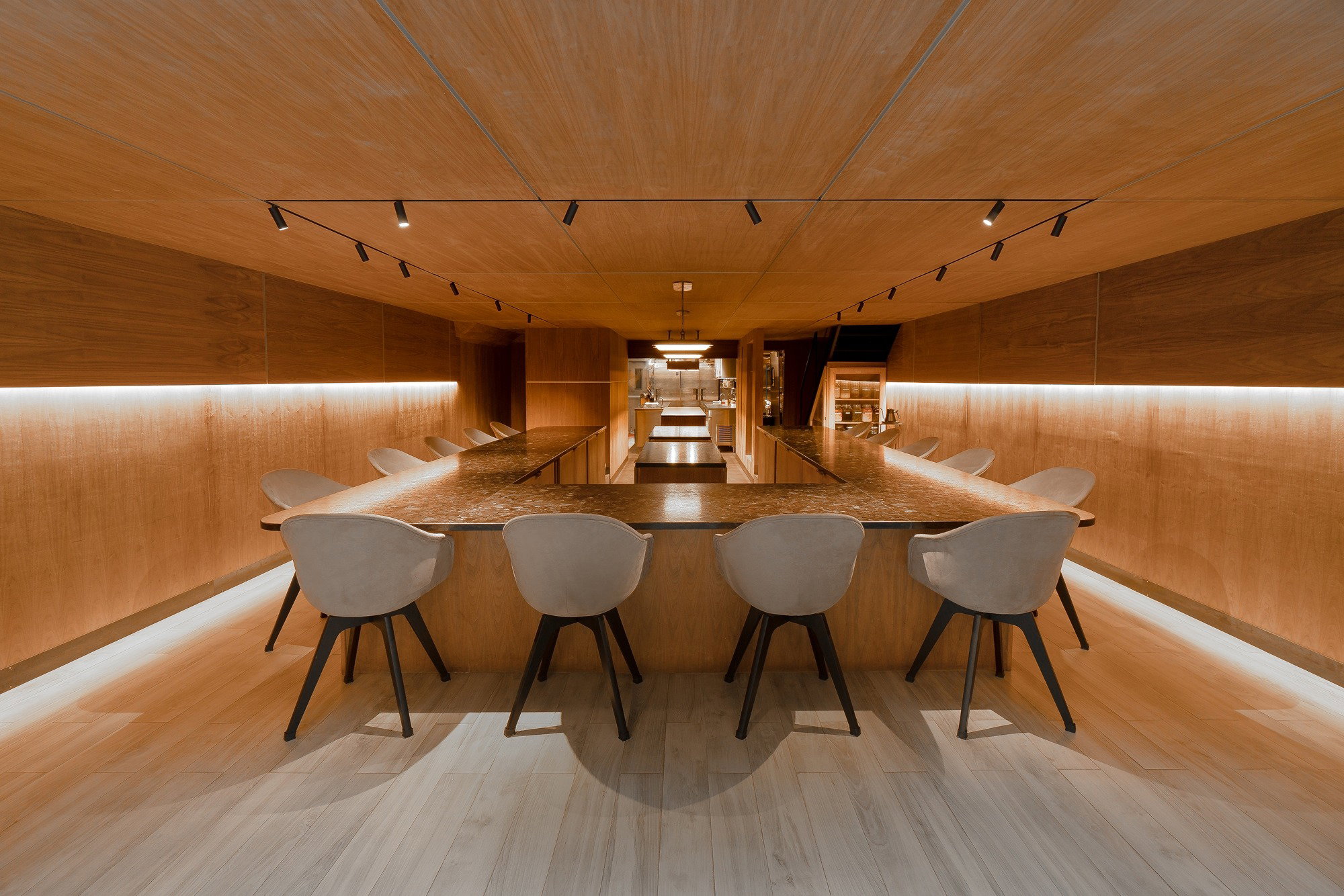
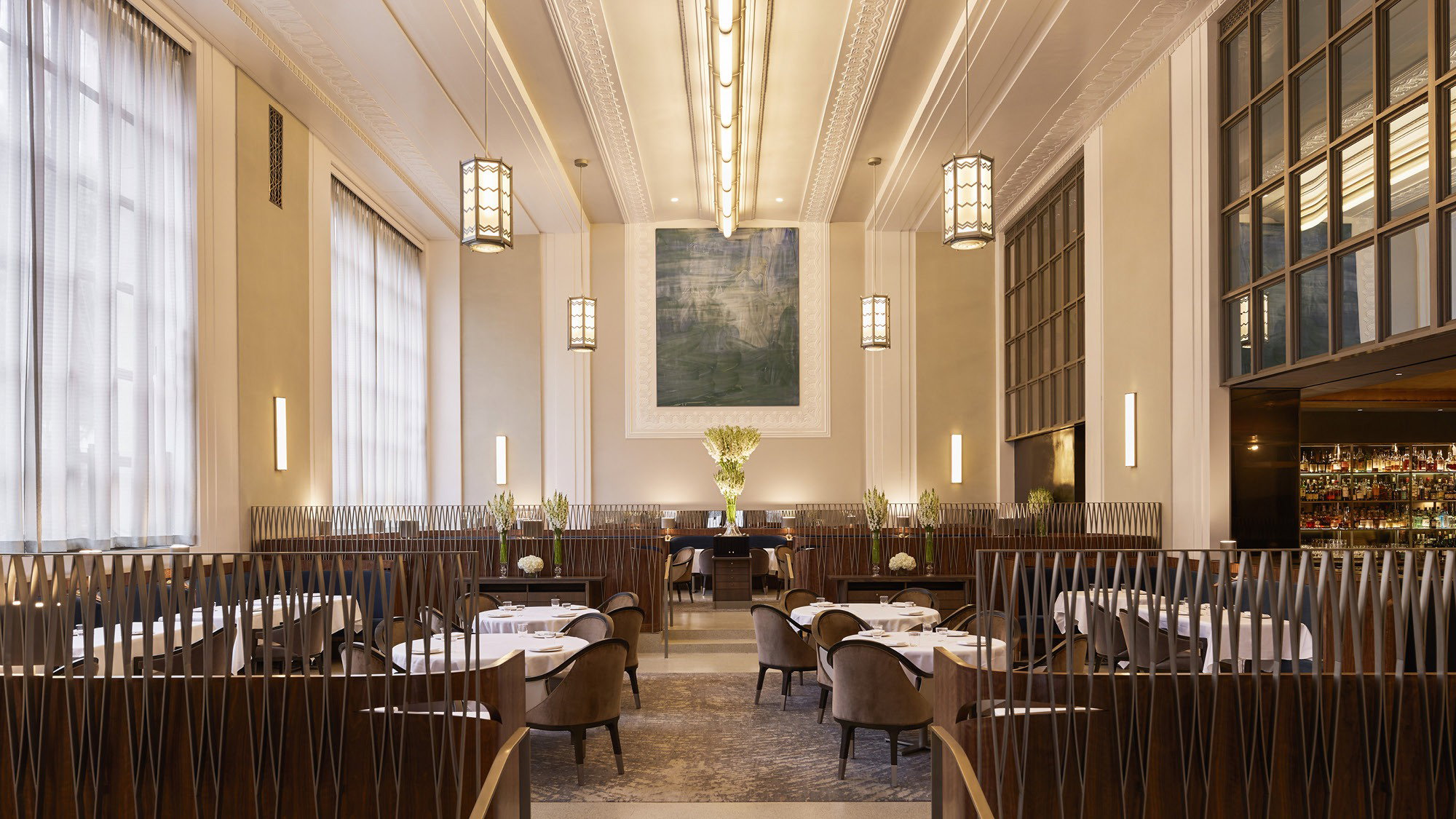
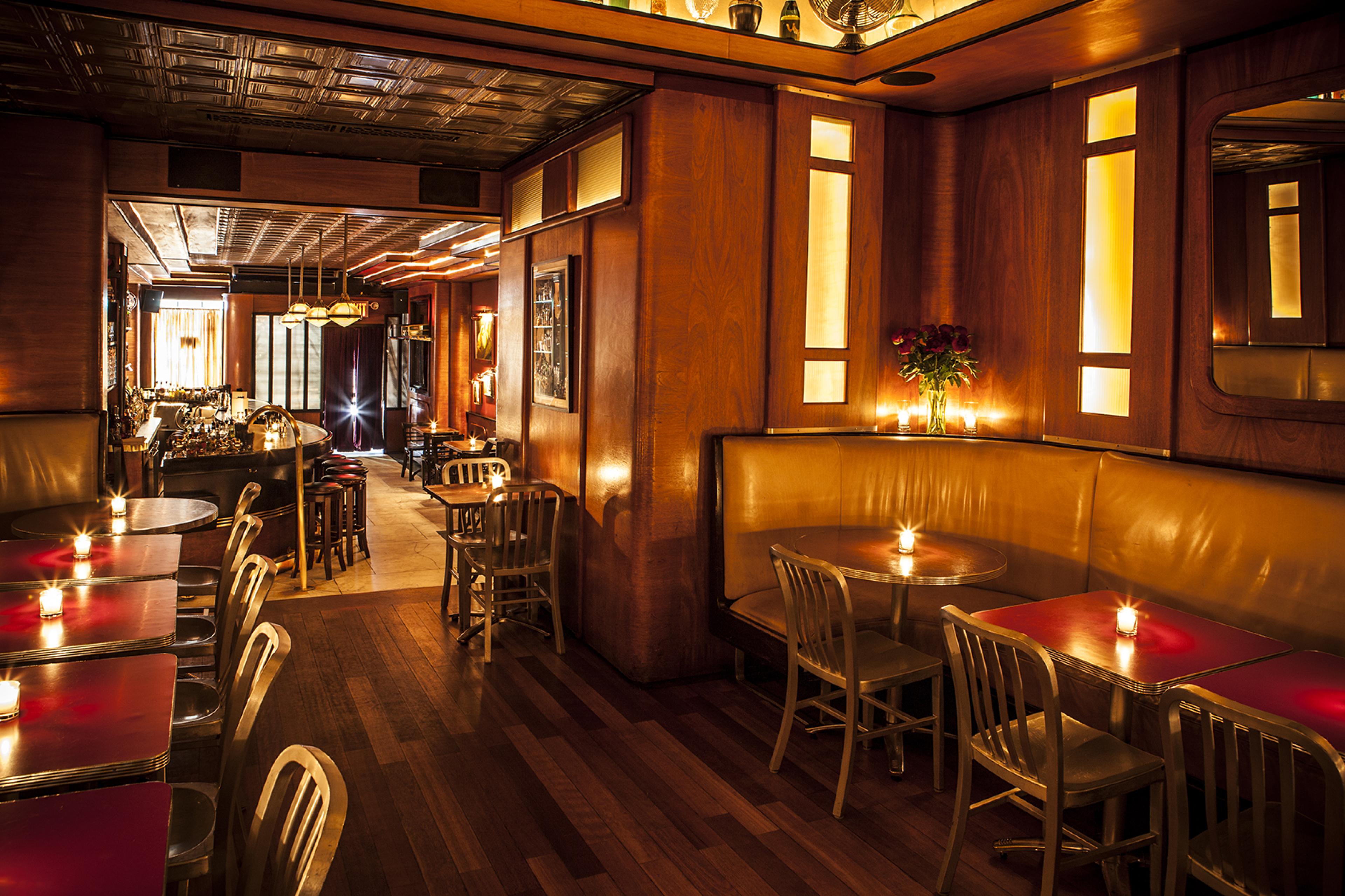
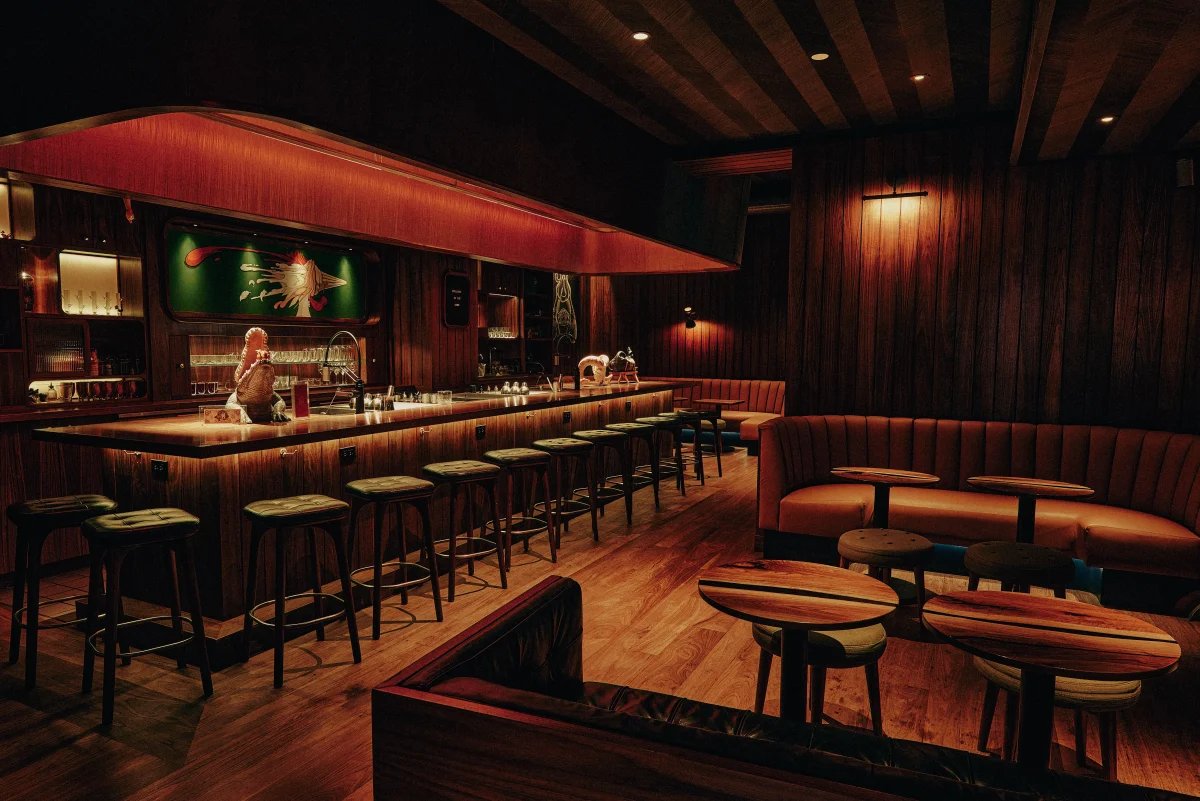
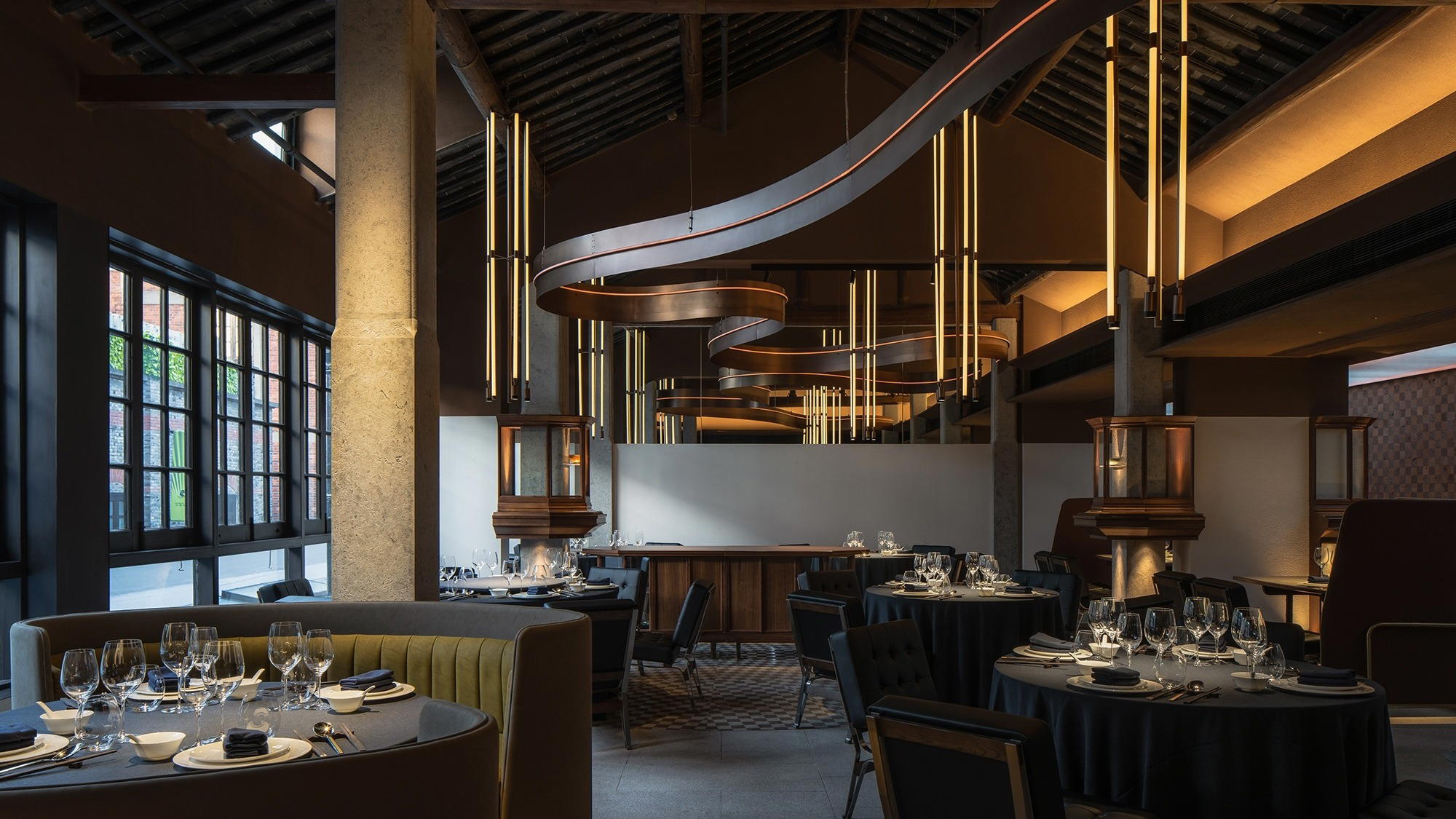
The Imperial design scheme at Jiang Nan is the first thing you notice when you walk in. Lacquered finishes, stone surfaces, and incorporated greenery give the space a weight that $$ restaurants rarely bother. The room reads formal without feeling stiff — a combination that makes it genuinely workable for business dinners and dates in a way that most Bowery restaurants are not. If you need a Chinese restaurant in Lower Manhattan that doesn't look like a quick lunch stop, this is the address. The grand scale of the setting also means it absorbs larger parties without the claustrophobia that smaller Chinatown spots can generate on a busy Friday.
What to Order
If you've visited once and defaulted to whatever the table next to you was having, here is how to approach a return visit with more structure. Three dishes anchor the menu and are worth treating as the core of your meal.
The Peking duck is the signature order. It arrives with thin pancakes on a silver tray, the presentation matches the room's formality, and the preparation aligns with the Beijing tradition rather than the Cantonese shorthand version common at many New York Chinese restaurants. Order it first and give it the attention it deserves before moving on.
Mapo tofu comes in a portion sized for four, which means it belongs on the table at any group dinner. The fiery version here is substantive enough to hold its own as a main dish rather than a side, and it sets the heat register for the rest of the meal.
The sliced beef in golden pepper sauce is the third anchor. The golden pepper preparation distinguishes it from the more common red chili treatments you'll find across the street or in Flushing. If you haven't had it, it's the order that earns the most return visits.
What makes Jiang Nan a different proposition from its neighbors is the regional scope. Where most Chinatown and Flushing restaurants commit to one tradition, Sichuan, Shanghainese, soup dumplings, dim sum, Jiang Nan draws from across China. That breadth means a table of four or five can move through distinct regional flavors in a single sitting, which is harder to engineer elsewhere without splitting up. For groups with mixed preferences, that range is the practical argument for booking here over a more specialized spot like Chongqing Lao Zao or Big Wong.
The Original Location
The restaurant group now operates multiple locations across the region, but the Bowery address is the original. That matters for one practical reason: the Bowery location carries the Michelin recognition and has the longest track record. If you're choosing between locations, book here.
How Jiang Nan Sits in the New York Chinese Dining Picture
New York's Chinese restaurant spectrum runs from no-frills Flushing counters to multi-course banquet halls. Jiang Nan positions itself in the middle register where design, service, and cooking quality converge at a price that doesn't demand justification. Nearby, Asian Jewel Seafood Restaurant focuses on Cantonese seafood banquet cooking; Alley 41 leans into a different register of Chinese-American cooking; and Blue Willow occupies its own niche. Jiang Nan's point of difference is the combination of regional breadth, formal setting, and Michelin-validated consistency at a mid-range price point.
For Chinese cooking at a comparable level of seriousness in other cities, Mister Jiu's in San Francisco and Restaurant Tim Raue in Berlin occupy related territory, though both operate at higher price points and with tighter tasting-menu formats.
Know Before You Go
- Address: 103 Bowery, New York, NY 10002
- Price range: $$ (mid-range)
- Awards: Michelin Bib Gourmand (2024)
- Booking difficulty: Easy, walk-ins are possible but a reservation is worth making for groups of four or more
- Leading for: Group dinners, dates, business meals where you need a formal-feeling room without a $$$$ price tag
- Signature orders: Peking duck, mapo tofu, sliced beef in golden pepper sauce
- Original location: Yes, the Bowery address is the founding restaurant in a multi-location group
Explore More in New York City
- Our full New York City restaurants guide
- Our full New York City hotels guide
- Our full New York City bars guide
- Our full New York City wineries guide
- Our full New York City experiences guide
Chinese Restaurants Worth Knowing in Other Cities
Other High-Performing American Restaurants for Context
Planning details
- Location
- 103 Bowery, New York, NY 10002
- Website
- jiangnanny.com
- Phone
- (212) 775-8998
The take
The Take
The Vibe
Jiang Nan presents a deliberately grand interior that favors measured luxury over gimmick. The Imperial‑design room — lacquered finishes, rough‑hewn stone and planted greenery — reads as a coherent design statement rather than pastiche. The space is scaled for occasion dining and carries a sense of formality, but it resists the uptight air of Manhattan fine dining by pairing its weighty aesthetics with a moderate price point. The overall effect is an assured, classical room that feels considered and substantial while keeping the experience approachable.
Best For
This is a restaurant built for notable evenings: dates, business meals and family gatherings all fit naturally into the room’s intent. The dining space is scaled for groups and special occasions, delivering formality without the typical Manhattan price tag, and the 2024 Michelin Bib Gourmand confirms the kitchen’s consistent quality. If you’re looking for a place that reads as serious and ceremonial but remains accessible in cost, Jiang Nan is positioned for those moments when setting and solid cooking both matter.
Ordering Tips
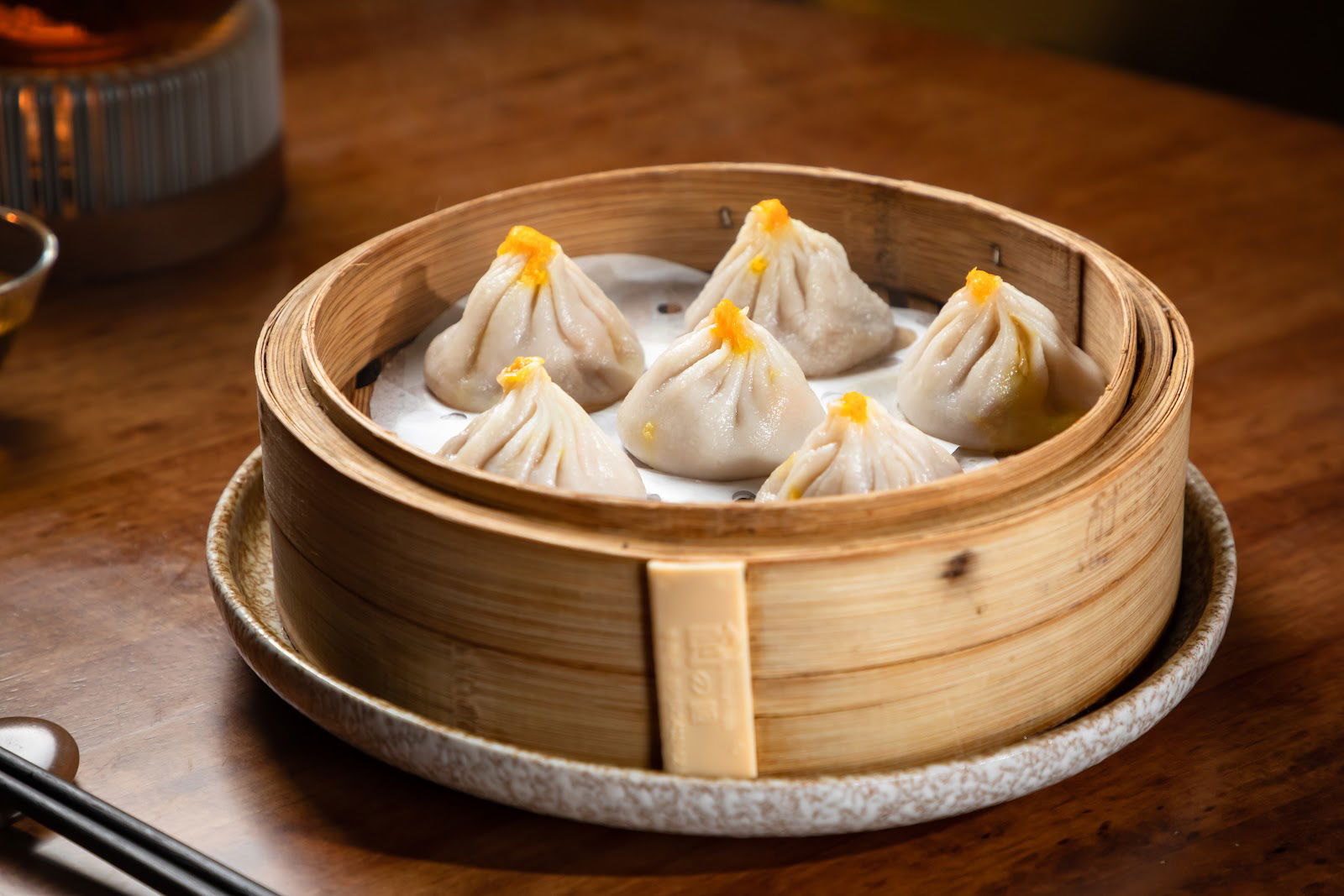
The kitchen draws from many Chinese regional traditions, so ordering across styles rewards diners. Shareable highlights include the signature Peking Duck and Soup Dumplings, which showcase classic technique, alongside Mapo Tofu for Sichuan spice and the Sliced Beef in Golden Pepper Sauce for savory heat. The Grilled Fish offers a contrast in preparation and texture. Given the menu’s range, plan to order several dishes to share so the table can sample different regions and preparations.
Venue details
Ambiance
Grand, stylish setting with handsome Imperial design featuring lacquered finishes, stone accents, and greenery; elegant and atmospheric with spacious bathrooms on the same floor.
Tags
Vibe
Best For
Experience
At the Table
- Dress Code
- Smart Casual
- Noise Level
- Conversational
- Service Style
- Upscale Casual
- Meal Pacing
- Standard
- Capacity
- Medium
- Kitchen
- Modern
- Menu Format
- Family style, A la carte
- Wine Program
- Standard
- Drinks Focus
- Beer, Tea
- Dietary
- Vegetarian friendly
- Private Dining
- Available
Signature Dishes
- Peking Duck
- Mapo Tofu
- Sliced Beef in Golden Pepper Sauce
- Soup Dumplings
- Grilled Fish
Know before you go
Know Before You Go
- Getting there
- 103 Bowery, New York, NY 10002
Planning details
Location

Also consider
Also Consider
- Le Bernardin, French, Seafood, $$$$
- Atomix, Modern Korean, Korean, $$$$
- Eleven Madison Park, French, Vegan, $$$$
- Masa, Sushi, Japanese, $$$$
- Per Se, French, Contemporary, $$$$
Restaurant context
Jiang Nan at $$ sits in a completely different financial tier from the New York fine-dining benchmarks. Le Bernardin, Atomix, Eleven Madison Park, Masa, and Per Se all operate at $$$$, where per-person spend routinely exceeds $300 before wine. Jiang Nan's Michelin Bib Gourmand is the specific designation for restaurants that deliver quality above their price point, a different credential from a star, but a meaningful one for value-oriented diners. If your question is where to spend serious money on a single tasting-menu occasion, any of the $$$$ options above deliver more elaborate service and longer format experiences. If your question is where to eat well for a group without a significant financial commitment, Jiang Nan wins that comparison on every axis.
Within the value-oriented tier, Jiang Nan's advantage over more specialized Chinatown neighbors is regional scope. Atomix delivers a tightly structured Korean tasting menu; Masa is a singular omakase experience at a price point that excludes most diners by design; Per Se and Eleven Madison Park are multi-hour commitments with dress expectations to match. Jiang Nan asks for none of that. The room is formal enough to feel like an occasion, the bill won't require preparation, and booking is straightforward. For a group that wants a proper dinner, not a quick lunch counter, not a $400 tasting menu, Jiang Nan fills a gap that the $$$$ tier doesn't serve.
The clearest peer comparison in the value tier is between Jiang Nan and the other strong Chinese options in and around Chinatown. Jiang Nan's specific edge is the combination of a formal room, multi-regional menu breadth, and Michelin recognition at a mid-range price. If you need a single Chinese restaurant recommendation for a visiting guest who wants the full New York Chinatown-adjacent experience without committing to a specialty format, book here before considering the alternatives.
Explore New York City
Around this place
Discover more on Pearl
Unlock the full Jiang Nan guide in Pearl, including awards, comparisons, FAQs, planning details, and nearby places.
Compare Jiang Nan
| Venue | Awards | Price |
|---|---|---|
| Jiang Nan | 2025 OAD Top Restaurants in Asia Ranked · #1312025 Michelin Bib Gourmand2025 Michelin Plate2024 Michelin Plate2024 Michelin Bib Gourmand | $$ |
| Le Bernardin | 2026 Eater NY 38 Best Restaurants in New York City · #82026 North America's 50 Best Restaurants · #132026 New York Times Best Restaurants in New York City · #212026 OAD Top Restaurants in North America Ranked · #342026 Forbes 5-Star2026 La Liste Top RestaurantsAAA Diamonds Top 10 Restaurants 20262026 Wine Spectator Grand Award2026 Les Grandes Tables du Monde Members | $$$$ |
| Atomix | 2026 OAD Top Restaurants in North America Ranked · #62026 New York Times Best Restaurants in New York City · #72026 North America's 50 Best Restaurants · #7Star Wine Lists 20262026 Les Grandes Tables du Monde Members2026 La Liste Top Restaurants2025 World's 50 North America's Best Restaurants · #12025 James Beard Awards · #12025 New York Times Best Restaurants in New York City · #2 | $$$$ |
| Eleven Madison Park | Star Wine Lists 2026 · #12026 OAD Top Restaurants in North America Ranked · #472026 Forbes 5-Star2026 Relais Chateaux RestaurantsAAA Diamonds Top 10 Restaurants 20262026 Wine Spectator Grand Award2026 Les Grandes Tables du Monde Members2026 La Liste Top Restaurants2025 Robb Report 100 Greatest American Restaurants of the 21st Century · #3 | $$$$ |
| Masa | 2026 OAD Top Restaurants in North America Ranked · #922026 Forbes 5-Star2026 OAD Top Restaurants in North America Recommended2026 La Liste Top Restaurants2025 OAD Top Restaurants in North America Ranked · #672025 Robb Report 100 Greatest American Restaurants of the 21st Century · #862025 Michelin 2 Stars2025 La Liste Top Restaurants2025 Forbes 5-Star | $$$$ |
| Per Se | 2026 OAD Top Restaurants in North America Ranked · #292026 Forbes 5-Star2026 Relais Chateaux Restaurants2026 Wine Spectator Grand AwardAAA Diamonds Top 10 Restaurants 20262026 Les Grandes Tables du Monde Members2026 La Liste Top Restaurants2025 Robb Report 100 Greatest American Restaurants of the 21st Century · #102025 OAD Top Restaurants in North America Ranked · #92 | $$$$ |
.png?width=1200&quality=80)













Comparing your options in New York City for this tier.
FAQ
Frequently Asked Questions
Does Jiang Nan handle dietary restrictions?
The menu spans multiple regional Chinese styles — from Peking duck to mapo tofu to beef in golden pepper sauce — so there is meaningful range, but the kitchen leans heavily on meat and bold sauces. If you have strict dietary requirements, call ahead rather than assuming the menu will accommodate on arrival. The $$ price point and Bib Gourmand recognition suggest a full-service operation that should be able to field requests, but specifics are not documented in the venue record.
What should a first-timer know about Jiang Nan?
This is the original Bowery location of a restaurant group that now runs multiple sites across the region — the flagship carries the most consistent reputation. The 2024 Michelin Bib Gourmand signals strong value at the $$ price point, not fine-dining austerity. Go with at least three people so you can cover the table anchors: Beijing duck, mapo tofu, and the sliced beef in golden pepper sauce.
What should I wear to Jiang Nan?
The room runs an Imperial design scheme with lacquered finishes, stone surfaces, and greenery — it reads as polished and date-appropriate, but the $$ pricing and Bib Gourmand positioning place it well short of formal-dress territory. Clean, put-together casual fits the room; there is no documented dress code.
Is Jiang Nan worth the price?
At $$ per head, yes — the 2024 Michelin Bib Gourmand exists precisely to flag restaurants where the kitchen outperforms the bill. For pan-regional Chinese in a well-designed Manhattan room, this is a strong value proposition compared to the tasting-menu price tags at nearby options. If you want single-region specialization — pure Sichuan or soup dumplings specifically — there are more focused alternatives on the same block.
Is the tasting menu worth it at Jiang Nan?
No tasting menu is documented for Jiang Nan. The venue operates as a full-service à la carte Chinese restaurant, so the shareable-plates approach is the format here. Order across the documented signatures rather than expecting a prix-fixe structure.
What should I order at Jiang Nan?
Three dishes anchor every visit: roast Beijing duck served with thin pancakes on a silver tray, mapo tofu in a portion sized for four, and sliced beef in golden pepper sauce. Cover all three and you have a complete read on what the kitchen does well across regions. The duck in particular is the signature order and the reason most regulars return.