Restaurant in Montenegro, Montenegro

    Mamula

    100pts

    Boka Kotorska Seafood Terroir

    Mamula, Restaurant in Montenegro

    About Mamula

    Mamula sits at the crossroads of Adriatic seafood tradition and the Montenegrin coast's growing appetite for ingredient-led cooking. The setting, framed by the Boka Kotorska region's limestone coastline and its exceptional shellfish waters, places this restaurant within a small peer set that takes provenance seriously. For travelers working through Montenegro's dining circuit, Mamula represents a worthwhile stop on the Adriatic route.

    Where the Boka Kotorska Meets the Plate

    The Montenegrin coastline has a particular quality in the late afternoon, when the light drops low over the bay and the water shifts between green and pewter. Arriving at a restaurant along this stretch, you feel the geography before you taste it: the salt air, the limestone escarpments, the fishing boats working the same channels they have for centuries. Mamula operates within this setting, and the setting is not incidental to what it serves. Along the Boka Kotorska, the sourcing argument for fresh seafood almost makes itself. The bay's shellfish waters, fed by cold underground springs meeting Adriatic salinity, have supplied local kitchens for generations, and the leading restaurants in this corridor treat that supply chain as a structural advantage rather than a marketing point.

    Montenegro's dining scene has developed unevenly. Coastal towns including Perast, Kotor, and the Kumbor area each hold kitchens operating at different levels of ambition. Mamula sits within this geography, where the question for any serious restaurant is not whether to source locally but how rigorously to do so. The restaurants earning sustained attention in this region, such as Pescatore Oysters & Mussels Farm in Perast, have made provenance the organizing principle of their menus rather than a secondary consideration. That standard sets the bar for any kitchen working the same waters.

    Ingredient Sourcing Along the Adriatic

    The eastern Adriatic has one of the more defensible claims to seafood quality in the Mediterranean basin. The Boka Kotorska in particular sits at a confluence of freshwater and saltwater systems that produces shellfish with pronounced mineral character. Mussels, oysters, and clams from this bay have a flavor profile shaped by those spring-fed inputs, distinct from farmed product grown in more neutral conditions. For kitchens with direct relationships with local fishermen and shellfish producers, the material arriving each morning is categorically different from what a restaurant sourcing through a distributor would receive.

    This distinction matters most at the simpler end of any menu. When a kitchen has access to product of this quality, restraint becomes a legitimate technique. The Adriatic tradition, shared with the Italian and Croatian coasts, has always placed emphasis on allowing the ingredient to speak rather than obscuring it. You see this philosophy institutionalized at places like Arpège in Paris, where sourcing relationships define the menu's shape, and at Le Bernardin in New York City, where the fish is always the subject and the technique is always in service of it. At the Boka Kotorska level, the same logic applies with less ceremony and more directness.

    The regional comparison set for Mamula includes Sabia in Kumbor and NOA in Enovici, kitchens that have built their identities around what the bay and its surrounding terrain can supply. Across Montenegro more broadly, the conversation about sourcing has expanded: see Bastion 1 in Kotor for a kitchen operating within the Old Town's constraints, or Kokotov rep in Podgorica for how the capital approaches similar questions with different produce. Our full Montenegro restaurants guide maps this landscape in detail.

    The Atmosphere and What It Signals

    Restaurants on Montenegro's coast occupy a specific atmospheric register that is difficult to replicate elsewhere. The physical environment, stone buildings, water proximity, and the particular quality of Adriatic light, does a considerable amount of work before any food arrives. Kitchens in this setting either lean into that context, integrating the view and the air into the dining experience, or they fight against it with interior design that could belong anywhere. The more coherent approach, evident at the better Boka Kotorska tables, is to let the geography function as part of the offer.

    For context on how ambitious regional restaurants handle this balance across the Mediterranean, the comparison with Quattro Passi in Marina del Cantone is instructive. That kitchen has maintained Michelin recognition while remaining anchored to its specific coastal setting, demonstrating that place-rooted cooking and technical ambition are not competing values. Montenegro's coast is earlier in that development arc, which means the restaurants here are still establishing what their version of that balance looks like. Mamula operates within that formative moment.

    Planning Your Visit

    Montenegro's peak season runs from June through August, when the Boka Kotorska draws visitors from across Europe and reservation availability compresses accordingly. The shoulder months of May and September offer the same coastal conditions with a measurably quieter booking environment, and the quality of local seafood does not diminish outside high summer. Travelers moving along the coast between Kotor and Herceg Novi will find Mamula positioned on that route. For a fuller picture of what the region's kitchens are doing, Duomo Crna Gora in Becici and Lee Fast in Budva round out the coastal circuit in different directions. Those traveling from Podgorica will also want to consider Masala Art for a different register entirely before heading to the bay.

    For travelers whose reference points are European fine dining at the level of Osteria Francescana in Modena, Le Calandre in Rubano, or CORE by Clare Smyth in London, the Montenegrin coast operates at a different scale and price point, but the sourcing quality at its better tables is not a lesser version of the same thing. It is a different expression of the same underlying principle, that the leading cooking begins with the leading available material, handled with enough skill to let it arrive at the table intact. Atomix in New York City and Lazy Bear in San Francisco demonstrate how far that principle can be extended in more formally ambitious formats. Montenegro's version is quieter and less codified, but the logic is the same. And Emeril's in New Orleans offers a useful counterexample: a kitchen that built its identity on regional sourcing within a specific culinary geography, which is precisely what the Boka Kotorska kitchens are still working to articulate.

    Frequently Asked Questions

    Would Mamula be comfortable with kids?
    Montenegro's coastal restaurants generally accommodate families, particularly outside peak dinner service. If the price positioning is mid-range and the setting is waterfront rather than formal interior, the atmosphere tends toward relaxed rather than ceremonial. Confirming directly with the venue on format and seating is advisable, especially during high season when configurations can change.
    What should I expect atmosphere-wise at Mamula?
    Restaurants on the Boka Kotorska typically offer an outdoor-forward experience, where the bay and surrounding limestone terrain function as part of the dining environment. Given Montenegro's coastal dining conventions and the region's emphasis on informal waterfront settings, expect an atmosphere oriented toward the view and the water rather than interior formality.
    What dish is Mamula famous for?
    The kitchen's position on the Montenegrin coast, where shellfish from the Boka Kotorska bay define the local larder, suggests the strongest plates will be seafood-driven and ingredient-led. Specific signature dishes are not confirmed in available data; contacting the venue directly or reviewing recent guest accounts will give the most accurate current picture.
    Do they take walk-ins at Mamula?
    Walk-in availability along Montenegro's Adriatic coast narrows significantly between June and August, when demand from regional tourists compresses tables at waterfront restaurants. Outside peak summer months, the chances of a walk-in succeeding improve substantially. For high season visits, making a reservation in advance is the more reliable approach regardless of the restaurant's awards profile or price tier.
    What is Mamula leading at?
    Based on its position within the Boka Kotorska's ingredient-rich coastal corridor, Mamula's strongest suit is likely its proximity to the bay's shellfish supply and the Adriatic seafood tradition that underpins regional cooking here. Kitchens in this peer set, including Sabia in Kumbor and Pescatore in Perast, distinguish themselves through sourcing relationships rather than technical elaboration.
    Can Mamula handle vegetarian requests?
    Montenegro's coastal kitchens are primarily seafood-oriented, with vegetarian options typically available but not the structural focus of the menu. Given the absence of confirmed menu data, the most reliable approach is to contact the venue directly before visiting. The broader Montenegrin dining scene does include kitchens with more flexible formats, detailed in our full Montenegro restaurants guide.
    Is Mamula connected to the historic island fortress of the same name in the Bay of Kotor?
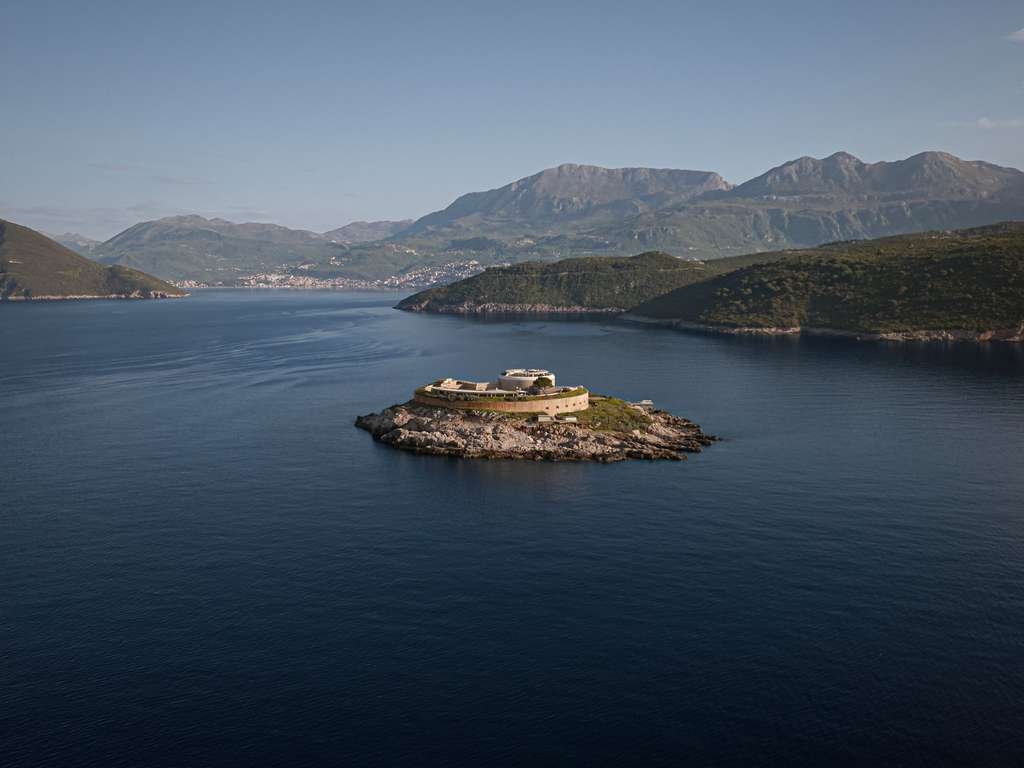
    The name Mamula is shared with the small fortified island at the mouth of the Boka Kotorska, a 19th-century Austro-Hungarian structure that has become one of the bay's most photographed landmarks. Whether the restaurant takes its name directly from that reference or from the surrounding geographical area is not confirmed in available records. Visitors drawn to the bay's historical and architectural character will find the island itself visible from various points along the Montenegrin coastline, adding a layer of context to any meal taken in the region.
    Keep this place

    Save or rate Mamula on Pearl

    Keep this venue in your Pearl passport, rate it after you visit, and track it alongside every other place you collect.