
Restaurant in Paradise Valley, United States
Lincoln Restaurant
100ptsSonoran Resort Table
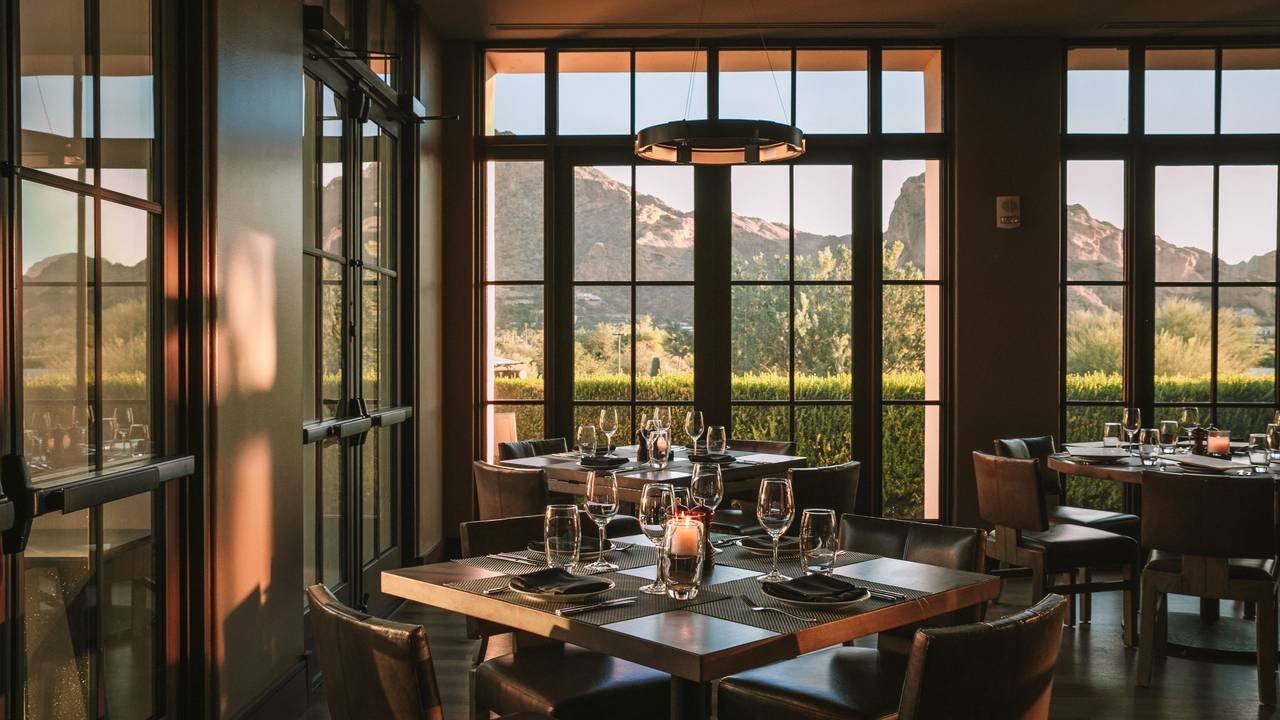
About Lincoln Restaurant
Lincoln Restaurant sits inside the JW Marriott Scottsdale Camelback Inn Resort and Spa, one of the Sonoran Desert's most storied resort addresses. The setting places it within Paradise Valley's upper dining tier, where resort kitchens increasingly compete on sourcing discipline and regional identity rather than spectacle. For guests already on property, it functions as a serious dining option in its own right.
Where the Sonoran Desert Meets the Resort Dining Table
There is a particular quality to the light at the base of Camelback Mountain in the late afternoon: the sandstone turns amber, the saguaro throw long shadows, and the resort grounds of the JW Marriott Scottsdale Camelback Inn feel genuinely still. Lincoln Restaurant occupies this setting — inside one of Arizona's oldest and most recognized resort properties at 5402 E Lincoln Drive, Scottsdale. The address carries history; the Camelback Inn opened in 1936 and has functioned as a reference point for desert luxury ever since. A restaurant inside that frame inherits both the prestige of the location and the weight of expectation that comes with it.
Resort dining in the American Southwest has shifted considerably over the past decade. Where hotel restaurants once leaned on scale and menu breadth to satisfy a captive audience, the more credible operations now take narrower, more deliberate positions — sourcing regionally, working with the desert's seasonal rhythms, and treating the physical environment as an argument for what appears on the plate. Lincoln Restaurant sits within that evolving category, at a property where the surrounding landscape makes a direct case for ingredient-led thinking.
Sourcing in the Desert: Why Provenance Matters Here
Arizona's agricultural identity is less discussed than California's, but it is substantial. The state produces Medjool dates, pistachios, citrus, pecans, and a growing range of heritage grains, with operations concentrated in the Salt River Valley and along the agricultural corridors south and west of Phoenix. For a kitchen working inside the Sonoran Desert biome, these are the natural reference points , ingredients that reflect the heat, the elevation shifts, and the seasonal extremes of the region rather than approximating what a European or coastal American kitchen might reach for by default.
This matters because resort kitchens at properties like the Camelback Inn occupy a specific tension: they serve a national and international clientele that arrives with broad expectations, but they also sit in a place with a distinct culinary identity. The strongest versions of this format , think Single Thread Farm in Healdsburg or Blue Hill at Stone Barns in Tarrytown, where farm provenance is the explicit spine of the entire program , resolve that tension by making sourcing the editorial argument. In the Arizona context, a kitchen that genuinely works with local producers makes a more interesting case for the region than one that simply acknowledges it in passing on the menu.
The Paradise Valley dining scene broadly reflects this push toward regional grounding. elements, also set within a resort property in the area, has built its identity around Southwest-leaning cooking and the dramatic outdoor setting of Sanctuary Camelback Mountain. El Chorro draws on decades of local history, functioning as something closer to a cultural institution than a contemporary dining destination. Fat Ox pivots toward Italian-American with a strong focus on house-made product. Alma and INDIBAR round out a peer set that covers considerable stylistic range. Lincoln Restaurant's position within this set is defined largely by its address: it is, in practical terms, the primary full-service dining option at one of the valley's most recognized resort addresses.
The Resort Dining Tier: Peer Context and Competitive Position
At the national level, the resort restaurant category has split clearly. On one end sit venues that have effectively separated from their parent properties in critical terms , Addison in San Diego, which holds Michelin recognition inside a resort context, or The French Laundry in Napa, where the property setting amplifies rather than defines the restaurant's identity. On the other end sit hotel restaurants that serve their captive audience competently but generate little independent reason to visit. The middle ground , resort kitchens that are worth visiting in their own right but are not yet operating at destination-dining level , is where most of the interesting activity happens, and where a property like Lincoln fits into the broader picture.
For reference, ambitious American restaurant programs at this tier often look toward models like Le Bernardin in New York City for sourcing discipline, Lazy Bear in San Francisco for format experimentation, or Providence in Los Angeles for the integration of regional seafood identity into a fine-dining frame. These are not direct comparisons to a resort restaurant in Paradise Valley, but they illustrate the spectrum of ambition that now defines American fine dining , and against which any serious kitchen positions itself, even implicitly.
Closer to the middle of that spectrum, Emeril's in New Orleans and Alinea in Chicago represent two different modes of American dining ambition , one rooted in regional identity, the other in technical innovation , that have both influenced how resort kitchens think about menu construction and identity in the years since. The Inn at Little Washington remains the clearest example of a destination-level hotel restaurant in the American context, where the property and the kitchen have fused into a single argument. Atomix in New York City and 8 1/2 Otto e Mezzo Bombana in Hong Kong extend the frame internationally, showing how hotel-adjacent fine dining operates at its most rigorous outside the US.
Planning a Visit
Lincoln Restaurant is located within the JW Marriott Scottsdale Camelback Inn Resort and Spa, making it naturally accessible to resort guests and direct to reach from central Scottsdale and Paradise Valley by car. The resort sits at the base of Camelback Mountain, which means early evenings in the cooler months , October through April , offer the combination of mild temperatures and extended desert light that defines the leading of the Arizona dining calendar. Summer visits remain viable given the resort's air-conditioned indoor spaces, though the outdoor setting is considerably more comfortable in the shoulder seasons. For non-resort guests, the address is a short drive from the broader Scottsdale restaurant corridor. Booking through the resort directly is the practical approach given the lack of publicly listed contact details. For context on the wider dining options across the valley, see our full Paradise Valley restaurants guide.
Frequently Asked Questions
Is Lincoln Restaurant good for families?
The resort context at the JW Marriott Camelback Inn generally accommodates families, and resort restaurants in this category tend to maintain service standards that work across age ranges. That said, Paradise Valley's dining price tier runs higher than most casual family dining in the Phoenix area, so the practical fit depends on how the table approaches resort dining. Families comfortable with that price register will find the setting generous and unhurried.
How would you describe the vibe at Lincoln Restaurant?
The Camelback Inn carries a legacy resort atmosphere , settled, unhurried, and conscious of its own history in Arizona hospitality. A restaurant inside that property tends to reflect those qualities: the pace is measured, the setting leans toward comfort over edge, and the clientele skews toward guests who are already on property rather than diners making a destination trip specifically for the food. It sits in a different register from Paradise Valley's more independent dining options.
What's the must-try dish at Lincoln Restaurant?
Specific menu details for Lincoln Restaurant are not publicly confirmed in available records, so naming a particular dish would require verification directly with the kitchen. Given the Sonoran Desert context, dishes that draw on Arizona's regional agricultural output , citrus, heritage grains, desert-grown produce , would represent the most coherent expression of what this setting can offer. Confirming current menu composition with the restaurant before visiting is advisable.
Does Lincoln Restaurant source ingredients locally from Arizona producers?
Arizona has a substantial agricultural base, including Medjool date farms in the Coachella and Yuma corridors, pecan groves, and a growing range of heritage grain producers in the Salt River Valley. Whether Lincoln Restaurant actively builds supplier relationships with these producers is not confirmed in publicly available data. Given the broader shift toward regional sourcing among resort kitchens in the Southwest , a trend well established at properties across Scottsdale and Paradise Valley , it is a reasonable question to put directly to the kitchen when booking.
Related editorial
- Asia's 50 Best Restaurants 2026: The Chairman and Wing Go 1-2 from the Same BuildingThe Chairman takes No. 1 and Wing climbs to No. 2 at Asia's 50 Best Restaurants 2026. Both operate from the same Hong Kong building. Here's what it means.
- Four Seasons Yachts Debut: 95 Suites, 11 Restaurants, and a March 2026 Maiden VoyageFour Seasons I launches March 20, 2026, with 95 suites, a one-to-one staff ratio, and 11 onboard restaurants. Worth tracking if you want hotel-grade service at sea.
- LA Michelin Guide 2026: Seven New Restaurants from Tlayudas to Uzbek DumplingsMichelin's March 2026 California Guide update adds six LA restaurants and one Montecito newcomer, spanning Oaxacan tlayudas, Uzbek manti, and Korean-Italian pasta.
Save or rate Lincoln Restaurant on Pearl
Keep this venue in your Pearl passport, rate it after you visit, and track it alongside every other place you collect.