
Restaurant in Pinellas Park, United States
La Teresita
100ptsStrip-Mall Cuban Tradition
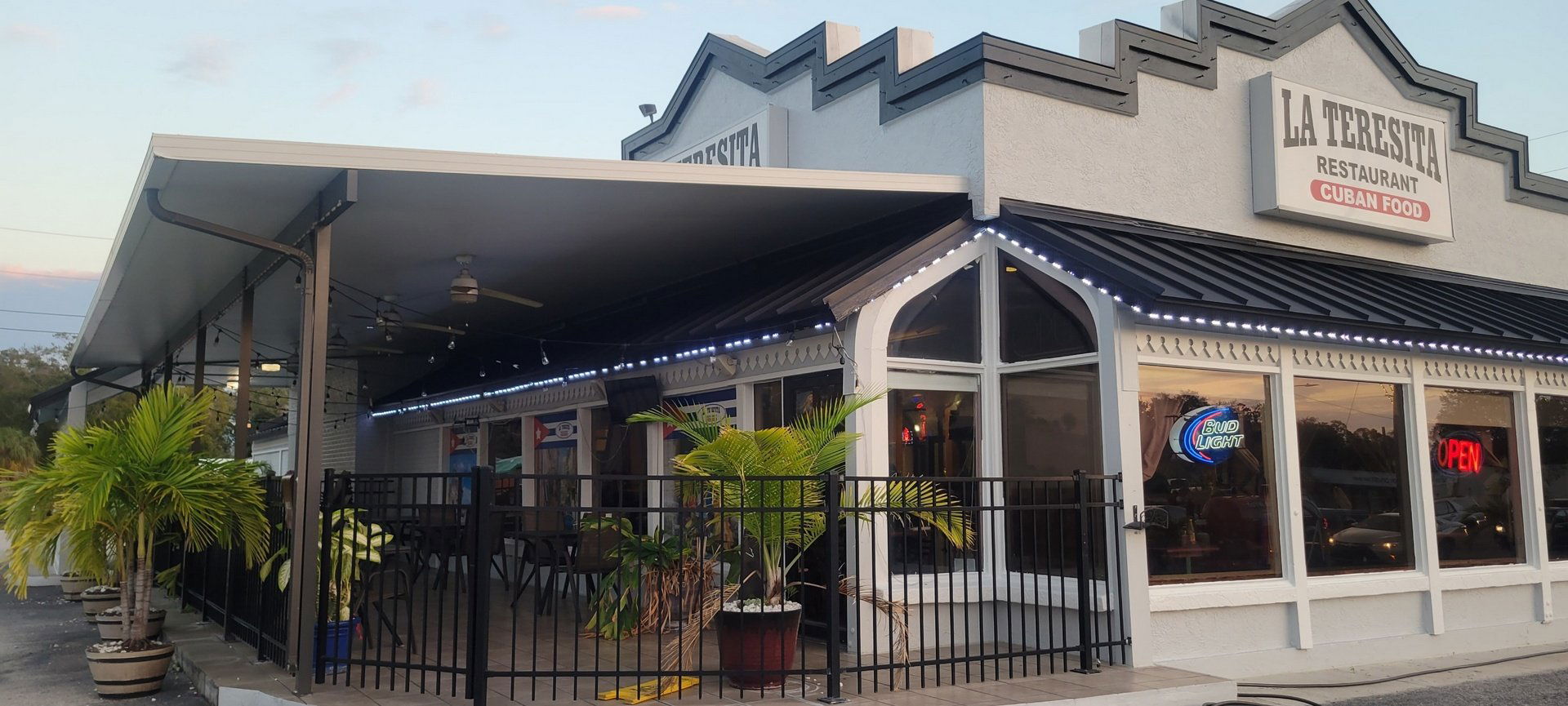
About La Teresita
La Teresita occupies a strip-mall address on 66th Street North that Pinellas Park regulars treat as a reliable neighbourhood anchor. The kitchen leans into Cuban-American cooking traditions that prioritize ingredient-forward preparation over novelty. For a city more often associated with chain dining, it represents a committed independent presence in the local food scene.
Where Pinellas Park Sits Down for Real Food
Strip-mall dining in Florida's mid-Pinellas corridor has a reputation problem. The dominant format along corridors like 66th Street North skews toward chain redundancy: familiar logos, standardised sourcing, portion engineering calibrated for throughput rather than flavour. La Teresita, at 7101 66th St N, operates in the same physical register but inside a different culinary logic. The room is unpretentious, the lighting functional, and the crowd largely local. What separates it from the surrounding commercial fabric is the same thing that has always separated serious neighbourhood cooking from the alternative: a commitment to ingredient integrity that shows up on the plate rather than in the marketing copy.
Cuban-American cooking, the tradition La Teresita draws from, has always been ingredient-led by structural necessity. Dishes like ropa vieja, picadillo, and roast pork derive their character not from technique complexity but from the quality and preparation of the base materials: the cut of meat, the ripeness of the tomatoes, the fat content of the lard, the freshness of the mojo ingredients. You cannot disguise weak sourcing behind a braise the way you can behind a sauce reduction. The protein and aromatics are the sauce. In this sense, Cuban-American home cooking and the restaurant traditions it spawned represent one of the more ingredient-honest food cultures in the American canon.
Sourcing in a Sun Belt Context
Florida's agricultural position is frequently underestimated by diners who associate sourcing credibility with Northern California operations like Single Thread Farm in Healdsburg or Blue Hill at Stone Barns in Tarrytown. In practice, Florida is among the largest producers of fresh vegetables and citrus in the country. The state's growing calendar extends year-round in ways the Midwest cannot match, and the Cuban-American kitchen's reliance on citrus, specifically sour orange and lime for mojo and marinades, benefits directly from regional proximity. A Tampa Bay area restaurant drawing on Cuban traditions sits physically close to the citrus-producing belts of central Florida in a way that, say, a comparable restaurant in Chicago cannot replicate without cold-chain compromise.
This matters because mojo, the garlic-citrus marinade central to Cuban pork cookery, is one of those preparations where freshness of citrus shifts the result meaningfully. Bottled sour orange concentrate and fresh-pressed juice from locally grown fruit are not equivalent products. The decision a kitchen makes at that juncture, whether driven by cost, convenience, or conviction, is legible in the finished dish in a way that most diners register intuitively without being able to name it.
The Pinellas Park Context
Pinellas Park sits in a part of the Tampa Bay region that serious food coverage tends to bypass in favour of St. Petersburg's more photogenic dining districts. That editorial neglect does not reflect the density of working neighbourhood restaurants along corridors like 66th Street. The city's dining scene is predominantly composed of independents serving local populations who return weekly rather than tourist visitors seeking a single marquee experience. This creates a different performance pressure than the one operating at, say, Le Bernardin in New York City or Alinea in Chicago. The repeat-customer base is unforgiving about consistency and value in ways that one-time destination diners are not, because regulars notice when something changes.
That competitive pressure is actually a quality signal. Restaurants like La Teresita survive in neighbourhood markets not because of awards cycles or critical attention but because the food earns return visits. Among Pinellas Park's independent operators, including nearby options like Campanella's Italian Restaurant & Pizzeria and Sonny's BBQ, La Teresita occupies the Cuban-American niche without direct competition at the same address or format. Da Sesto serves a different culinary tradition and clientele, illustrating how Pinellas Park's independent dining tier, while not as concentrated as St. Pete's central districts, covers a broader range of food cultures than its commercial aesthetic suggests. Our full Pinellas Park restaurants guide maps the broader picture.
What the Cuban-American Kitchen Teaches About Simplicity
At the high end of the American dining spectrum, farm-to-table sourcing has become a framework that restaurants from The French Laundry in Napa to Providence in Los Angeles have institutionalised into something closer to a design language. The Cuban-American neighbourhood tradition predates that framing entirely and operates without its vocabulary. The sourcing discipline, where it exists, is embedded in recipe logic rather than announced on menus. Pork slow-cooked in mojo does not require a sourcing statement to demonstrate that the quality of the citrus and the garlic matters. The dish itself makes the argument.
This positions places like La Teresita in an interesting comparative frame when set against destination kitchens such as Emeril's in New Orleans, Bacchanalia in Atlanta, or Addison in San Diego, all of which have built sourcing into their public-facing identity. The neighbourhood Cuban-American kitchen is doing something related without the institutional apparatus. The restraint in presentation and the absence of editorial framing around the food actually makes the ingredient quality more, not less, central to the eating experience. There is no other layer to focus on.
For readers accustomed to the tasting-menu format at venues like Lazy Bear in San Francisco, Atomix in New York City, or Brutø in Denver, the Cuban-American counter model represents a useful recalibration. The cooking is direct, the portions generous, and the margin for error relatively low because there is no complexity to hide behind. That directness is the point, and it is a different kind of discipline than what 8½ Otto e Mezzo Bombana in Hong Kong or The Inn at Little Washington exercises, but it is not less demanding.
Planning Your Visit
La Teresita operates at 7101 66th St N in Pinellas Park, Florida, accessible by car from both central St. Petersburg and Clearwater. The format is neighbourhood casual; no dress expectations apply, and the clientele reflects the working-community character of the corridor. Given the restaurant's local-regular orientation rather than tourist traffic, weekday visits typically offer a quieter, more consistent experience than weekends. Specific hours, current pricing, and booking arrangements are leading confirmed directly, as those details were not available in the data reviewed for this editorial.
Frequently Asked Questions
- Is La Teresita suitable for children?
- Yes. The casual, neighbourhood format and direct Cuban-American cooking at everyday Pinellas Park price points make it a practical choice for families dining without ceremony.
- What should I expect atmosphere-wise at La Teresita?
- The setting is a no-frills neighbourhood room consistent with the strip-mall address on 66th Street North in Pinellas Park. There are no awards or headline credentials repositioning it toward a destination-dining register; this is a local-regular operation, and the atmosphere reflects that, practically and unpretentiously.
- What's the signature dish at La Teresita?
- Verified dish-specific data was not available for this editorial. Within the Cuban-American cooking tradition that defines this type of kitchen, roast pork preparations and rice-and-bean combinations are typically the structural anchors of the menu. A direct inquiry to the restaurant will confirm current offerings more reliably than any published list.
- How does La Teresita compare to other Cuban-American restaurants in the Tampa Bay area?
- Tampa Bay has one of the most established Cuban-American dining communities in the continental United States, rooted in the historical Ybor City cigar-factory culture. Within Pinellas Park specifically, La Teresita occupies the Cuban-American niche without direct same-format competition at its address. For readers cross-referencing options across the broader region, the relevant comparison set is the independent Cuban counter and cafeteria tradition rather than the city's newer chef-driven restaurants, which operate in a different register entirely.
Related editorial
- Asia's 50 Best Restaurants 2026: The Chairman and Wing Go 1-2 from the Same BuildingThe Chairman takes No. 1 and Wing climbs to No. 2 at Asia's 50 Best Restaurants 2026. Both operate from the same Hong Kong building. Here's what it means.
- Four Seasons Yachts Debut: 95 Suites, 11 Restaurants, and a March 2026 Maiden VoyageFour Seasons I launches March 20, 2026, with 95 suites, a one-to-one staff ratio, and 11 onboard restaurants. Worth tracking if you want hotel-grade service at sea.
- LA Michelin Guide 2026: Seven New Restaurants from Tlayudas to Uzbek DumplingsMichelin's March 2026 California Guide update adds six LA restaurants and one Montecito newcomer, spanning Oaxacan tlayudas, Uzbek manti, and Korean-Italian pasta.
Save or rate La Teresita on Pearl
Keep this venue in your Pearl passport, rate it after you visit, and track it alongside every other place you collect.