
Restaurant in Beijing, China
L. Bodhi (Guanghua Road)
210Pearl PointsMichelin-recognised vegetarian dining, book ahead.
.png?width=144&height=144&quality=80)
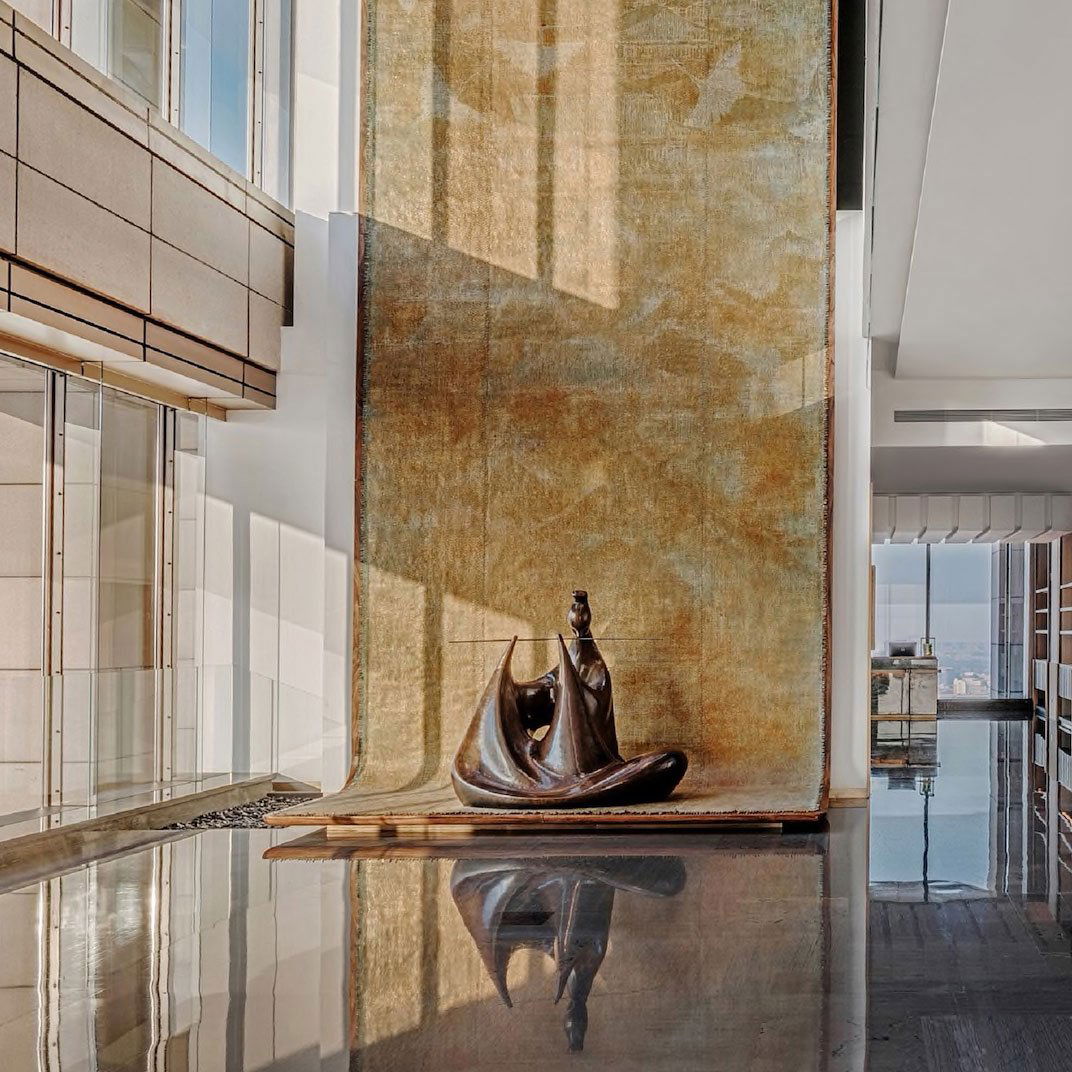
About L. Bodhi (Guanghua Road)
L. Bodhi holds Michelin Plates for both 2024 and 2025, making it one of the most credentialed vegetarian restaurants in Beijing. Priced at ¥¥¥¥ and set in the 798 Art District, it suits diners who want serious technique rather than a casual meat-free option. Visit in late spring or early autumn to catch the seasonal menu at its most varied.
Is L. Bodhi Worth Booking for Serious Vegetarian Dining in Beijing?
Yes — if you're looking for vegetarian fine dining in Beijing with Michelin recognition behind it, L. Bodhi on Guanghua Road is one of the clearest choices you can make. It has held a Michelin Plate in both 2024 and 2025, putting it in a small group of Beijing vegetarian restaurants that have passed that credentialing bar. At the ¥¥¥¥ price tier, you're paying for serious technique and a considered menu, not just a meat-free fallback. The question isn't whether L. Bodhi is good — it is, it's whether it's the right choice for your specific visit, and when during the year to go.
What L. Bodhi Is Actually Like
L. Bodhi sits inside the 798 Art District on Qixing East Street, one of Beijing's most architecturally distinctive neighbourhoods. The industrial heritage of the 798 complex means the surrounding environment shifts the whole register of a meal here: this is not a restaurant in a luxury hotel corridor, and it doesn't feel like one. The setting is Chaoyang district, where the dining culture trends international and the crowd skews toward Beijing's creative and arts-adjacent communities. That context matters for what you'll find on the plate: the cooking here is vegetarian with the kind of ambition that expects to be taken as seriously as any omnivore kitchen in the same price bracket.
Two consecutive Michelin Plates signal consistent execution rather than a single standout year. For a vegetarian restaurant in China, where the category can sometimes default to tofu preparations and Buddhist canteen formats, that recognition marks L. Bodhi as something more technically demanding. If you've visited once and found it competent, know that the kitchen earns its ¥¥¥¥ positioning through precision rather than portion volume, go back with that expectation calibrated.
When to Visit: Seasonal Rotation Matters Here
Beijing's seasons are pronounced enough to shift what any serious kitchen offers, and vegetarian cooking is particularly season-dependent, the ingredient palette narrows or expands dramatically between winter and summer. If you're planning ahead, the case for visiting L. Bodhi in late spring or early autumn is strong. Late spring brings an influx of shoots, flowering vegetables, and lighter preparations; early autumn introduces earthier roots, mushrooms, and warmer-spiced dishes suited to the cooling temperatures. Summer and winter visits are perfectly valid, but the menu will feel different in character, leaner and brighter in summer, more warming and textured in winter.
For a repeat visitor who has experienced the menu in one season, the priority should be returning in a contrasting season to see how the kitchen handles the rotation. A summer visit followed by a winter return will give you a far better read on what the kitchen can actually do than two visits in the same period. This is the kind of vegetarian restaurant where seasonal return visits reward the effort.
Beijing's harsh winters and hazy springs also affect the 798 district itself, the outdoor environment around the restaurant complex is considerably more appealing from late April through October, which may factor into your evening if you plan to walk the area before or after your meal.
For the Return Visitor: What to Prioritise
If you've been once and want to maximise a second visit, arrive with the season in mind rather than reordering what worked before. Vegetarian menus at this tier typically shift at least partially with market availability, which means a repeat of your first order is less interesting than working through whatever the kitchen is currently centred on. Ask what's new or what the kitchen is highlighting that month, at a Michelin Plate level, that kind of direct engagement with the staff is expected and usually well-received.
For the first-timer arriving at ¥¥¥¥, it's worth knowing that comparable vegetarian experiences in Beijing include Lamdre, which operates at the same price tier and draws its identity from Tibetan-influenced vegetarian tradition, and Blossom Vegetarian in Dongcheng, which skews more toward Buddhist-style preparations. Gong De Lin is a longer-established name in Beijing vegetarian dining with a different price positioning, while Tianchumiaoxiang Vegetarian in Chaoyang is also in the neighbourhood and worth knowing as a backup if L. Bodhi is full.
For broader vegetarian fine dining context across China, Fu He Hui in Shanghai operates in a comparable register and is the benchmark many serious vegetarian diners in China use for comparison. Further afield, I Tenerumi in Isola Vulcano shows what vegetarian fine dining can achieve in a European context, a useful frame of reference for how the category performs internationally.
Practical Details
Reservations: Booking is rated Easy, walk-ins may be possible, but at ¥¥¥¥ in a Michelin-recognised room it's sensible to book ahead, particularly for weekend evenings and peak season visits (late spring and early autumn). Budget: ¥¥¥¥, plan accordingly for a full dinner with drinks; this is not a casual drop-in price point. Location: 798 Art District, Chaoyang, Beijing, accessible by taxi or ride-hailing from central Beijing; the district is navigable on foot once there. Dress: Not confirmed in available data, but the 798 context suggests smart-casual is appropriate; overly formal dress would likely feel out of place with the neighbourhood's creative character. Phone and hours: Not available in current data, check locally or via a booking platform before visiting.
For more on dining in the capital, see our full Beijing restaurants guide. If you're planning a wider trip, our Beijing hotels guide, bars guide, and experiences guide cover the rest of the city. Vegetarian fine dining travellers extending to other cities should consider Xin Rong Ji on Xinyuan South Road for high-end non-vegetarian contrast in Beijing, or venture to 102 House in Shanghai, Ru Yuan in Hangzhou, or Chef Tam's Seasons in Macau for the broader regional picture. See also Imperial Treasure in Guangzhou, Dai Yuet Heen in Nanjing, and Xin Rong Ji in Chengdu for wider fine dining context across China.
Frequently Asked Questions
Is L. Bodhi (Guanghua Road) good for solo dining?
Solo dining works well here. The 798 Art District setting gives you architectural detail to absorb between courses, and a focused vegetarian menu at ¥¥¥¥ is easier to pace solo than in a group with competing preferences. Book ahead rather than walking in — Michelin Plate recognition in 2024 and 2025 means demand is consistent.
Is the tasting menu worth it at L. Bodhi (Guanghua Road)?
At ¥¥¥¥ pricing with back-to-back Michelin Plate awards (2024 and 2025), the tasting format is the right way to assess what the kitchen can do with vegetarian ingredients. If you're committed to the vegetarian fine dining format, the price is justified. If you want flexibility or are not convinced by meat-free menus, look at Lamdre or Xin Rong Ji instead.
What are alternatives to L. Bodhi (Guanghua Road) in Beijing?
For Chinese fine dining with broader menu options, Xin Rong Ji on Xinyuan South Road and Lamdre are the main comparators in Beijing's upper tier. Jing covers international fine dining if you want to move away from Chinese formats entirely. None of these offer a dedicated vegetarian focus at L. Bodhi's Michelin-recognised level, which is the specific case for booking here.
Can L. Bodhi (Guanghua Road) accommodate groups?
Groups can book, but a focused vegetarian tasting menu at ¥¥¥¥ per head narrows the fit — this works best for groups where everyone is aligned on the format rather than parties with mixed dietary expectations. check the venue's official channels to confirm private dining or larger table availability, as seating configuration details are not publicly documented.
What should a first-timer know about L. Bodhi (Guanghua Road)?
L. Bodhi sits inside the 798 Art District on Qixing East Street in Chaoyang — an industrial-heritage neighbourhood that shapes the setting as much as the food. It holds back-to-back Michelin Plates (2024 and 2025), which signals consistent kitchen quality rather than a one-off accolade. At ¥¥¥¥, arrive knowing it is a committed vegetarian menu, not a venue that happens to offer vegetarian options.
Is L. Bodhi (Guanghua Road) worth the price?
Yes, if vegetarian fine dining is what you're after. Two consecutive Michelin Plate awards position L. Bodhi as the clearest benchmark for the format in Beijing, and ¥¥¥¥ pricing is consistent with the recognition. If you need meat on the menu or want broader Chinese regional cooking, Xin Rong Ji or Lamdre deliver more at a comparable price point.
Location
China, Bei Jing Shi, Chaoyang, Jiuxianqiao Residential District, Qixing E St, 2号大山子798艺术工厂 邮政编码: 100102
Beijing, China
Compare L. Bodhi (Guanghua Road)
| Venue | Cuisine | Price | Booking Difficulty |
|---|---|---|---|
| L. Bodhi (Guanghua Road) | Vegetarian | ¥¥¥¥ | Easy |
| Jing | French Contemporary | ¥¥¥ | Unknown |
| Xin Rong Ji (Xinyuan South Road) | Taizhou | ¥¥¥¥ | Unknown |
| Chao Shang Chao (Chaoyang) | Chao Zhou | ¥¥¥¥ | Unknown |
| Lamdre | Vegetarian | ¥¥¥¥ | Unknown |
| Jingji | Beijing Cuisine | ¥¥¥¥ | Unknown |
How L. Bodhi (Guanghua Road) stacks up against the competition.
Also Consider
- Jing, French Contemporary, ¥¥¥
- Xin Rong Ji (Xinyuan South Road), Taizhou, ¥¥¥¥
- Chao Shang Chao (Chaoyang), Chao Zhou, ¥¥¥¥
- Lamdre, Vegetarian, ¥¥¥¥
- Jingji, Beijing Cuisine, ¥¥¥¥
At ¥¥¥¥, L. Bodhi shares its price tier with several of Beijing's more serious dining rooms, but its Michelin Plate credentials (2024 and 2025) set it apart within the vegetarian category. The closest like-for-like comparison is Lamdre, also vegetarian and also at ¥¥¥¥, which draws more directly on Tibetan culinary tradition. If your priority is specifically Chinese vegetarian fine dining in a contemporary register, L. Bodhi is the stronger choice; if you want a more distinctive cultural identity in the cooking, Lamdre pulls in a different direction worth considering.
Against the non-vegetarian ¥¥¥¥ options in this set, the comparison is more about category fit than quality ranking. Xin Rong Ji on Xinyuan South Road delivers precise Taizhou seafood-centred cooking at the same price point, a better choice if you're not committed to vegetarian dining. Chao Shang Chao in Chaoyang offers Chao Zhou cuisine at ¥¥¥¥ and is the pick for Cantonese-adjacent technique over vegetarian ambition. Jingji at ¥¥¥¥ covers Beijing cuisine specifically, which is worth prioritising if regional cooking matters more to you than dietary format.
For value comparison, Jing sits at ¥¥¥ with French Contemporary cooking, a meaningful step down in price and a different cuisine entirely, but useful if your group includes diners less invested in a vegetarian-only menu. L. Bodhi is the most targeted choice in this set for diners specifically seeking Michelin-recognised vegetarian dining in Beijing; for everything else, the peer venues serve different purposes rather than inferior ones.
Recognized By

Explore Beijing
Save or rate L. Bodhi (Guanghua Road) on Pearl
Keep this venue in your Pearl passport, rate it after you visit, and track it alongside every other place you collect.