
Wakasugi
Japanese · Kita, Kyoto
Restaurant in Kyoto, Japan
 Book with Pearl
The Read
Neighbourhood À La Carte Counter
Price
$100–150per person
Dress
Smart Casual
Why go
A husband-and-wife counter restaurant near Kinkaku-ji, Wakasugi holds a Michelin Plate for 2024 and 2025 and is rated 4.6 across 203 reviews. At ¥¥¥, it is the most accessible Michelin-recognised option in Kita Ward — easy to book, genuinely local in feel, and worth the trip from central Kyoto for lunch kaiseki or à la carte dinner.
About Wakasugi
Verdict: Should You Book Wakasugi?
Wakasugi is easy to book and worth booking — particularly if you are visiting Kinkaku-ji and want a meal that feels local rather than tourist-facing. It sits in a neighbourhood where serious dining options are thin, and it fills a gap deliberately: more considered than an izakaya, less formal and less expensive than kappo. If you are eating your way through central Kyoto's kaiseki circuit at venues like Isshisoden Nakamura or Kikunoi Roan, Wakasugi offers a useful counterpoint: a ¥¥¥ neighbourhood anchor rather than a destination splurge.
Portrait: What Wakasugi Actually Is
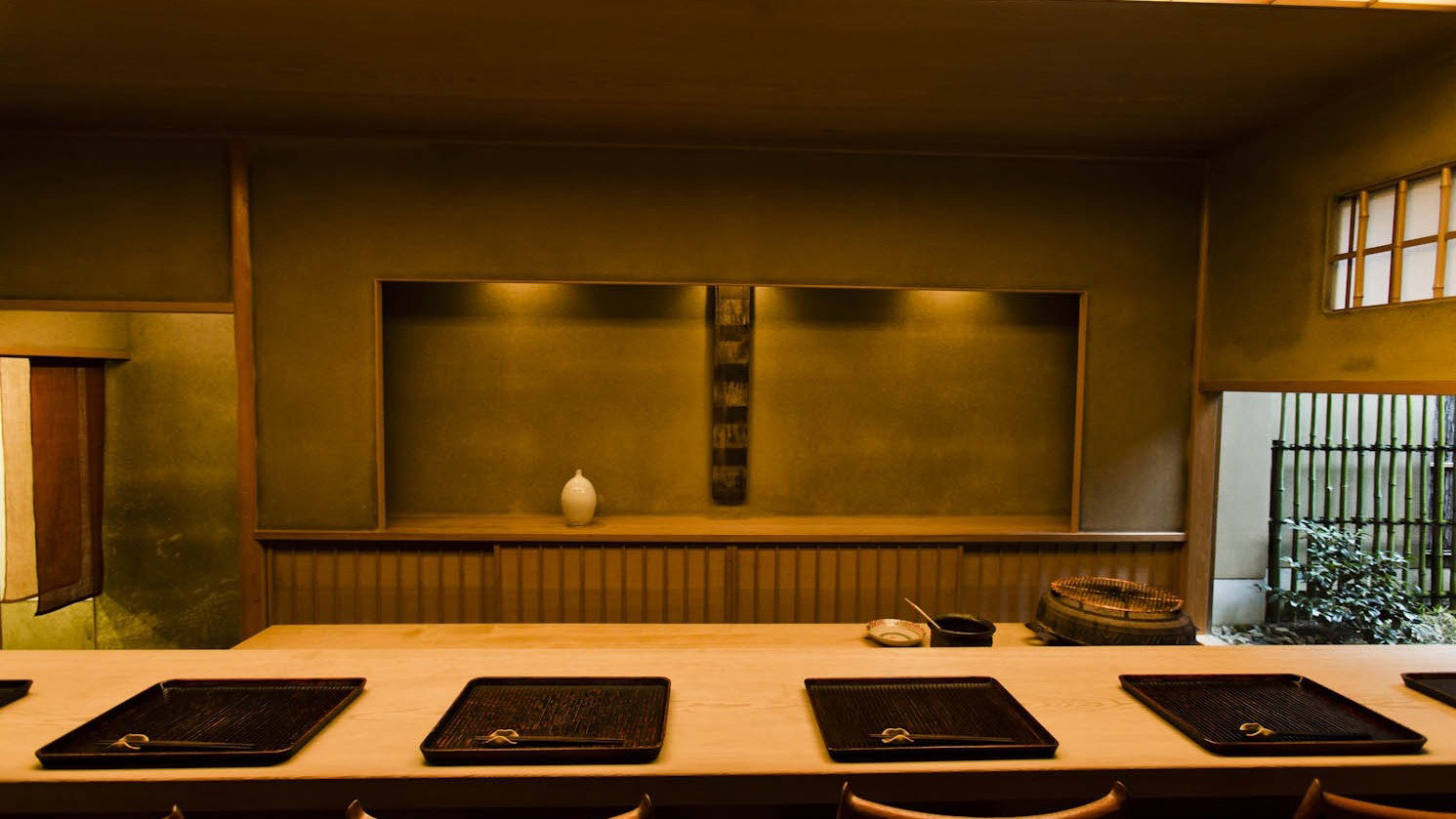
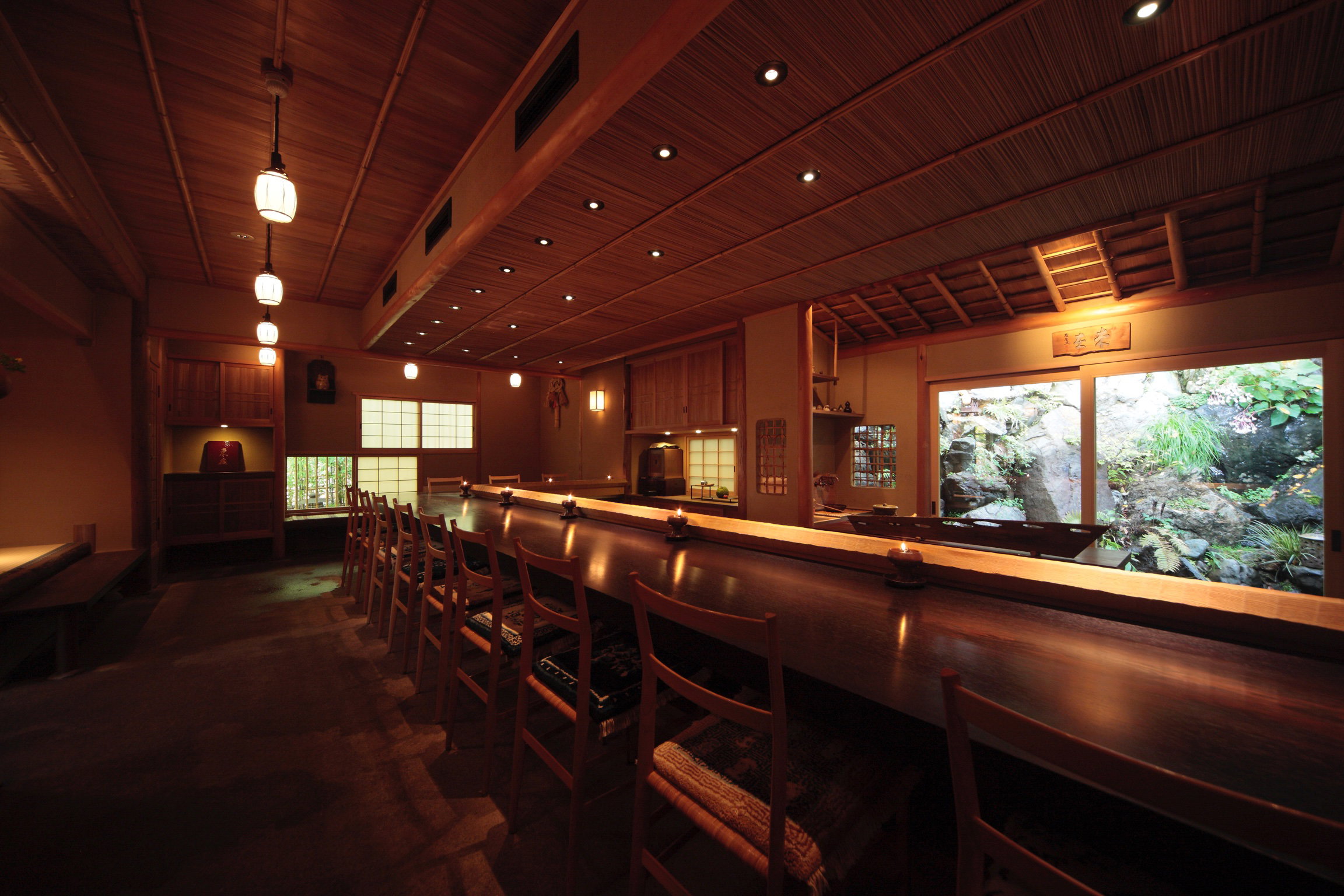
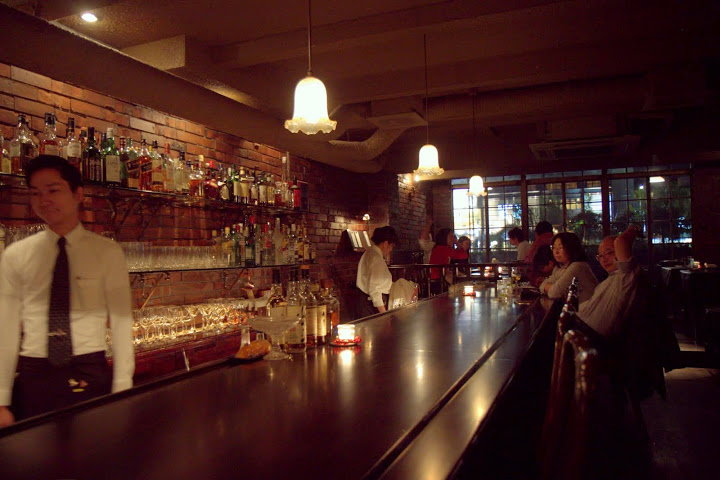
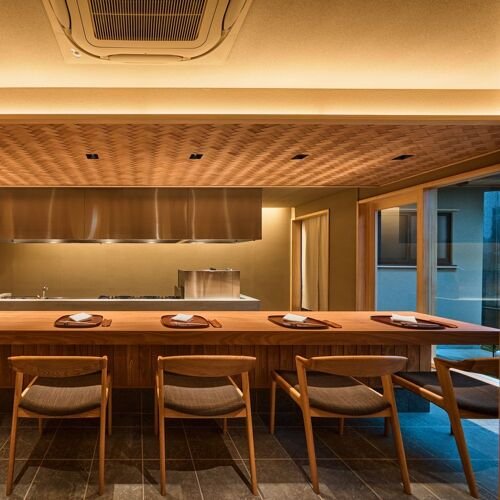
The room is a counter. That detail matters more than it might seem. A counter-style restaurant in Japan — particularly one operated by a couple, means the physical space is intimate and the service dynamic is direct. You are not seated in a large dining room being handled by a floor team. You are at the bar, close enough to the kitchen that conversation happens naturally, and the couple running the restaurant designed it that way deliberately. They wanted neighbours to gather. They wanted the feel of community dining that a pub provides, without the pub format, and without the distance of formal kappo.
The address puts you in Kita Ward, five minutes from the World Heritage site of Kinkaku-ji Temple. That proximity shapes the venue's identity in a concrete way. Most of the eating options immediately around Kinkaku-ji skew toward tourists: quick bites, set menus engineered for turnover. Wakasugi is not that. It was opened by a couple who loved the location and wanted to contribute to the neighbourhood's daily life, not to its tourist economy. That intent shows up in the format: à la carte at dinner, kaiseki multi-course at lunch. The à la carte structure is a deliberate choice, it puts the customer's preferences first rather than locking everyone into a fixed progression.
If you have been once and are returning, the à la carte menu is where to focus. The smoked salmon and herring-roe potato salad is cited as standard fare in Michelin's own record for the venue, not a seasonal special, a reliable anchor dish. For returning guests, that consistency is the point. You are not chasing a tasting menu that rotates; you are building familiarity with a kitchen that has a clear point of view and executes it steadily.
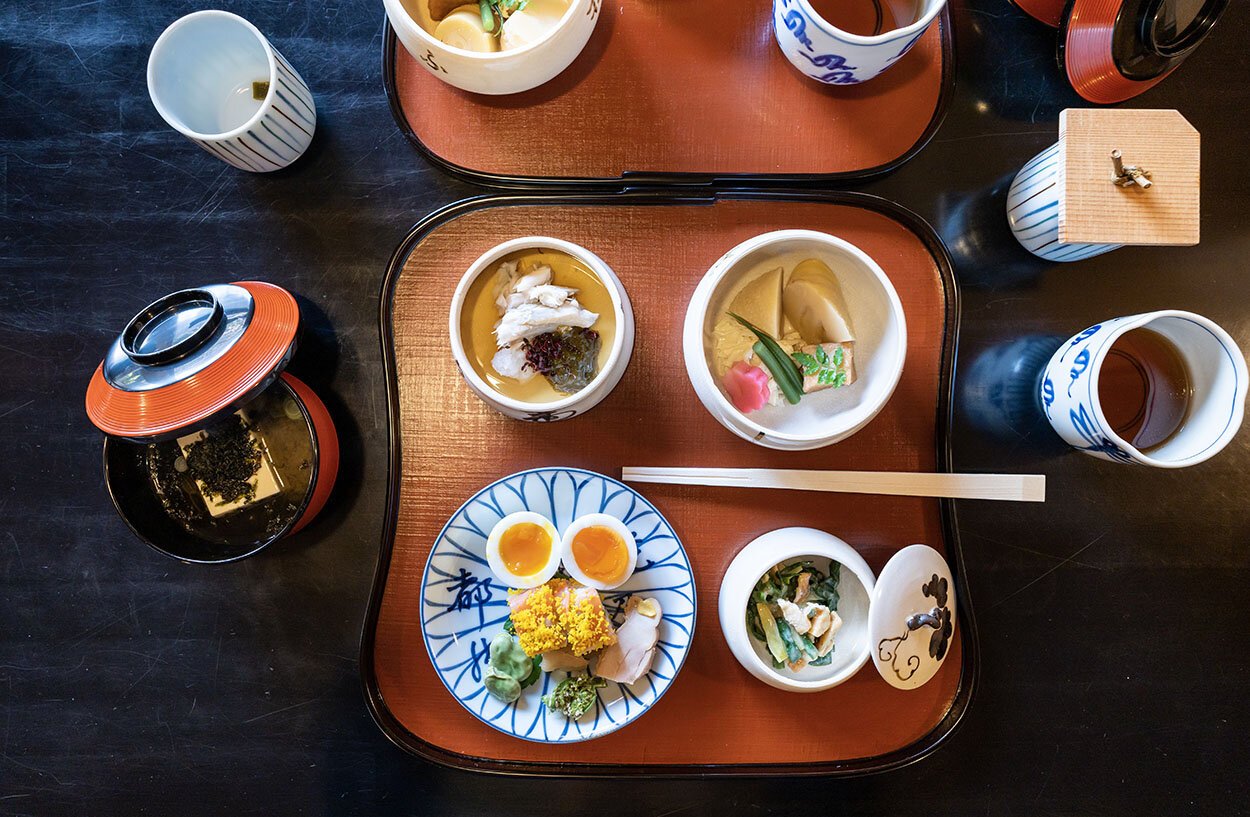
Lunch is a different format entirely. The kaiseki multi-course structure at lunch is not incidental, the couple uses the meal as a vehicle for conversation. The pacing of multi-course service gives them time to engage with each guest at the counter. If you want to experience the social dimension that defines this restaurant's identity, lunch is the format that delivers it most fully. For dinner, the à la carte approach gives you more control but a slightly different atmosphere.
Two consecutive Michelin Plates (2024, 2025) confirm a level of technical consistency that the price tier does not always guarantee in Kyoto. The Michelin Plate recognises good cooking, it is not a star, but it is a meaningful signal that the guide's inspectors found the food worth noting. At ¥¥¥, Wakasugi sits below the ¥¥¥¥ venues on the kaiseki circuit, which means the value-per-quality ratio is favourable for diners who want Michelin-acknowledged cooking without committing to a full kaiseki expenditure.
For context on what the wider Kyoto dining scene offers, see our full Kyoto restaurants guide. If you are planning broader travel in Japan, comparable neighbourhood-anchored experiences worth knowing include akordu in Nara and Goh in Fukuoka. For Tokyo comparisons in a similar register, Myojaku and Azabu Kadowaki are worth examining. And if Osaka is on your itinerary, HAJIME represents the higher end of what the Kansai region offers.
The neighbourhood context also matters for planning your day. Kita Ward is not central Kyoto. Visitors staying in Gion or the city centre will need to factor in travel time. The upside is that Wakasugi is unlikely to be crowded with the same diners you encounter elsewhere on a Kyoto restaurant circuit, it is genuinely local in a way that few Michelin-recognised venues in the city can claim. See our Kyoto hotels guide if you are considering basing yourself in the north of the city to make venues like this more accessible, and our Kyoto bars guide for what to do around the area in the evening.
Know Before You Go
Practical Details
- Price range: ¥¥¥
- Cuisine: Japanese, counter-style, à la carte (dinner) / kaiseki multi-course (lunch)
- Location: 5 Kinugasa Kaidocho, Kita Ward, Kyoto, close to Kinkaku-ji Temple
- Booking difficulty: Easy
- Michelin recognition: Michelin Plate 2024 and 2025
- Format: Counter seating; husband-and-wife operation
- Lunch format: Kaiseki multi-course only
- Dinner format: À la carte
- Hours: Not confirmed, verify before visiting
- Phone / website: Not listed, check Google Maps or contact directly
How It Compares
See the comparison section below for Wakasugi against its Kyoto peers.
Pearl Picks: More Kyoto Dining
Further afield in Japan: Harutaka in Tokyo, 1000 in Yokohama, 6 in Okinawa. For more on the Kyoto area: our Kyoto experiences guide and our Kyoto wineries guide.
Planning details
- Location
- 5 Kinugasa Kaidocho, Kita Ward, Kyoto, 603-8372, Japan
- Reservations
- Book on Omakase
- Website
- instagram.com/haru.8489?igshid=YmMyMTA2M2Y%3D
- Phone
- +81 75-600-9256
The take
The Take
The Vibe
Wakasugi sits on the quieter streets of Kita Ward, removed from Kyoto’s main tourist arteries and oriented toward a local clientele. The counter configuration keeps the kitchen literally and figuratively close to guests, producing an intimate, low-key energy that resists theatricality. The restaurant deliberately occupies a middle ground between neighbourhood izakayas and formal kappo houses: it prioritizes careful, consistent cooking and direct engagement over a fixed tasting ritual. The result is a compact, quietly refined atmosphere that feels resident-focused and measured rather than showy—a modest, carefully tended counter experience in a residential pocket near Kinkaku-ji.
Best For
Wakasugi is firmly a dinner destination built around counter dining, suited to diners who prize interaction with the chefs and thoughtful, à la carte cooking. The format works well for date nights and special evenings when guests want attentive, close-up service without the rigid pacing of a kaiseki menu. It also suits solo diners and small parties who appreciate the kitchen-to-table conversation the counter enables. Larger-group or high-energy occasions are not the restaurant’s focus; Wakasugi favors measured service and a neighbourly, evening-oriented experience.
Ordering Tips
Wakasugi operates à la carte rather than with a fixed tasting menu, so diners control pacing and selection. Take advantage of the counter: the seating puts the kitchen in direct conversation with guests, making it appropriate to ask the chefs for recommendations and sequencing advice. That interaction helps craft a balanced progression since the kitchen is not imposing a preset menu. Expect a focused, conversational service model where chef guidance and personal choices determine how the meal unfolds.
Venue details
Ambiance
Intimate counter setting with warm, welcoming atmosphere; soulful service from the couple-run operation creates a personal dining experience.
Tags
Vibe
Best For
Experience
Accessibility
At the Table
- Dress Code
- Smart Casual
- Noise Level
- Quiet
- Service Style
- Omakase Bar
- Meal Pacing
- Leisurely
- Capacity
- Intimate
- Kitchen
- Traditional
- Menu Format
- Omakase, A la carte, Counter dining, Set menu
- Drinks Focus
- Sake
Know before you go
Know Before You Go
- Getting there
- 5 Kinugasa Kaidocho, Kita Ward, Kyoto, 603-8372, Japan
Planning details
Location
5 Kinugasa Kaidocho, Kita Ward, Kyoto, 603-8372, Japan · Directions
Recognition and awards
Also consider
Also Consider
- Gion Sasaki, Kaiseki, Japanese, ¥¥¥¥
- cenci, Italian, ¥¥¥
- Ifuki, Kaiseki, ¥¥¥¥
- Kyokaiseki Kichisen, Japanese, ¥¥¥¥
- SEN, French, Japanese, ¥¥¥¥
Restaurant context
Wakasugi occupies a specific niche in Kyoto that none of its obvious peers quite fill. Gion Sasaki and Ifuki are both ¥¥¥¥ kaiseki operations in central Kyoto with significantly higher booking difficulty and a more formal register. If your priority is depth of kaiseki technique and you are willing to plan weeks ahead, either of those will deliver more than Wakasugi. But if you want Michelin-acknowledged Japanese cooking at a lower price point with an easy booking window, Wakasugi is the stronger practical choice.
Kyokaiseki Kichisen and SEN both operate at ¥¥¥¥ and serve a diner who is treating the meal as the centrepiece of the day. Wakasugi is better framed as a neighbourhood meal, excellent by the standards of its price tier and location, but not competing for the same occasion. If you are choosing between spending ¥¥¥¥ at Kichisen or ¥¥¥ at Wakasugi, the decision comes down to whether you want a full formal kaiseki event or a more relaxed counter dinner near a major temple. cenci at ¥¥¥ offers an interesting alternative for diners who want Italian rather than Japanese at the same price tier, though the formats and atmospheres are entirely different.
For diners doing a single meal in Kyoto and wanting the most complete expression of the city's kaiseki tradition, Gion Sasaki or Ifuki are the calls. For diners who want a genuine neighbourhood experience, a counter setting, and Michelin-noted cooking without the formality or expense, Wakasugi is the right answer, particularly if the Kinkaku-ji area is already on your itinerary.
Explore Kyoto
Around this place
Discover more on Pearl
Unlock the full Wakasugi guide in Pearl, including awards, comparisons, FAQs, planning details, and nearby places.
Compare Wakasugi
| Venue | Cuisine | Price | Booking Difficulty | Awards |
|---|---|---|---|---|
| Wakasugi | Japanese | ¥¥¥ | Easy | Michelin Guide Kyoto Osaka 20262026 Michelin Plate2025 Michelin Plate2024 Michelin Plate |
| Gion Sasaki | Kaiseki, Japanese | ¥¥¥¥ | Unknown | 2026 Tabelog Bronze · #3862026 OAD Top Restaurants in Japan RecommendedMichelin Guide Kyoto Osaka 20262026 La Liste Top RestaurantsTabelog 100 - Japanese cuisine - WEST - 2025 · #132025 OAD Top Restaurants in Japan Ranked · #2462025 Tabelog Silver2025 Michelin 3 Stars2025 La Liste Top Restaurants |
| cenci | Italian | ¥¥¥ | Unknown | 2026 Tabelog Bronze · #442026 Asia's 50 Best Restaurants · #762026 OAD Top Restaurants in Japan Highly RecommendedMichelin Guide Kyoto Osaka 2026Tabelog 100 - Italian - WEST - 2025 · #632025 Asia's 50 Best Restaurants · #632025 OAD Top Restaurants in Japan Ranked · #1682025 Tabelog Bronze2024 OAD Top Restaurants in Japan Ranked · #135 |
| Ifuki | Kaiseki | ¥¥¥¥ | Unknown | 2026 OAD Top Restaurants in Japan Ranked · #1222026 Tabelog Bronze · #128Michelin Guide Kyoto Osaka 20262026 La Liste Top RestaurantsTabelog 100 - Japanese cuisine - WEST - 2025 · #622025 OAD Top Restaurants in Japan Ranked · #1002025 La Liste Top Restaurants2025 Tabelog Bronze2025 Michelin 2 Stars |
| Kyokaiseki Kichisen | Japanese | ¥¥¥¥ | Unknown | 2026 Tabelog Bronze · #1752026 OAD Top Restaurants in Japan Highly RecommendedMichelin Guide Kyoto Osaka 20262025 OAD Top Restaurants in Japan Ranked · #1862025 Michelin 2 Stars2025 La Liste Top Restaurants2024 OAD Top Restaurants in Japan Ranked · #1422024 Michelin 2 Stars2023 OAD Top Restaurants in Japan Ranked · #136 |
| SEN | French, Japanese | ¥¥¥¥ | Unknown | 2026 Tabelog Bronze · #3952026 OAD Top Restaurants in Japan RecommendedMichelin Guide Kyoto Osaka 20262026 Michelin PlateTabelog 100 - Japanese cuisine - WEST - 2025 · #652025 Michelin Plate2025 Tabelog Bronze2024 OAD Top Restaurants in Japan Ranked · #3622024 Michelin Plate |
.png?width=1200&quality=80)






A quick look at how Wakasugi measures up.
FAQ
Frequently Asked Questions
What should I order at Wakasugi?
The smoked salmon and herring-roe potato salad are confirmed staples on the à la carte menu, so start there. At lunch, the only option is a kaiseki multi-course set — useful to know before you arrive. The à la carte format at dinner is intentional: the owners built the menu around letting customers choose rather than dictating a fixed progression.
Can I eat at the bar at Wakasugi?
Yes — the entire restaurant is counter-style, so every seat is essentially at the bar. That layout is the point: it puts you in direct contact with the couple running the kitchen and shapes the whole tone of the meal. If you prefer table seating, this is not the right format.
What should I wear to Wakasugi?
This is a neighbourhood counter restaurant, not a high-end kappo room — the owners explicitly positioned it that way. Neat, comfortable clothing is appropriate. You do not need to dress formally, but turning up in hiking gear after a full day at Kinkaku-ji may feel off given the intimate counter setting.
What should a first-timer know about Wakasugi?
Lunch and dinner operate on different formats: lunch is kaiseki multi-course only, dinner is à la carte. The restaurant holds a Michelin Plate (2024 and 2025), which signals consistent quality without the pressure of a starred experience. It sits in Kita Ward, close to Kinkaku-ji, so it works well as a post-temple meal rather than a destination in its own right.
How far ahead should I book Wakasugi?
The venue is described as approachable and neighbourhood-facing rather than hard-to-get, so booking pressure is lower than at Kyoto's starred restaurants. That said, counter-style rooms have limited seats by definition. Booking a few days to a week ahead is a sensible precaution, especially around peak Kinkaku-ji tourist periods in spring and autumn.
Does Wakasugi handle dietary restrictions?
The à la carte format at dinner gives you more control over what you order than a fixed omakase or kaiseki would, which helps if you have restrictions. At lunch, the kaiseki set is the only option, which offers less flexibility. No specific dietary policy is documented so contact them directly before visiting if you have serious requirements.
Is Wakasugi good for solo dining?
Yes — counter-only seating is one of the formats that works best for solo diners in Japan. You sit directly facing the kitchen, the couple engages with customers as part of the service, and there is no awkward large table to fill. At ¥¥¥ pricing with Michelin Plate recognition, it is a solid solo option after a morning at Kinkaku-ji.