
Takehisa
Japanese · Nakagyō, Kyoto
Restaurant in Kyoto, Japan
 Book with Pearl
The Read
Patient-Technique Kaiseki
Price
$100–150per person
Why go
Takehisa is a Michelin Plate-recognised Japanese restaurant in central Kyoto's Nakagyo Ward, delivering patient, technique-driven seasonal cooking at ¥¥¥ — a price tier below most of Kyoto's top kaiseki houses. Old-school simmered preparations, salt-grilled fish, and mountain-foraged garnishes define the menu. Book it for a quiet special occasion where craft matters more than ceremony.
About Takehisa
Verdict
Takehisa earns a confident recommendation for anyone seeking a deeply traditional Japanese meal in Nakagyo, Kyoto. This is old-school kaiseki-adjacent cooking grounded in patience, seasonality, and technique — not theatrical plating or fusion experimentation. At ¥¥¥, it sits a price tier below the ¥¥¥¥ establishments that dominate Kyoto's high-end dining conversation, which makes it one of the more accessible entry points into serious Japanese cookery in the city. Two consecutive Michelin Plates (2024 and 2025) confirm it is operating at a recognised standard. If you are celebrating a quiet occasion, planning a long lunch with someone who appreciates restraint over spectacle, or simply want to eat well without the full kaiseki outlay, Takehisa is a strong booking.
About Takehisa
Takehisa sits in Takeyacho, a quiet pocket of Nakagyo Ward that occupies the central band of Kyoto — not the tourist-heavy streets around Gion or the grand northern temple districts, but the workaday residential and commercial core that most visitors pass through without stopping. That positioning matters. This is a neighbourhood restaurant in the most serious sense: a place that exists for the people who live and work nearby, not primarily for destination diners arriving from abroad. That said, the cooking is precise enough to justify a deliberate visit from anywhere in the city.
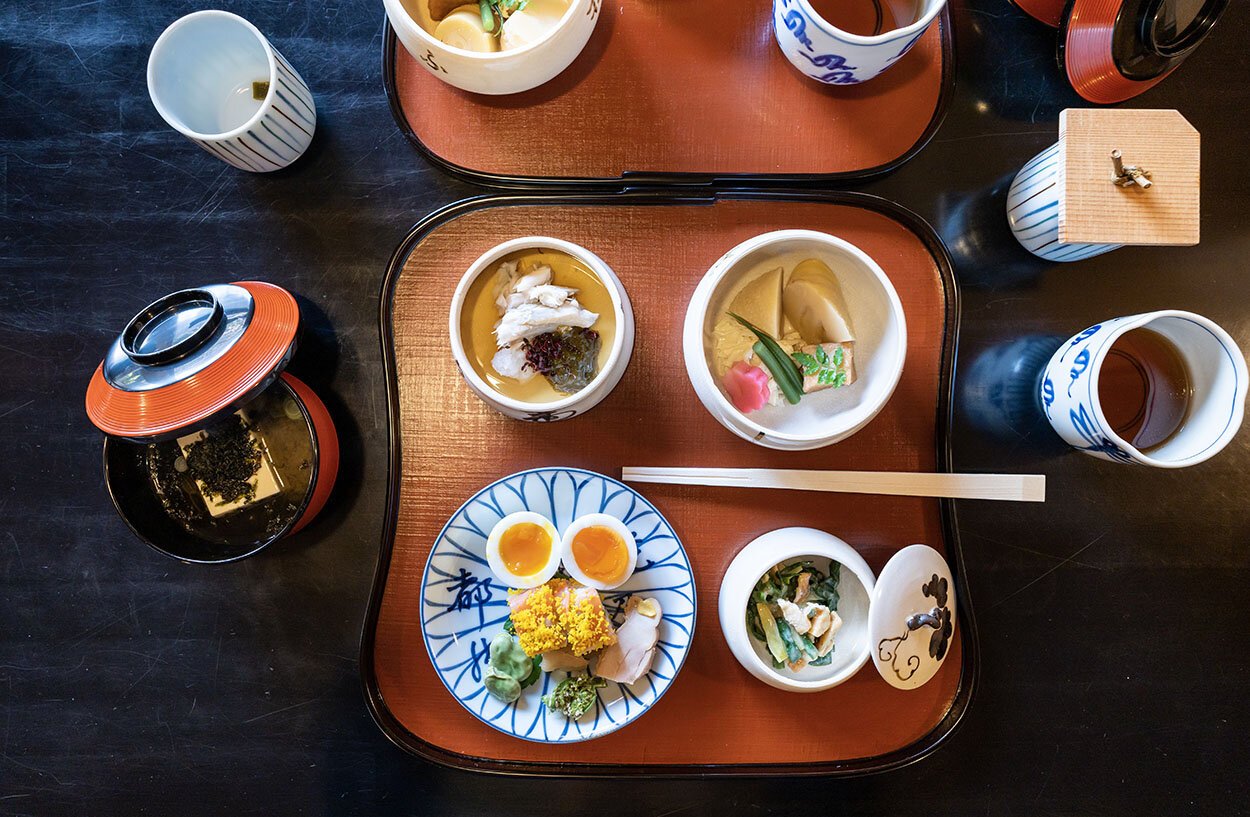
The kitchen's guiding principle is a commitment to old-school Japanese technique, applied with genuine patience. Simmered preparations are central to the menu: unripe plum simmered in sugar syrup and herring braised with eggplant are the kinds of dishes that require hours of careful attention and produce flavours that are quietly complex rather than immediately striking. This is not food designed to photograph well or to announce itself loudly. It is food designed to taste like what it is, seasonal Japanese ingredients, cooked with respect for their natural character.
The seasonal dimension runs through everything. Edible wild plants appear in tempura, sweetfish is salt-grilled in the manner that has been standard in Japanese kitchens for centuries, and chestnuts find their way into takikomi-gohan, the rice dish that absorbs the flavour of whatever is cooked alongside it. The garnishes on the plates are literal: leaves collected from the mountains, used to signal the current moment of the year. This is not a metaphor or a marketing point. It is a practical expression of how the kitchen thinks about the connection between the mountain environment and what ends up on the table.
For a special occasion meal, this framing matters. You are not booking Takehisa for drama or for a performance of luxury. You are booking it for a meal that is genuinely rooted in a place and a season, a quality that is harder to find than it sounds, even in Kyoto. Compared to the grand kaiseki houses like Kyokaiseki Kichisen or Isshisoden Nakamura, Takehisa is less formal and less expensive, but the culinary intent is comparable: bring out the natural flavour of good ingredients, respect the season, and do not overcomplicate things.
For context on how Takehisa sits within the broader Kyoto dining landscape, see our full Kyoto restaurants guide. Those planning a longer stay should also check our Kyoto hotels guide, our Kyoto bars guide, and our Kyoto experiences guide for a complete picture of the city.
If your trip includes other Japanese cities, the same philosophy of patient, technique-driven cooking appears at HAJIME in Osaka, Harutaka in Tokyo, and akordu in Nara. For Japanese cooking specifically in Tokyo, Myojaku and Azabu Kadowaki offer useful points of comparison. Further afield, Goh in Fukuoka, 1000 in Yokohama, and 6 in Okinawa round out a picture of serious Japanese dining across the country.
Ratings and Recognition
The Michelin Plate in both 2024 and 2025 places it in the tier of restaurants that Michelin inspectors consider worth visiting, below a star, but formally recognised as cooking at a higher standard than the surrounding average. For a ¥¥¥ restaurant in a non-tourist pocket of Nakagyo, that is meaningful positioning. Compare this to Kikunoi Roan or Gion Matayoshi, both of which carry heavier award credentials and correspondingly higher prices. Takehisa offers Michelin-acknowledged quality at a lower price point, which is a practical advantage worth noting.
Practical Details
Reservations: Booking difficulty is rated Easy, this is not a venue requiring months of advance planning, unlike some of Kyoto's starred kaiseki houses. That said, specific booking methods are not publicly listed, so contact the restaurant directly or use a hotel concierge for assistance. Budget: ¥¥¥ price range positions this comfortably below the ¥¥¥¥ tier occupied by most of Kyoto's top-end kaiseki restaurants, making it accessible for a special meal without requiring a full celebration budget. Location: Takeyacho, Nakagyo Ward, central Kyoto, walkable from most major city hotels. Hours: Not publicly listed; confirm directly before visiting. Dress: No formal dress code confirmed in available data, but smart casual is appropriate for the setting and the occasion. Groups: Seat count is not confirmed; contact the restaurant directly for group enquiries.
How It Compares
See the comparison section below for how Takehisa sits against its Kyoto peers. Also worth considering: Kodaiji Jugyuan for a similarly grounded, seasonal approach to Japanese cooking, and Kyokaiseki Kichisen if budget allows for the full ¥¥¥¥ kaiseki experience.
Planning details
- Location
- Takeyacho, Nakagyo Ward, Kyoto, 604-0865, Japan
- Website
- facebook.com/takeyamachi.takehisa
- Phone
- +81 75-231-5622
The take
The Take
The Vibe
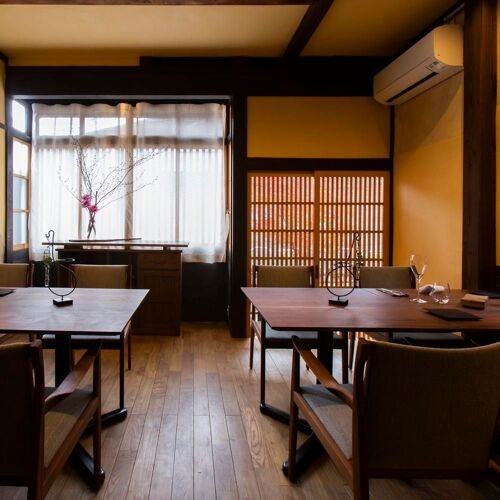
Takehisa feels like an understated Kyoto find: tucked into the machiya-lined lanes of Nakagyo, it registers as quietly exceptional rather than performative. The dining rooms are small and the menus concise, and the kitchen privileges patient technique over theatrical plating. The restaurant’s Michelin Plate recognition frames it as technically rigorous without the full pomp of the starred kaiseki rooms, so the atmosphere leans toward low-key refinement. Visitors encounter a setting that favors tradition and restraint—historic surroundings, subtle craftsmanship and an almost hidden quality that rewards attention rather than spectacle.
Best For
This is an evening destination for diners who value focused, technically adept Japanese cooking. Takehisa is best experienced at dinner, when the seasonally driven menus and carefully timed preparations come into their own. The Michelin Plate status signals disciplined execution, making it suitable for date nights, special-occasion meals and considered business dinners where foodcraft matters more than flash. Smaller dining rooms encourage intimate service and a contemplative pace; guests come to appreciate the subtleties of technique and seasonal ingredients rather than a high-energy dining theatre.
Ordering Tips
Lean into the seasonal set menu and let the kitchen dictate pacing: the restaurant’s strength is disciplined, patiently prepared dishes rather than a la carte showpieces. Seek out the house signatures — sweetfish grill, chestnut rice and seasonal tempura — which reflect the kitchen’s focus on seasonality and technique. Expect modest presentation and precise execution; portions and sequencing follow kaiseki-style principles. Reservations are advisable but the profile suggests the room is less scarce than Kyoto’s highest-starred houses, so planning ahead without the expectation of impossibility is a sensible approach.
Venue details
Ambiance
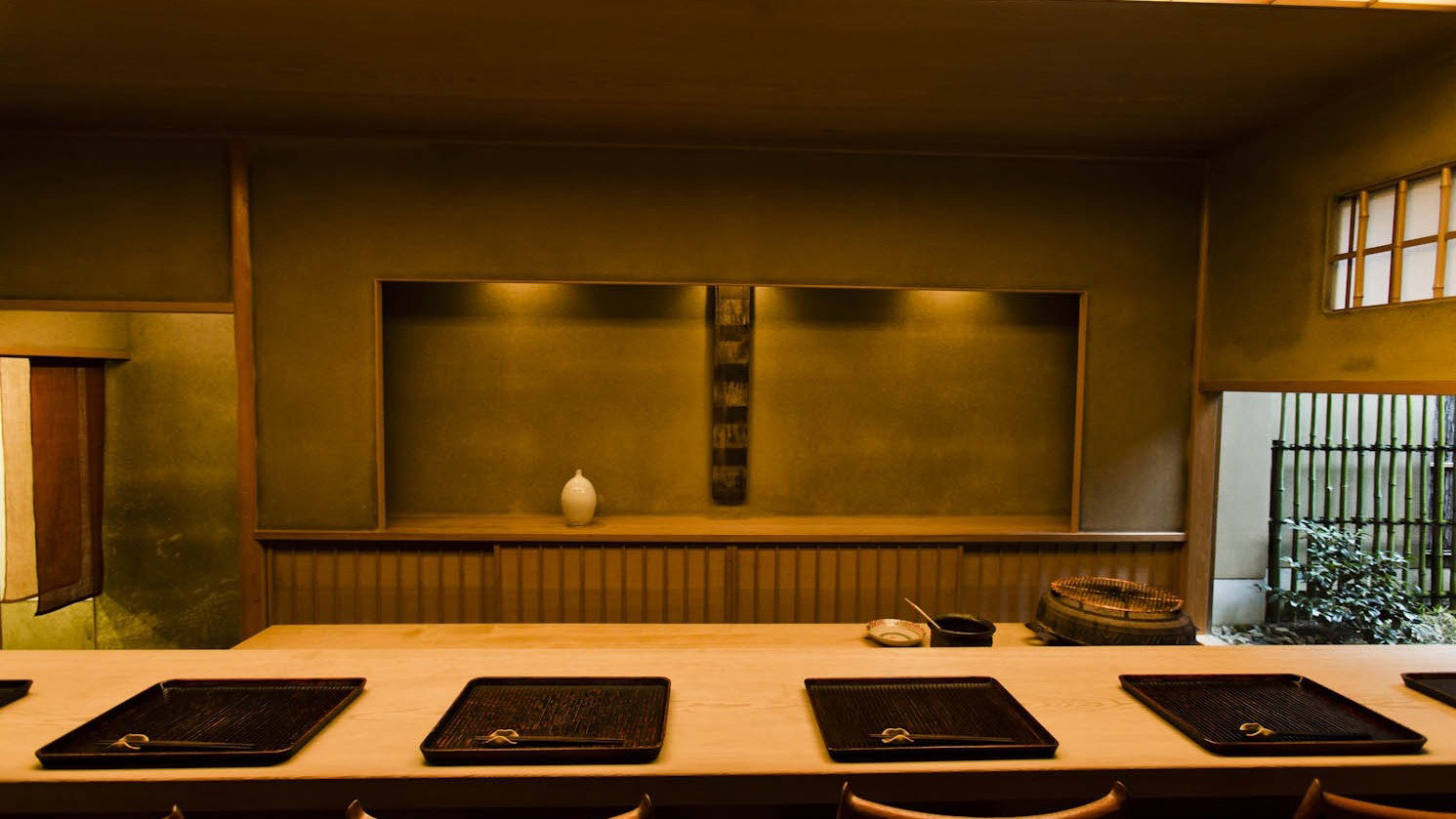
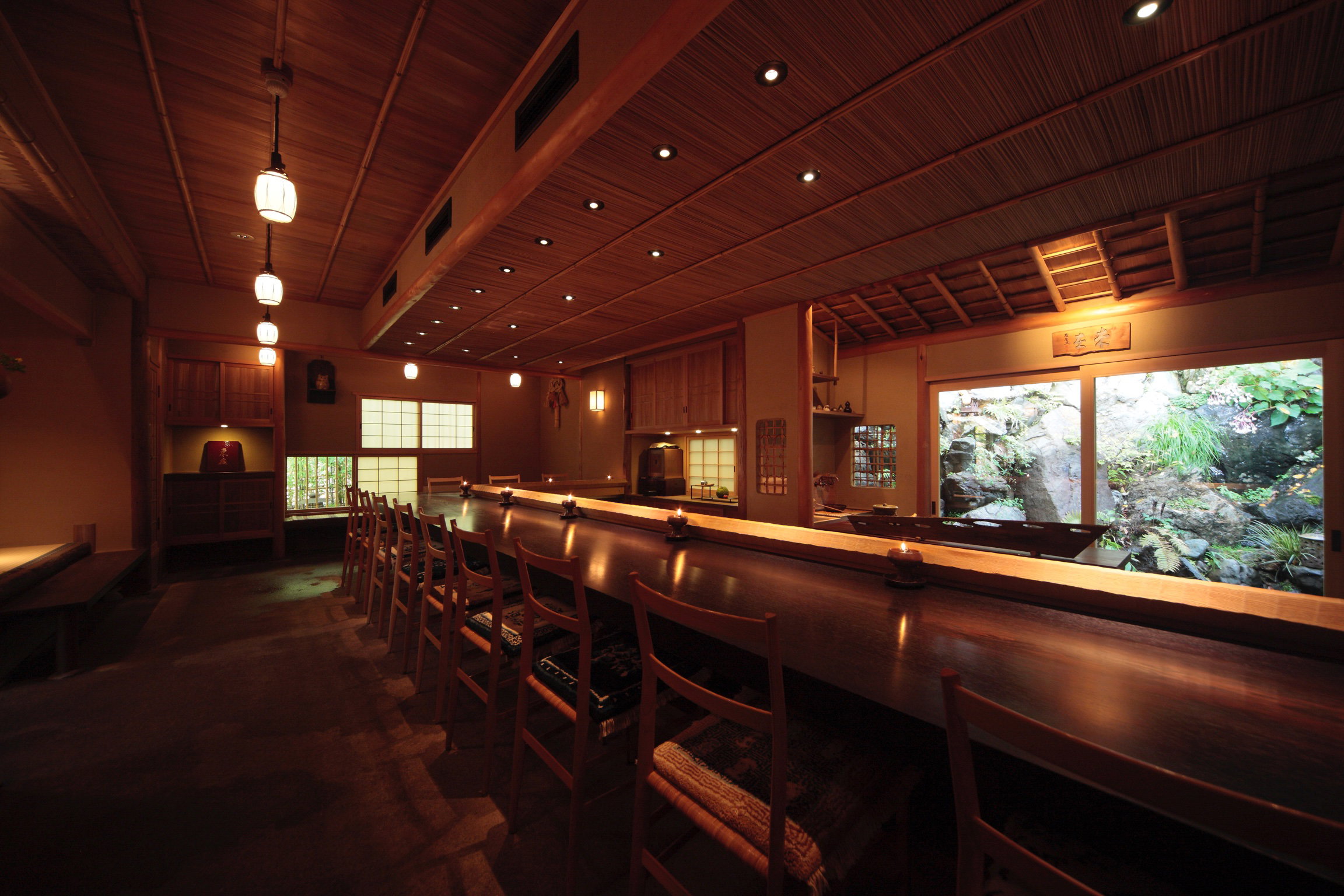
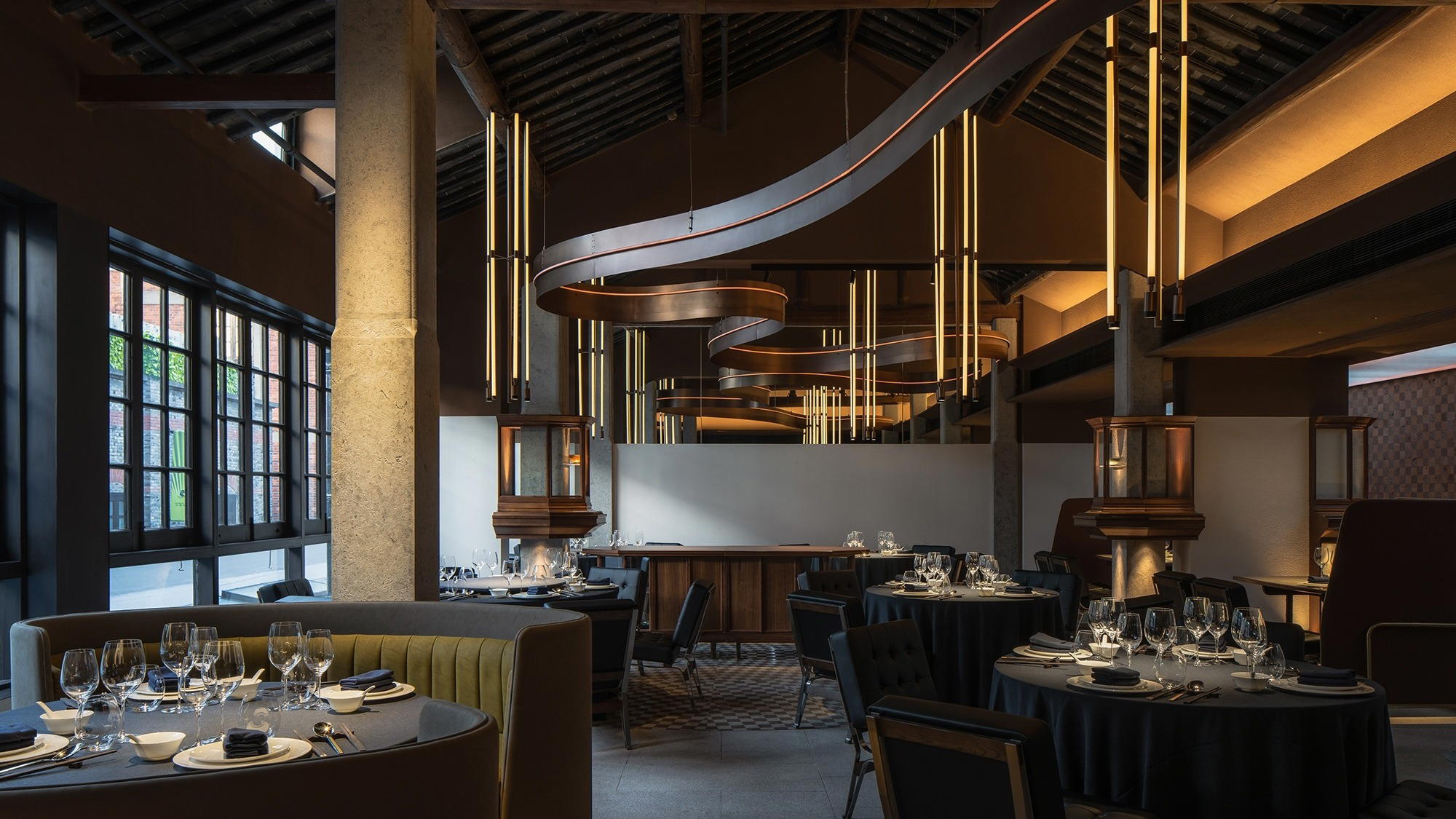
Minimalist wooden counter with warm wood aromas, relaxed and serene atmosphere focused on the chef's craft.
Tags
Vibe
Best For
Experience
Sourcing
At the Table
- Noise Level
- Quiet
- Service Style
- Formal
- Meal Pacing
- Leisurely
- Capacity
- Intimate
- Kitchen
- Traditional
- Menu Format
- Counter dining, Set menu
- Wine Program
- Curated
- Drinks Focus
- Sake
- Private Dining
- Available
Signature Dishes
- sweetfish grill
- chestnut rice
- seasonal tempura
Know before you go
Know Before You Go
- Getting there
- Takeyacho, Nakagyo Ward, Kyoto, 604-0865, Japan
Planning details
Location
Takeyacho, Nakagyo Ward, Kyoto, 604-0865, Japan · Directions
Recognition and awards
Also consider
Also Consider
- Gion Sasaki, Kaiseki, Japanese, ¥¥¥¥
- cenci, Italian, ¥¥¥
- Ifuki, Kaiseki, ¥¥¥¥
- Kyokaiseki Kichisen, Japanese, ¥¥¥¥
- SEN, French, Japanese, ¥¥¥¥
Restaurant context
Takehisa at ¥¥¥ is the most accessible of the serious Japanese options in Kyoto's central wards. If budget is a factor and you want Michelin-acknowledged cooking without committing to a ¥¥¥¥ kaiseki outlay, Takehisa is the clearest recommendation. Gion Sasaki and Ifuki both operate at ¥¥¥¥ and deliver a more elaborate kaiseki format with stronger award credentials, the right choice if you want the full multi-course ceremonial experience and are willing to spend accordingly. Kyokaiseki Kichisen sits at the upper end of the ¥¥¥¥ tier and is the most formal of the group; book it for a once-in-a-trip occasion rather than a relaxed dinner.
cenci at ¥¥¥ is the direct price-tier peer, but the comparison ends there, cenci is Italian-influenced and contemporary, while Takehisa is resolutely traditional Japanese. Choose between them based on what you are in the mood for, not on quality grounds. SEN at ¥¥¥¥ occupies a French-Japanese lane and suits diners who want a Western cooking framework applied to Japanese ingredients, a different proposition entirely from Takehisa's old-school simmered preparations.
For booking difficulty, Takehisa is the easiest to secure of this group, rated Easy, with no months-long waitlist. Gion Sasaki and Kyokaiseki Kichisen require more planning. If you are organising a trip and want to lock in a serious meal without the reservation anxiety, Takehisa is the practical choice.
Explore Kyoto
Around this place
Discover more on Pearl
Unlock the full Takehisa guide in Pearl, including awards, comparisons, FAQs, planning details, and nearby places.
Compare Takehisa
| Venue | Cuisine | Price | Awards | Booking Difficulty |
|---|---|---|---|---|
| Takehisa | Japanese | ¥¥¥ | Michelin Guide Kyoto Osaka 20262026 Michelin Plate2025 Michelin Plate2024 Michelin Plate | Easy |
| Gion Sasaki | Kaiseki, Japanese | ¥¥¥¥ | 2026 Tabelog Bronze · #3862026 OAD Top Restaurants in Japan RecommendedMichelin Guide Kyoto Osaka 20262026 La Liste Top RestaurantsTabelog 100 - Japanese cuisine - WEST - 2025 · #132025 OAD Top Restaurants in Japan Ranked · #2462025 Tabelog Silver2025 Michelin 3 Stars2025 La Liste Top Restaurants | Unknown |
| cenci | Italian | ¥¥¥ | 2026 Tabelog Bronze · #442026 Asia's 50 Best Restaurants · #762026 OAD Top Restaurants in Japan Highly RecommendedMichelin Guide Kyoto Osaka 2026Tabelog 100 - Italian - WEST - 2025 · #632025 Asia's 50 Best Restaurants · #632025 OAD Top Restaurants in Japan Ranked · #1682025 Tabelog Bronze2024 OAD Top Restaurants in Japan Ranked · #135 | Unknown |
| Ifuki | Kaiseki | ¥¥¥¥ | 2026 OAD Top Restaurants in Japan Ranked · #1222026 Tabelog Bronze · #128Michelin Guide Kyoto Osaka 20262026 La Liste Top RestaurantsTabelog 100 - Japanese cuisine - WEST - 2025 · #622025 OAD Top Restaurants in Japan Ranked · #1002025 La Liste Top Restaurants2025 Tabelog Bronze2025 Michelin 2 Stars | Unknown |
| Kyokaiseki Kichisen | Japanese | ¥¥¥¥ | 2026 Tabelog Bronze · #1752026 OAD Top Restaurants in Japan Highly RecommendedMichelin Guide Kyoto Osaka 20262025 OAD Top Restaurants in Japan Ranked · #1862025 Michelin 2 Stars2025 La Liste Top Restaurants2024 OAD Top Restaurants in Japan Ranked · #1422024 Michelin 2 Stars2023 OAD Top Restaurants in Japan Ranked · #136 | Unknown |
| SEN | French, Japanese | ¥¥¥¥ | 2026 Tabelog Bronze · #3952026 OAD Top Restaurants in Japan RecommendedMichelin Guide Kyoto Osaka 20262026 Michelin PlateTabelog 100 - Japanese cuisine - WEST - 2025 · #652025 Michelin Plate2025 Tabelog Bronze2024 OAD Top Restaurants in Japan Ranked · #3622024 Michelin Plate | Unknown |
.png?width=1200&quality=80)






What to weigh when choosing between Takehisa and alternatives.
FAQ
Frequently Asked Questions
Is the tasting menu worth it at Takehisa?
Yes, if old-school Japanese technique is what you are after. Takehisa's approach — simmering, salt-grilling, tempura of foraged wild plants, chestnuts in takikomi-gohan — is deliberate and ingredient-led rather than performance-driven. At ¥¥¥ pricing, this sits in the serious-but-not-stratospheric bracket for Kyoto. If you want Michelin-starred theatrics, look at Kyokaiseki Kichisen instead; Takehisa is for the reader who wants craft over ceremony.
Is Takehisa worth the price?
At ¥¥¥, Takehisa delivers a Michelin Plate-recognised meal anchored in seasonal, technique-driven cooking — that is solid value for Kyoto's traditional dining tier. It is not a cheap lunch option, but it is considerably more accessible than the starred kaiseki houses nearby. For a comparable seasonal focus at a similar price, Kodaiji Jugyuan is worth considering; Takehisa has an edge on old-school technique and foraging-led garnishes.
What should a first-timer know about Takehisa?
Booking is rated Easy — no months-long waitlist, which is genuinely unusual for a Michelin Plate venue in Kyoto. The cooking follows the seasons closely: expect simmered preparations, salt-grilled fish, and mountain-foraged garnishes rather than a modern or fusion menu. The address is Takeyacho, Nakagyo Ward — central Kyoto, but away from the Gion crowds. Arrive knowing what you are ordering, as the menu leans traditional and the format rewards guests who understand Japanese cuisine basics.
Does Takehisa handle dietary restrictions?
No specific dietary accommodation policy is documented for Takehisa. The kitchen's focus on seasonal Japanese ingredients — fish, wild plants, chestnuts, plum, eggplant — means vegetarian guests may find limited options, and pescatarians will likely fare better. Contact the restaurant in advance if dietary requirements are a factor; do not assume flexibility given the technique-first, traditional format.