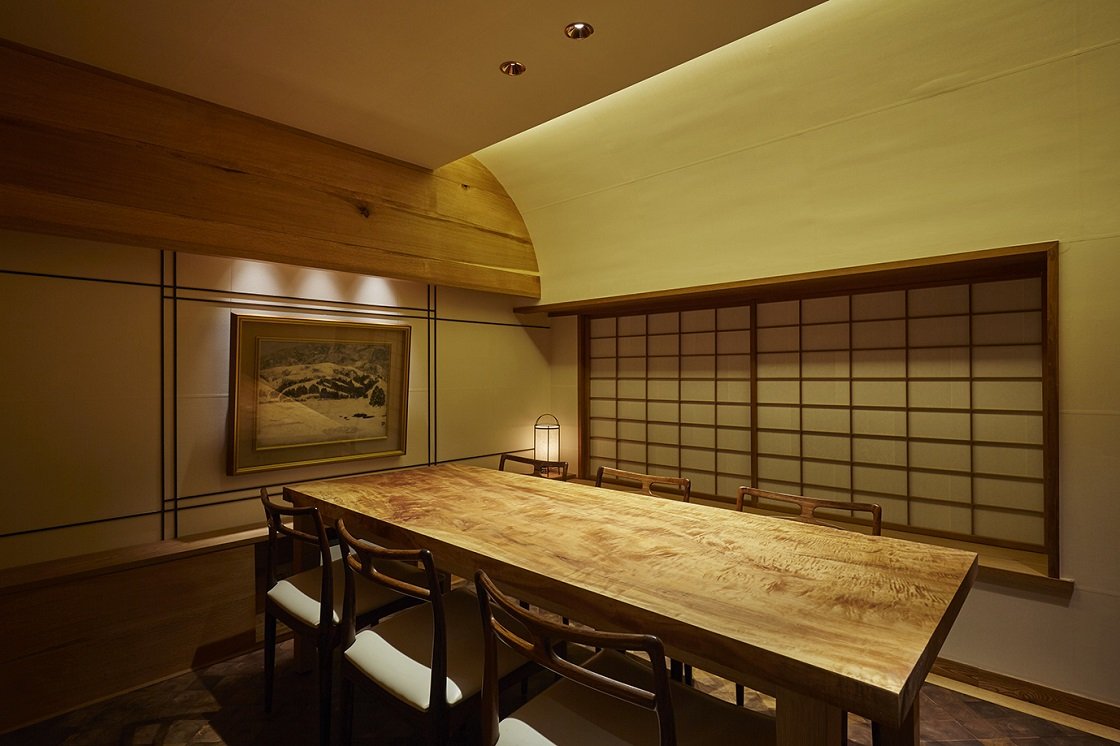

Ikkon Uehara
Japanese · Kita, Kyoto
Restaurant in Kyoto, Japan
 Book with Pearl
The Read
Horigotatsu Omakase Comfort
Price
¥¥
Dress
Smart Casual
Why go
Ikkon Uehara holds back-to-back Michelin Bib Gourmand awards (2024–2025) and delivers serious Japanese cooking at the ¥¥ price tier — rare in a city dominated by ¥¥¥¥ kaiseki rooms. Lunch is omakase only; dinner adds à la carte. The horigotatsu counter and husband-and-wife service make it one of Kyoto's most compelling value bookings for food-focused travellers.
About Ikkon Uehara
Ikkon Uehara, Kyoto: The Verdict
Book Ikkon Uehara if you want a Michelin-recognised Japanese meal in Kyoto's Kita Ward without committing to the ¥¥¥¥ outlay of the city's formal kaiseki houses. Holding consecutive Michelin Bib Gourmand awards in 2024 and 2025, this small counter restaurant run by a husband-and-wife team offers something the grander rooms in Gion rarely do: a genuinely relaxed, seasonal meal at a price point that leaves money for sake. The trade-off is informality over ceremony, and that is entirely the point.
The Experience
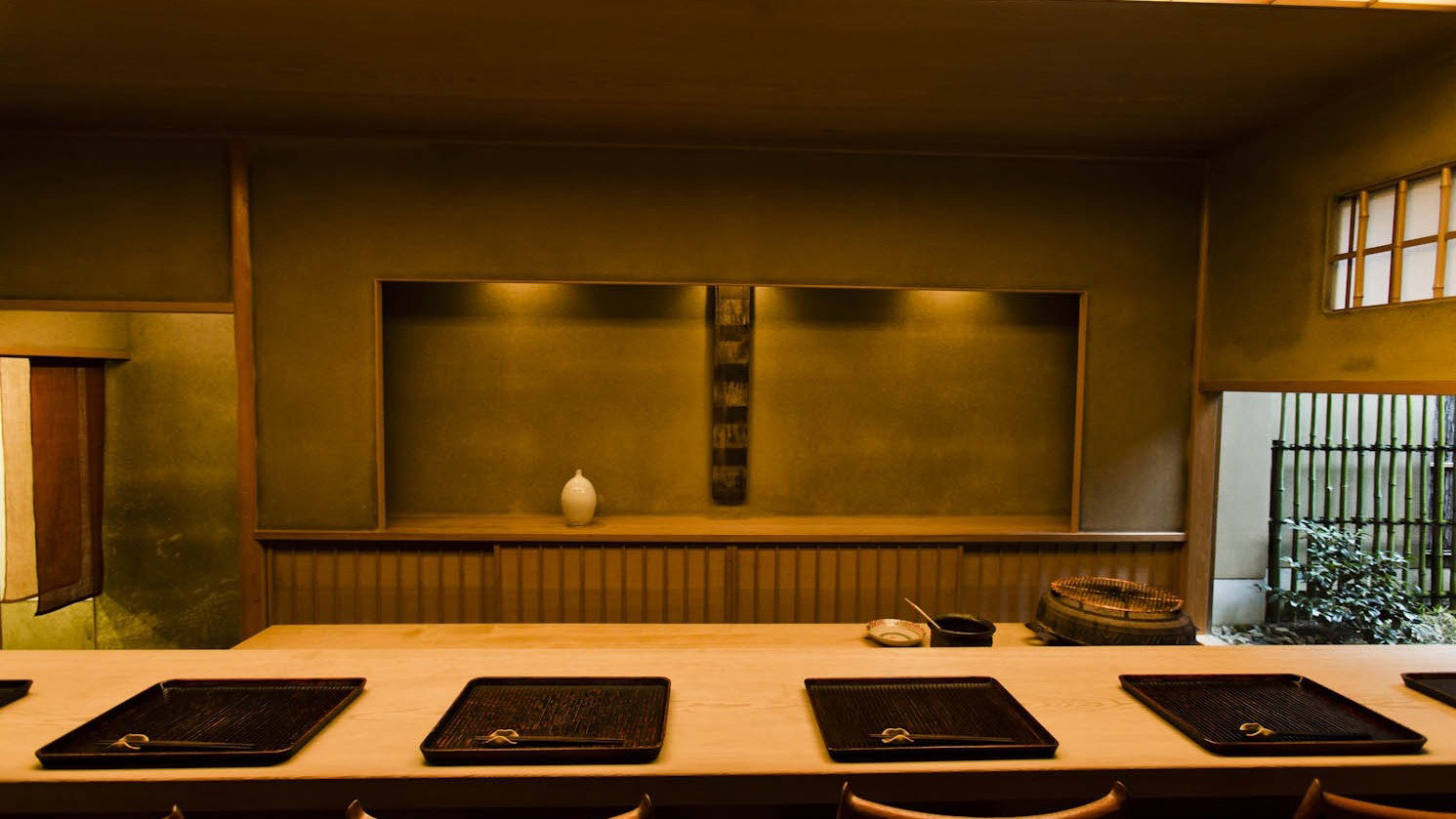
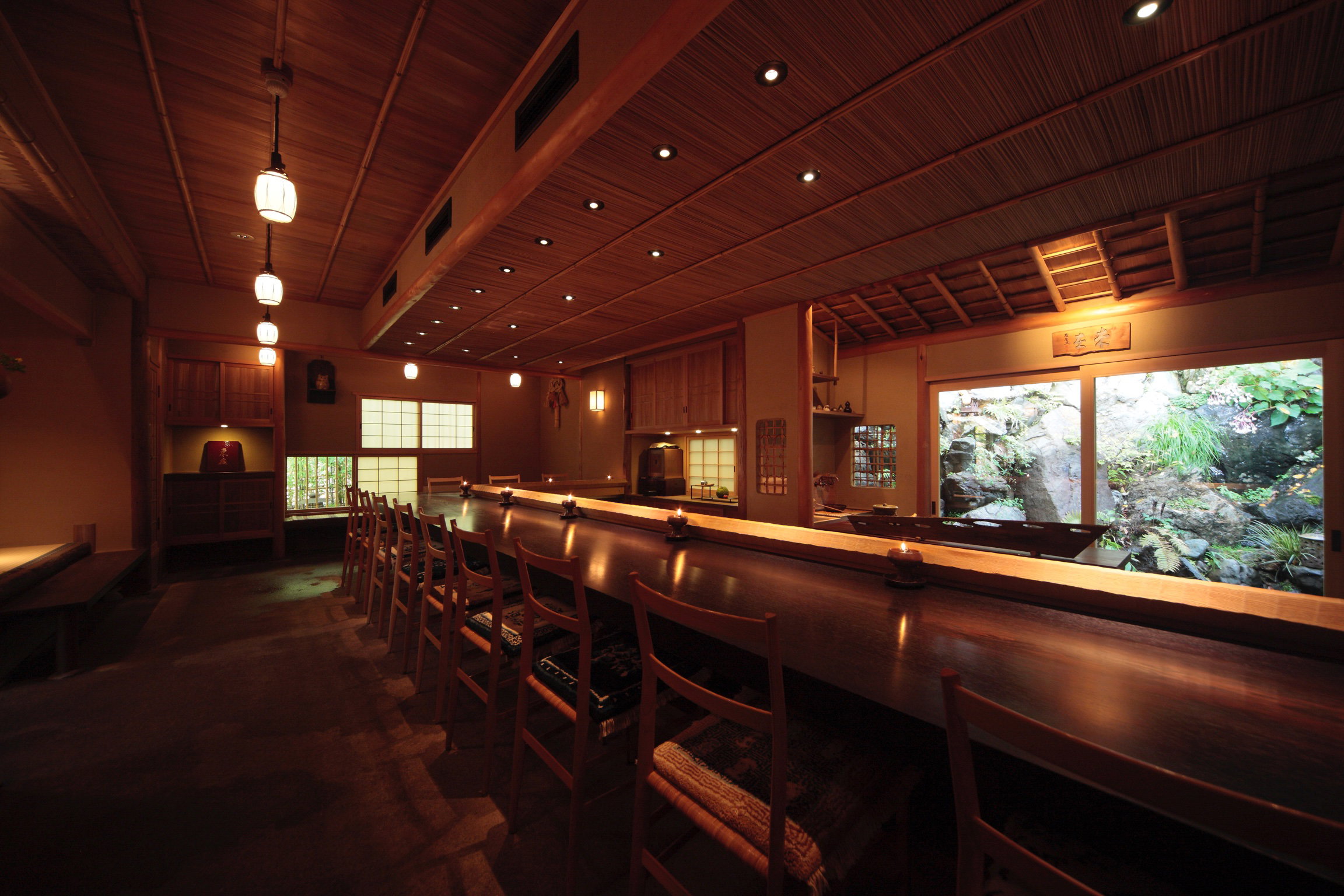
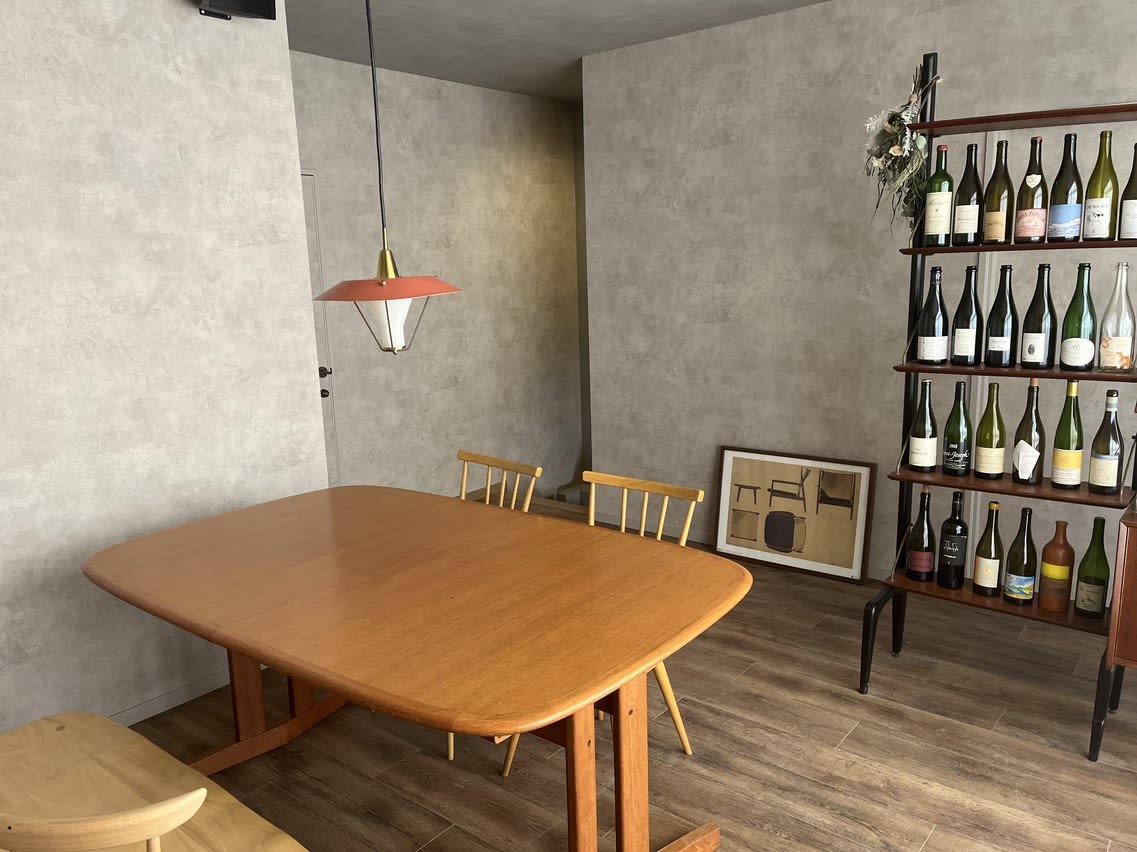
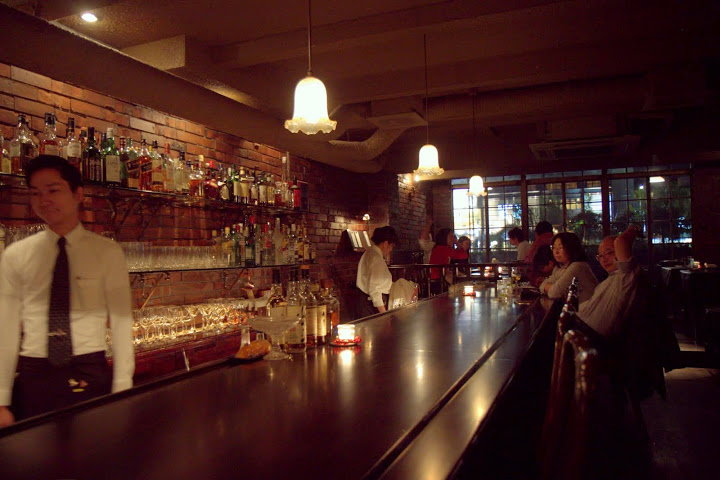
Sit at the horigotatsu counter and the tone is set immediately. The horigotatsu format — a sunken footwell beneath a low counter — is traditional, convivial, and unhurried. The atmosphere is warm and quiet rather than hushed and reverent, which places Ikkon Uehara closer in feel to a well-loved neighbourhood kappo than to the austere precision of a kaiseki dining room. There is no performance of ceremony here. The couple who run the counter deliver what the Michelin notes describe as cheerful and gracious service, and the room carries that quality. Conversation flows; the energy stays calm. If you are looking for a room that quiets down with your table rather than competing with you for attention, this is a good fit.
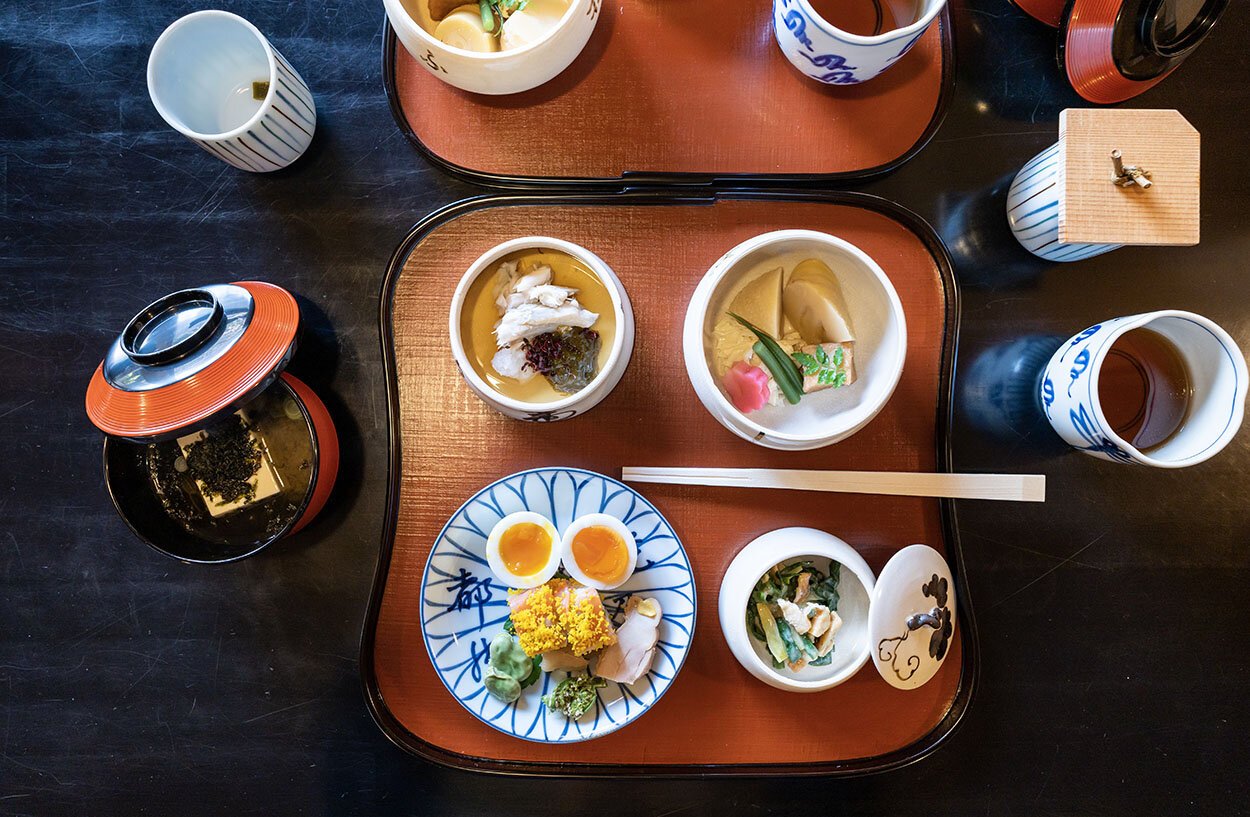
The menu structure is deliberate and worth understanding before you arrive. At lunch, only omakase set menus are offered. In the evening, à la carte dishes are also available alongside the set format. This distinction matters for how you should plan your visit. Lunch locks you into the kitchen's choices, which is not a disadvantage, the Bib Gourmand award applies to the full experience and the omakase format here reflects a kitchen confident in its own seasonal judgement. The assorted appetiser platter and a wooden bowl of fishcake in clear broth are specifically noted in the venue's Michelin recognition as exemplars of the kitchen's commitment to classical technique: the old ways, done well.
Lunch vs Dinner: Which Is Worth It?
For first-time visitors and food-focused travellers, lunch is the stronger recommendation. The omakase-only format at midday keeps the kitchen focused and the menu cohesive. You are eating what the couple have decided to cook that day, which at this level of Michelin recognition is a reliable basis for trust. The practical case for lunch is also compelling: Bib Gourmand restaurants in Kyoto at this price tier are harder to find than the ¥¥¥¥ temples, and a well-paced omakase lunch here is significantly more accessible financially than an equivalent experience at Kyokaiseki Kichisen or Isshisoden Nakamura.
Dinner, by contrast, is the better format if you want flexibility or are returning for a second visit. The addition of à la carte options lets you order around preferences, pair dishes with multiple rounds of sake more freely, and extend the evening at your own pace. The counter setting rewards this, the relaxed atmosphere at Ikkon Uehara is more suited to a long dinner than a rushed one. If you are in Kyoto for more than two nights and this is a second visit, dinner is the format that reveals more of what the kitchen can do when not constrained to a set progression.
For explorers building a broader picture of Kyoto's Japanese dining scene, Ikkon Uehara sits in a distinct tier. It is not in the same register as Kikunoi Roan or Gion Matayoshi in terms of formal kaiseki progression, but that is not the comparison that matters here. The relevant comparison is between Ikkon Uehara and the mid-tier restaurants that charge similar prices without the kitchen depth or consistent recognition. On that basis, the Bib Gourmand award two years running is a meaningful signal that the cooking holds to a standard above the neighbourhood average.
Practical Details
Reservations: Booking difficulty is rated Easy, but given the small counter format and consistent Michelin recognition, securing a reservation in advance is advisable, particularly for weekend lunches. Budget: Priced at ¥¥, Ikkon Uehara sits significantly below the ¥¥¥¥ tier of Kyoto's kaiseki establishments, expect a materially lower outlay than a formal kaiseki dinner. Format: Lunch is omakase only; dinner adds à la carte. Dress: No dress code is listed. Given the informal counter format and neighbourhood setting in Kita Ward, smart-casual is appropriate. Groups: The horigotatsu counter format suggests this is better suited to parties of two to four; larger groups should contact the venue directly. Getting there: Address is 232-9 Kamigoryokamiecho, Kita Ward, Kyoto. Kita Ward sits north of the city centre, plan travel time accordingly if based near Gion or Kyoto Station. Solo dining: The counter format is well-suited to solo diners; a horigotatsu counter in a room run with this level of personal service is one of the better solo dining formats in Japanese restaurant culture.
Pearl Rating
Michelin Bib Gourmand 2024 and 2025. For a Kyoto restaurant at the ¥¥ price tier, this combination of consistent critical recognition and strong peer ratings is a reliable basis for booking confidence.
Context: Where Ikkon Uehara Fits in Japan
If you are building a broader Japan itinerary around food, Ikkon Uehara occupies a useful position as the kind of high-value, low-ceremony meal that balances out heavier spending elsewhere. Travellers visiting HAJIME in Osaka, Harutaka in Tokyo, or akordu in Nara will find Ikkon Uehara a natural counterpoint, technically grounded, seasonally driven, and unpretentious. For Tokyo comparisons at a similar register of personal, counter-based Japanese cooking, Myojaku and Azabu Kadowaki are relevant points of reference. Further afield, Goh in Fukuoka, 1000 in Yokohama, and 6 in Okinawa each offer their own regional counterparts to this style of committed, intimate Japanese cooking.
For a full picture of dining in the city, see our full Kyoto restaurants guide. Also useful: Kyoto hotels, Kyoto bars, Kyoto wineries, and Kyoto experiences.
Planning details
- Location
- 232-9 Kamigoryokamiecho, Kita Ward, Kyoto, 603-8147, Japan
- Website
- hitosara.com/0006131502/?cid=gm_hp
- Phone
- +81 50-5263-6600
The take
The Take
The Vibe
Ikkon Uehara reads like a neighbourhood institution rather than a Kyoto showpiece. Set in a quiet residential pocket of Kita Ward, the couple-run venue favors repeat local clientele over tourist footfall, and that approach shapes everything from the modest pricing to the unpretentious service. The dining room centers on counter culture: compact, attentive and quietly focused on the food. The Michelin Bib Gourmand recognition for 2024 and 2025 underlines a level of craft relative to price, so the mood is low-key and considered rather than theatrical—comfortably intimate, quietly refined and warmly local.
Best For
The restaurant is best experienced at lunch or dinner depending on how prescriptive you want the meal to be. Lunch operates as an omakase-only sequence, which suits diners who want a curated progression of seasonal plates. Evenings switch to à la carte, which caters to regulars who prefer to pick favorites rather than follow a set sequence. With a ¥¥ price range and Bib Gourmand status, Ikkon Uehara fits date nights, solitary meals and modest special occasions where excellent, unfussy Japanese cooking is the focus rather than formal kaiseki ceremony.
Ordering Tips
If you visit for lunch, expect an omakase-only experience—the kitchen sequences its strongest work so you can sit back and let the chef shape the meal. Come evening, the menu opens à la carte, which is ideal for repeat guests who want to order around signature items such as kamameshi, the hassun platter, grilled fish or tempura. The dual-mode service means the kitchen can show its range: accept the prescribed flow at lunch and use the à la carte evening to revisit particular dishes you enjoyed.
Venue details
Ambiance
Warm, inviting, and intimate with wood surfaces, compact layout, and focus on the chef's counter; direct and cheerful service in a minimalistic setting.
Tags
Vibe
Best For
Experience
Sourcing
At the Table
- Dress Code
- Smart Casual
- Noise Level
- Quiet
- Service Style
- Upscale Casual
- Meal Pacing
- Leisurely
- Capacity
- Intimate
Signature Dishes
- kamameshi
- hassun platter
- grilled fish
- tempura
Know before you go
Know Before You Go
- Getting there
- 232-9 Kamigoryokamiecho, Kita Ward, Kyoto, 603-8147, Japan
Planning details
Location
232-9 Kamigoryokamiecho, Kita Ward, Kyoto, 603-8147, Japan · Directions
Recognition and awards
Also consider
Also Consider
- Gion Sasaki, Kaiseki, Japanese, ¥¥¥¥
- cenci, Italian, ¥¥¥
- Ifuki, Kaiseki, ¥¥¥¥
- Kyokaiseki Kichisen, Japanese, ¥¥¥¥
- Kyo Seika, Chinese, ¥¥¥
Restaurant context
How Ikkon Uehara Compares
Ikkon Uehara operates at ¥¥, which immediately separates it from the majority of Kyoto's Michelin-listed Japanese dining. Kyokaiseki Kichisen and Gion Sasaki both sit at ¥¥¥¥ and deliver multi-course kaiseki in formal rooms with full brigade service, the gap in ceremony and price is substantial. Ifuki is also ¥¥¥¥ kaiseki, similarly formal. If you are looking for the full traditional kaiseki experience with meticulous seasonal progression and lacquerware presentation, those rooms are the appropriate choice. Ikkon Uehara does not compete on those terms, it offers a different register entirely: personal, warm, and notably less expensive.
At ¥¥¥, cenci and Kyo Seika are the closer price-tier comparisons, though both in different cuisines (Italian and Chinese respectively). For a visitor trying to cover multiple high-quality meals in Kyoto without spending ¥¥¥¥ at every sitting, Ikkon Uehara is the stronger Japanese choice at a lower outlay than either of those, with the added credibility of consecutive Bib Gourmand recognition over cenci or Kyo Seika's distinct cuisine profiles.
The practical booking decision comes down to what kind of meal you are planning. If the priority is a formal kaiseki progression with full ceremony, book Gion Sasaki or Kyokaiseki Kichisen and commit the budget. If the priority is technically serious Japanese cooking at a neighbourhood counter with genuine warmth and a lower price point, Ikkon Uehara is the clear choice in Kita Ward and one of the more accessible Michelin-recognised options in the city. It books easier than the ¥¥¥¥ rooms, costs less, and for the right diner, one who values substance over staging, delivers proportionally more.
Explore Kyoto
Around this place
Discover more on Pearl
Unlock the full Ikkon Uehara guide in Pearl, including awards, comparisons, FAQs, planning details, and nearby places.
Compare Ikkon Uehara
| Venue | Cuisine | Price | Awards | Booking Difficulty |
|---|---|---|---|---|
| Ikkon Uehara | Japanese | ¥¥ | Michelin Guide Kyoto Osaka 20262026 Bib Gourmand2025 Michelin Bib Gourmand2024 Michelin Bib Gourmand | Easy |
| Gion Sasaki | Kaiseki, Japanese | ¥¥¥¥ | 2026 Tabelog Bronze · #3862026 OAD Top Restaurants in Japan RecommendedMichelin Guide Kyoto Osaka 20262026 La Liste Top RestaurantsTabelog 100 - Japanese cuisine - WEST - 2025 · #132025 OAD Top Restaurants in Japan Ranked · #2462025 Tabelog Silver2025 Michelin 3 Stars2025 La Liste Top Restaurants | Unknown |
| cenci | Italian | ¥¥¥ | 2026 Tabelog Bronze · #442026 Asia's 50 Best Restaurants · #762026 OAD Top Restaurants in Japan Highly RecommendedMichelin Guide Kyoto Osaka 2026Tabelog 100 - Italian - WEST - 2025 · #632025 Asia's 50 Best Restaurants · #632025 OAD Top Restaurants in Japan Ranked · #1682025 Tabelog Bronze2024 OAD Top Restaurants in Japan Ranked · #135 | Unknown |
| Ifuki | Kaiseki | ¥¥¥¥ | 2026 OAD Top Restaurants in Japan Ranked · #1222026 Tabelog Bronze · #128Michelin Guide Kyoto Osaka 20262026 La Liste Top RestaurantsTabelog 100 - Japanese cuisine - WEST - 2025 · #622025 OAD Top Restaurants in Japan Ranked · #1002025 La Liste Top Restaurants2025 Tabelog Bronze2025 Michelin 2 Stars | Unknown |
| Kyokaiseki Kichisen | Japanese | ¥¥¥¥ | 2026 Tabelog Bronze · #1752026 OAD Top Restaurants in Japan Highly RecommendedMichelin Guide Kyoto Osaka 20262025 OAD Top Restaurants in Japan Ranked · #1862025 Michelin 2 Stars2025 La Liste Top Restaurants2024 OAD Top Restaurants in Japan Ranked · #1422024 Michelin 2 Stars2023 OAD Top Restaurants in Japan Ranked · #136 | Unknown |
| Kyo Seika | Chinese | ¥¥¥ | Tabelog 100 - Chinese cuisine - WEST - 2026 · #762026 Tabelog Bronze · #2162026 OAD Top Restaurants in Japan Recommended2026 Michelin 1 Star2025 OAD Top Restaurants in Japan Ranked · #3262025 Tabelog Bronze2024 OAD Top Restaurants in Japan Ranked · #3042024 Michelin Plate2024 Michelin 1 Star | Unknown |
.png?width=1200&quality=80)








.png?width=1200&quality=80)
Comparing your options in Kyoto for this tier.
FAQ
Frequently Asked Questions
What should a first-timer know about Ikkon Uehara?
Lunch is omakase only, so you hand control to the kitchen — that is the format here and it works in your favour. Dinner opens up à la carte options if you want more flexibility. The counter is a horigotatsu, meaning you sit with legs in a sunken footwell, which is traditional and comfortable but worth knowing ahead of time. The Michelin Bib Gourmand recognition in both 2024 and 2025 signals consistent quality at the ¥¥ price tier, not a one-off strong performance.
Is the tasting menu worth it at Ikkon Uehara?
Yes, at the ¥¥ price tier the omakase lunch format delivers solid value by Kyoto standards. The kitchen keeps the menu focused at midday, which tends to produce tighter, more deliberate cooking than an à la carte spread. Two consecutive Michelin Bib Gourmand awards back that up. If you prefer to order freely, come in the evening instead.
Is Ikkon Uehara worth the price?
At ¥¥, it is one of the more compelling value propositions for Michelin-recognised Japanese cooking in Kyoto. The Bib Gourmand designation specifically flags good food at moderate prices, so the award is directly relevant to this question. Compared to Kyoto's kaiseki tier — where ¥¥¥¥ bills are standard — Ikkon Uehara costs a fraction while still delivering considered, seasonally grounded cooking.
Is Ikkon Uehara good for solo dining?
The horigotatsu counter is one of the better formats for solo dining in Kyoto — you are seated close to the couple running the kitchen, the service is described as cheerful and direct, and the omakase structure at lunch means the meal moves at its own pace without any pressure to fill a table. Solo diners should book a counter seat specifically.
What should I wear to Ikkon Uehara?
The venue's tone is neighbourhood and relaxed rather than formal, and the ¥¥ price tier aligns with that. Neat, comfortable clothes are appropriate — the horigotatsu counter means you will be sitting on the floor-level seat, so anything restrictive will be uncomfortable. There is no evidence in the venue record of a dress code, so avoid over-dressing.
What should I order at Ikkon Uehara?
At lunch, the choice is made for you: omakase set menus only. The venue record highlights an assorted appetiser platter and a fishcake in clear broth as representative of the kitchen's approach — classic Japanese comfort food done with care. In the evening, à la carte dishes are available alongside the set options. A cup of sake is noted as pairing naturally with the meal and the setting.