

Aoike
French · Nakagyō, Kyoto
Restaurant in Kyoto, Japan
 Book with Pearl
The Read
Kamigamo Garden Counter
Price
¥¥¥
Dress
Smart Casual
Why go
A produce-led French counter in Nakagyo Ward, where the chef harvests vegetables from his Kamigamo garden each morning and the day's menu follows from there.
About Aoike
Should You Book Aoike?
If you're weighing a French dinner in Kyoto and have already considered la bûche or Hiramatsu Kodaiji, Aoike deserves serious consideration at the ¥¥¥ price tier — one step below the city's most expensive kaiseki rooms. What separates it from comparable French addresses in Kyoto is the sourcing story: the chef harvests vegetables himself each morning from his Kamigamo garden, and that daily ritual shapes what appears on the counter. This is not a menu driven by classical French convention. It is driven by what was pulled from the soil that morning, then interpreted through French technique. For a special occasion dinner where the food's origin matters as much as its execution, Aoike is the right call at this price point.
The Restaurant
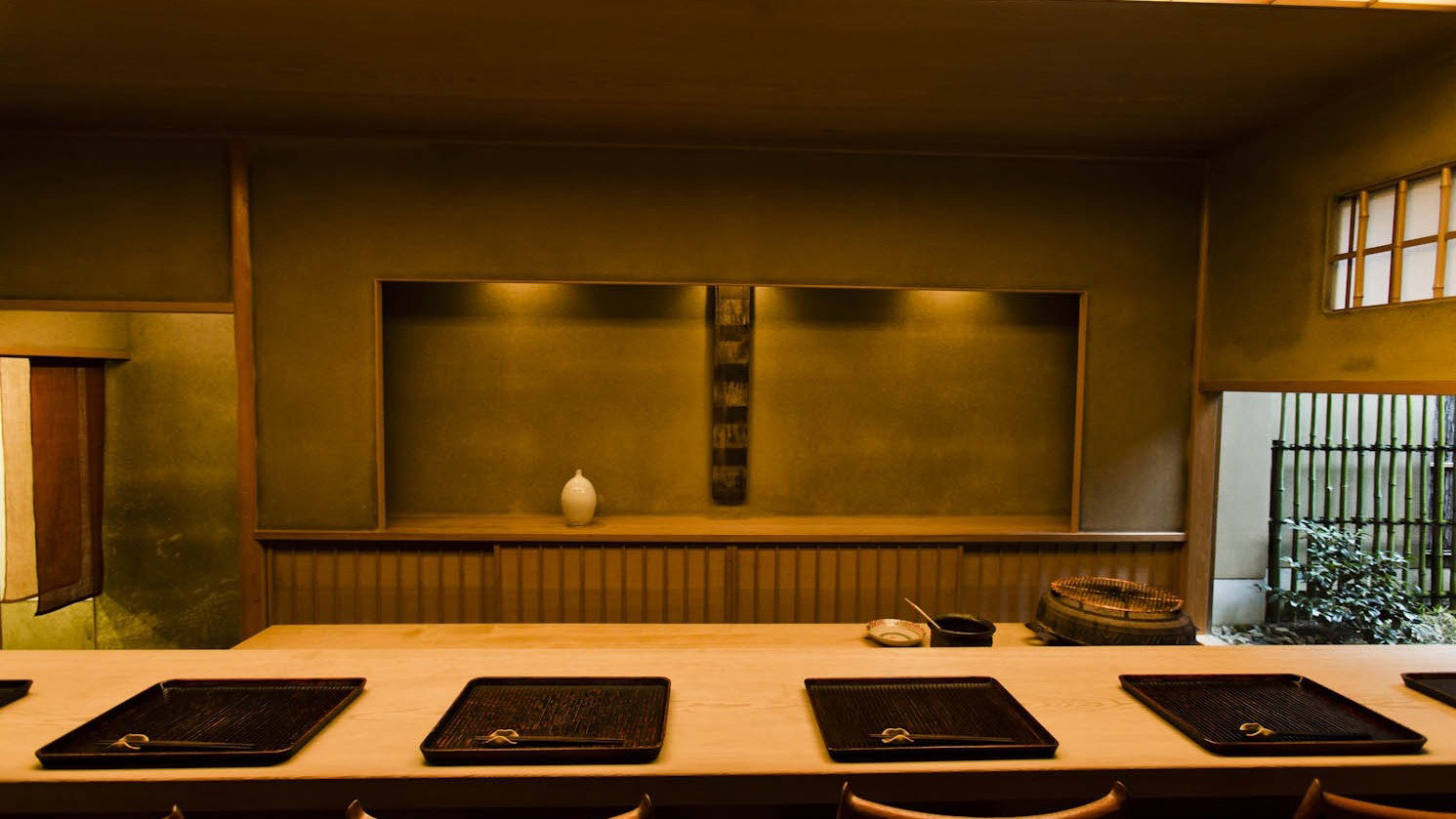
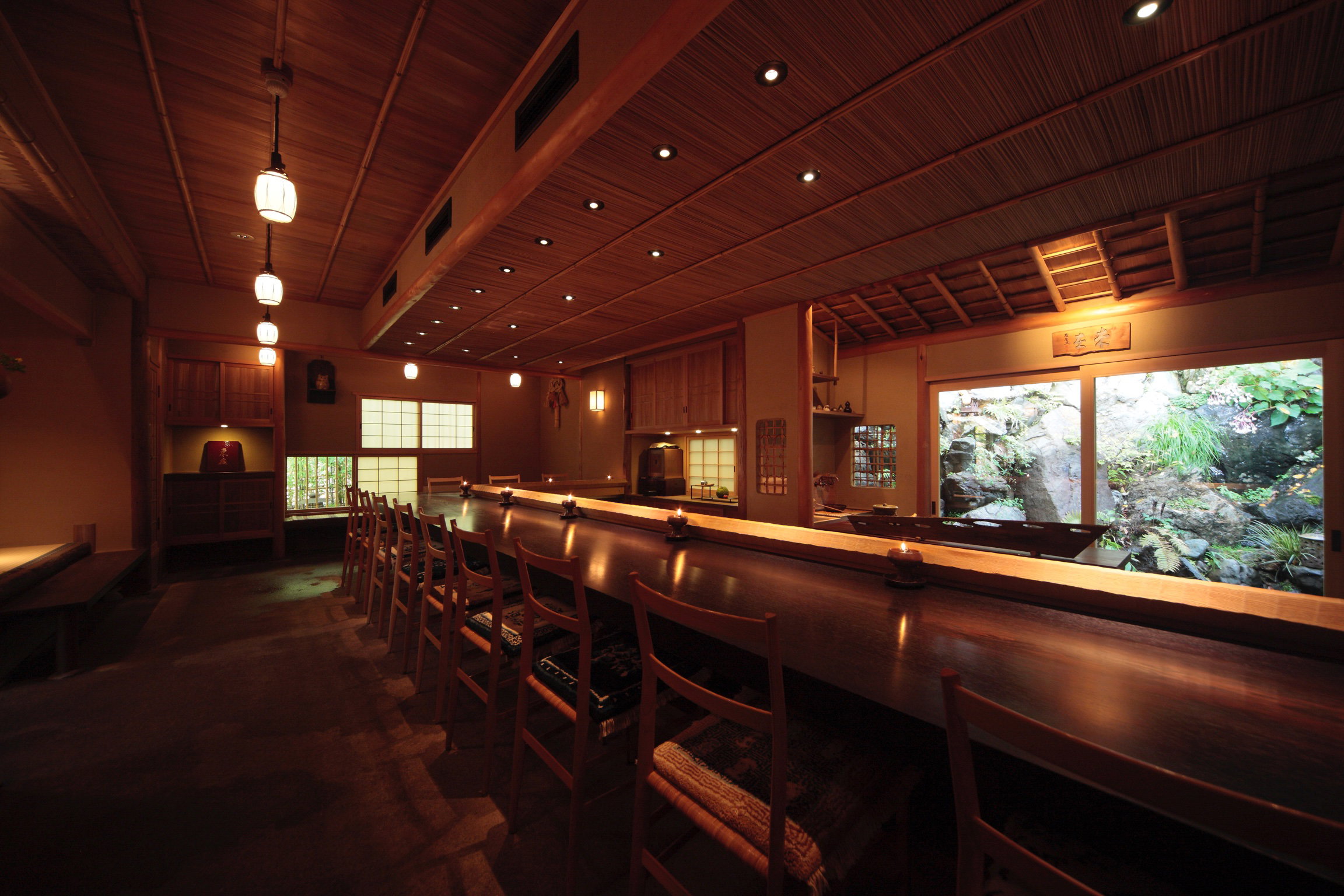
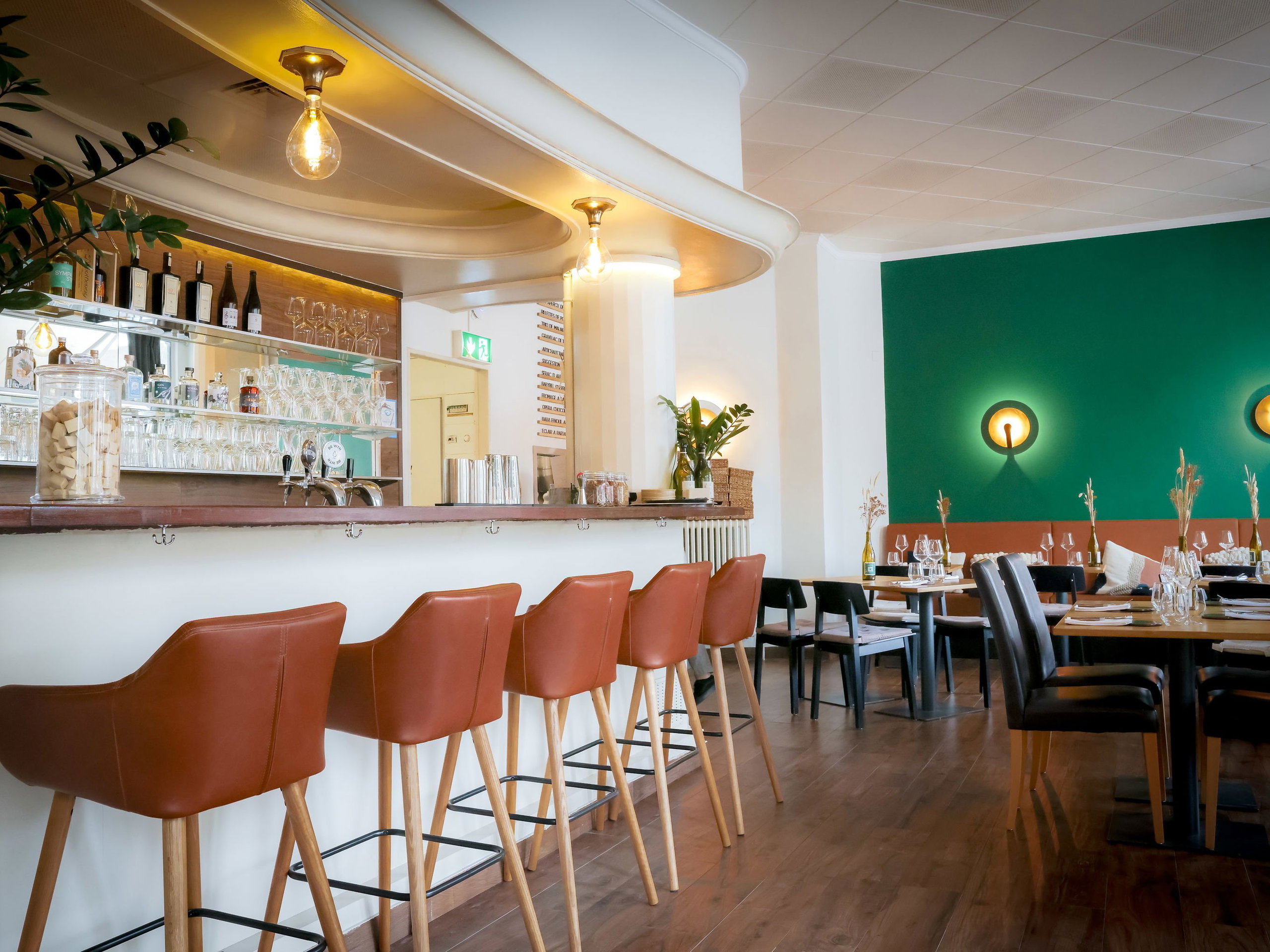
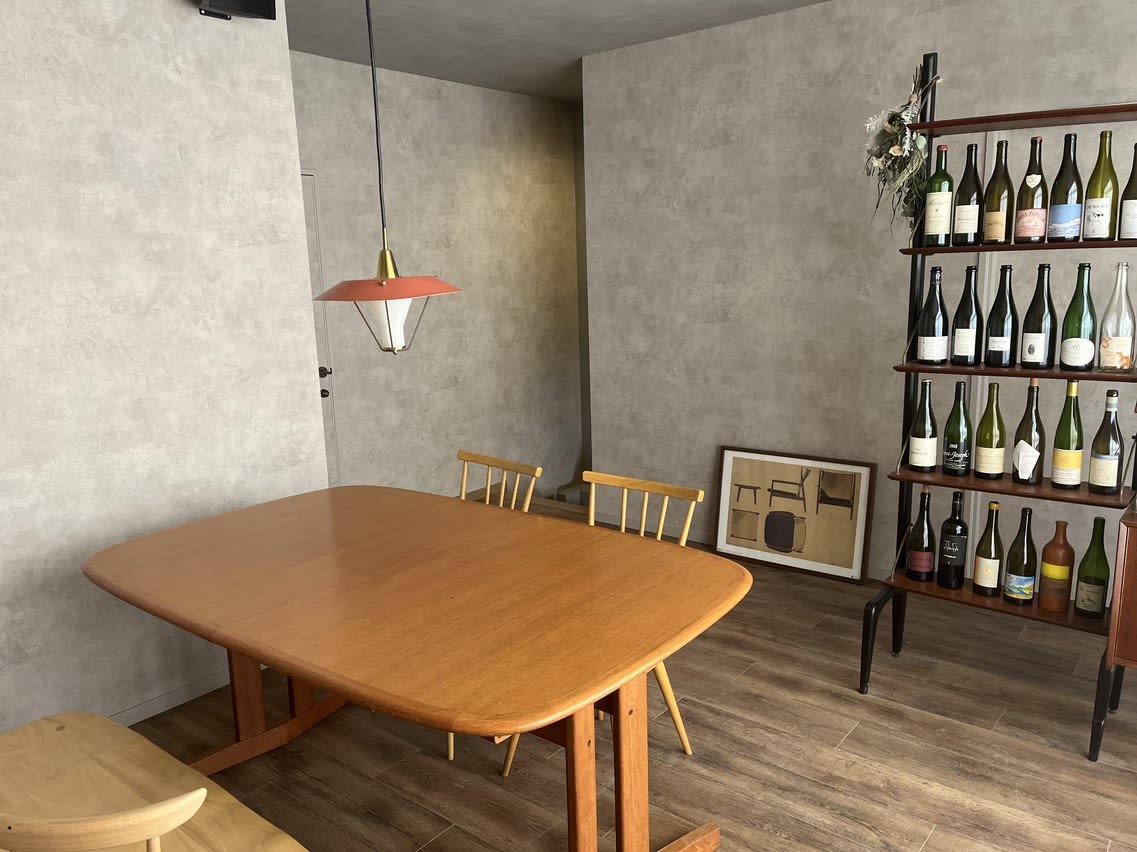
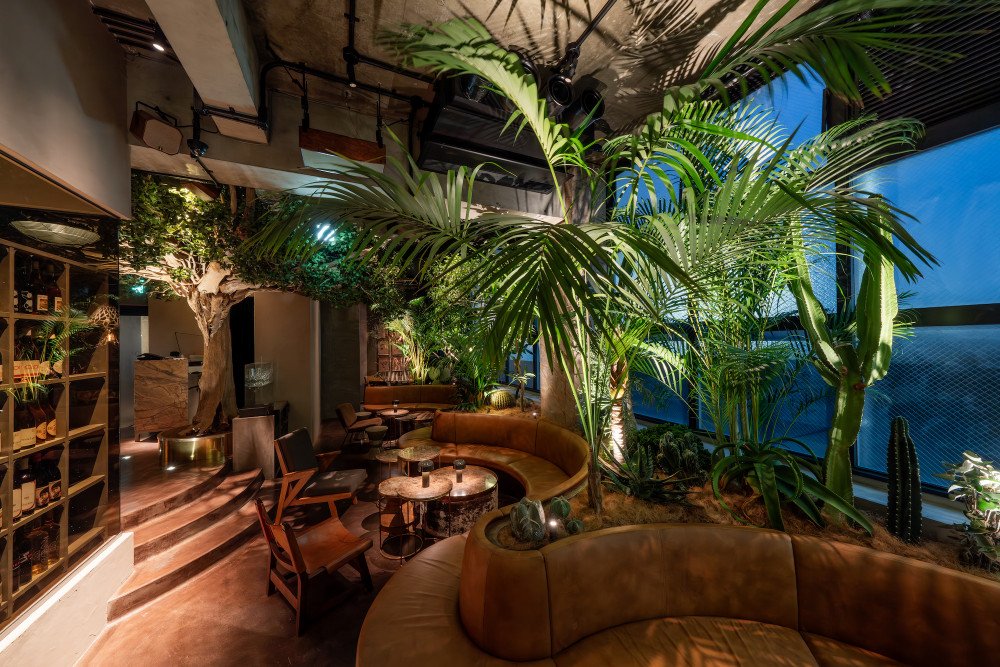
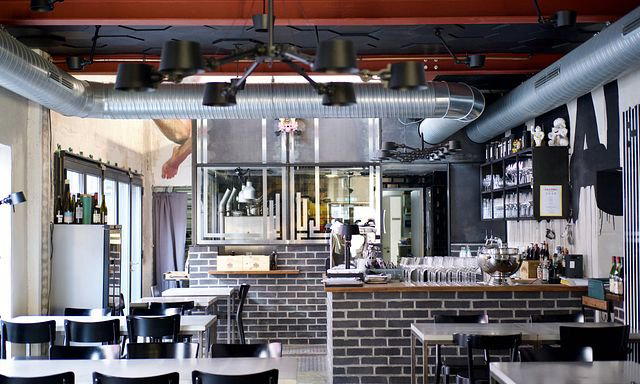
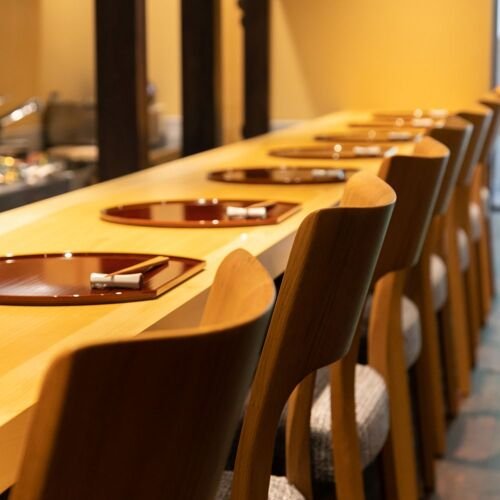
Aoike sits in Nakagyo Ward, at the address in Heinouchicho on Takakura-dori. The room was built by the chef's father-in-law, a sukiya carpenter — the traditional craft associated with Japanese tea house construction, and the result is an interior that holds both a mosaic-studded counter and Scandinavian chairs without either element feeling out of place. It is a modern room with material integrity, which makes it appropriate for a date or a business dinner where the setting is expected to do some work.
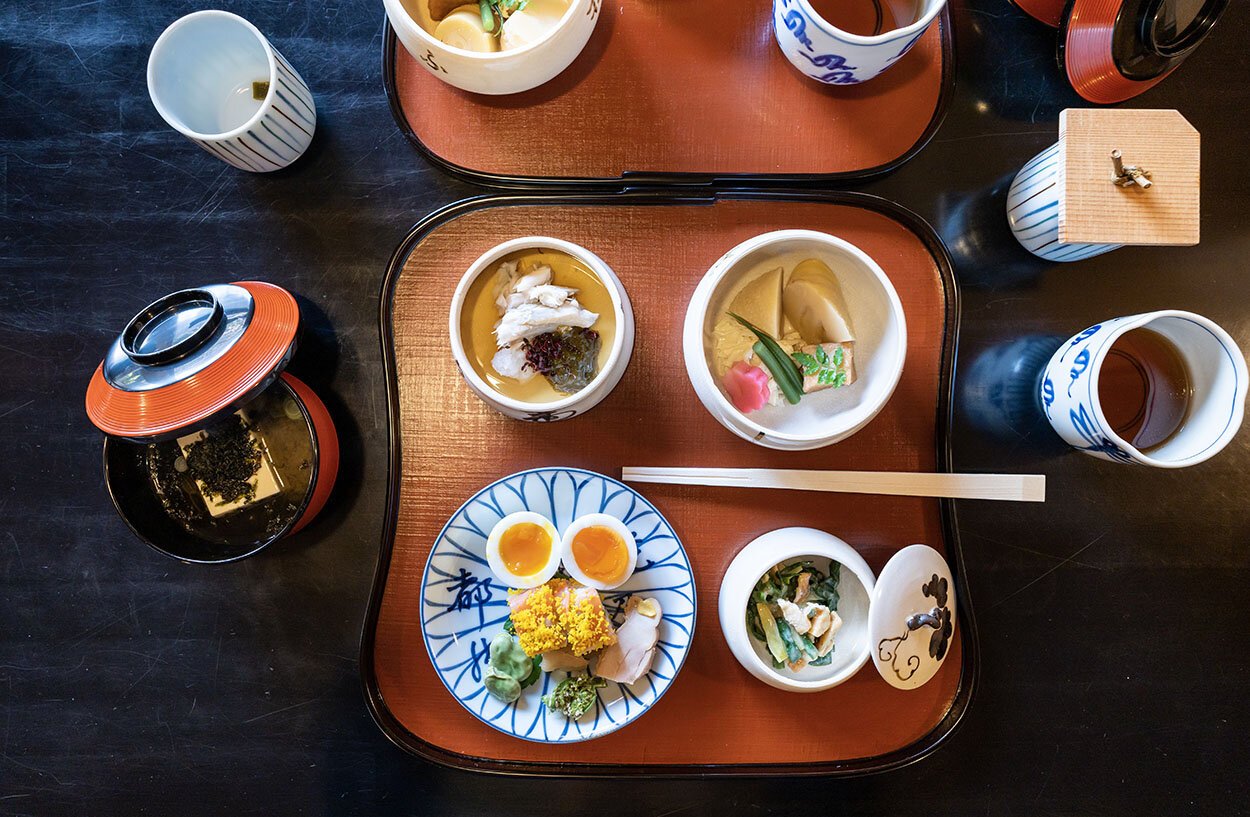
The counter format means the kitchen is close. Mushrooms and root vegetables arrive as mousses and thick soups. The pressed vegetables dish, vegetables arranged with the visual logic of a garden plot, is described in Michelin's own record for the restaurant as the defining expression of the chef's approach: colourful, compositional, rooted in what is growing rather than what is seasonal in a generic sense. This level of specificity in sourcing is not universal at the ¥¥¥ tier in Kyoto, and it is part of what earns the 2025 Michelin Plate recognition the restaurant holds.
The Michelin Plate is not a star, and it is worth being clear about what that means for your decision. A Plate signals that Michelin inspectors consider the cooking good, the food is prepared competently and the ingredients are treated with care, but it does not carry the same weight as a star designation. At ¥¥¥, you are paying for a thoughtful, produce-led French tasting experience in a room with genuine craft, not for the ceiling-level technical performance of a starred kitchen. That is a fair trade at this price for most diners considering a special occasion meal that does not require the full financial commitment of Kyoto's ¥¥¥¥ rooms.
Service and Experience
The service philosophy at Aoike follows the logic of the food: personal, attentive, and structured around what the chef decided to do that morning. At a counter of this size and format, the chef's direct involvement in service is almost inevitable, this is not a room where you are managed by a floor team operating at a remove from the kitchen. For a special occasion dinner, that intimacy is an asset. You are eating close to the process. The trade-off is that the experience is less formally orchestrated than what you would find at a ¥¥¥¥ kaiseki room like Gion Sasaki or Kyokaiseki Kichisen, where the service apparatus is part of the price. At Aoike, the chef's presence substitutes for that apparatus. Whether that feels warmer or less polished depends on what you are looking for.
For context on how this compares to other chef-driven French rooms in Japan, L'Effervescence in Tokyo and HAJIME in Osaka both operate at higher price tiers with more formal service structures. Aoike is closer in register to akordu in Nara, a small, chef-driven room where the cooking is the focus and the service is warm but not ceremonial. If ceremony is part of what you need for the occasion, factor that in.
Booking
Booking difficulty at Aoike is rated Easy. Book two to three weeks out for weekend evenings to be safe; mid-week dinners should be more accessible on shorter notice. No phone number or online booking link is available in our current data, so approach the restaurant directly or use a local concierge service if you need assistance securing a reservation. For a broader view of dining options in the city, see our full Kyoto restaurants guide.
Other French options nearby worth considering: anpeiji, Droit, and La Biographie are all in Kyoto's French dining tier and worth cross-referencing before you decide. If you are planning a broader trip, Goh in Fukuoka, 1000 in Yokohama, and 6 in Okinawa represent interesting reference points for chef-driven dining elsewhere in Japan. For the strongest comparison in classical French technique at the international level, Hotel de Ville Crissier sets the benchmark.
For everything else you need in Kyoto: our full Kyoto hotels guide, our full Kyoto bars guide, our full Kyoto wineries guide, and our full Kyoto experiences guide.
Quick reference: Aoike, Nakagyo Ward, Kyoto. French. ¥¥¥. Michelin Plate 2025. Booking difficulty: Easy.
How It Compares
Planning details
- Location
- Japan, 〒604-0884 Kyoto, Nakagyo Ward, Heinouchicho, 631 高倉西入
- Website
- aoike-kyoto.com
- Phone
- +81 75-204-3970
The take
The Take
The Vibe
Aoike presents a quietly considered counter experience that balances Kyoto tradition with a restrained modernity. The room is crafted by a sukiya carpenter and set around a mosaic-studded counter with Scandinavian chairs, producing a subtle friction between local craft and international references. The overall effect is calm and intimate rather than showy: materials and composition do the work, and the dining room reads as measured and deliberate. This is a place where the interior’s restraint mirrors the kitchen’s slow, ingredient-led approach, making every detail feel intentional and quietly charming.
Best For
Aoike is best for intimate evenings that center on the food and the chef’s process. As a Michelin Plate–recognized counter, it suits date nights and special-occasion dinners when you want a focused, ingredient-driven experience rather than a loud, social scene. The counter layout places guests close to the craft of cooking and to the chef’s selection of produce from his Kamigamo garden, so it’s ideal for diners who appreciate quiet attention to seasonality, texture and composition in a small, thoughtfully designed room.
Ordering Tips
Expect a menu that is shaped by the morning harvest: the chef selects vegetables from his Kamigamo garden and composes the day’s dishes around what he finds. Lean into the kitchen’s choices rather than seeking à la carte substitutions, and order with the understanding that vegetable-forward preparations—like the Garden Vegetable Terrine and Pressed Vegetables—are central to the experience. Sit at the counter when possible to watch the sequence and technique unfold, and ask the staff about that day’s harvest to learn how the menu was determined.
Venue details
Ambiance
Quiet, unostentatious sophistication with modern mosaic-studded counter, Scandinavian chairs in sukiya-crafted interior and small garden view.
Tags
Vibe
Best For
Experience
Sourcing
View
At the Table
- Dress Code
- Smart Casual
- Noise Level
- Quiet
- Service Style
- Upscale Casual
- Meal Pacing
- Leisurely
- Capacity
- Intimate
Signature Dishes
- Garden Vegetable Terrine
- Pressed Vegetables
Know before you go
Know Before You Go
- Getting there
- Japan, 〒604-0884 Kyoto, Nakagyo Ward, Heinouchicho, 631 高倉西入
Planning details
Location
Japan, 〒604-0884 Kyoto, Nakagyo Ward, Heinouchicho, 631 高倉西入 · Directions
Recognition and awards
Also consider
Also Consider
- Gion Sasaki, Kaiseki, Japanese, ¥¥¥¥
- cenci, Italian, ¥¥¥
- Ifuki, Kaiseki, ¥¥¥¥
- Kyokaiseki Kichisen, Japanese, ¥¥¥¥
- Kyo Seika, Chinese, ¥¥¥
Restaurant context
At ¥¥¥, Aoike sits in a different tier from most of Kyoto's celebrated dining addresses. Gion Sasaki and Ifuki both operate at ¥¥¥¥ in the kaiseki format, higher spend, more formal service, and a different cuisine philosophy entirely. If you are committed to French cooking and want to stay at ¥¥¥, Aoike has no direct French competitor at the same price with a comparable credential. That makes the booking decision relatively clear for French-focused diners.
The more useful comparison is across cuisine types at the same price. cenci (Italian, ¥¥¥) is the closest peer in terms of approach: a chef-driven room, strong produce focus, and similar intimacy. If cuisine flexibility exists, put both on your shortlist and choose based on format preference. Kyo Seika (Chinese, ¥¥¥) completes the ¥¥¥ picture in Kyoto but operates in a different register. Kyokaiseki Kichisen at ¥¥¥¥ is for diners who want Kyoto's most formally constructed kaiseki experience and are prepared to pay for it.
For booking ease, Aoike has a clear advantage over the ¥¥¥¥ rooms. Gion Sasaki and Kyokaiseki Kichisen require significantly more lead time and are harder to access for visitors without a local contact or hotel concierge. If your travel window is short or your plans are still forming, Aoike's Easy booking difficulty makes it the practical pick at the quality level it operates. The Michelin Plate 2025 give you enough confidence to commit without the research burden that the harder-to-book rooms demand.
Explore Kyoto
Around this place
Discover more on Pearl
Unlock the full Aoike guide in Pearl, including awards, comparisons, FAQs, planning details, and nearby places.
Compare Aoike
| Venue | Price | Booking Difficulty | Awards |
|---|---|---|---|
| Aoike | ¥¥¥ | Easy | Michelin Guide Kyoto Osaka 20262026 Michelin PlateTabelog 100 - French - WEST - 2025 · #132025 Michelin Plate |
| Gion Sasaki | ¥¥¥¥ | Unknown | 2026 Tabelog Bronze · #3862026 OAD Top Restaurants in Japan RecommendedMichelin Guide Kyoto Osaka 20262026 La Liste Top RestaurantsTabelog 100 - Japanese cuisine - WEST - 2025 · #132025 OAD Top Restaurants in Japan Ranked · #2462025 Tabelog Silver2025 Michelin 3 Stars2025 La Liste Top Restaurants |
| cenci | ¥¥¥ | Unknown | 2026 Tabelog Bronze · #442026 Asia's 50 Best Restaurants · #762026 OAD Top Restaurants in Japan Highly RecommendedMichelin Guide Kyoto Osaka 2026Tabelog 100 - Italian - WEST - 2025 · #632025 Asia's 50 Best Restaurants · #632025 OAD Top Restaurants in Japan Ranked · #1682025 Tabelog Bronze2024 OAD Top Restaurants in Japan Ranked · #135 |
| Ifuki | ¥¥¥¥ | Unknown | 2026 OAD Top Restaurants in Japan Ranked · #1222026 Tabelog Bronze · #128Michelin Guide Kyoto Osaka 20262026 La Liste Top RestaurantsTabelog 100 - Japanese cuisine - WEST - 2025 · #622025 OAD Top Restaurants in Japan Ranked · #1002025 La Liste Top Restaurants2025 Tabelog Bronze2025 Michelin 2 Stars |
| Kyokaiseki Kichisen | ¥¥¥¥ | Unknown | 2026 Tabelog Bronze · #1752026 OAD Top Restaurants in Japan Highly RecommendedMichelin Guide Kyoto Osaka 20262025 OAD Top Restaurants in Japan Ranked · #1862025 Michelin 2 Stars2025 La Liste Top Restaurants2024 OAD Top Restaurants in Japan Ranked · #1422024 Michelin 2 Stars2023 OAD Top Restaurants in Japan Ranked · #136 |
| Kyo Seika | ¥¥¥ | Unknown | Tabelog 100 - Chinese cuisine - WEST - 2026 · #762026 Tabelog Bronze · #2162026 OAD Top Restaurants in Japan Recommended2026 Michelin 1 Star2025 OAD Top Restaurants in Japan Ranked · #3262025 Tabelog Bronze2024 OAD Top Restaurants in Japan Ranked · #3042024 Michelin Plate2024 Michelin 1 Star |
.png?width=1200&quality=80)






What to weigh when choosing between Aoike and alternatives.
FAQ
Frequently Asked Questions
Is Aoike good for solo dining?
Yes. The counter format at Aoike suits solo diners well: you're watching the meal take shape in front of you, and the personal, chef-led service structure works better for one than it does for a table of four. At ¥¥¥, solo dining here is a considered but justified spend for anyone serious about vegetable-forward French cooking in Kyoto.
Can I eat at the bar at Aoike?
The room centres on a mosaic-studded counter, so counter seating is the primary format at Aoike, not a secondary bar option. If you want a counter seat, request it explicitly when booking — it puts you closest to the action and aligns with how the space was designed.
Can Aoike accommodate groups?
Aoike is not well-suited to large groups. The sukiya-carpenter-built interior with a counter and Scandinavian chairs suggests an intimate, small-capacity room. For groups of four or more in Kyoto at the ¥¥¥ tier, Hiramatsu Kodaiji or a venue with private dining capacity is a more practical choice.
Is Aoike good for a special occasion?
Yes, with the right expectations. The combination of a Michelin Plate, a chef who harvests his own vegetables each morning, and a room built by a sukiya carpenter gives Aoike a personal, considered quality that transactional special-occasion restaurants lack. It suits a dinner where the food matters more than the formality.
Is Aoike worth the price?
At ¥¥¥ with a Michelin Plate and a chef harvesting Kamigamo vegetables daily, Aoike delivers value that is grounded in sourcing discipline rather than prestige branding. If vegetable-driven French cooking is what you want, the price is justified. If you are prioritising kaiseki or a bigger-name Kyoto French address, cenci or Hiramatsu Kodaiji is a closer comparison.
What are alternatives to Aoike in Kyoto?
For French in Kyoto, cenci is the closest peer in format and price register. For kaiseki at a higher spend, Kyokaiseki Kichisen is the reference point. Gion Sasaki and Ifuki offer Japanese-rooted alternatives at varying price levels. Kyo Seika is worth considering if you want a lighter meal with Japanese confectionery as the focus.