
Restaurant in Lyss, Switzerland
Kreuzstube Hotel Weisses Kreuz
150ptsSeeland Market Square Wine Focus

About Kreuzstube Hotel Weisses Kreuz
A hotel-restaurant on Lyss's central Marktplatz, Kreuzstube at Hotel Weisses Kreuz earned a White Star recognition from Star Wine List in December 2021, signalling a wine program that punches above what the town's modest scale might suggest. In a canton where farm-to-table sourcing is a baseline expectation rather than a selling point, this address sits at the intersection of Swiss regional hospitality and serious wine curation.
A Market Square Address in the Seeland
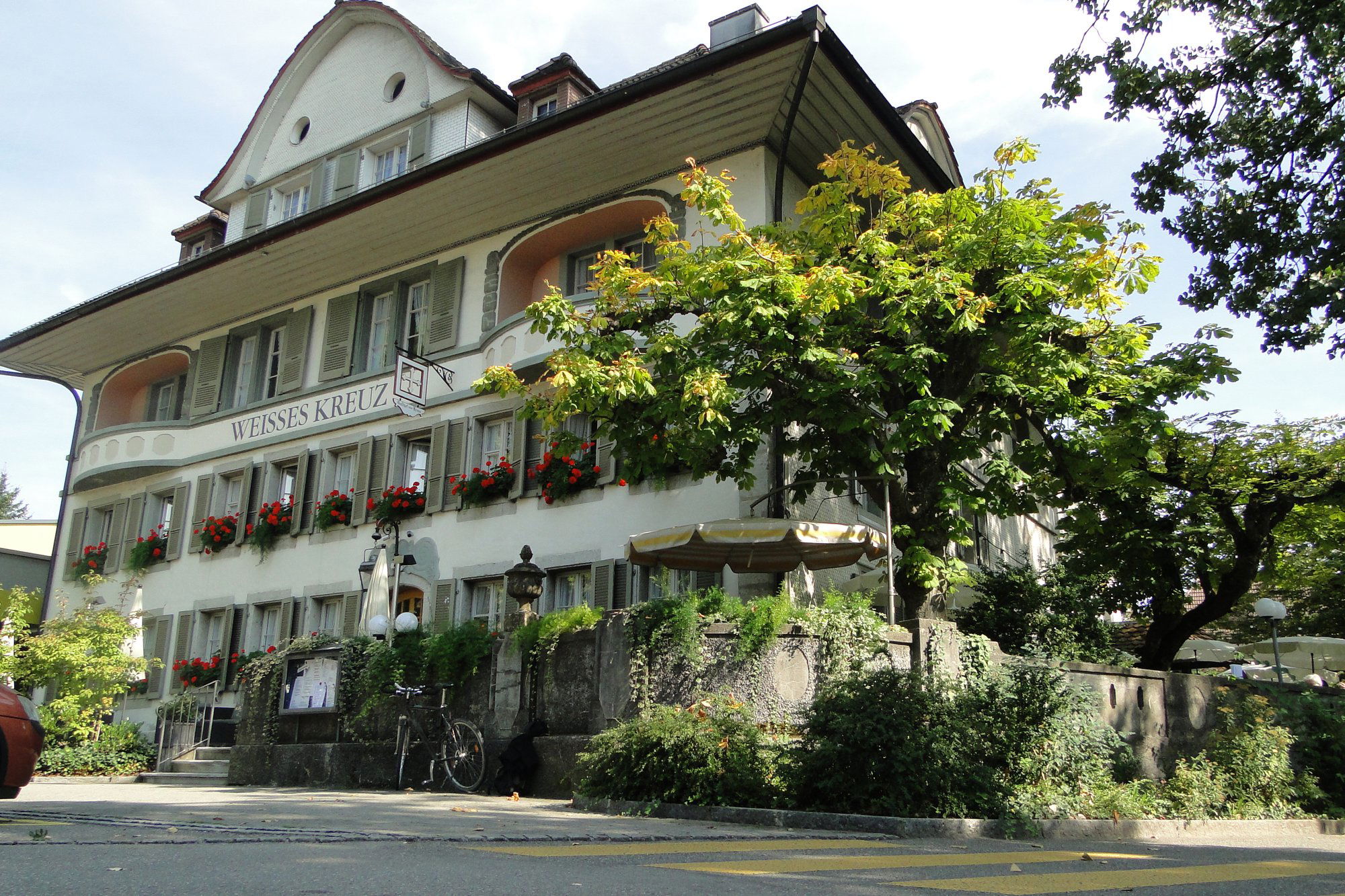
The Bernese Mittelland has a particular way with its market towns. Lyss sits at the centre of the Seeland, a flat, intensively farmed region where the density of vegetable cultivation is among the highest in Switzerland, and where the distance between field and kitchen is, in practical terms, very short. Hotel Weisses Kreuz occupies Marktplatz 15, the kind of address that signals civic longevity: market-square buildings in Swiss towns of this size have typically housed travellers, traders, and locals for generations. Arriving at the square, the architecture carries that weight, a mid-town façade with the unhurried confidence of a property that does not need to announce itself. For context on the broader dining and hospitality picture in Lyss, see our full Lyss restaurants guide and our full Lyss hotels guide.
What the White Star Signals
In December 2021, Star Wine List awarded Kreuzstube a White Star, a designation the publication uses to flag wine programs it considers notable at the regional or national level. This is the most concrete trust signal available for this address, and it matters for a specific reason: Star Wine List's methodology focuses on list depth, producer selection, and pricing transparency rather than room count or restaurant category. A White Star at a hotel-restaurant in a town of Lyss's scale suggests a wine buyer who is selecting deliberately, probably with an eye on Swiss producers from the nearby Bielersee wine region and broader Swiss German appellations, rather than defaulting to a generic international list. The Bielersee itself produces Chasselas, Pinot Noir, and increasingly serious Pinot Gris, and properties in this catchment area have natural access to those wines at the source. For those planning further wine-focused visits in the region, our full Lyss wineries guide covers local producers worth knowing.
Sourcing in the Seeland: Why Provenance Matters Here
Switzerland's Seeland is sometimes called the vegetable garden of the country, and that description is more literal than figurative. The alluvial plain between the Aare and the Zihl canal supports an extraordinary concentration of market gardening: asparagus in spring, a succession of brassicas, root vegetables, and salad crops through the summer, and late-season produce that extends the fresh supply well into autumn. For a kitchen operating in this geography, proximity to producers is not a marketing claim but a logistical reality. The radius from Marktplatz Lyss to working farm land is measured in minutes, not hours. Swiss regional hotel-restaurants at this price point and location type have historically used that proximity well, building relationships with specific farms and adjusting menus to what is actually available rather than what a standardised supplier can deliver year-round. That pattern, common across the Bernese Mittelland, shapes the seasonal rhythm of the dining room in ways that are worth accounting for when you plan a visit. The spring asparagus period in particular draws serious attention from diners across the canton.
To understand where Kreuzstube sits in the broader Swiss dining conversation, it helps to sketch the upper tier of the national scene. Properties such as Schloss Schauenstein in Fürstenau, Memories in Bad Ragaz, and focus ATELIER in Vitznau operate at the €€€€ tier with multi-course formats and explicit creative ambition. Kreuzstube is a different proposition: a market-town hotel-restaurant whose recognition comes from its wine program rather than from a tasting-menu format. That positioning is not a limitation; it reflects a different kind of hospitality offer, one more embedded in local commercial and civic life than in destination-dining circuits. The peer set here is not Michelin-starred creative kitchens but serious regional hotels with credible wine lists, a category that Switzerland does particularly well.
The Hotel-Restaurant Format in Swiss Town Centres
Across Switzerland's smaller towns, the hotel-restaurant occupying a central square or main street has served a consistent social function for at least two centuries. It is the place where local businesses hold lunches, where regional travellers stop before continuing along the corridor between Biel/Bienne and Bern, and where the wine list, if well-managed, becomes a source of local pride. Kreuzstube fits that model. The Weisses Kreuz name itself, White Cross, is one of the most common hotel names in German-speaking Switzerland, a naming convention that dates to the inn culture of the Reformation period. Properties carrying that name in active use today are typically among the more durable addresses in their respective towns. The format tends toward a broader menu range than destination restaurants, with options that serve both the business-lunch diner and the evening table looking for something more considered. Those visiting Lyss for the first time will find the broader context useful: our full Lyss bars guide and our full Lyss experiences guide map out what else the town offers.
Lyss in the Wider Swiss Context
Lyss is not a dining destination in the way that cities with concentrated Michelin representation are. It lacks the critical mass of Cheval Blanc by Peter Knogl in Basel or the draw of IGNIV Zürich by Andreas Caminada in Zurich. What it has instead is a functional role in a well-connected regional corridor. The town sits on the main rail line between Biel/Bienne and Bern, making it accessible from both cities in under twenty minutes. That accessibility matters: Kreuzstube is not a venue that requires a special journey in the same way that Hotel de Ville Crissier in Crissier or Da Vittorio in St. Moritz do. Its appeal is partly in being a reliable, wine-serious address that you pass through or stop at within a broader Bernese Mittelland itinerary. The Hardern Pintli represents another recognised address in the local dining picture, offering a point of comparison for those building a fuller sense of what Lyss offers at table.
Planning a Visit
Given the absence of confirmed booking or hours data, contacting the property directly via Marktplatz 15, Lyss is the most reliable approach. Swiss hotel-restaurants of this type typically offer lunch and dinner service across the working week, with reduced or closed days on Sunday or Monday, a pattern common across the Bernese Mittelland. If the wine list is the primary draw, visiting outside peak agricultural calendar events, when the cellar is less likely to be depleted, is worth considering. The spring vegetable season, roughly April through June, aligns with the point at which local sourcing from the Seeland reaches its most varied. For those connecting this visit to other Swiss dining, Colonnade in Lucerne, 7132 Silver in Vals, and L'Atelier Robuchon in Geneva all sit within a day's travel and represent different points on the Swiss dining spectrum.
Frequently Asked Questions
Is Kreuzstube Hotel Weisses Kreuz suitable for children?
Swiss market-town hotel-restaurants of this type typically accommodate families across lunch service, and the format at Kreuzstube, a hotel dining room on a civic square rather than an intimate tasting-menu counter, is consistent with that approach. No confirmed children's menu data is available, so it is worth confirming directly with the property before visiting with young children. For reference, the broader Lyss town centre context makes it a low-friction environment for family dining compared to destination-restaurant formats elsewhere in Switzerland.
Is Kreuzstube Hotel Weisses Kreuz formal or casual?
The White Star recognition from Star Wine List points to a wine program taken seriously, but the hotel-restaurant format on a Swiss market square operates in a different register than urban fine dining. Properties in this category across the Bernese Mittelland tend toward smart-casual rather than formal dress expectations. The awards data here reflects the cellar rather than a particular formality of service style, and Lyss's commercial rather than resort character supports a relaxed approach to dress.
What's the must-try dish at Kreuzstube Hotel Weisses Kreuz?
No confirmed menu or signature dish data is available for this property, and generating specific dish descriptions without a verified source would not serve you well. What the sourcing context does suggest is that seasonal Seeland produce, particularly during the spring asparagus and summer vegetable windows, is likely to feature prominently in a kitchen operating at this geography. The wine list, given the Star Wine List White Star, is the more reliably documented draw, and pairing regional Swiss wines with whatever the seasonal menu offers is the most grounded recommendation available from the published record.
Recognized By

Similar venues by awards
Related editorial
- Asia's 50 Best Restaurants 2026: The Chairman and Wing Go 1-2 from the Same BuildingThe Chairman takes No. 1 and Wing climbs to No. 2 at Asia's 50 Best Restaurants 2026. Both operate from the same Hong Kong building. Here's what it means.
- Four Seasons Yachts Debut: 95 Suites, 11 Restaurants, and a March 2026 Maiden VoyageFour Seasons I launches March 20, 2026, with 95 suites, a one-to-one staff ratio, and 11 onboard restaurants. Worth tracking if you want hotel-grade service at sea.
- LA Michelin Guide 2026: Seven New Restaurants from Tlayudas to Uzbek DumplingsMichelin's March 2026 California Guide update adds six LA restaurants and one Montecito newcomer, spanning Oaxacan tlayudas, Uzbek manti, and Korean-Italian pasta.
Save or rate Kreuzstube Hotel Weisses Kreuz on Pearl
Keep this venue in your Pearl passport, rate it after you visit, and track it alongside every other place you collect.