
Restaurant in Tokyo, Japan
Kabi
775Pearl PointsBook if fermentation-forward omakase is your format.



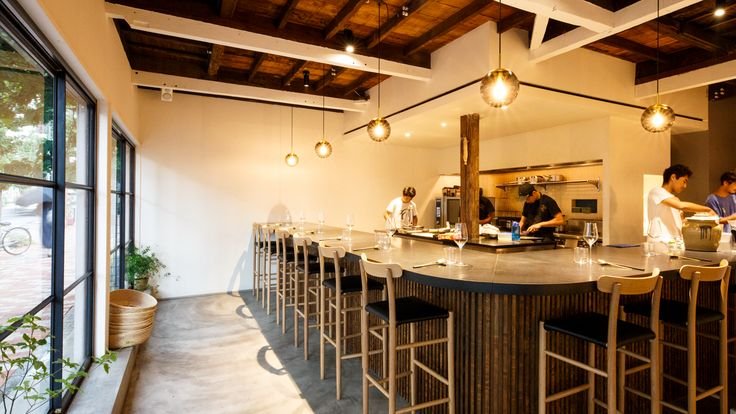
About Kabi
Book Kabi if the occasion calls for an inventive Tokyo dinner with a clear fermentation point of view rather than classic luxury cues. The Michelin-starred Meguro restaurant is a strong fit for curious diners and smaller celebrations, but less safe for groups with narrow preferences or guests who want a conventional fine-dining script.
For a Tokyo celebration where the meal needs to feel thoughtful rather than showy, Kabi is worth targeting early, especially if the table wants innovative cooking with a serious fermentation through-line. Meguro gives it a calmer frame than the Ginza or Roppongi luxury circuit, and the point here is not excess: it is whether chef Shohei Yasuda’s Denmark-informed, Japan-rooted approach feels distinctive enough to justify a hard booking and a ¥¥¥ spend.
The answer is yes for diners who like a kitchen with a clear idea. The name means mold in Japanese, and that is the useful clue: fermentation is not a gimmick here, but the organizing logic. The cooking connects Japanese pickling and preservation traditions with Northern European fermentation culture, which makes the meal a better fit for curious diners than for anyone chasing familiar luxury markers. If the occasion calls for caviar-and-champagne signaling, this is the wrong target. If the occasion calls for a meal that gives the table something to talk about without turning dinner into a lecture, it makes sense.
Fermentation is the reason to book, not a decorative theme
The strongest case for booking is the kitchen’s specificity. Public recognition supports that case: the restaurant holds a Michelin 1 Star from 2024 and appears in Opinionated About Dining’s Japan restaurant lists, including a 2026 Recommended placement and ranked appearances in 2025 and 2024. Those signals matter because this style can be uneven elsewhere, especially when fermentation becomes a branding device rather than a disciplined cooking structure.
Here, the better read is to expect a meal built around preservation, acidity, umami, and controlled funk rather than a conventional luxury tasting menu. The known examples point in that direction: tsukemono, vinegar-marinated mackerel with handmade miso, and ojiya inspired by fermented crucian carp sushi. Those are not safe crowd-pleaser cues. They are reasons to book if the table likes Japanese tradition pushed into a more contemporary format.
Service is the deciding variable at this price level. With this kind of cooking, the room has to explain just enough without making guests feel examined. That is especially relevant for a date or anniversary: the meal should feel guided, not academic. The award profile suggests a serious operation, but diners should still choose it for food curiosity first. For a more polished, higher-budget innovative dinner, MAZ is the cleaner splurge comparison; for a more fermentation-led Tokyo dinner with a less formal price signal, this is the more focused bet.
Who should book it, and who should not
Book this for two people or a small celebration where the group is comfortable with a chef-led point of view. It is less obvious for a broad business dinner, because innovative cuisine built around fermentation can divide a table. It is also not the safest pick for guests with narrow preferences, strong aversions to acidity, or a need for a classic luxury-room script.
Tokyo has plenty of ambitious dining at this level, so cross-shopping matters. Diners comparing styles can use AO, Chiune, Hasegawa Minoru, jiü, and l' Equateur to sort whether they want contemporary Japanese, Chinese-inflected precision, or a more French-leaning meal. For broader planning, keep our full Tokyo restaurants guide handy, then pair the dinner with our full Tokyo hotels guide, our full Tokyo bars guide, our full Tokyo wineries guide, or our full Tokyo experiences guide if the trip needs more than one anchor.
Outside Tokyo, the innovative category ranges widely, from [ki:] in Kyoto to [àbitat] in San Fermo della Battaglia and Å by T.U.N.G in Ho Chi Minh City. Those are useful reminders that “innovative” is a broad label; this address is the better choice when fermentation, Japanese preservation, and a compact Tokyo dinner plan are the actual reasons for booking. For regional contrast, also covers Grilled beef Sukiyaki KAMAKURA TANUKIAN in Kamakura,.cafe in Osaka,.know in Kumamoto, (Shoku) Vietnam in Kawasaki, and [Curry Senmon Ten] Maruyama Kyoju. in Sapporo.
Frequently Asked Questions
Does Kabi handle dietary restrictions?
Contact Kabi directly when booking to flag any restrictions. Given that fermentation is the core technique across nearly every course, severe intolerances to aged, pickled, or mold-cultured foods may limit the experience significantly. This is not a venue where a restricted diner can easily substitute dishes without the menu losing coherence.
Can Kabi accommodate groups?
Kabi operates on a small-counter format with limited weekly service — Tuesday through Friday evenings and Saturday lunch and dinner only. Groups larger than four should confirm availability and seating configuration when booking, ideally 4 or more weeks out. This is a better fit for intimate parties of two to four than for large group celebrations.
Is Kabi worth the price?
At ¥¥¥, Kabi earns its price if you want a Michelin 1-star tasting menu that takes a clear conceptual position rather than following Tokyo's conventional omakase playbook. The OAD ranking of #215 in Japan for 2025 (up from #263 in 2024) suggests the kitchen is improving. If you want straightforward nigiri or French technique, L'Effervescence or Harutaka may be a better spend.
Is Kabi good for solo dining?
Yes. Counter-format omakase restaurants in Tokyo generally accommodate solo diners well, and Kabi's focused menu suits a single guest who wants to engage with each course. Book early — seats are limited and the Tuesday–Friday evening windows fill fast.
What should a first-timer know about Kabi?
The name means 'mold' in Japanese, which signals the kitchen's intent: this is fermentation as a serious culinary framework, not a trend. Chef Shohei Yasuda cross-applies Northern European and Japanese fermentation traditions, so expect flavours that are funky, acidic, and umami-forward rather than delicate. First-timers who prefer clean, mild Japanese flavours may find the menu challenging.
What should I order at Kabi?
Kabi runs a set tasting menu, so there is no à la carte ordering — the kitchen decides. Based on the venue's documented approach, fermented rice dishes (including an ojiya inspired by crucian carp sushi), miso-based preparations, and vinegar-marinated fish are recurring elements of the format. Trust the menu; the entire experience is designed as a sequence.
Location
4 Chome-10-8 Meguro, Meguro City, Tokyo 153-0063, Japan
Tokyo, Japan
Compare Kabi
Kabi vs. MAZ
Kabi and MAZ both sit in Tokyo’s innovative dining lane, but they solve different decisions. Kabi is the more focused booking for fermentation-driven cooking in Meguro at a ¥¥¥ level, while MAZ is a ¥¥¥¥ splurge with a broader luxury-dining signal.
Choose Kabi when the table wants a distinctive Japanese preservation angle and does not need a high-gloss room to make the night feel special. Choose MAZ when budget is less sensitive and the occasion needs a more formal, higher-spend experience.
If you cannot book Kabi
Try MAZ if the date is fixed and the group wants another Tokyo innovative restaurant with a stronger splurge profile. It will cost more, but it is the more obvious substitute when the priority is a polished special-occasion dinner rather than a fermentation-specific meal.
How it compares
Against MAZ, Kabi is the more fermentation-led choice and the better fit for diners who want Japanese preservation traditions at the center of the meal. MAZ sits at a higher ¥¥¥¥ tier, so it makes more sense when the occasion calls for a bigger splurge and a more polished international fine-dining frame.
For value, Kabi has the clearer argument: ¥¥¥ pricing, Michelin recognition, and a focused culinary identity give it a strong case if the table is open to acidity, umami, and preserved flavors. MAZ is the stronger pick for diners prioritizing a grander room and higher-budget experience; Kabi is the stronger pick for a date or compact celebration where the food’s point of view matters more than luxury signaling.
Hours
- Monday
- Closed
- Tuesday
- 7 pm–12 am
- Wednesday
- 7 pm–12 am
- Thursday
- 7 pm–12 am
- Friday
- 7 pm–12 am
- Saturday
- 12–2 pm, 7 pm–12 am
- Sunday
- Closed
Recognized By


Explore Tokyo
Save or rate Kabi on Pearl
Keep this venue in your Pearl passport, rate it after you visit, and track it alongside every other place you collect.