
Restaurant in Diest, Belgium
Jerome
100ptsFlemish Market Town French

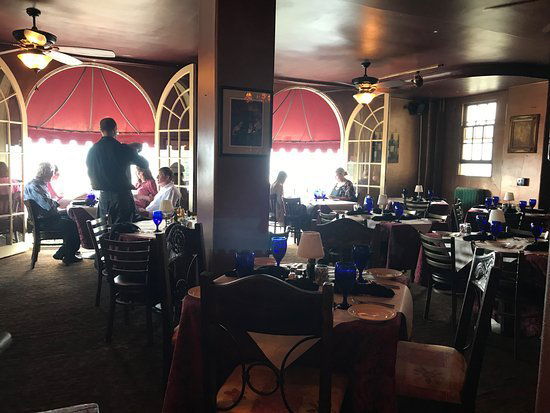
About Jerome
Jerome holds a Michelin Plate (2025) in Diest, a Flemish Brabant town better known for its medieval beguinage than its restaurant scene. The French kitchen operates at a mid-range price point that places it well below Belgium's starred tier, yet the recognition signals cooking that clears the threshold most neighbourhood restaurants in small Belgian cities do not reach. For visitors passing through the Hageland region, it is a credible sit-down option with a clear culinary identity.
Diest and the Case for French Cooking Away from the Capitals
Belgium's most-discussed restaurant tables are concentrated in Brussels, Antwerp, and a handful of Flemish towns with enough critical mass to sustain multi-star ambition. Boury in Roeselare, Zilte in Antwerp, and Hof van Cleve in Kruishoutem occupy the upper bracket of that map. Diest — a walled market town in Flemish Brabant, roughly 50 kilometres east of Brussels — rarely enters that conversation. What it does offer, and what tends to go unexamined, is a quieter register of Belgian cooking: French-rooted, regionally grounded, priced for a local clientele rather than destination diners. Jerome, on Felix Moonsstraat, operates in exactly that register.
The Michelin Plate awarded to Jerome in 2025 marks a specific threshold. The Plate is not a star, but it is a deliberate distinction the guide uses to signal kitchens where the cooking is consistently good enough to notice. In a town like Diest, with fewer than 25,000 residents and no other entries at this recognition level in the immediate area, that distinction carries more weight than it would in a dense urban restaurant market. It positions Jerome as the address in this part of Hageland for French cooking done at a reliable standard.
French Technique in a Flemish Market Town
French cuisine in Belgium occupies a particular position that differs from its role in France itself. Across Flanders and Wallonia, the French kitchen tradition has been absorbed, inflected, and in many cases made more ingredient-driven than it might be in Paris. The country's proximity to French produce corridors , Champagne, Burgundy, the Ardennes , combined with Flemish attention to sourcing from the immediate agricultural belt means that French technique here often reads through a regional lens. The Hageland, the rolling sub-region of Flemish Brabant where Diest sits, is Flemish wine country in its nascent form, with increasing numbers of small producers working Chardonnay and Pinot Noir on the area's iron-rich soils. A French kitchen in this setting draws on provenance that is closer to hand than the genre's name might suggest.
The €€ price positioning at Jerome confirms this is not the compressed, expensive format associated with Belgium's top-end French tables. Restaurants like Castor in Beveren or Cuchara in Lommel operate at €€€€ with the menu structure and ingredient spend that goes with two Michelin stars. Jerome's mid-range bracket implies a different proposition: French cooking applied to accessible formats, where the craft shows in execution and sourcing rather than in elaborate multi-course architecture. That is a legitimate and often more honest expression of the tradition.
What a Michelin Plate Signals About the Kitchen
Michelin's Plate category, introduced formally in the 2017 edition, exists to extend the guide's recognition below the star tier without diluting it. The inspectors' language for the Plate is direct: it denotes fresh ingredients, carefully prepared. In practice, that phrase does real editorial work. It distinguishes kitchens that treat sourcing and technique as the foundation from those that treat cooking as a secondary concern behind décor or concept. For a French restaurant at the €€ level in a small Flemish city, earning and holding that recognition in 2025 means the kitchen is meeting a consistent standard across multiple inspection visits.
Comparing Jerome to other Plate-level French houses in Belgium's smaller cities, the pattern is a commitment to produce-led cooking , seasonal rhythm, attention to butchery and sauce work, the kind of detail that the Plate category rewards even when a restaurant is not building toward a star campaign. De Jonkman in Sint-Kruis and L'air du temps in Liernu represent the higher end of that French-in-Belgium tradition. Jerome operates several tiers below in price and ambition, but the recognition suggests the underlying discipline is present.
Google's aggregate rating of 4.7 across 50 reviews adds a second data point. Fifty reviews is a modest sample, but a 4.7 average at that count is harder to sustain by accident than it might be at 500 reviews where statistical regression pulls outliers toward the mean. The correlation between the Michelin signal and the public rating suggests a kitchen that performs consistently rather than one that over-delivers on a single visit.
Terroir, Region, and What the Hageland Brings to the Table
The editorial angle on Jerome that the Michelin Plate most supports is one about regional grounding. French cooking, wherever it is practiced seriously, anchors itself to supply chains: the producer relationships, the seasonal rhythms, the agricultural character of the surrounding country. Diest and the broader Hageland sit within reach of Flemish vegetable growers, Ardennes game in season, Belgian dairy traditions, and an increasingly active local wine scene. A French kitchen in this location, if it is paying attention, has access to ingredients that carry regional specificity without requiring cross-border sourcing.
That connection between land and plate is what separates French cooking practiced as a regional discipline from French cooking practiced as a stylistic overlay. The Michelin Plate does not specify which applies at Jerome, but the price point and the local recognition pattern are consistent with a kitchen engaged with its immediate supply rather than importing an identity from elsewhere. For the diner, that means the seasonal menu , whatever form it takes , is likely to reflect the agricultural calendar of central Flanders rather than a fixed French repertoire applied regardless of what is available locally.
Planning a Visit
Jerome is at Felix Moonsstraat 28 in Diest's historic centre, within walking distance of the town's beguinage, which holds UNESCO heritage status. Diest is served by train from Brussels (Leuven line), making a day or evening visit practical for travellers based in the capital without a car. The restaurant's mid-range pricing means a meal sits well within a reasonable day-trip budget without requiring the advance planning that Belgium's starred restaurants demand. For current opening hours and table availability, contact the restaurant directly or check current listings, as hours were not confirmed at time of writing. Booking ahead is advisable given the limited restaurant stock at this level in the area.
For broader context on eating and staying in the region, see our full Diest restaurants guide, our Diest hotels guide, and our Diest bars guide. If the surrounding region interests you, Diest wineries and local experiences are covered separately. For comparative reference on French cooking at the higher end of the Belgian market, Bozar in Brussels and d'Eugénie à Emilie in Baudour represent different points on the same tradition. Internationally, Hotel de Ville Crissier in Switzerland and L'Effervescence in Tokyo illustrate how French technique travels when paired with a strong regional ingredient identity. Bartholomeus in Heist and Willem Hiele in Oudenburg show what the coastal Flemish version of that discipline looks like.
Frequently Asked Questions
Would Jerome be comfortable with kids?
At the €€ price point in a Flemish market town, Jerome sits closer to a neighbourhood bistro in format and feel than to a formal French table , in that context, children are not an obvious fit but are unlikely to be out of place either. If in doubt, calling ahead to confirm the room's current setup is the sensible move.
What's the overall feel of Jerome?
Diest is a quiet, historic Flemish town rather than a dining destination, and Jerome reflects that setting: a Michelin Plate-recognised French restaurant at the €€ level, which means the feel is closer to a well-run neighbourhood address than a formal occasion restaurant. The recognition signals serious cooking without the ceremony that accompanies Belgium's starred tier.
What's the leading thing to order at Jerome?
With a French kitchen and Michelin Plate recognition, the technically demanding preparations , sauce-led dishes, precisely cooked proteins , are where the cooking standard is most likely to show. Follow seasonal availability and let the kitchen's current menu guide the choice rather than arriving with a fixed expectation.
Recognized By

Similar venues by awards
Related editorial
- Asia's 50 Best Restaurants 2026: The Chairman and Wing Go 1-2 from the Same BuildingThe Chairman takes No. 1 and Wing climbs to No. 2 at Asia's 50 Best Restaurants 2026. Both operate from the same Hong Kong building. Here's what it means.
- Four Seasons Yachts Debut: 95 Suites, 11 Restaurants, and a March 2026 Maiden VoyageFour Seasons I launches March 20, 2026, with 95 suites, a one-to-one staff ratio, and 11 onboard restaurants. Worth tracking if you want hotel-grade service at sea.
- LA Michelin Guide 2026: Seven New Restaurants from Tlayudas to Uzbek DumplingsMichelin's March 2026 California Guide update adds six LA restaurants and one Montecito newcomer, spanning Oaxacan tlayudas, Uzbek manti, and Korean-Italian pasta.
Save or rate Jerome on Pearl
Keep this venue in your Pearl passport, rate it after you visit, and track it alongside every other place you collect.