
Restaurant in Kyoto, Japan
Gion Kida
550ptsMichelin-starred kaiseki; book well ahead.


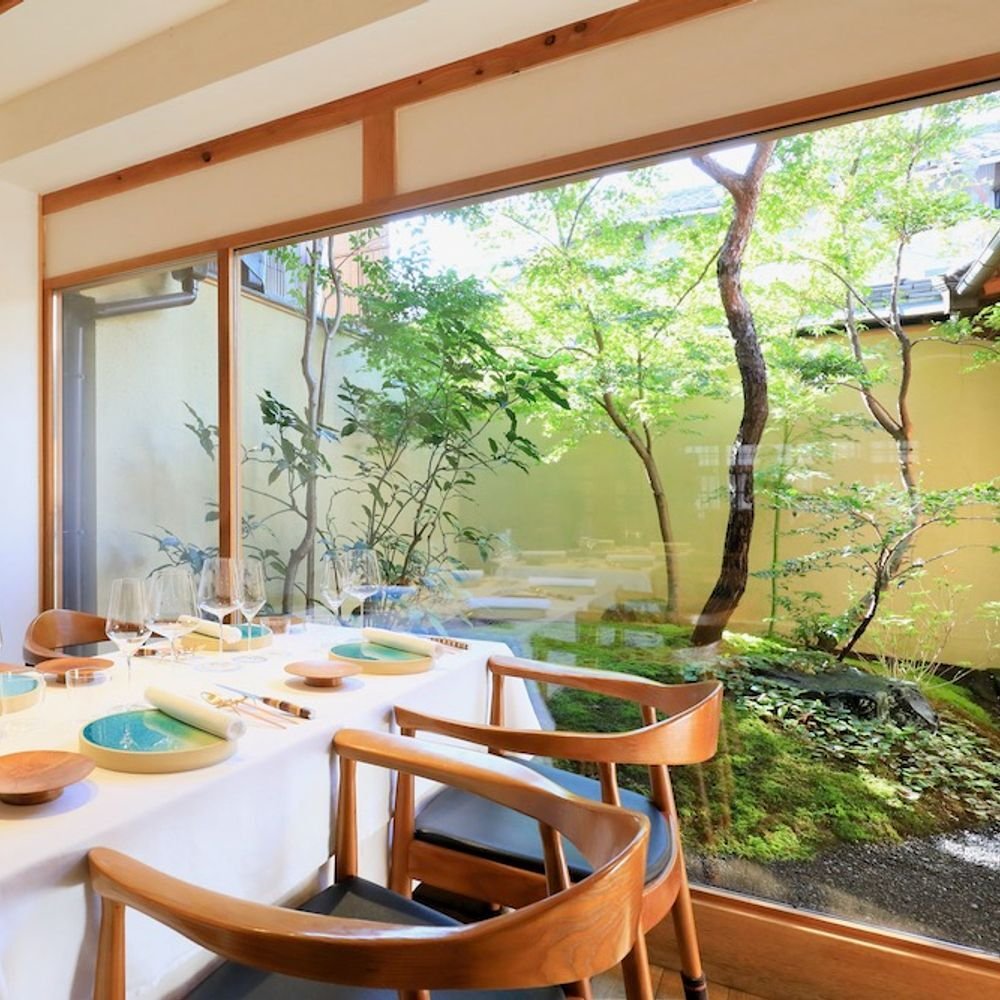
About Gion Kida
Gion Kida holds a Michelin star (2024) and ranks #603 on OAD's Top Restaurants in Japan (2025), making it a credible choice for ingredient-led kaiseki in Kyoto's Higashiyama district. Chef Yasuo Kida builds his menus around Japan's 72 micro-seasons, producing a menu that shifts faster than most at this tier. Book hard and well in advance — demand consistently outpaces availability in this part of Gion.
Verdict
If you are serious about kaiseki and you are going to Kyoto, Gion Kida belongs on your shortlist. Chef Yasuo Kida holds a Michelin star (2024) and ranks #603 on Opinionated About Dining's Leading Restaurants in Japan for 2025 — numbers that position him well within Kyoto's crowded fine-dining tier but not at its absolute summit. The cooking is grounded in a clear philosophy: ingredients are the cause, cooking is the effect, and the chef's role is to respect the connection between the two. That framework produces food with genuine discipline behind it. At ¥¥¥¥ pricing, you are paying Kyoto premium rates, and the question is whether Kida delivers enough distinction to justify that. For most food-focused travellers, the answer is yes — but read the practical section before you try to book.
Portrait
Gion Kida sits in Gionmachi Minamigawa, the southern stretch of Gion that runs along the Shirakawa canal area in Higashiyama Ward. Visually, the address places you in one of the most recognisable streetscapes in Japan: machiya townhouses, stone-paved lanes, and the low-lit lanterns that characterise this part of Kyoto after dark. What you see when you arrive is architecture that signals ceremony before you have ordered anything. That visual context matters in kaiseki, where the room and the approach to it are considered part of the meal.
Chef Kida's stated approach draws on the traditional Japanese concept of the 72 micro-seasons, each lasting only a few weeks. This is not decorative philosophy. It means the sourcing decisions are made on a very short cycle, and the menu turns faster than restaurants operating on broader seasonal logic. For an explorer-type diner, this is exactly the right lens through which to think about timing your visit: what you eat in late March is materially different from what arrives in mid-April. Kyoto kaiseki is always seasonal by design, but Kida's framework makes that granularity explicit. The ingredients themselves, as he frames it, carry the life of the natural world , and the cooking exists to transmit that rather than transform it beyond recognition.
A Michelin star signals a consistent technical standard. What the star does not tell you is the specific register of the experience: whether it leans formal and austere, or warmer and more accessible. Without verified sensory detail from the dining room, it would be overstepping to characterise the atmosphere precisely. What the address and the philosophy together suggest is a restrained, ingredient-led experience rather than a theatrical one. If you are coming from a louder, more production-heavy kaiseki in Tokyo, Kida's approach is likely to read as quieter and more precise. Travellers who have eaten at Azabu Kadowaki in Tokyo or Myojaku in Tokyo will find Gion Kida sits in a comparable register of considered, classical Japanese cooking , though the Kyoto idiom always carries its own specific weight.
On the question of takeout and delivery: kaiseki is the format most resistant to off-premise consumption in all of Japanese cuisine. The format is built around sequencing, temperature, and the specific vessel in which each course arrives. Nothing about Gion Kida's philosophy , cooking that transmits the life of the ingredient through the chef's direct examination of it each day , is compatible with food sitting in a delivery container. If you are considering Kyoto kaiseki at this price point for anything other than a seated experience, you are looking at the wrong category entirely. The value here is the full sequence in the room. There is no meaningful off-premise version of what Kida is doing.
For comparison across the broader Japan circuit: HAJIME in Osaka operates at a higher technical and price ceiling if you want to push further; akordu in Nara offers an interesting counterpoint if you want European technique applied to Japanese ingredients in the Kansai region. Within Kyoto specifically, see the comparison section below for how Kida stacks up against Gion Sasaki, Ifuki, and Kyokaiseki Kichisen.
Ratings & Recognition
- Michelin: 1 Star (2024)
- Opinionated About Dining: #603, Leading Restaurants in Japan (2025)
- Google: 4.8 / 5 (49 reviews)
Booking
Booking difficulty at Gion Kida is rated Hard. This is not a walk-in venue. The combination of a Michelin star, a small likely seat count (no figure confirmed in available data), and Gion's position as Kyoto's most visited dining district means demand consistently outpaces availability. Plan a minimum of four to six weeks ahead for weekday slots; weekend availability runs tighter. The booking method is not confirmed in current data , do not rely on a general online booking platform finding availability here without direct verification. If you are building a Kyoto itinerary, lock this booking before your flights. Also consider nearby alternatives such as Gion Matayoshi or Kikunoi Roan as backup targets at a similar tier, and Isshisoden Nakamura if you want a longer-standing Kyoto kaiseki institution in the same booking conversation.
Practical Details
| Detail | Gion Kida | Gion Sasaki | Ifuki |
|---|---|---|---|
| Price tier | ¥¥¥¥ | ¥¥¥¥ | ¥¥¥¥ |
| Cuisine | Japanese / Kaiseki | Kaiseki / Japanese | Kaiseki |
| Michelin | 1 Star (2024) | Not confirmed | Not confirmed |
| Booking difficulty | Hard | Hard | Hard |
| Location | Gionmachi Minamigawa, Higashiyama | Gion district | Kyoto |
| Leading for | Ingredient-led kaiseki, solo or couple | Classical kaiseki depth | Seasonal kaiseki |
For the broader Kyoto dining picture, see our full Kyoto restaurants guide. If you are planning around the dining visit, our Kyoto hotels guide, Kyoto bars guide, and Kyoto experiences guide cover the rest of the trip. Further afield in Japan, the kaiseki conversation extends to Goh in Fukuoka, Harutaka in Tokyo, 1000 in Yokohama, and 6 in Okinawa for regional comparison. Consult our Kyoto wineries guide if sake and wine pairing is part of your planning. For a different Kyoto kaiseki register, Kodaiji Jugyuan is worth considering alongside Kida.
Frequently Asked Questions
- Is Gion Kida good for solo dining? Solo dining at high-end Kyoto kaiseki is generally accommodated at a counter, and Gion's kaiseki houses have a tradition of welcoming solo guests for exactly this reason. At ¥¥¥¥ pricing, going solo means the full cost lands on one person without a shared bill, but the counter experience is arguably the most engaging way to eat kaiseki , you are closer to the kitchen rhythm. If solo counter dining is your preference, Gion Kida is a reasonable choice; confirm availability directly when booking.
- Is the tasting menu worth it at Gion Kida? A Michelin star and a philosophy built around 72 micro-seasons means you are paying for genuine seasonal precision, not a generic kaiseki format. At ¥¥¥¥, that is competitive with Kyoto's other starred kaiseki houses, and Kida's OAD ranking (#603 in Japan, 2025) confirms peer recognition. The tasting menu is worth it if you want to eat food that reflects a specific, considered framework. If you want the kaiseki format at a lower price point first, Kyokaiseki Kichisen and others offer entry points before committing to top-tier pricing.
- Can I eat at the bar at Gion Kida? Counter seating is standard at this type of Kyoto kaiseki house and is often the preferred position for engaged diners who want to watch the chef work. Whether Kida's specific layout offers a bar counter separate from the main room is not confirmed in current data. Assume counter seats are available but limited, and request one at booking if it matters to you.
- Does Gion Kida handle dietary restrictions? No specific dietary policy is confirmed in available data. Japanese kaiseki at this level is typically a set menu built around seasonal ingredients, which makes significant substitutions difficult without advance notice. Contact the restaurant directly well ahead of your reservation , phone and website details are not published in current data, so route enquiries through your hotel concierge or the booking platform you use to secure the reservation.
- Is Gion Kida worth the price? At ¥¥¥¥, you are in the same tier as most of Kyoto's starred kaiseki. A Michelin star (2024) and OAD #603 in Japan (2025) both confirm this is not a case of paying a premium for name alone. The cooking philosophy, grounded in tight micro-seasonal sourcing, gives the price a specific justification: you are eating food that was evaluated and selected by the chef that morning, not a static menu. For food-focused travellers who treat kaiseki as the point of the trip rather than a night out, the price is justified. If kaiseki is more of a box to tick, the value is harder to defend at this tier.
- What are alternatives to Gion Kida in Kyoto? At the same ¥¥¥¥ tier and kaiseki format, Gion Sasaki and Ifuki are the closest comparisons. For a longer-established institutional name, Kyokaiseki Kichisen is the heaviest hitter in Kyoto kaiseki. If budget is a consideration, cenci (¥¥¥, Italian) offers a different format at a lower spend. For a complete picture of the Kyoto dining options at this level, see our full Kyoto restaurants guide.
Compare Gion Kida
| Venue | Price | Value |
|---|---|---|
| Gion Kida | ¥¥¥¥ | — |
| Gion Sasaki | ¥¥¥¥ | — |
| cenci | ¥¥¥ | — |
| Ifuki | ¥¥¥¥ | — |
| Kyokaiseki Kichisen | ¥¥¥¥ | — |
| Kyo Seika | ¥¥¥ | — |
Side-by-side comparison to help you decide where to book.
Frequently Asked Questions
Is Gion Kida good for solo dining?
Gion Kida is a reasonable solo option if you can secure a seat at the counter or a single booking, though the venue's small size makes solo reservations harder to place than a table for two. At ¥¥¥¥ pricing, solo diners pay full kaiseki rates with no discount. If solo dining access is your priority, Ifuki is often more accommodating for single bookings in Kyoto.
Is the tasting menu worth it at Gion Kida?
Yes, for kaiseki purists. Chef Yasuo Kida's approach is grounded in a micro-seasonal philosophy that treats each ingredient's moment as the point of the meal, which is exactly what kaiseki is supposed to do. The Michelin star (2024) and an Opinionated About Dining ranking confirm the cooking is at the level the ¥¥¥¥ price demands. If you want a more freestyle or contemporary Japanese format, cenci in Kyoto is worth considering instead.
Can I eat at the bar at Gion Kida?
Counter seating is plausible given the traditional kaiseki format, but the exact seating configuration is not confirmed in available data. At a Michelin-starred venue of this type in Gionmachi Minamigawa, counter seats, where available, are typically the most immersive way to watch the progression of the meal. Confirm when booking.
Does Gion Kida handle dietary restrictions?
Dietary accommodation at kaiseki venues of this calibre is worth raising at the time of reservation, not on arrival. Kaiseki menus are composed around seasonal ingredients with little room for last-minute substitution, so communicate restrictions clearly when you book. Serious allergies or vegan requirements may limit what the kitchen can deliver without compromising the format.
Is Gion Kida worth the price?
At ¥¥¥¥, Gion Kida is priced at the top of Kyoto kaiseki. The Michelin star (2024) and a philosophy built around micro-seasonal sourcing give that pricing a defensible foundation. It is worth it if traditional kaiseki is the format you are there for; if you want more modern Japanese cooking at a similar spend, Kyokaiseki Kichisen offers a different prestige register and Kyo Seika is worth checking for value.
What are alternatives to Gion Kida in Kyoto?
For traditional kaiseki at a comparable level, Kyokaiseki Kichisen is the reference point in Kyoto, though it books further out and prices higher. Gion Sasaki offers a more ingredient-driven, chef-led style with a strong following. For a contemporary take on Japanese cooking, cenci diverges from classic kaiseki format but appeals to diners who find the traditional structure rigid. Ifuki is worth considering if booking access or value-for-format is a factor.
Recognized By


More restaurants in Kyoto
- OgataOgata is a 16-seat kaiseki counter in Shimogyo, Kyoto, holding two Michelin stars and ten years of Tabelog Gold recognition. Dinner runs JPY 60,000–79,999 before drinks and a 10% service charge. Booking is near impossible without months of advance planning, but for serious kaiseki at the counter, it earns its place on any shortlist.
- MizaiMizai holds three Michelin stars and a sustained Tabelog track record across nearly a decade, with dinner running to ¥80,000–¥99,999 per person all-in. Chef Hitoshi Ishihara structures the meal around the spirit of the tea ceremony in a 15-seat room inside Maruyama Park. Book for a serious special occasion; reservations are near-impossible to secure without months of advance planning.
Related editorial
- Best Fine Dining Restaurants in ParisFrom three-Michelin-star icons to the next generation of Parisian chefs pushing boundaries, these are the restaurants that define fine dining in the world's culinary capital.
- Best Luxury Hotels in RomeFrom rooftop terraces overlooking ancient ruins to Michelin-starred hotel dining, these are the luxury hotels that make Rome unforgettable.
- Best Cocktail Bars in KyotoFrom sleek lounges to hidden speakeasies, Kyoto's cocktail scene blends Japanese precision with global influence in ways you won't find anywhere else.
Save or rate Gion Kida on Pearl
Keep this venue in your Pearl passport, rate it after you visit, and track it alongside every other place you collect.