
Restaurant in Kraków, Poland
Bianca
100ptsOld Town European Table
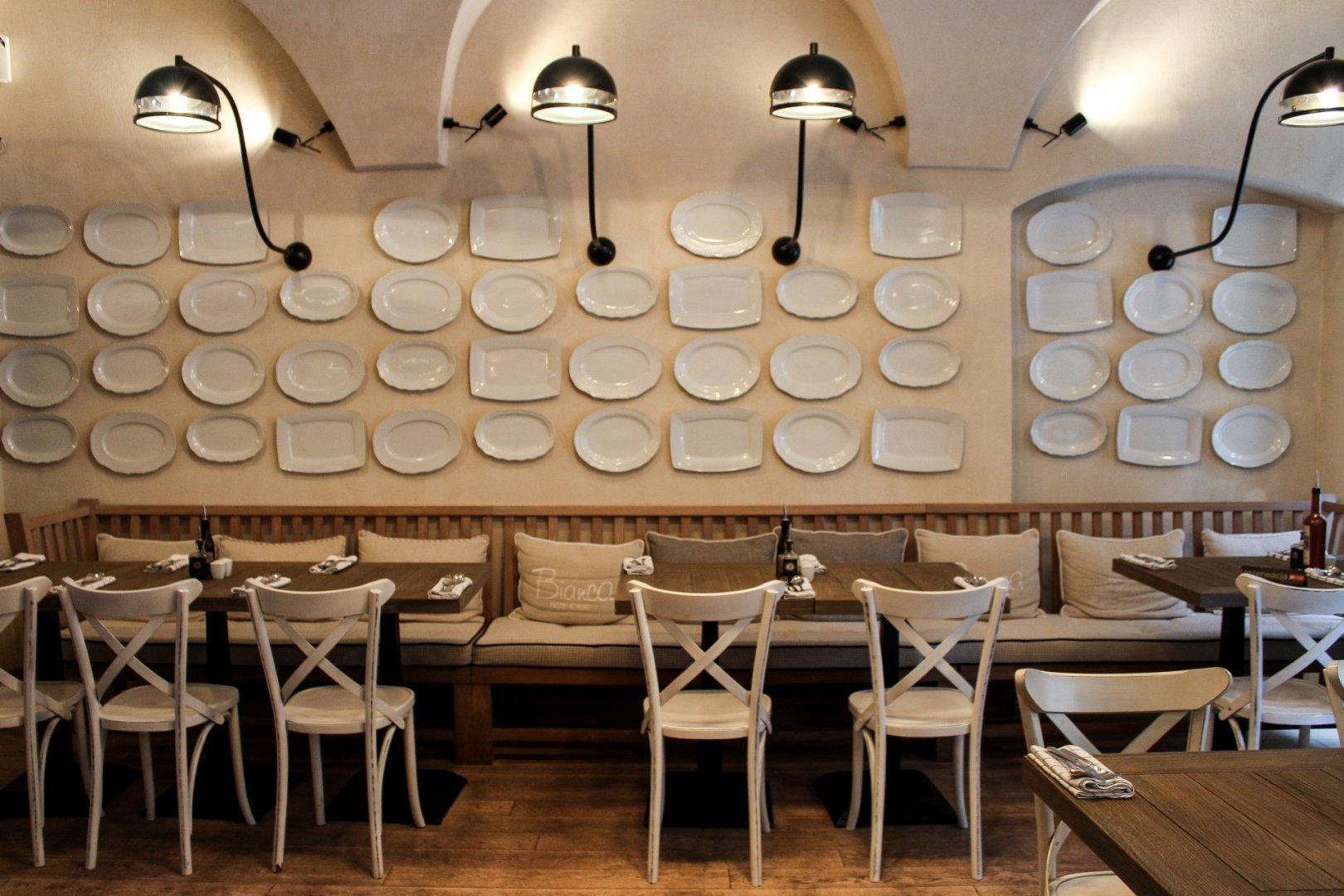
About Bianca
Bianca occupies plac Mariacki 2, steps from St. Mary's Basilica in Kraków's Old Town, placing it at the centre of one of Central Europe's most visited medieval squares. The address alone signals a restaurant operating in the premium casual tier that characterises the square's dining offer, where the tension between tourist footfall and serious cooking is most visible and most consequential.
Plac Mariacki and the Pressure of a Great Address
There are addresses in Kraków that do the work before a restaurant opens its door, and plac Mariacki 2 is one of them. The square sits in the shadow of St. Mary's Basilica, whose twin towers have defined the northeastern corner of the Rynek Główny since the fourteenth century. Every hour, on the hour, the hejnał trumpet call breaks over the square from the taller tower — a sound that has functioned as Kraków's civic clock since the medieval period. To dine at this address is to eat inside one of the most historically freighted public spaces in Poland, and that weight shapes everything about what a restaurant here must do to be taken seriously by anyone other than a first-time visitor.
The broader dining pattern around the Rynek Główny has followed a familiar Central European arc: medieval cellars converted into tourist-facing Polish tavern formats in the 1990s, followed by a wave of Italian and Mediterranean arrivals in the 2000s, and then — in the past decade , a more deliberate turn toward kitchens that treat Polish ingredients with the same technical rigour applied in Warsaw's restaurant renaissance and in Kraków's own Michelin-recognised operations. Bottiglieria 1881 Restaurant in Kraków holds the city's sole Michelin star and represents the ceiling of that ambition; Bianca operates in a different register, closer to the premium casual bracket that the square's geography demands.
The Intersection of Technique and Place
The editorial question worth asking about any restaurant at this address is not whether it can attract diners , the square guarantees footfall , but whether it can hold the attention of someone who has also eaten at 3 Rybki or worked through the wine list at Aqua e Vino. That is the peer-set pressure that defines the serious end of Old Town dining in Kraków.
Across Poland's more ambitious restaurant scene, the dominant tension of the last several years has been between globally acquired technique and the specific character of local produce. This is not a Polish phenomenon exclusively , you see the same negotiation at Arco by Paco Pérez in Gdańsk and in the approach taken at Muga in Poznań , but it plays out with particular intensity in Kraków because the city sits at the junction of several distinct regional food cultures: the highland traditions of the Tatra foothills, the riverine produce of the Vistula corridor, and the Jewish-influenced cookery of the Kazimierz quarter that Ariel has kept in public consciousness for decades. A kitchen on plac Mariacki that ignores this complexity is simply selling location; one that engages with it is making a different kind of argument about what Kraków cooking can be.
The name Bianca, Italian in register, signals an orientation toward Mediterranean method , an approach that has become one of the more productive frameworks for Polish kitchens seeking to apply classical European technique to local ingredients without the weight of the French brigade system. Italian cooking's emphasis on product quality over transformation, on simplicity as discipline rather than poverty of imagination, translates well to a context where the produce , Lesser Poland's dairy, the smoked meats of the Podhale, rye from the surrounding agricultural plains , carries its own flavour without needing to be corrected. This is the logic that connects kitchens as different as La Cucina Ristorante in Gdansk and the technically rigorous seafood approach of Le Bernardin in New York City: restraint as a form of respect for primary material.
Seasonal Positioning in an Old Town Context
Kraków's tourist season peaks hard between May and September, when the Rynek Główny operates at capacity and the square around St. Mary's Basilica becomes the primary orientation point for the city's millions of annual visitors. For restaurants on plac Mariacki, the summer months bring volume but also the risk of being read as a seasonal operation , a table that fills on reputation of address rather than kitchen. The more telling indicator of a serious restaurant in this location is its winter offer: whether it maintains the same kitchen standards when the outdoor seating folds, the coach groups thin out, and the guests who remain are residents, repeat visitors, and professionals with genuine interest in what is on the plate.
Autumn is arguably the most productive season for a kitchen with Polish ingredient commitments. The game season opens, mushroom foraging peaks across the Lesser Poland forests, and the late-harvest produce from the Kraków-Częstochowa Upland region arrives in volume. A restaurant oriented toward local-ingredients-with-global-technique finds its most compelling material in this window, which runs roughly from September through November. Diners planning a visit specifically to engage with that kind of cooking should time accordingly. Giewont in Kościelisko, an hour south toward the Tatras, makes the highland version of this seasonal argument; Bianca's position in the city centre makes a different case for the same underlying logic.
Where Bianca Sits in the Kraków Conversation
Kraków's restaurant conversation has diversified considerably in the past five years. Ramen has arrived in earnest , Akita Ramen is the most visible example of the Japanese import format , and the bar culture around Kazimierz, anchored by venues like Alchemia, has developed its own identity separate from the Rynek. Against that diversification, the Old Town's premium restaurants occupy a distinct position: higher price ceilings, international reference points, and a guest mix that skews toward business travellers, cultural tourists with prior Kraków knowledge, and the city's own professional class seeking a formal occasion venue.
Bianca sits at plac Mariacki 2 within that Old Town premium tier, competing on address and execution rather than on discovery or niche positioning. For visitors working through Kraków's dining offer systematically, it belongs in the same planning bracket as a visit to Bottiglieria 1881 , not as a substitute for the Michelin-starred operation, but as part of the same conversation about what serious cooking looks like when it engages with one of Europe's most historically dense city centres. The full shape of that conversation is mapped in our full Krakow restaurants guide.
For context on how the local-ingredients-global-technique model plays out across Poland more broadly, the programmes at hub.praga in Warsaw, OK Wine Bar in Wrocław, and Bar Przystań in Sopot each demonstrate regional variations on the same underlying argument. Kraków's version, as seen from plac Mariacki, has the advantage of the country's most coherent medieval streetscape and the disadvantage of having to justify itself against that backdrop every service.
Planning a Visit
Bianca is located at plac Mariacki 2, a two-minute walk from the Rynek Główny's northeastern corner. The square is pedestrianised, accessible on foot from the main tram stops on Basztowa and Westerplatte streets. For visitors also considering Nare Sushi in Skórzewo or Luneta and Lorneta Bistro Club in Ciekocinko as part of a broader Polish dining trip, Kraków functions as the natural southern anchor. Specific booking details, current hours, and pricing are leading confirmed directly with the restaurant, as these details change seasonally in the Old Town tier. Lazy Bear in San Francisco demonstrates how advance-booking discipline at premium casual formats has become a global standard; the same expectation applies at serious Old Town addresses during peak Kraków season.
Frequently Asked Questions
What do regulars order at Bianca?
The restaurant's position on plac Mariacki, combined with its Italian-register name and Old Town context, suggests a menu oriented toward European technique applied to Polish seasonal produce , the format that characterises Kraków's more considered mid-to-upper tier. Regulars at restaurants in this bracket typically anchor on whatever reflects current seasonal produce most directly, whether that is game in autumn or dairy-forward dishes in spring. For specific current dishes, the restaurant's own channels are the reliable source, as menus in this tier shift with supply.
What is the leading way to book Bianca?
Restaurants on plac Mariacki operate in one of Kraków's highest-footfall zones, which means peak-season tables , particularly weekend evenings between June and August , fill ahead of time. Direct contact with the restaurant is the most reliable booking route for this tier in the Old Town. Visitors planning around a specific date during the summer peak, or around the autumn game and mushroom season when serious kitchens in Lesser Poland are at their most interesting, should plan further in advance than they might for comparable addresses in less-visited Polish cities.
What has Bianca built its reputation on?
The restaurant's address at plac Mariacki 2 places it inside Kraków's Old Town premium tier, where reputation is built on consistent execution across a mixed guest base of international visitors and local professionals rather than on a single signature format. In this competitive set , which includes operations like Aqua e Vino and the broader cluster around the Rynek Główny , sustained presence and kitchen coherence over successive seasons carry more weight than any individual award or opening moment.
Is Bianca suitable for a business dinner in Kraków's Old Town?
Plac Mariacki addresses carry a formal-occasion signal that makes them a natural fit for business dining in Kraków, where the Old Town's medieval architecture provides a setting with genuine cultural weight rather than manufactured atmosphere. Restaurants in this location typically operate the kind of service format , measured pace, wine list with international reference points, room acoustics that allow conversation , that professional dining requires. For visitors assessing Kraków's business dining tier against Poland's other major cities, this address sits in the same bracket as the more formal options in Warsaw's centre and Gdańsk's old town.
Related editorial
- Asia's 50 Best Restaurants 2026: The Chairman and Wing Go 1-2 from the Same BuildingThe Chairman takes No. 1 and Wing climbs to No. 2 at Asia's 50 Best Restaurants 2026. Both operate from the same Hong Kong building. Here's what it means.
- Four Seasons Yachts Debut: 95 Suites, 11 Restaurants, and a March 2026 Maiden VoyageFour Seasons I launches March 20, 2026, with 95 suites, a one-to-one staff ratio, and 11 onboard restaurants. Worth tracking if you want hotel-grade service at sea.
- LA Michelin Guide 2026: Seven New Restaurants from Tlayudas to Uzbek DumplingsMichelin's March 2026 California Guide update adds six LA restaurants and one Montecito newcomer, spanning Oaxacan tlayudas, Uzbek manti, and Korean-Italian pasta.
Save or rate Bianca on Pearl
Keep this venue in your Pearl passport, rate it after you visit, and track it alongside every other place you collect.