
Hotel in Zadar, Croatia
Almayer Art \u0026 Heritage Hotel and Dépendance
150ptsHeritage Stone Hospitality

About Almayer Art \u0026 Heritage Hotel and Dépendance
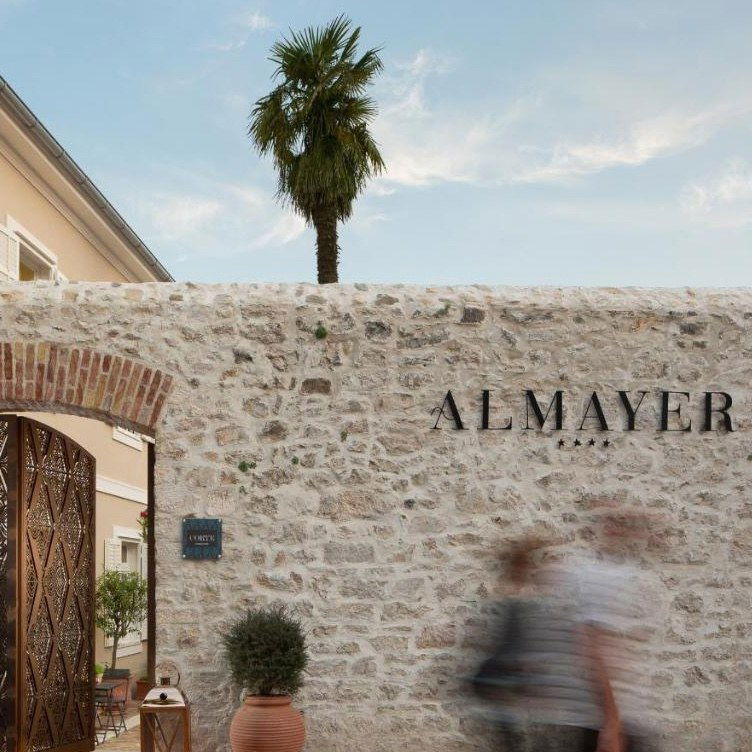
A MICHELIN Selected property occupying a converted heritage building in the heart of Zadar's old town, Almayer Art & Heritage Hotel and Dépendance places itself within a growing tier of Croatian hotels where architectural integrity and cultural identity do more work than resort amenity counts. The address on Ulica Brace Bersa puts guests within walking distance of the Roman Forum and the Sea Organ, two anchors of any serious Zadar visit.
Stone, Memory, and the Architecture of Staying in Zadar
Zadar's old town is a layered document. Roman columns share pavement with Venetian facades, Habsburg-era civic buildings, and the occasional Brutalist interruption from post-war reconstruction. Walking into this peninsula is less like entering a museum and more like reading a city that never fully erased its previous drafts. Hotels that occupy historic structures here carry an obligation that purpose-built resorts on the Dalmatian coast simply do not face: the building itself is part of the guest experience, and the quality of the intervention, how much original fabric survives, how sensitively new elements are introduced, determines whether the property feels like a genuine heritage stay or a themed product.
Almayer Art & Heritage Hotel and Dépendance, addressed at Ulica Brace Bersa 2, sits inside this older built fabric rather than alongside it. The dual-structure format, a main hotel building paired with a separate Dépendance, is an arrangement that appears more often in Central European grand hotel tradition than in Adriatic coastal hospitality. It signals a particular relationship with the physical premises: two buildings, presumably acquired and converted at different points, now operating as a single property. That configuration tends to produce a more varied room character than a single new-build would offer, with guests in each structure experiencing different ceiling heights, window orientations, and material palettes.
Where Almayer Sits in Croatia's Heritage Hotel Tier
Croatia's premium accommodation market has developed two broadly distinct formats over the past decade. The first is the large-footprint resort: properties like Grand Park Hotel Rovinj by Maistra Collection in Rovinj or Girandella Resort, Valamar Collection in Rabac, which compete on wellness infrastructure, beach access, and branded consistency. The second is the smaller, design-led heritage conversion, where the building's age and cultural specificity are the primary assets. Almayer belongs to this second category.
Within that heritage tier, the Michelin Hotels selection for 2025 is a meaningful benchmark. Michelin's hotel program applies the same editorial selectivity to accommodation that its restaurant guides apply to dining, and inclusion signals a consistent quality threshold rather than a marketing arrangement. Almayer's presence on the 2025 MICHELIN Selected Hotels list places it in a peer set that includes properties such as Aminess Korčula Heritage Hotel in Curzola and Lešić Dimitri Palace in Korčula, both of which similarly convert historic Dalmatian structures into considered accommodation. That peer group tends to attract guests who are visiting the city itself rather than retreating from it, and who want the building they sleep in to connect to the place rather than insulate them from it.
For context on what the heritage conversion model looks like at different scales across Croatia, San Canzian Hotel & Residences in Buje, Hotel Kastel in Motovun, and Boutique Hotel Alhambra in Mali Losinj each represent the format applied to different building typologies and island or inland contexts. Almayer's specific contribution is applying that approach to the dense urban grain of Zadar's old town, a setting where the logistical constraints of a UNESCO-adjacent historic centre shape what conversion architecture can and cannot do.
The Physical Setting: Zadar's Old Town as Context
The Roman Forum in Zadar is one of the largest surviving Roman public spaces in the eastern Adriatic, and it sits a short walk from the Almayer address. The Cathedral of St Anastasia, the Church of St Donatus built on Roman foundations in the ninth century, the Sea Organ designed by architect Nikola Bašić and inaugurated in 2005: these are not decorative backdrops but functioning parts of daily life in the old town, audible and visible from any position within the peninsula. A heritage hotel in this neighbourhood draws meaning from proximity to these structures whether or not it markets that proximity explicitly.
The Dépendance format, that secondary building, is particularly well-suited to old town conditions, where a single large floor plate is rarely available. It allows the property to expand capacity without requiring demolition of existing party walls or insertion of modern circulation cores into a primary historic structure. In practice, guests choosing between main house rooms and Dépendance rooms are choosing between two different built environments within the same property, a distinction worth considering when booking.
Placing Almayer in Your Dalmatian Itinerary
Zadar functions well as a base for island access. Dugi Otok, where Villa Nai 3.3 operates as an isolated design property, is reachable by ferry from Zadar. Ugljan, home to LIOQA Resort, sits even closer. For travellers combining city stays with more remote island time, Almayer's old-town address represents the urban anchor of an itinerary that might then move outward. Zadar also has a functioning international airport, which makes it a practical entry point for the northern Dalmatian coast rather than a deviation from the Split or Dubrovnik routing that many Adriatic itineraries default to.
Travellers approaching from the north, via Istria, might also consider how Zadar connects to properties like Ikador Luxury Boutique Hotel & Spa in Ika or Lone Hotel by Maistra Collection in Rovinj as part of a longer Croatian coastal route. For those extending south toward Split or Dubrovnik, D-Resort Šibenik sits roughly between Zadar and Split as a logical next stop, and Hotel Ambasador Split anchors the Split end of that corridor.
For the Zadar dining scene beyond the hotel, our full Zadar restaurants guide covers the old town's leading options across categories, from the fish market adjacents along Kalelarga to the more considered contemporary Dalmatian cooking that has emerged in the past several years.
Planning Your Stay
Almayer's old-town location means that driving to the door is complicated by the pedestrianised nature of the peninsula; guests typically park at the edge of the old town and arrive on foot, which is worth factoring into arrival logistics, especially with larger luggage. The property's MICHELIN Selected status for 2025 makes advance booking advisable for peak summer travel, when Zadar's old town accommodation fills quickly across all categories. The Dépendance structure means that room types differ across the property, and specifying a preference at booking stage is likely worth the effort. For properties at comparable or higher price points in the broader Adriatic region, Maslina Resort in Stari Grad and Villa Korta Katarina & Winery in Orebić offer useful calibration points on what the Dalmatian heritage and design-led tier looks like at a more resort-oriented scale.
Frequently Asked Questions
- Is Almayer Art & Heritage Hotel and Dépendance more formal or casual?
- In the context of Zadar's heritage hotel tier, properties of this type tend toward a composed but not stiff register: the building and its art-focused identity carry the atmosphere without requiring black-tie formality. MICHELIN Selected status signals a consistent service standard, but the old-town pedestrian setting and the building's converted character point toward a guest experience that is attentive rather than ceremonious. If the price point and aesthetic match your expectations for a considered Croatian city stay, the register is likely to match as well.
- What room category do guests prefer at Almayer Art & Heritage Hotel and Dépendance?
- The dual-structure format, main hotel plus Dépendance, means the property offers meaningfully different room environments under one booking umbrella. Generally, guests with a preference for the most original architectural fabric gravitate toward whichever structure retains more period detail, whether that is the main building or the Dépendance depends on the specific conversion. Without room-by-room data, the most reliable approach is to contact the property directly and ask which rooms have the highest ceilings, original flooring, or most intact historic fabric, information the front desk can answer specifically.
- Why do people go to Almayer Art & Heritage Hotel and Dépendance?
- Zadar's old town is one of the more historically dense urban environments on the Adriatic coast, and Almayer offers a way to sleep inside that density rather than arriving from a peripheral resort. The MICHELIN Selected recognition for 2025 provides external validation for those calibrating quality expectations, and the art-and-heritage framing attracts guests who want the building and its cultural context to be part of what they are paying for, not merely a backdrop to pool access or spa treatments.
- Do they take walk-ins at Almayer Art & Heritage Hotel and Dépendance?
- For a MICHELIN Selected property in Zadar's old town, walk-in availability during summer months is unreliable. The peninsula's accommodation is finite, demand peaks sharply from June through August, and properties at this tier are typically booked well in advance. Outside peak season, particularly in May, September, and October, walk-in enquiries are more viable, but contacting the property directly in advance remains the more practical approach. Neither phone nor website data is available in our current record, so approaching through a booking platform or the Michelin Hotels portal is the clearest route.
- What makes Almayer's dual-building format different from a standard boutique hotel stay in Croatia?
- The main hotel plus Dépendance configuration is relatively unusual in Dalmatian hospitality, where most heritage conversions occupy a single historic structure. At Almayer, guests are effectively choosing between two distinct built environments within one property, each likely carrying different ceiling heights, room orientations, and material character. This format is more common in Central European grand hotel tradition and adds a layer of room-selection nuance that a standard single-building boutique does not offer. For guests who care about the specific architecture of the room they occupy, the MICHELIN Selected recognition and the Art & Heritage branding both signal that this distinction is intentional rather than incidental.
Recognized By

Similar venues by awards
Related editorial
- Asia's 50 Best Restaurants 2026: The Chairman and Wing Go 1-2 from the Same BuildingThe Chairman takes No. 1 and Wing climbs to No. 2 at Asia's 50 Best Restaurants 2026. Both operate from the same Hong Kong building. Here's what it means.
- Four Seasons Yachts Debut: 95 Suites, 11 Restaurants, and a March 2026 Maiden VoyageFour Seasons I launches March 20, 2026, with 95 suites, a one-to-one staff ratio, and 11 onboard restaurants. Worth tracking if you want hotel-grade service at sea.
- LA Michelin Guide 2026: Seven New Restaurants from Tlayudas to Uzbek DumplingsMichelin's March 2026 California Guide update adds six LA restaurants and one Montecito newcomer, spanning Oaxacan tlayudas, Uzbek manti, and Korean-Italian pasta.
Save or rate Almayer Art \u0026 Heritage Hotel and Dépendance on Pearl
Keep this venue in your Pearl passport, rate it after you visit, and track it alongside every other place you collect.