
Hacienda Temozon
Temozon Sur
Hotel in Temozon Sur, Mexico
 Book with Pearl
Why go
Hacienda Temozon is worth considering if the goal is a Yucatán hacienda stay with credible hotel recognition rather than a beach or city base. The MICHELIN Guide hotel selection is the clearest trust signal, but price, room, dining, and booking specifics should be checked before treating it as the easy default.
About Hacienda Temozon
Hacienda Temozon’s strongest distinction is its MICHELIN Guide, Hotels Selected (2025) recognition. Consider it as a Temozon Sur hotel with a recognized guide listing, and confirm facilities, dining, pricing, and room types directly before booking.
For planning, keep the decision grounded in the essentials: the venue is Hacienda Temozon in Temozon Sur, and the dress code is smart casual. If you need specific details such as dining format, room categories, rates, amenities, or transport logistics, confirm them directly before booking.
A Temozon Sur stay with a MICHELIN hotel selection
Book this if the MICHELIN Guide, Hotels Selected (2025) recognition is a meaningful trust signal for your shortlist. Do not assume a specific service style, resort facilities, cuisine, room count, or price level without checking directly.
The practical tradeoff is that key booking details should be clarified in advance. Hacienda Temozon is in Temozon Sur and has a smart casual dress code, but meal service, wellness facilities, loyalty benefits, and booking inclusions should be confirmed through official booking channels before committing.
Compared with other dining or hotel options in Temozon Sur, Hacienda Temozon should be considered on the basis of its recognition and location, not on assumptions about amenities or itinerary fit.
Quick reference: Temozon Sur location, smart casual dress code, and MICHELIN Guide, Hotels Selected (2025) recognition; other specifics should be checked directly.
Part of
Luxury Collection87 locations on PearlPlanning details
- Location
- KM 182 Carretera, Merida-Uxmal, Temozon Sur, Mexico
- Phone
- +52.999.923.8089
The take
The Take
The Vibe
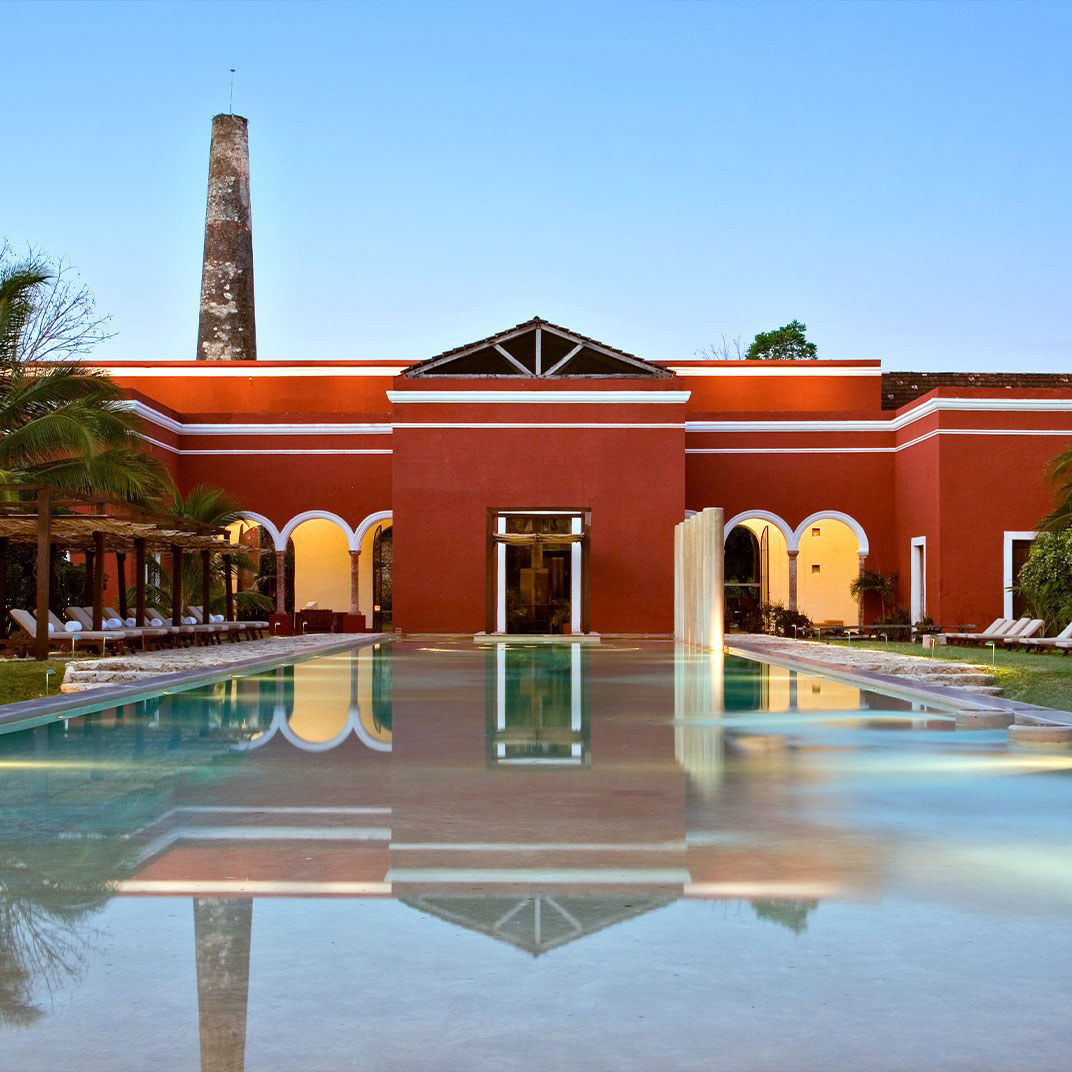
Hacienda Temozón presents as an immersive historic estate rather than a purpose-built luxury hotel. The property foregrounds original industrial infrastructure — chimneys, machinery halls and aqueduct systems — repurposed into living spaces, so the scale feels generational and weighty. Thick stone walls and arched colonnades shape movement and climate control, giving the place a tactile, conserved character. The restoration reads as conservation-led rather than curated minimalism, and the Michelin Selected recognition underscores a quietly elevated sensibility. Overall, the atmosphere leans toward contemplative and architecturally rich rather than overtly contemporary.
Best For
This hotel suits travelers who want to experience an authentic Yucatán hacienda and visitors en route between Mérida and the archaeological site at Uxmal. The estate’s intact processing structures and large-scale agricultural architecture appeal to history and design-minded guests who appreciate material texture and conservation. Couples seeking a secluded, historically resonant base and anyone drawn to slow, site-specific hospitality will find Temozón rewarding. Because the property emphasizes its inherited structure and scale, it is particularly good for guests who value atmosphere and architectural narrative over trend-driven design.
Stay Tips
Hacienda Temozón sits at KM 182 on the Mérida–Uxmal highway, so plan transport accordingly and allow time to move between town and site. Visitors interested in the property’s architecture should set aside time to walk the estate and inspect the repurposed processing spaces, chimneys and aqueducts — these elements are the central reason to stay. Note that the hotel’s thick stone construction moderates heat naturally, which affects the feel of rooms and common areas; pack with that mellow climate in mind. The property’s Michelin Selected recognition suggests peak interest, so consider confirming availability in advance.
Venue details
Ambiance
Elegant colonial atmosphere with high ceilings, polished antique furnishings, and serene tropical garden surroundings.
Tags
Vibe
Best For
Experience
Amenities
View
About the Stay
- Rooms
- 28
- Check-in
- 15:00
- Check-out
- 12:00
- Property Type
- Heritage hotel
- Property Style
- Historic Hacienda with Modern Luxury
- Design Style
- Colonial Chic with Mayan Influences and Antique Furnishings
- Airport Transfer
- Available
- Pool
- Yes
- Spa
- Yes
- Pets
- Allowed
- Families
- Welcome
- Cancellation
- Moderate
Know before you go
Know Before You Go
- Getting there
- KM 182 Carretera, Merida-Uxmal, Temozon Sur, Mexico
Planning details
Location
KM 182 Carretera, Merida-Uxmal, Temozon Sur, Mexico · Directions
Recognition and awards
Explore Temozon Sur
Around this place
Discover more on Pearl
Unlock the full Hacienda Temozon guide in Pearl, including awards, comparisons, FAQs, planning details, and nearby places.
FAQ
Frequently Asked Questions
How is the dining at Hacienda Temozon?
For dining format, cuisine, menu, meal periods, or pricing at Hacienda Temozon, check directly before booking. Hacienda Temozon is in Temozon Sur, has a smart casual dress code, and is listed as MICHELIN Guide, Hotels Selected (2025).
How is the pool and spa at Hacienda Temozon?
What is check-in like at Hacienda Temozon?
Which room category is best at Hacienda Temozon?
Review the venue's official room descriptions and booking channels for the latest room details before choosing a category.
Do loyalty programs work at Hacienda Temozon?
Do not plan around points, upgrades, or elite benefits unless your booking channel confirms them directly.