
Hotel in Speziale Di Fasano, Italy
Masseria Narducci
150ptsLimestone Farmstead Lodging

About Masseria Narducci
A Michelin Selected masseria in the Fasano countryside, Masseria Narducci sits within the dry-stone and whitewashed vernacular that defines Puglia's most enduring rural architecture. The property occupies a quietly authoritative position in a region where trulli-dotted estates and olive groves set the terms for what premium hospitality looks like. For travellers who find Borgo Egnazia too large and the coast too exposed, this offers a different register entirely.
Stone, Silence, and the Pugliese Masseria Tradition
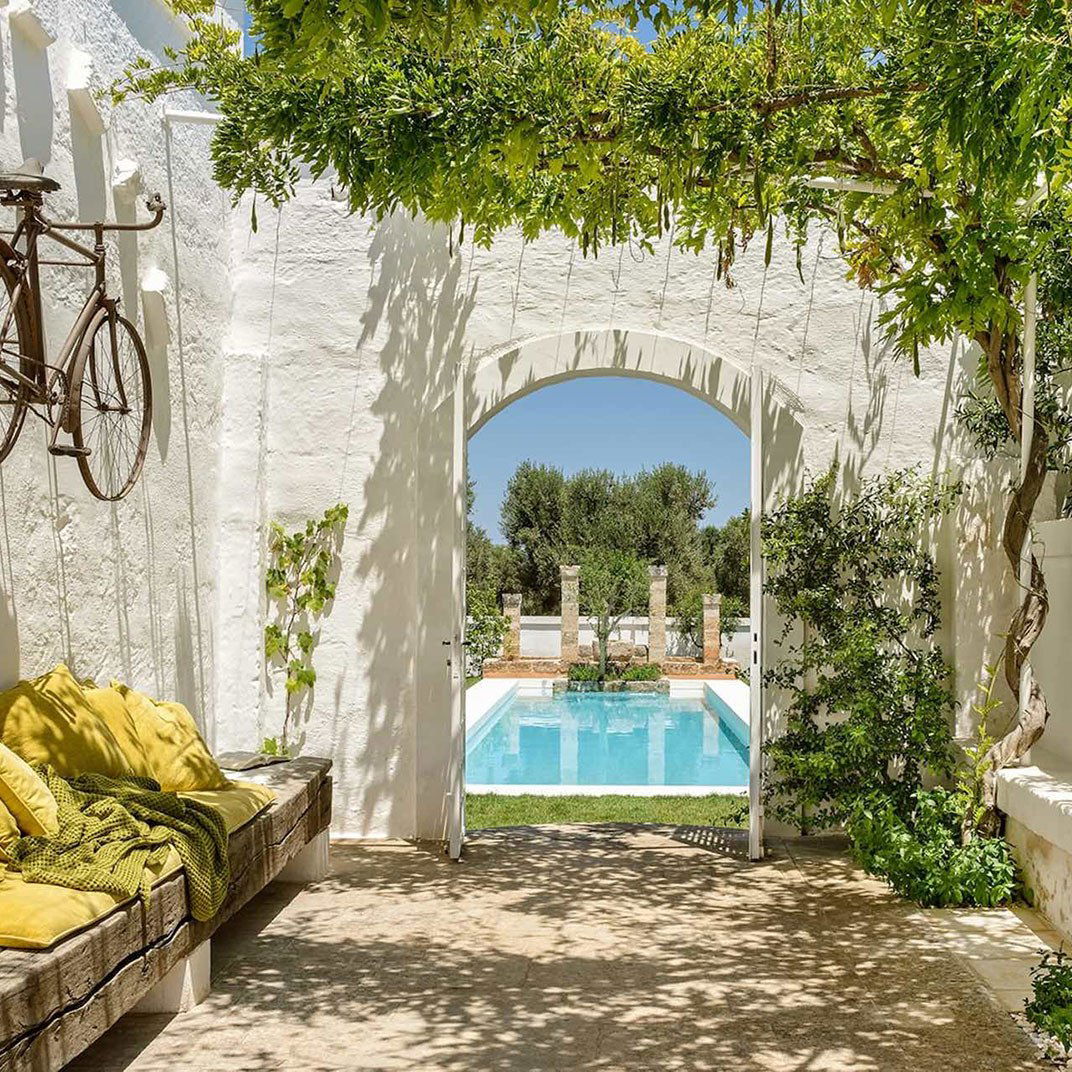
The masseria is not a hotel that happens to occupy a historic building. It is an architectural typology with its own logic: thick limestone walls engineered for summer heat, inward-facing courtyards that catch shadow rather than view, and a proportional language derived from centuries of agricultural function rather than aesthetic ambition. Across the Valle d'Itria and the Fasano hinterland, this building type has become the dominant format for premium rural accommodation, and the quality of any individual property is leading read through how faithfully it honours those structural principles rather than how many amenities it layers on leading of them.
Masseria Narducci, addressed at Via Lecce 144 in the Speziale di Fasano locality, sits within that tradition. Its Michelin Selected recognition in the 2025 hotel guide places it in a verified tier of properties that the guide's editors consider worthy of a detour, a designation that carries weight precisely because it applies across categories and price points rather than rewarding scale or brand affiliation alone. In a region that has seen significant investment in rural hospitality over the past decade, Michelin's selection functions as a form of editorial shortlisting rather than a guarantee of a particular experience, and that framing is useful here.
The Physical Language of the Fasano Countryside
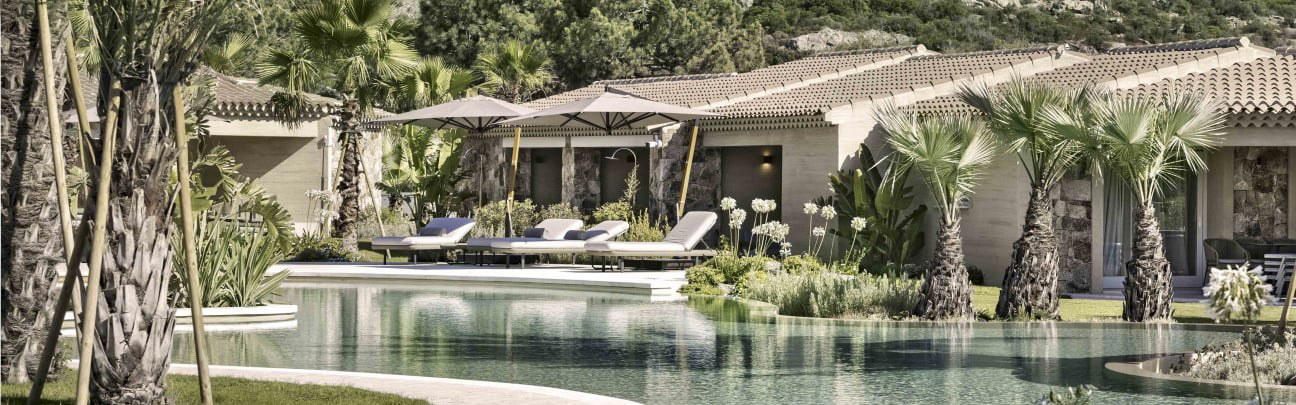
Puglia's premium masserie share a consistent visual grammar: rendered or bare limestone exteriors, shallow-pitched roofs, and the kind of horizontal stillness that reads as austerity from the road and as calm once you are inside the gate. The landscape around Speziale di Fasano reinforces this quality. The town sits inland from the Adriatic coast, above Savelletri and the resort strip, in the transitional zone where the flat coastal plain begins to corrugate into the gentler hills running toward Alberobello. Olive groves here are not decorative; many of the trees in this corridor are centuries old, and their presence gives properties a sense of permanence that newer construction cannot replicate.
For context on where Masseria Narducci sits in the regional peer set, it is worth mapping the spread. At the larger, more resort-oriented end, Borgo Egnazia in Savelletri di Fasano operates at significant scale, with multiple pools, a destination spa, and an event infrastructure that places it in a different competitive category entirely. Narducci belongs to the smaller, quieter tier, where the architecture itself is the primary offering and the surrounding countryside is understood as part of the stay rather than backdrop to a self-contained resort. That distinction matters when choosing between them. For other points of comparison within Italy's broader design-led rural accommodation category, properties like Rosewood Castiglion Del Bosco in Montalcino and Borgo San Felice Resort in Castelnuovo Berardenga occupy analogous positions in Tuscany: historic agricultural estates converted with restraint and carrying editorial recognition that signals curation over volume.
Approaching the Property
The Fasano area is served by Brindisi Airport to the south, approximately 40 kilometres from the Speziale locality, and by Bari Karol Wojtyla Airport to the north, roughly 70 kilometres distant. Neither journey takes more than an hour by car, and the drive through the olive belt on the SS16 and connecting provincial roads is itself a useful orientation to the territory's character. A hire car is functionally necessary for any stay in this part of Puglia; the masseria's position on Via Lecce, outside the immediate town centre, is not walkable to the coast or to Fasano's restaurants and markets. This is not a limitation so much as a condition of the format: the masseria tradition assumes private transport, and the surrounding landscape rewards it.
Guests approaching from the Ostuni direction pass through one of Puglia's most photographed whitewashed towns before descending into the Fasano plain, a sequence that sharpens appreciation for the masseria's lower-profile vernacular once you arrive. The property's address places it in the Montalbano district of Speziale di Fasano, a sub-locality that sits in the quieter agricultural fringe rather than the commercial centre.
Where Masseria Narducci Fits the Wider Italian Picture
Italy's premium rural hotel category has bifurcated over the past decade. One branch runs toward the branded resort model, where international groups have acquired historic estates and fitted them with the full infrastructure of destination hotels. The other branch retains the smaller-scale, owner-operated or independently managed character that the masseria format originally implied. Michelin's hotel selection acknowledges both, but its editorial value is arguably higher for the second category, where third-party recognition provides orientation that brand identity cannot. Narducci's inclusion in the 2025 Michelin Selected list places it in that verified independent tier.
For travellers building an Italian itinerary that combines multiple property types, the Puglia leg sits in an interesting position. The region does not carry the same immediate recognition as Tuscany or the Amalfi Coast, which means the properties here compete on intrinsic character rather than destination status. That gap is closing: Borgo Santandrea on the Amalfi Coast and Il San Pietro di Positano represent the more established southern Italy premium set, but they operate in a coastal idiom that is fundamentally different from the inland masseria experience. For the full range of what Italian editorial hotels look like, our coverage also includes Aman Venice, Four Seasons Hotel Firenze, Passalacqua in Moltrasio, Casa Maria Luigia in Modena, Bulgari Hotel Roma, Portrait Milano, Il Pellicano in Porto Ercole, Castello di Reschio in Lisciano Niccone, Corte della Maestà in Civita di Bagnoregio, Castel Fragsburg in Merano, Bellevue Hotel & Spa in Cogne, Il Sereno in Torno, Grand Hotel Tremezzo in Tremezzo, Therasia Resort in Lipari, and Savoia Excelsior Palace Trieste. For properties outside Italy in a comparable editorial tier, see JK Place Capri, Badrutt's Palace Hotel in St. Moritz, Hôtel de Paris Monte-Carlo, and The Fifth Avenue Hotel in New York City.
For a full picture of what Speziale di Fasano and the surrounding area offer, see our full Speziale di Fasano guide.
Planning Your Stay
Puglia's masseria season runs most actively from late April through October, with August representing both the peak demand period and the most pressured booking window. The Fasano area specifically sees significant European visitor traffic in July and August, when coastal access and the relative coolness of the inland hills make properties like Narducci particularly sought after. Approaching outside those peak months, particularly in May, June, or September, gives a materially different experience of the countryside: harvests, different light, and a quieter road network.
Given the property's Michelin Selected status and the general demand pattern for well-recognised smaller masserie in this corridor, early booking is advisable for summer stays. The absence of a published direct booking channel in current records suggests contacting the property directly or working through a specialist travel service. Pricing data is not available in our current database, but the Michelin Selected tier in this region spans a wide range, from mid-market agriturismo with editorial recognition to fully serviced boutique properties; the property's specific positioning within that range warrants direct inquiry.
Frequently Asked Questions
- How would you describe the overall feel of Masseria Narducci?
- The feel here is shaped by its architectural type rather than by any particular decorative programme. Pugliese maserie are built for stillness: thick walls, inward courtyards, and agricultural proportions that prioritise shade and enclosure over panoramic exposure. Michelin's 2025 Selected designation confirms the property meets an editorial threshold, but the dominant character is the quietude of the Fasano countryside itself. If you arrive expecting the resort energy of the coast, recalibrate: this is a property where the building and its land do most of the work.
- Which room category should I book at Masseria Narducci?
- Without current room category data in our records, the most direct guidance is to ask the property which accommodation type has the strongest connection to the historic masseria structure itself, as opposed to any more recently added annexe or external unit. In the masseria format generally, rooms within the original farmhouse body tend to carry the most architectural integrity. Michelin's Selected status applies to the property as a whole rather than to specific room types, so host-level guidance is the most reliable filter here.
- What is the standout thing about Masseria Narducci?
- In the Fasano countryside, what differentiates a Michelin Selected property from the broad range of masseria accommodation is editorial validation of its overall offer: setting, hospitality standard, and spatial quality assessed against regional peers. Narducci holds that designation for 2025, which places it in a shortlisted group within a region that has seen significant growth in rural accommodation supply. The building's position in the agricultural landscape between Speziale and the Valle d'Itria corridor is the material context for that distinction.
- Should I book Masseria Narducci in advance?
- For summer travel, particularly July and August, yes: the Fasano hinterland sees sustained demand from European travellers, and smaller Michelin Selected properties in this corridor fill well ahead of peak season. For spring and autumn travel, the window is more forgiving, though the property's recognition makes early contact advisable regardless of timing. Direct booking contact details are not currently in our database, so reaching out via the property's address at Via Lecce 144, Montalbano, Speziale di Fasano, or through a specialist concierge service, is the practical path.
- Is Masseria Narducci a good base for exploring the Valle d'Itria and the trulli towns?
- Its location in the Speziale di Fasano locality places it in the transitional zone between the coastal strip and the Valle d'Itria, which means Alberobello, Locorotondo, and Martina Franca are all within a 30-to-45-minute drive. Michelin Selected hotels in this part of Puglia typically appeal to travellers who want a rooted base for day-trip exploration rather than a self-contained resort, and Narducci's inland position, away from the coast's summer congestion, supports that pattern. A hire car is essential for this kind of itinerary.
Recognized By
Similar venues by awards
Related editorial
- Asia's 50 Best Restaurants 2026: The Chairman and Wing Go 1-2 from the Same BuildingThe Chairman takes No. 1 and Wing climbs to No. 2 at Asia's 50 Best Restaurants 2026. Both operate from the same Hong Kong building. Here's what it means.
- Four Seasons Yachts Debut: 95 Suites, 11 Restaurants, and a March 2026 Maiden VoyageFour Seasons I launches March 20, 2026, with 95 suites, a one-to-one staff ratio, and 11 onboard restaurants. Worth tracking if you want hotel-grade service at sea.
- LA Michelin Guide 2026: Seven New Restaurants from Tlayudas to Uzbek DumplingsMichelin's March 2026 California Guide update adds six LA restaurants and one Montecito newcomer, spanning Oaxacan tlayudas, Uzbek manti, and Korean-Italian pasta.
Save or rate Masseria Narducci on Pearl
Keep this venue in your Pearl passport, rate it after you visit, and track it alongside every other place you collect.