
Poseidonion Grand Hotel Spetses
Dapia, Spetses
Hotel in Spetses, Greece
 Book with Pearl
Why go
Poseidonion Grand Hotel Spetses is the practical pick for travelers who want a polished base in Dapia rather than a remote resort setup. It makes the strongest case for business-leisure stays, hosted trips, and repeat Spetses visitors who care about easy movement around town more than seclusion.
About Poseidonion Grand Hotel Spetses
Poseidonion Grand Hotel Spetses is in Spetses, with smart casual dress and MICHELIN Guide, Hotels Selected (2025) recognition.
Consider it when you want an option in Spetses with a recognized guide listing, and compare it with other stays based on your own dates, needs, and current availability. If your trip depends on particular amenities, views, transfers, spa access, family arrangements, or dining plans, check those details with the property rather than assuming them from a general guide description.
Better for guide recognition than assumed specifics
The clearest point is the MICHELIN Guide, Hotels Selected (2025) recognition. That is a useful signal for travelers building a shortlist, but it should not be stretched into claims about facilities, service style, exact location within Spetses, or the kind of stay every guest will have.
Use that recognition as one input rather than the whole decision. Poseidonion Grand Hotel Spetses may belong on a Spetses shortlist for travelers who value guide recognition, but details such as room category, quietness, views, dining, spa access, and family suitability should be checked against current information before booking.
Book for a Spetses option, not for promises
With public rate, room count, booking difficulty, and full amenity details best checked directly, the practical rule is to judge value against your own purpose. If the stay needs to be in Spetses and you want a place with MICHELIN Guide, Hotels Selected (2025) recognition, it is a relevant option to consider. If the priority is a specific facility, package, or room feature, check that directly before committing.
For broader planning, compare Poseidonion Grand Hotel Spetses with other options that fit your trip style. Amanzoe, Euphoria Retreat, Kinsterna Hotel, La Villa de Madeleine, and Mandraki Beach Resort may suit different travel priorities, so treat them as separate options rather than assuming they answer the same Spetses brief.
The clearest verdict: choose Poseidonion Grand Hotel Spetses when you want a Spetses option with smart casual dress and MICHELIN Guide, Hotels Selected (2025) recognition. Skip any assumption about exact amenities, location details, service format, or pricing unless you have checked those details for your dates.
Planning details
- Location
- Ντάπια, Spetses 180 50, Greece
- Website
- poseidonion.com/en
- Phone
- +30 2298 074553
The take
The Take
The Vibe
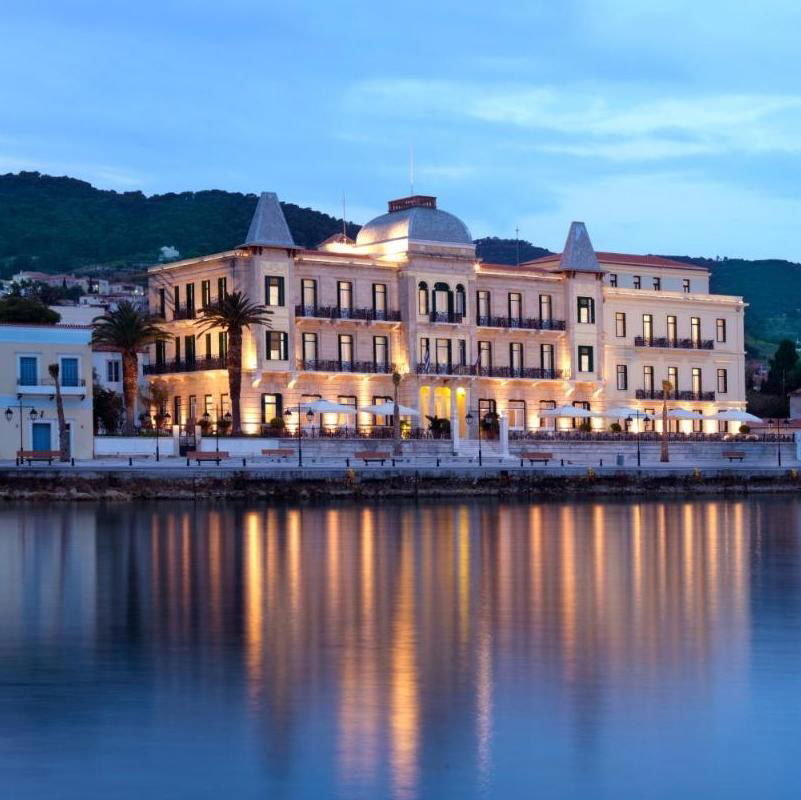
The Poseidonion presents itself as an architectural anchor on Spetses’ Dapia harbour. Built in 1914 and rendered in Edwardian neoclassical language, the hotel emphasizes proportion, colonnade and symmetry rather than modern amenity accretions. The writing privileges period authenticity and civic presence: from the water the pale facade reads as part of the town’s identity, not an imported resort. That historical weight and visibility create a stately, composed atmosphere: visitors encounter a hotel that was designed to be seen and that continues to shape how the island is experienced.
Best For
This is a stay for travelers who prize architecture, history and a quintessential island arrival. Guests who come by sea or by the town’s traditional modes, horse-drawn carriage or water taxi, will appreciate how the hotel is woven into Dapia’s rhythms. Poseidonion Grand Hotel Spetses also suits those who want a classic, quietly grand hotel with period authenticity and civic presence, and Michelin’s 2025 Selected nod underscores its position in the European hotel conversation.
Venue details
Ambiance
Turn-of-the-century grandeur with decorative archways, potted palms, trompe l'oeil tiled floors, and serene sea views evoking Golden Age elegance.
Tags
Vibe
Best For
Experience
Amenities
View
About the Stay
- Rooms
- 52
- Check-in
- 15:00
- Check-out
- 11:00
- Property Type
- Heritage hotel
- Property Style
- Historic Seafront Grand Hotel with Côte D'azur Inspired Architecture
- Design Style
- Classical Beaux Arts Blended with Contemporary Elegance
- Breakfast
- Included
- Pool
- Yes
- Spa
- Yes
- Families
- Welcome
- Cancellation
- Moderate
Know before you go
Know Before You Go
- Getting there
- Ντάπια, Spetses 180 50, Greece
Planning details
Location
Recognition and awards
Also consider
Also Consider
- Amanzoe, Notable alternative
- Mandraki Beach Resort, Notable alternative
- La Villa de Madeleine, Notable alternative
- Kinsterna Hotel, Notable alternative
- Euphoria Retreat, Notable alternative
Hotel context
How it compares in and around Spetses
Choose Poseidonion Grand Hotel Spetses for the more connected Spetses stay: it sits in the island's main harbor rhythm and carries MICHELIN Guide hotel selection recognition for 2025. Mandraki Beach Resort is the easier recommendation for guests who want a more resort-led beach mood, while La Villa de Madeleine reads better for travelers prioritizing a smaller, more private-feeling base.
Amanzoe is the splurge comparison: better for guests who want a destination resort experience and are less tied to Spetses town movement. Poseidonion is the more practical choice when meetings, dinners, and ferry timing matter. If wellness is the main reason for the trip, Euphoria Retreat is the cleaner fit; it is built around that purpose in a way a harbor hotel is not.
Kinsterna Hotel suits travelers who want a mainland heritage-hotel feel and a quieter sense of removal. Poseidonion is stronger for a Spetses-specific stay where ambiance and convenience need to work together. Booking is listed as easy here, so it is also the safer fallback when the plan is fixed and the trip needs less reservation drama.
Explore Spetses
Around this place
Discover more on Pearl
Unlock the full Poseidonion Grand Hotel Spetses guide in Pearl, including awards, comparisons, FAQs, planning details, and nearby places.
Compare Poseidonion Grand Hotel Spetses
| Venue | Location | Awards |
|---|---|---|
| Poseidonion Grand Hotel Spetses | Spetses | 2025 Michelin Selected Hotels |
| Amanzoe | Porto Heli | 2026 Virtuoso Luxury Hotel Collection2026 Mr & Mrs Smith Luxury Hotels2026 La Liste Top Hotels2026 Michelin 2 Keys2025 Michelin 2 KeysAman Hotels |
| Mandraki Beach Resort | Hydra | No published awards |
| La Villa de Madeleine | Arcadia | No published awards |
| Kinsterna Hotel | Monemvasía | No published awards |
| Euphoria Retreat | Mystras | World Spa Awards: Greece's Best Wellness Retreat 2026 · #12026 Virtuoso Luxury Hotel CollectionMichelin 1 Key 20252025 Michelin 1 KeySmall Luxury Hotels Member 2025 |








How Poseidonion Grand Hotel Spetses compares with similar nearby venues.
FAQ
Frequently Asked Questions
Do loyalty programs work at Poseidonion Grand Hotel Spetses?
If points, status benefits, or booking-channel perks matter, check them before reserving.
How does Poseidonion Grand Hotel Spetses compare to other options?
Poseidonion Grand Hotel Spetses is in Spetses with MICHELIN Guide, Hotels Selected (2025) recognition. Amanzoe, Euphoria Retreat, Kinsterna Hotel, La Villa de Madeleine, and Mandraki Beach Resort may fit different trip styles, so compare current location, facilities, and availability rather than assuming they serve the same purpose.