
Hotel in Snowmass, United States
Viceroy Snowmass
175ptsSlope-Side Mountain Lodging

About Viceroy Snowmass
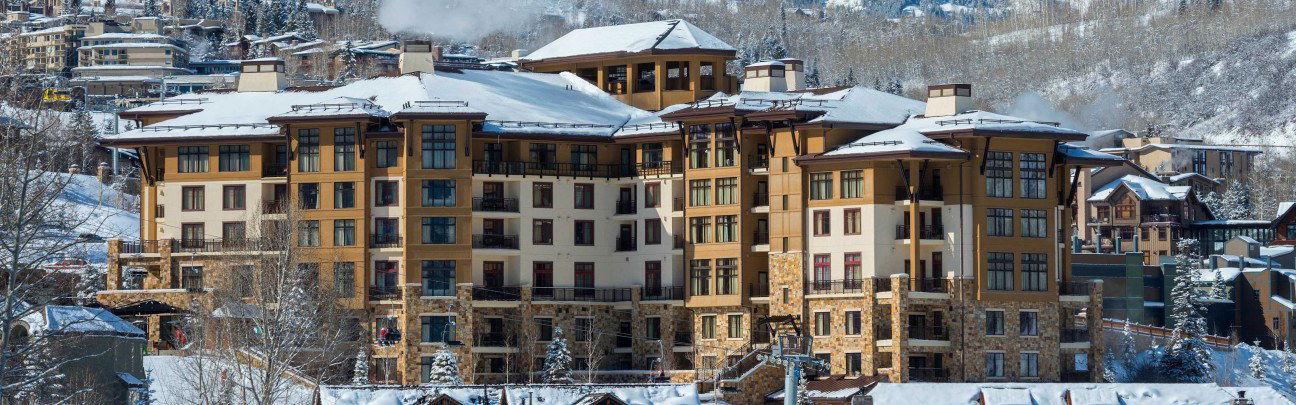
Viceroy Snowmass sits at the base of Snowmass Mountain, earning Michelin Selected recognition in 2025 as one of a small tier of Colorado mountain properties where ski-in, ski-out access meets considered design. The architecture integrates the scale of the Elk Mountains rather than competing with it, making the physical setting as deliberate as the hospitality program.
Where the Mountain Does the Heavy Lifting
Snowmass Village sits roughly four miles from Aspen proper, and that distance does a great deal of editorial work. Properties here trade Aspen's concentrated social energy for something more spatially generous: wider views, fewer crowds at the base, and a pace that rewards guests who came primarily for the terrain rather than the scene. Viceroy Snowmass, at 130 Wood Road, is positioned at the base of Snowmass Mountain in a way that removes the gap between lodging and skiing entirely. The building addresses the mountain directly, which in Colorado resort architecture is both a logistical claim and a design statement.
Among the handful of properties operating at this address and altitude, Viceroy Snowmass received Michelin Selected recognition in 2025, placing it in the curated tier of the Michelin hotel guide for the United States. That distinction does not rank properties by star count but instead flags hotels where the inspectors found the overall experience coherent and credible. In a mountain market where design ambition sometimes outpaces execution, that coherence matters more than square footage figures.
The Architecture of a Colorado Mountain Stay
Mountain resort architecture in the American West tends to split between two poles: the grand rusticated lodge tradition, all exposed timber and river stone, and the sleeker contemporary approach that uses the landscape as backdrop rather than as decorative vocabulary. Viceroy Snowmass operates closer to the latter register. The building's massing acknowledges the vertical drama of the Elk Mountains without replicating it in construction materials. Glass plays a significant role in how the property frames its surroundings, and the interior volumes are scaled to feel residential rather than institutional, which is a deliberate departure from the convention that mountain luxury requires cathedral ceilings and oversized chandeliers.
That design positioning places Viceroy Snowmass in a specific competitive set. Properties like Amangiri in Canyon Point have made landscape-responsive minimalism their defining architecture, and ski-adjacent properties in the Mountain West increasingly use that same logic. The question for any property adopting this approach is whether the restraint reads as intention or as absence. At Viceroy Snowmass, the reported coherence behind the Michelin selection suggests the former.
Compared to properties that prioritize historic or heritage character, such as Badrutt's Palace Hotel in St. Moritz or Hôtel de Paris Monte-Carlo, Viceroy Snowmass operates in a different register entirely. It is not trading on institutional history. Its authority comes from a direct relationship with terrain and from design choices that treat the mountain view as the primary amenity rather than as a backdrop to interior programming.
Ski-In, Ski-Out as a Design Principle
Ski-in, ski-out access is typically discussed as a logistical convenience, but it also shapes the entire rhythm of a stay. Properties where guests can move between snow and shelter without a vehicle or shuttle develop a different interior culture than those where the mountain requires a commute. Common spaces fill and empty in sync with lift schedules, apres-ski takes place on-site because the terrain is right outside, and the architecture has to perform across the full temperature range of a mountain day. Viceroy Snowmass is built around that rhythm, and its position at the Snowmass base area means the transition from heated interior to open mountain is as immediate as the design allows.
That immediacy is what separates ski-base properties from ski-adjacent ones, and it is increasingly rare even at premium price points. Properties like Sage Lodge in Pray and Dunton Hot Springs in Dunton understand this principle in their respective contexts: proximity to the natural draw is not incidental to the property's identity, it is structural to it. Viceroy Snowmass applies the same logic to a major ski resort format.
Snowmass in the Colorado Mountain Context
Snowmass Mountain holds more skiable terrain than any other mountain in the Aspen/Snowmass complex, and the village at its base has developed a distinct identity from Aspen over the past two decades. Where Aspen's accommodation and dining scene is compressed and walkable, with properties competing intensely for the same visitor attention, Snowmass is more spread out and destination-focused. Guests who stay here have generally chosen the mountain explicitly, not as an afterthought to the town.
That market self-selection is visible in how properties at Snowmass position themselves. The emphasis falls on slope access, on amenity depth (spas, pools, and food-and-beverage that make sense during a ski week), and on accommodation that can handle a group or family without feeling like a hotel corridor with ski lockers at the end. Viceroy Snowmass's room configuration, reported to include residences and multi-room options alongside standard hotel keys, fits that usage pattern. For a comparable approach to nature-proximate resort accommodation elsewhere in the western United States, Kona Village, A Rosewood Resort in Kailua Kona and Post Ranch Inn in Big Sur illustrate how destination-specific design can anchor a property's identity regardless of category.
Planning a Stay
Snowmass ski season typically runs from late November through mid-April, with the strongest snow conditions historically falling between January and March. For guests prioritizing slope quality over pricing, January and February represent the optimal window. Peak holiday periods, particularly the weeks around Christmas and New Year, compress availability significantly across all Snowmass properties, and Viceroy Snowmass, with its base-area position, is no exception. Booking lead times of several months are realistic for those periods. Spring skiing, when longer daylight hours and softer conditions define the mountain experience, tends to offer better availability with a somewhat different atmospheric character. For further context on what Snowmass offers across accommodation and dining categories, see our full Snowmass restaurants guide.
For travelers building a broader mountain itinerary, Washington School House Hotel in Park City offers a contrasting ski-town model, while urban counterparts like The Fifth Avenue Hotel in New York City, Raffles Boston, and Chicago Athletic Association represent the design-led independent hotel category in city contexts. Properties with strong wellness programming, such as Canyon Ranch Tucson and Canyon Ranch Lenox, sit in an adjacent hospitality niche for guests whose priorities extend beyond ski access. Wine country alternatives including Meadowood Napa Valley, SingleThread Farm Inn in Healdsburg, and The Stavrand in Guerneville complete a picture of how Michelin-recognized properties distribute across American hospitality categories. Further afield, Aman Venice and Four Seasons at The Surf Club in Surfside illustrate the international and coastal ends of the same design-coherent spectrum, while The Beverly Hills Hotel, Troutbeck in Amenia, Little Palm Island Resort and Spa, Bowie House in Fort Worth, and The Hornibrook Mansion Empress of Little Rock round out the broader Michelin Selected landscape across North America.
Frequently Asked Questions
Is Viceroy Snowmass more low-key or high-energy?
The property occupies a middle register. Its Snowmass Village location means it attracts guests whose primary purpose is skiing rather than social programming, which produces a noticeably different energy from Aspen's more concentrated dining-and-nightlife circuit. Amenities on-site cover the full range of a ski week without requiring guests to leave, but the atmosphere skews toward activity-recovery rather than late-night intensity. The Michelin Selected recognition signals coherence in execution rather than spectacle in format, which is a reasonable proxy for its overall register.
What is the leading room type at Viceroy Snowmass?
Without confirmed current pricing or configuration data in the EP Club database, a prescriptive answer would overstate certainty. What the property's ski-base position and Michelin recognition suggest is that accommodation with direct slope orientation captures the core design logic of the building most fully. Multi-room configurations, where available, align with the typical Snowmass visitor pattern of group or family travel over multi-night stays. Direct contact with the property is the appropriate route for confirmed room-type specifics and current availability.
Recognized By

Related editorial
- Asia's 50 Best Restaurants 2026: The Chairman and Wing Go 1-2 from the Same BuildingThe Chairman takes No. 1 and Wing climbs to No. 2 at Asia's 50 Best Restaurants 2026. Both operate from the same Hong Kong building. Here's what it means.
- Four Seasons Yachts Debut: 95 Suites, 11 Restaurants, and a March 2026 Maiden VoyageFour Seasons I launches March 20, 2026, with 95 suites, a one-to-one staff ratio, and 11 onboard restaurants. Worth tracking if you want hotel-grade service at sea.
- LA Michelin Guide 2026: Seven New Restaurants from Tlayudas to Uzbek DumplingsMichelin's March 2026 California Guide update adds six LA restaurants and one Montecito newcomer, spanning Oaxacan tlayudas, Uzbek manti, and Korean-Italian pasta.
Save or rate Viceroy Snowmass on Pearl
Keep this venue in your Pearl passport, rate it after you visit, and track it alongside every other place you collect.