
Hotel in Siem Reap, Cambodia
Raffles Grand Hotel d\u0027Angkor
200ptsColonial Heritage Hospitality

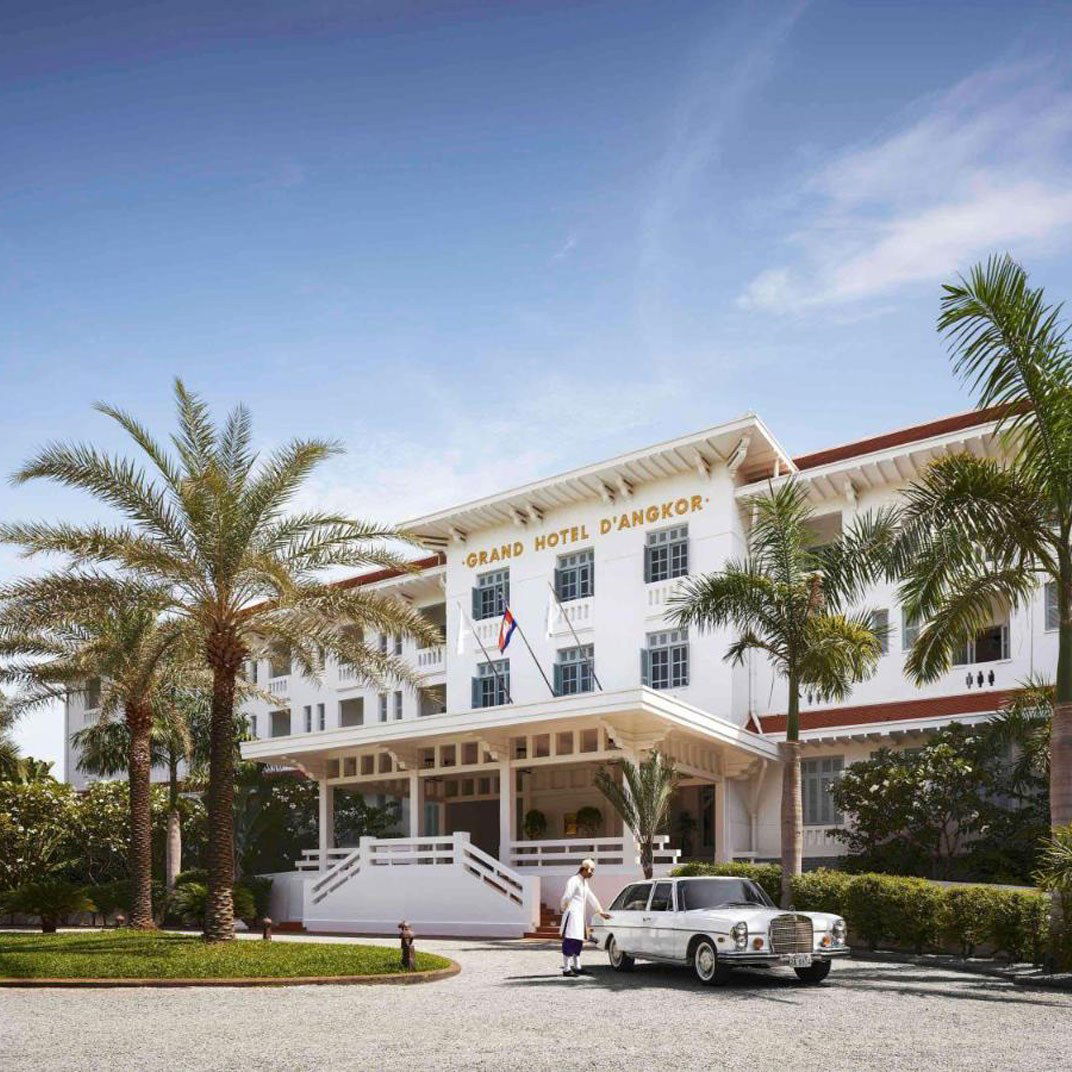
About Raffles Grand Hotel d\u0027Angkor
Raffles Grand Hotel d'Angkor holds a One MICHELIN Key distinction in Siem Reap's 2025 guide, placing it among a small tier of properties recognised for hospitality quality in Cambodia. The colonial-era address on Vithei Charles De Gaulle sits at the edge of the town centre, within reach of the temple complex, and operates in a category where heritage architecture, attentive service culture, and institutional credentials form the core guest proposition.
Where Colonial Architecture Meets a Recognisable Standard of Care
Siem Reap's hotel market has stratified sharply over the past decade. At one end, the town supports dozens of mid-range guesthouses and international business-chain properties positioned for high-turnover temple tourism. At the other, a smaller cohort of hotels competes on credentials: institutional heritage, service culture, and the kind of calibrated formality that Michelin's hospitality evaluators recognise when awarding a Key distinction. The Raffles Grand Hotel d'Angkor sits in that upper tier, its 2025 One MICHELIN Key recognition placing it alongside a select group of Siem Reap properties assessed not on price alone but on the consistency and intentionality of the guest experience.
The building itself is the first argument the hotel makes. Colonial-era properties of this scale are rare in mainland Southeast Asia outside of Vietnam and Myanmar, and rarer still when they retain period architectural character rather than concealing it behind contemporary renovation layers. Approaching along Vithei Charles De Gaulle, the classical facade reads as institutional in the proper sense: wide verandas, symmetrical fenestration, and a sense of permanence that newer properties in the city cannot replicate through design alone. That physical presence matters in a city where the surrounding landscape is defined by one of the world's most visited archaeological sites. The hotel's address on a named boulevard rather than a lane off the Night Market strip signals its position in the city's social and civic geography.
The Service Architecture at Heritage Hotels
The hospitality standard that earns Michelin Key recognition is not primarily about facilities. Evaluators assess whether the human layer of a stay, the quality of arrival, the anticipation of guest needs, the handling of requests before they become requests, meets a measurable threshold. In Southeast Asian luxury hospitality, this has become a genuine differentiator. Properties like Amansara and Park Hyatt Siem Reap operate with low key-to-staff ratios that allow personalised attention. The Raffles brand operates differently: its properties are larger and more ceremonially formal, but the institutional training culture that the brand carries means that service rhythms tend toward the consistent and anticipatory rather than the spontaneous.
For guests arriving from long international connections, that distinction matters. A property that has operated at a senior tier for multiple decades develops a kind of procedural fluency that newer openings, however well-funded, take years to accumulate. The Raffles Grand Hotel d'Angkor's MICHELIN Key recognition in 2025 reflects that accumulated standard rather than a recent renovation or a moment of speculative buzz.
Within Siem Reap's recognised hotel set, the competitive field is relatively small. Anantara Angkor Resort occupies a similar colonial-inflected register. Heritage Suites Hotel and Angkor Village Hotel operate in a smaller, more design-considered format. Properties like FCC Angkor by Avani carry a different legacy, rooted in journalistic and expat culture rather than luxury hospitality infrastructure. The Raffles sits apart from all of them in scale, institutional affiliation, and the particular kind of credentialed formality that its brand history encodes.
Cambodia's Luxury Hotel Circuit in Context
Siem Reap does not exist in isolation within Cambodia's premium travel geography. Guests who treat a Raffles stay as part of a longer country itinerary will find an increasingly coherent luxury circuit. Rosewood Phnom Penh anchors the capital end of that circuit at a high level. On the coast, Knai Bang Chatt in Kep and Song Saa Private Island in the Koh Rong Archipelago represent the design-led independent end of the spectrum, while PEARL BEACH RESORT & SPA in Sihanoukville and The Secret Garden at Otres Beach in Preah Sihanouk serve a quieter coastal register. Inland, Shinta Mani Wild in Prey Praseth Village and Farmhouse Resort & Spa in Kampong Chhnang offer conservation-adjacent and rural-immersive formats that contrast sharply with urban heritage properties.
Within Siem Reap itself, travellers who prefer smaller boutique formats have options including Zannier Hotels Phum Baitang, Anjali By Syphon, Hotel Vellita Siem Reap, and The RiverGarden Siem Reap. These properties trade Raffles-scale ceremony for intimacy and, often, faster personalisation. The choice between them is a decision about what kind of hotel experience complements a temple itinerary, and there is no single correct answer. What the Raffles provides that smaller properties cannot is institutional depth: a trained-in service culture, the physical infrastructure to support multiple guest programmes simultaneously, and a global brand guarantee that has counterparts at properties like Badrutt's Palace Hotel in St. Moritz, Hôtel de Paris Monte-Carlo, and Aman Venice, all properties where the address itself carries a set of verified expectations.
Planning a Stay
The hotel sits at 1 Vithei Charles De Gaulle in Khum Sway Dang Kum, a central address that puts guests within easy reach of both the main temple complex and the town's restaurant and bar strip. For context on what to eat and drink during a Siem Reap stay, the EP Club Siem Reap guide covers the city's dining scene across price tiers and cuisines. Given the hotel's position as a MICHELIN-recognised property, booking directly through the Raffles reservations system rather than third-party platforms is worth considering for rate matching and room-category flexibility. Temple visits at Angkor Wat benefit from early-morning starts, so a hotel that handles breakfast service with quiet efficiency at 5am is a practical advantage, not a minor detail. The peak dry season runs roughly from November through March, when morning temperatures at the temples remain tolerable; the shoulder months of October and April offer fewer visitors at the cost of heat or the early rains.
Travellers comparing the Raffles to globally recognised heritage hotel addresses will find instructive parallels at Cipriani, A Belmond Hotel, Venice and The Fifth Avenue Hotel in New York City: properties where the building's age and institutional continuity contribute directly to the guest experience rather than serving as mere backdrop. The MICHELIN Key in 2025 is the most recent external signal that the Raffles Grand Hotel d'Angkor is sustaining that standard in a city where the competition has grown more sophisticated in recent years.
Frequently Asked Questions
How would you describe the overall feel of Raffles Grand Hotel d'Angkor?
The Raffles Grand Hotel d'Angkor operates in a register of ceremonial formality grounded in colonial-era architecture. For guests arriving in a city defined by ancient temple complexes and a rapidly expanding tourism infrastructure, the hotel offers a specific kind of institutional calm that smaller boutique properties cannot match at scale. Its 2025 One MICHELIN Key recognition confirms that the service standard meets an independently assessed threshold, which for first-time visitors to Siem Reap provides a measurable anchor point when weighing accommodation options.
What room should I choose at Raffles Grand Hotel d'Angkor?
Without confirmed room-category data in the EP Club record, the direct guidance is to contact the reservations team directly and ask which categories offer the clearest views of the period garden or pool areas, as these tend to be the features that distinguish heritage property rooms from one another. Given the hotel's MICHELIN Key status, the reservations staff should be in a position to make a specific recommendation based on your travel dates and priorities rather than defaulting to the highest-priced option.
What is Raffles Grand Hotel d'Angkor known for?
The hotel holds One MICHELIN Key recognition in the 2025 Michelin Hotels & Stays guide for Cambodia, placing it among a small set of Siem Reap properties assessed by external hospitality evaluators. Within the Raffles brand globally, the Angkor address carries heritage significance as one of the group's Southeast Asian anchors. In the local market, it functions as the reference point for large-format colonial-style luxury, against which smaller, design-led properties like Amansara and Zannier Hotels Phum Baitang position themselves as deliberate alternatives.
Do I need a reservation for Raffles Grand Hotel d'Angkor?
Yes. As a MICHELIN Key-recognised property in one of Southeast Asia's most visited temple destinations, the Raffles Grand Hotel d'Angkor operates at capacity during dry-season peak periods, particularly from November through February. Booking several months ahead for high-season travel is standard practice at this tier. Direct reservations through the Raffles brand channel are worth prioritising for cancellation flexibility. Walk-in inquiries at a property of this scale are rarely productive during peak months.
Recognized By

Related editorial
- Asia's 50 Best Restaurants 2026: The Chairman and Wing Go 1-2 from the Same BuildingThe Chairman takes No. 1 and Wing climbs to No. 2 at Asia's 50 Best Restaurants 2026. Both operate from the same Hong Kong building. Here's what it means.
- Four Seasons Yachts Debut: 95 Suites, 11 Restaurants, and a March 2026 Maiden VoyageFour Seasons I launches March 20, 2026, with 95 suites, a one-to-one staff ratio, and 11 onboard restaurants. Worth tracking if you want hotel-grade service at sea.
- LA Michelin Guide 2026: Seven New Restaurants from Tlayudas to Uzbek DumplingsMichelin's March 2026 California Guide update adds six LA restaurants and one Montecito newcomer, spanning Oaxacan tlayudas, Uzbek manti, and Korean-Italian pasta.
Save or rate Raffles Grand Hotel d\u0027Angkor on Pearl
Keep this venue in your Pearl passport, rate it after you visit, and track it alongside every other place you collect.