
Hotel in Shimizu, Japan
The Windsor Hotel Toya Resort \u0026 Spa
150ptsClifftop Volcanic Resort

About The Windsor Hotel Toya Resort \u0026 Spa
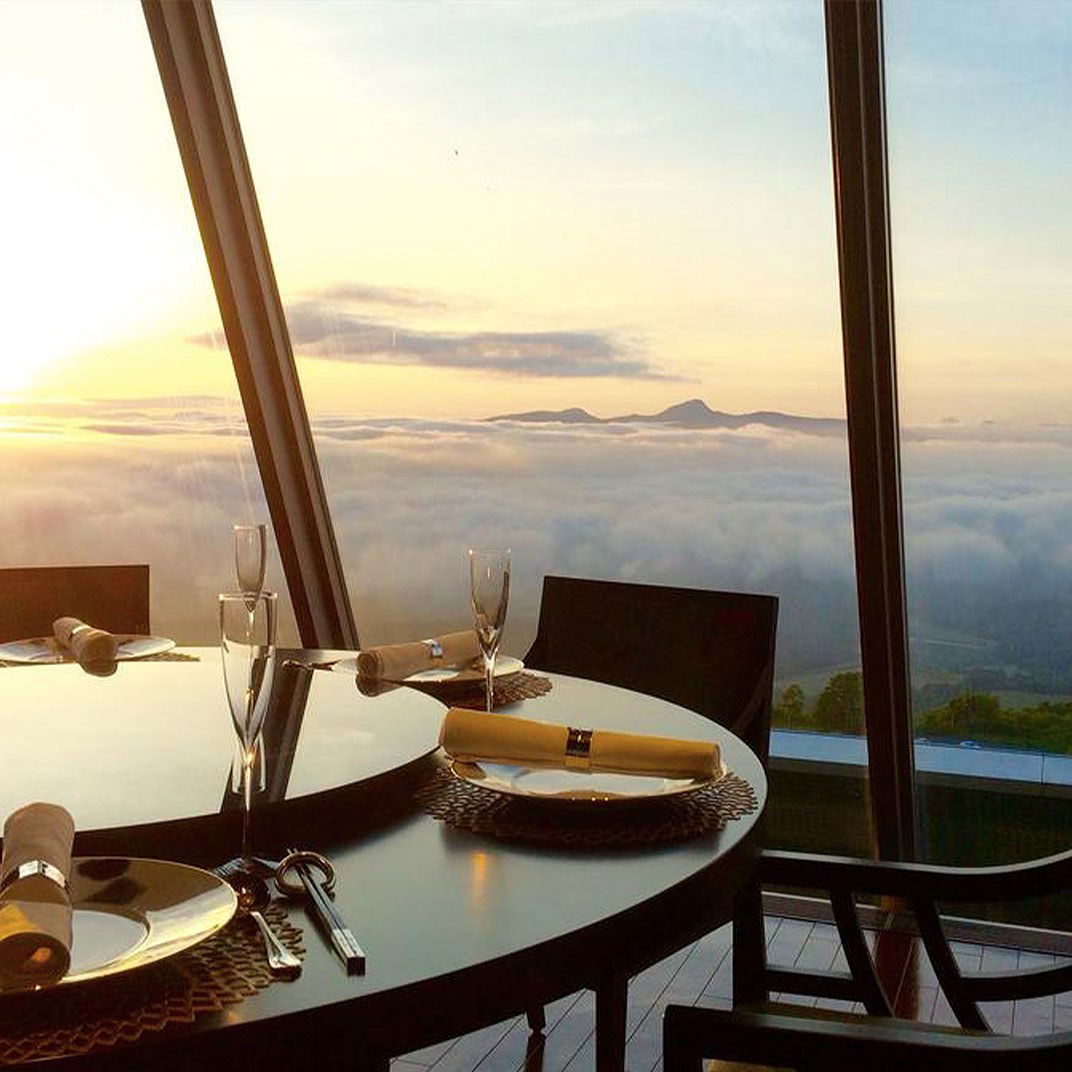
There are times when you want something a little more decadent than the ascetic charms of the ryokan. The Japanese countryside is home to some astonishing luxury hotels as well, the Windsor Hotel Toya among them. This Hokkaido hotel, with its mountaintop view of Lake Toya, hosted 2008’s G8 summit, a testament to the Windsor’s creature comforts as well as its business facilities; let’s be honest, if it’s suitable for heads of state, then you’re unlikely to find yourself wishing for more. Western rooms come in two styles: the “casual” style is calculated not to offend, while the “premier” style is contemporary, with more than a little bit of minimalist influence, resulting in a look that’s several degrees sharper than the soporific luxury-hotel standard. You can probably guess which one we prefer. And for the traditionalists, a number of tatami-style rooms and suites are available as well. Spaces are generous throughout, from the superior rooms on up to the sprawling G8 and Presidential suites, and the comforts are what you’d expect from a recently renovated high-end hotel. The facilities are similarly first-rate — the Windsor comes equipped with pool, spa and fitness center, and restaurants and lounges are well-conceived eateries. But it’s the location that puts the Windsor over the edge from merely quite nice to something more like sublime. Hokkaido isn’t generally short of natural charms in the first place, but Lake Toya is something to behold; this volcanic lake is nearly circular in shape, with a peaked island situated photogenically at its center, and the Windsor takes this all in from a height of two thousand feet. Not a view you’ll soon forget.
Lake Toya from the Clifftop: What the Setting Demands of a Hotel
There is a particular kind of resort architecture in Japan that responds to volcanic geography rather than working against it. The Windsor Hotel Toya Resort & Spa sits at 625 metres above sea level on the caldera rim of Lake Toya in Hokkaido, and the physical position is not incidental to the design brief — it is the design brief. The main structure is built along the ridge so that a significant share of rooms face the caldera directly, placing one of Japan's most geologically active panoramas as the primary visual anchor of the interior. This is a different spatial logic from the ryokan tradition of the garden-as-frame, and also different from the glass-box minimalism that defines resorts like Zaborin in Kutchan. At Windsor Toya, the architecture works at a larger civic scale: corridors read as promenades, the main hall carries ceiling heights more typical of a European grand hotel, and the overall massing references a confidence in classical resort form that is relatively rare in Hokkaido's modern hotel inventory.
The hotel holds a MICHELIN Selected designation in the 2025 Michelin Hotels guide, placing it within a peer set that includes properties selected for consistent quality across service, comfort, and setting rather than for a single signature element. In Shimizu and the broader Toya-Usu area, that recognition positions the Windsor as a reference point for the region's premium accommodation tier.
Hokkaido's Resort Geography and Where Windsor Toya Sits Within It
Hokkaido's hotel geography has split in recent years. On one side are the ski-resort concentrations around Niseko, where properties like Higashiyama Niseko Village, a Ritz-Carlton Reserve, compete on international luxury branding and winter-season access. On the other sits a smaller tier of geothermally anchored resorts that draw on onsen culture and dramatic volcanic scenery rather than slope access. Windsor Toya belongs firmly to the second category. Lake Toya is a caldera lake, part of the Shikotsu-Toya National Park, and the hotel's elevation gives it a perspective on the lake and Mount Usu that shifts through the seasons: snow-covered volcanic peaks in winter, the lake's surface catching low light in autumn, and the summer firework displays that run across the lake between April and October.
That seasonal calendar is worth noting for planning purposes. The summer firework programme, a long-running feature of the Toya area, is visible from lakeside-facing rooms and is one of the more concrete reasons guests time stays between spring and early autumn. Visitors planning winter visits are working with a different proposition: snow landscapes, hot spring access, and reduced crowds rather than the summer spectacle.
The Architecture in Detail: Scale, Materials, and the Room Logic
The building's design operates at a scale that deliberately separates it from the intimate ryokan model that defines properties like Gora Kadan in Hakone or Asaba in Izu. Where those properties build meaning through restraint and compression of space, Windsor Toya works through expansion. The lobby and public areas use the kind of proportions associated with grand European resort hotels, and the comparison to European palace-hotel formats is not accidental: the Windsor name itself signals a deliberate positioning within a Western resort idiom, applied to a Japanese volcanic landscape. Properties like Badrutt's Palace Hotel in St. Moritz or Hôtel de Paris Monte-Carlo operate within the same grand-hotel architectural tradition, and Windsor Toya is consciously working within that lineage while anchoring it to a specifically Hokkaido context.
The room configuration prioritises caldera views, and rooms oriented toward the lake represent the most consequential booking decision at this property. The spa and onsen facilities draw on the geothermal resources of the Toya area, which has been a hot spring destination since the Meiji era, and the integration of those facilities into a resort of this scale gives the property a practical depth that smaller ryokan cannot replicate.
Dining at Scale: The Multi-Restaurant Model
Large resort hotels in Japan face a structural challenge with dining: the kitchen programme has to serve a wide enough range of guests to justify the room count, which can work against the focused, single-format excellence of smaller properties. The multi-restaurant format Windsor Toya operates is common to this tier of resort, where French, Japanese, and teppanyaki options share the property with casual dining and bar service. This breadth is a function of scale rather than culinary indecision. The analogy holds across comparable resort properties: Halekulani Okinawa operates a similar multi-outlet model for similar reasons. For guests, the practical implication is that dining stays on property across a multi-night stay without repetition, which is meaningful given the hotel's distance from a dense restaurant district.
Shimizu and the Toya area are not urban dining destinations in the way that Kyoto or Tokyo are, and for context on Japanese urban food culture, our full Shimizu restaurants guide covers the regional picture. For a resort stay built around the volcanic landscape, the self-contained dining model is appropriate and functions as expected for a property of this category.
Positioning Against Japan's Premium Resort Tier
The Windsor Toya sits in a different cohort from the architecture-as-statement properties that have defined Japan's most-discussed premium hotels in recent years. Benesse House on Naoshima integrates a museum programme into the hotel structure. Amanemu in Mie and Hotel The Mitsui Kyoto operate within the Aman and Mitsui brand frameworks respectively, with the design coherence and service protocols those affiliations imply. Windsor Toya's peer set is closer to the large-format volcanic-resort category: it competes on the quality of its natural setting, the breadth of its facilities, and its ability to sustain a multi-night stay through programming rather than through architectural minimalism or a single-point cultural thesis.
For guests building a Japan itinerary that includes Hokkaido, properties like Fufu Kawaguchiko near Fuji, Nasu Mukunone, or Atami Izusan Karaku represent the comparable volcanic-onsen tier in other regions. Each of those properties anchors its offering in geothermal access and scenic landscape, which is the same fundamental proposition Windsor Toya makes, delivered at a larger and more European-inflected scale.
Planning a Stay: Access, Timing, and Booking
The Toya area is accessible from Sapporo by road in approximately two hours, or by shinkansen to Toya Station followed by a transfer. Given the hotel's scale and the Michelin Selected designation, advance booking is advisable for summer dates particularly, when the firework season and national holiday periods create compressed demand. The property's facilities — onsen, spa, multiple restaurants, and conference spaces , make it a common choice for extended leisure stays and corporate retreats, and room availability during peak season reflects that demand pressure. Specific current rates and availability require direct enquiry; the hotel operates at a price point consistent with the Michelin Selected resort tier in Hokkaido, which places it above mid-market hot spring hotels but below the per-night rates of the top-tier Aman or Ritz-Carlton Reserve properties in Japan.
Frequently Asked Questions
- What kind of setting is The Windsor Hotel Toya Resort & Spa?
- The hotel occupies an refined position on the caldera rim of Lake Toya in Hokkaido's Shikotsu-Toya National Park, at approximately 625 metres above sea level. The setting is volcanic and geothermally active, with the caldera lake as the central visual feature. The MICHELIN Selected 2025 designation confirms it as a recognised property within Japan's premium resort tier.
- What's the most popular room type at The Windsor Hotel Toya Resort & Spa?
- Rooms with direct caldera views toward Lake Toya represent the most consequential booking decision at the property. Given the hotel's architecture orients a significant portion of rooms toward the lake, caldera-facing room categories tend to carry premium positioning within the room inventory. Specific room type availability and pricing require direct confirmation with the hotel.
- What's the main draw of The Windsor Hotel Toya Resort & Spa?
- The primary draw is the combination of volcanic landscape, onsen access, and large-resort facilities at elevation above Lake Toya. The hotel holds a MICHELIN Selected 2025 designation, and the summer firework programme visible from lake-facing rooms adds a seasonal event dimension that runs from April through October. The self-contained multi-restaurant and spa model supports extended stays without leaving the property.
- Do I need a reservation for The Windsor Hotel Toya Resort & Spa?
- Advance booking is strongly advisable, particularly for summer stays when the firework season and Japanese national holidays create concentrated demand. The MICHELIN Selected status and the property's scale mean it operates with consistent occupancy during peak periods. Phone and website details should be confirmed at time of booking as contact information was not available at time of publication.
- How does The Windsor Hotel Toya Resort & Spa compare to other Michelin-recognised hotels in Hokkaido?
- Within Hokkaido's MICHELIN Selected hotel category, Windsor Toya operates at a larger physical scale than most recognised properties in the region, with a European grand-hotel architectural framework applied to a volcanic Japanese landscape. This distinguishes it from the compact ryokan and design-led minimalist formats that characterise other MICHELIN-recognised stays in Hokkaido. Guests seeking intimate, low-capacity formats might look at properties like Zaborin in Kutchan, while those seeking the full-facility resort model will find Windsor Toya the stronger fit.
Recognized By

Similar venues by awards
Related editorial
- Asia's 50 Best Restaurants 2026: The Chairman and Wing Go 1-2 from the Same BuildingThe Chairman takes No. 1 and Wing climbs to No. 2 at Asia's 50 Best Restaurants 2026. Both operate from the same Hong Kong building. Here's what it means.
- Four Seasons Yachts Debut: 95 Suites, 11 Restaurants, and a March 2026 Maiden VoyageFour Seasons I launches March 20, 2026, with 95 suites, a one-to-one staff ratio, and 11 onboard restaurants. Worth tracking if you want hotel-grade service at sea.
- LA Michelin Guide 2026: Seven New Restaurants from Tlayudas to Uzbek DumplingsMichelin's March 2026 California Guide update adds six LA restaurants and one Montecito newcomer, spanning Oaxacan tlayudas, Uzbek manti, and Korean-Italian pasta.
Save or rate The Windsor Hotel Toya Resort \u0026 Spa on Pearl
Keep this venue in your Pearl passport, rate it after you visit, and track it alongside every other place you collect.