
Boutique Hotel und Chalets Bergwiesenglück
See
Hotel in See, Austria
 Book with Pearl
Why go
Book this if a quieter See base and chalet-style space matter more than a big resort-hotel scene. The strongest value case is for longer stays, families, or couples who will use the extra room; for a quick sleep-only trip, compare harder against Ischgl and Fiss peers.
About Boutique Hotel und Chalets Bergwiesenglück
Boutique Hotel und Chalets Bergwiesenglück is a venue in See with MICHELIN Guide Hotels Selected recognition for 2025. It is a See stay with an external hotel-selection signal, not a dining destination with publicly detailed restaurant, amenities, room-format, price, or service information in this text.
For readers, the useful points are simple: the property is in See, it carries MICHELIN Guide hotel recognition for 2025, and the dress code is smart casual. Any decision beyond that should be checked directly with the venue before booking.
Upgrade only after confirming what changes
Room-category advice should be handled cautiously, because room sizes, layouts, and pricing are not detailed here. If space is central to the trip, confirm the available categories and inclusions directly with Boutique Hotel und Chalets Bergwiesenglück before paying more.
Do not book this on the basis of restaurant, chef, menu, or beverage claims. The confirmed information supports evaluating the property as a See hotel with MICHELIN Guide hotel selection, while dining specifics should be checked through the venue's current channels.
Who should choose See when comparing hotel options
See may suit travelers who specifically want their base to be in See. Comparisons with Elizabeth Arthotel, Gourmethotel Yscla, Schlosshotel Fiss, Schlosshotel Ischgl, and Sport- und Genusshotel Silvretta should be made carefully, since each property needs to be judged on its own location, style, and current offering.
The MICHELIN Guide Hotels Selected 2025 recognition is a useful external recognition, but it is not a substitute for checking practical booking details. Use the confirmed recognition as context, then verify room type, inclusions, dining, and arrival details directly with Boutique Hotel und Chalets Bergwiesenglück.
Planning details
- Location
- Neder 400, 6553 See, Austria
- Website
- bergwiesenglueck.at
- Phone
- +43 5441 20077
The take
The Take
The Vibe
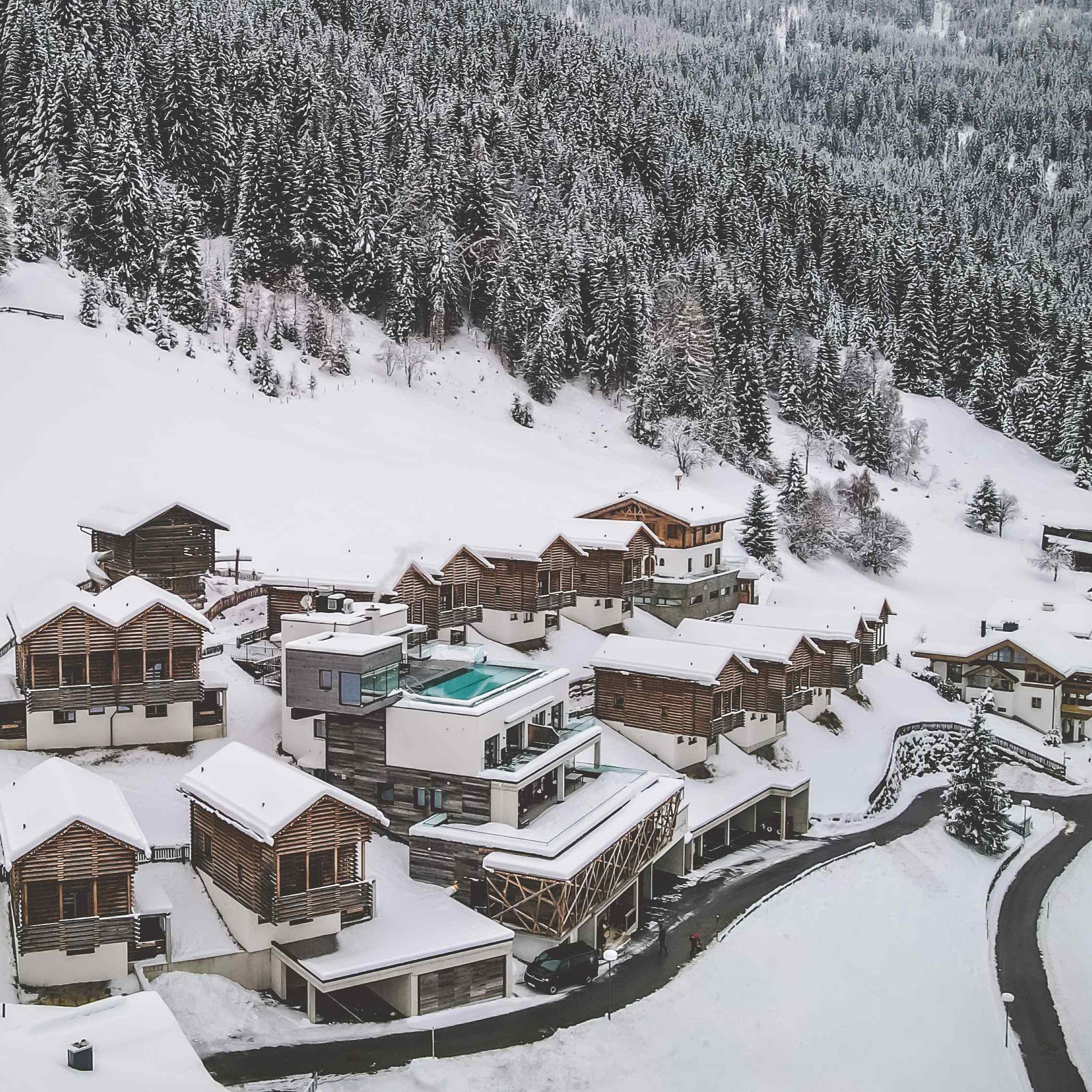
Bergwiesenglück reads like a thoughtful study in alpine restraint: pitched timber roofs, stone base courses and covered terraces align the property with traditional Tyrolean architecture while the chalet typology breaks the mass of the hotel into a sequence of intimate moments. Guests move between a main building and separate chalets, encountering changing sightlines and exterior landscape encounters that emphasize scale and materiality over amenity stacking. The narrative is quietly confident rather than showy—the Michelin Selected designation underscores a measured quality and comfort that complements the property’s architectural argument.
Best For
This boutique hotel suits travelers seeking a quiet, place-driven alpine escape. The chalet format gives families or couples more spatial autonomy than a typical corridor hotel, making it a natural fit for family vacations and romantic getaways. Its focus on materiality, pitched roofs and valley-facing terraces also appeals to guests looking for a restorative weekend or a wellness-oriented break where setting and calm matter as much as services. The Michelin Selected tag signals a reliable baseline of comfort and character for discerning visitors.
Stay Tips
When booking, consider opting for one of the separate chalets if you prize architectural autonomy and a sense of arrival—the description emphasizes that the chalet format 'gives guests more architectural autonomy within a curated setting.' Request accommodation with a covered terrace to maximize valley views and outdoor connection, since the property explicitly mentions terraces facing the valley. Use the Michelin Selected designation as a quality cue when comparing mid‑tier boutique options in the region, but confirm specific room siting when reserving to secure the vantage and layout you prefer.
Venue details
Ambiance
Light-filled, airy spaces blending natural beauty with modern alpine elegance, creating a cozy and tranquil retreat.
Tags
Vibe
Best For
Experience
Amenities
View
About the Stay
- Rooms
- 12
- Check-in
- 15:00
- Check-out
- 10:00
- Property Type
- Boutique hotel
- Property Style
- Alpine Chalet Village with Boutique Hotel Services
- Design Style
- Modern Alpine with Traditional Barn Elements and Natural Materials
- Breakfast
- Included
- Pool
- Yes
- Spa
- Yes
- Pets
- Allowed
- Families
- Welcome
Know before you go
Know Before You Go
- Getting there
- Neder 400, 6553 See, Austria
Planning details
Location
Recognition and awards
Also consider
Where to look if this is not the right fit
If the goal is a bigger resort feel, start with Schlosshotel Fiss. If dining is a bigger part of the stay than room space, cross-shop Gourmethotel Yscla before committing here.
Hotel context
How it compares with nearby alpine hotels
Boutique Hotel und Chalets Bergwiesenglück is the quieter value play in this set: choose it if space, privacy, and a lower-key See base matter more than resort spectacle. Schlosshotel Fiss is the stronger fit for travelers who want a fuller resort-hotel feel, while Elizabeth Arthotel makes more sense if an art-forward hotel mood is part of the reason for booking.
For dining-led trips, Gourmethotel Yscla and Sport- und Genusshotel Silvretta are more obvious cross-shops because their positioning points more directly toward food and resort amenities. If the trip is centered on Ischgl's higher-energy setting, Schlosshotel Ischgl is the cleaner choice.
The decision is practical: book Bergwiesenglück for a calmer stay where the room category carries the value. Choose the Ischgl or Fiss peers when location intensity, hotel facilities, or a stronger dining signal matter more than chalet-style space.
Explore See
Around this place
Discover more on Pearl
Unlock the full Boutique Hotel und Chalets Bergwiesenglück guide in Pearl, including awards, comparisons, FAQs, planning details, and nearby places.
Compare Boutique Hotel und Chalets Bergwiesenglück
| Venue | Location | Awards |
|---|---|---|
| Boutique Hotel und Chalets Bergwiesenglück | See | 2025 Michelin Selected Hotels |
| Schlosshotel Fiss | Fiss | 2026 Michelin 2 Keys2025 Michelin 1 Key |
| Elizabeth Arthotel | Ischgl | 2026 Michelin 1 Key2025 Michelin 1 Key |
| Gourmethotel Yscla | Ischgl | No published awards |
| Sport- und Genusshotel Silvretta | Ischgl | No published awards |
| Schlosshotel Ischgl | Ischgl | 2026 La Liste Top Hotels2026 Michelin 1 Key2025 Michelin 1 Key |



How Boutique Hotel und Chalets Bergwiesenglück See compares with similar nearby venues.
FAQ
Frequently Asked Questions
What is check-in like at Boutique Hotel und Chalets Bergwiesenglück?
Check-in details should be confirmed directly with the property before you travel, especially if you are arriving later in the day. The MICHELIN Guide Hotels Selected 2025 status is a useful external recognition, but it does not replace confirming arrival details with the venue.
How is the dining at Boutique Hotel und Chalets Bergwiesenglück?
No cuisine type, chef name, menu structure, or dining format is included here. Treat any dining plans as something to confirm directly with Boutique Hotel und Chalets Bergwiesenglück. If food is a major reason for choosing a base, you can also compare current information from Gourmethotel Yscla or Sport- und Genusshotel Silvretta without assuming the same offering at this property.
How does Boutique Hotel und Chalets Bergwiesenglück compare to other hotels?
Boutique Hotel und Chalets Bergwiesenglück is in See and has MICHELIN Guide Hotels Selected recognition for 2025. For comparison, travelers may also look at Elizabeth Arthotel, Gourmethotel Yscla, Schlosshotel Fiss, Schlosshotel Ischgl, or Sport- und Genusshotel Silvretta, while checking each property's own current details rather than assuming similar facilities or style.
When is the best time to book Boutique Hotel und Chalets Bergwiesenglück?
Which room category is best at Boutique Hotel und Chalets Bergwiesenglück?
Choose only after checking the current room options directly with Boutique Hotel und Chalets Bergwiesenglück, especially if space, layout, or inclusions are important to your stay.
Is Boutique Hotel und Chalets Bergwiesenglück good for business travel?
The property has MICHELIN Guide Hotels Selected recognition for 2025, but meeting spaces, work amenities, and corporate services should be confirmed directly with Boutique Hotel und Chalets Bergwiesenglück before booking.