

Terme di Saturnia
Saturnia, Manciano, Saturnia
Hotel in Saturnia, Italy
 Book with Pearl
The Read
Sulphurous Spring Immersion
Price
$300–500per night
Why go
Terme di Saturnia is worth choosing when the spa is the reason for the trip, especially for couples, celebration stays, or a quieter executive reset. It is less convincing as a city-style business base, but stronger than a generic countryside hotel if the plan is to stay put and use Saturnia's thermal setting as the anchor.
About Terme di Saturnia
Terme di Saturnia is a premium venue in Saturnia with two luxury-travel credentials: Leading Hotels of World Member status for 2025 and Virtuoso Luxury Hotel Partner status for 2026. Beyond those points, specific details such as room categories, dining format, services, facilities, prices, hours, and on-site amenities should be confirmed directly before booking.
The safest way to evaluate Terme di Saturnia is as a Saturnia stay with confirmed luxury-hotel affiliations, rather than relying on assumptions about the property experience. Travelers should use the confirmed recognition as one part of the decision, then check current availability, policies, and services through the venue's official channels.
Choose it for confirmed luxury-hotel affiliations in Saturnia
For travelers comparing premium stays, Terme di Saturnia stands out on its luxury credentials: it is listed as a Leading Hotels of World Member for 2025 and a Virtuoso Luxury Hotel Partner for 2026. Those affiliations are the grounded basis for considering it in a higher-end Saturnia itinerary.
The dress code is smart casual. Other practical details should not be assumed from the property name or reputation alone; confirm the current room setup, dining arrangements, amenities, and guest policies before committing to a stay.
Plan the timing around confirmed details
Planning should focus on what can be checked before arrival: booking conditions, current services, dress expectations, and any itinerary needs specific to your trip. Terme di Saturnia may be a strong candidate for travelers who want a premium Saturnia base with recognized luxury-travel affiliations, but the final decision should be based on the latest direct information from the venue.
If restaurants are the priority, use the Saturnia restaurants guide before committing to a full stay. If the decision is between hotels, compare Terme di Saturnia with other suitable properties and confirm the details that matter most for your trip.
Planning details
- Location
- Località Follonata, 58014 Saturnia, Manciano GR, Italy
- Website
- termedisaturnia.it
- Phone
- +390564600111
The take
The Take
The Vibe
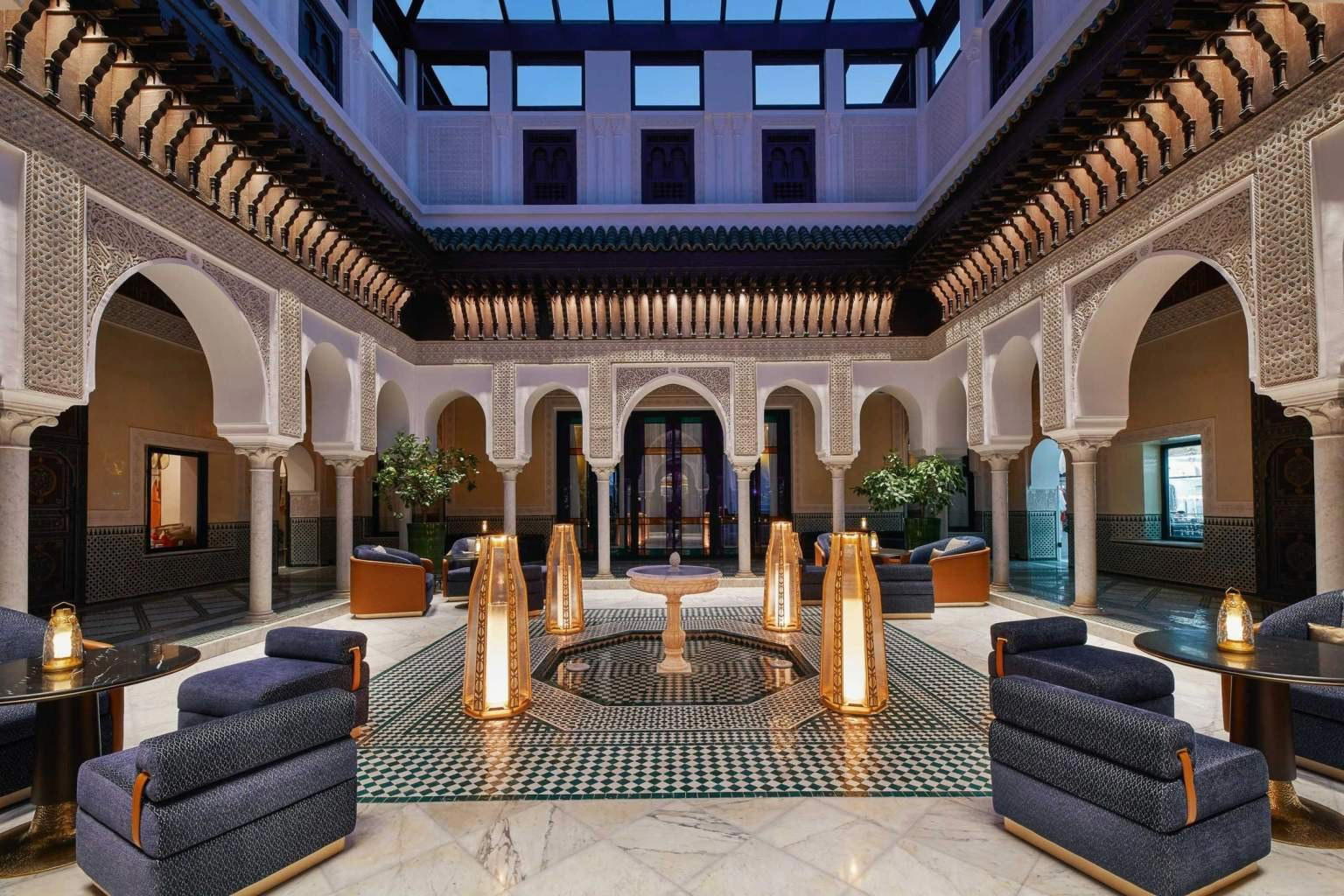
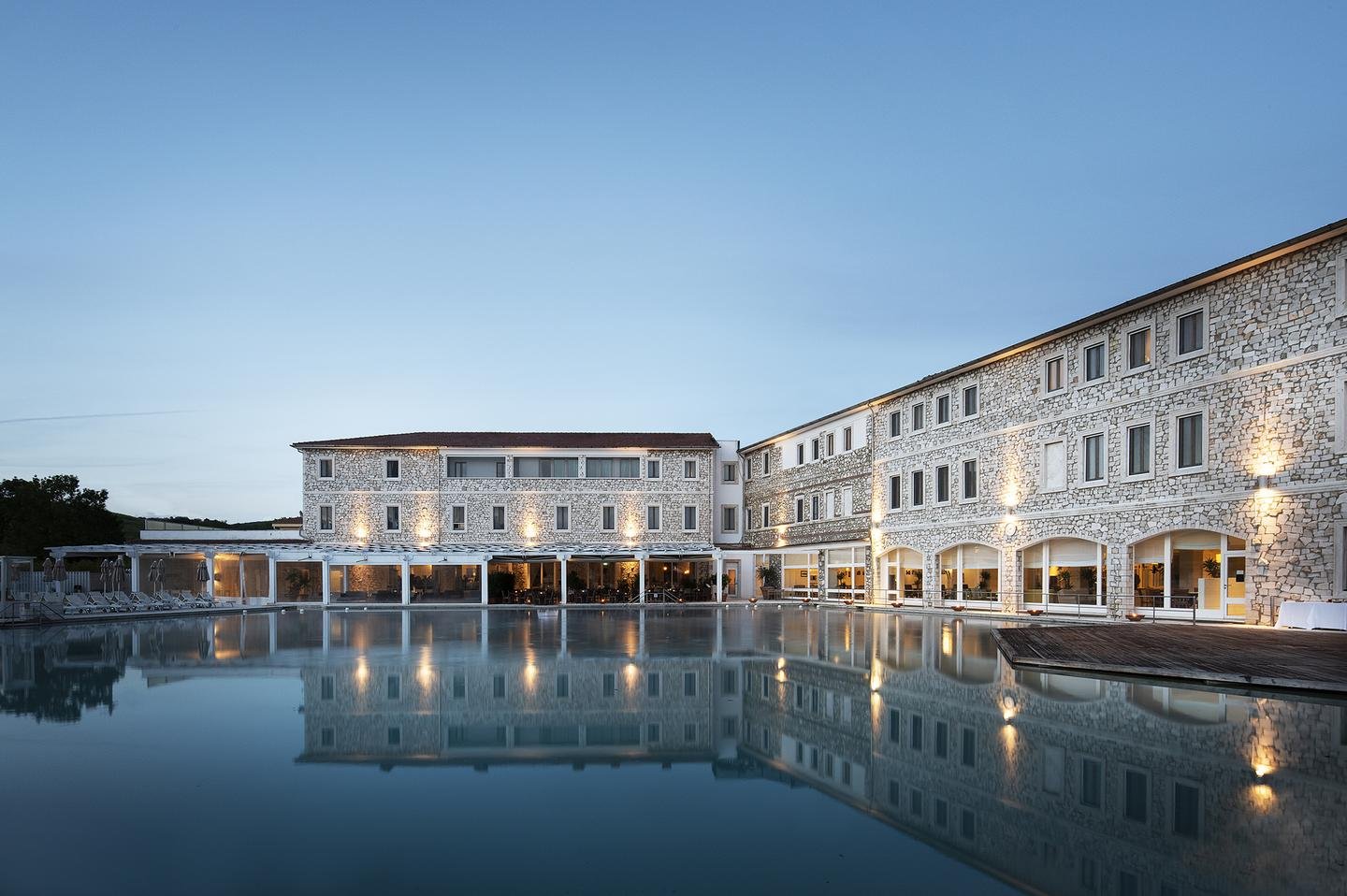
Terme di Saturnia reads like a study in quiet composition. The resort foregrounds travertine and the thermal spring itself, letting the calcium-rich geology shape surfaces, terraces and pool edges so that architecture feels like a natural continuation of the Maremma hills. Recent renovations refine a muted palette pulled from the spring—sulphurous green‑grey, warm ochre and pale travertine—so interiors and exteriors move in gentle visual concert. Spaces are designed to dissolve the usual thresholds between inside and out, producing a restrained, contemplative modernism that favors stillness and measured views of the surrounding landscape.
Best For
This is a destination for travelers seeking restorative, design-forward escapes. The focus on the thermal spring and the property's integrated travertine aesthetic makes it ideal for wellness-minded stays, romantic getaways and anniversaries where slowing down is the point. With 124 rooms and suites refreshed in recent renovations, the resort suits couples and small parties who want a quiet, thoughtfully composed environment rather than a high‑energy scene. Guests arrive expecting calm, architecture that foregrounds nature, and a stay organized around thermal water and the estate’s setting.
Stay Tips
Book with the renovations in mind—rooms and suites were refreshed in 2020 and again in 2024—so request a recently updated accommodation if finishes and the spring‑inspired palette matter to you. If you prioritize outdoor access, ask for a room with direct terrace or poolside adjacency to experience the seamless indoor/outdoor flow described in the property narrative. Plan time simply to be on the estate grounds and to absorb the travertine-led design; the resort is presented as a place for measured downtime rather than activity‑packed itineraries.
Venue details
Ambiance
Serene and rejuvenating, with natural light from expansive outdoor thermal pools, lush gardens, and terraces overlooking the Tuscan countryside; sophisticated yet relaxed wellness atmosphere.
Tags
Vibe
Best For
Experience
Amenities
View
Accessibility
About the Stay
- Rooms
- 124
- Check-in
- 15:00
- Check-out
- 11:00
- Property Type
- Heritage hotel
- Property Style
- Historic 1919 Building Harmoniously Integrated with the Landscape, Positioned as Italy's Premier Thermal Wellness Destination Combining Heritage Architecture with Modern Luxury Amenities.
- Design Style
- Classical Elegance with Natural Materials and Earth Tones, Designed to Complement the Surrounding Tuscan Countryside and Emphasize Connection to the Natural Thermal Environment.
- Breakfast
- Included
- Pool
- Yes
- Spa
- Yes
- Families
- Welcome
- Cancellation
- Moderate
Know before you go
Know Before You Go
- Getting there
- Località Follonata, 58014 Saturnia, Manciano GR, Italy
Planning details
Location
Recognition and awards


Also consider
Also Consider
- Casale Sterpeti, Notable alternative
- Locanda Rossa, Notable alternative
- Castello di Vicarello, Notable alternative
- Terre di Sacra, Notable alternative
- Borgo La Chiaracia Resort & SPA, Notable alternative
Hotel context
How it compares with Saturnia-area stays
Choose Terme di Saturnia when the spa experience is the main event and the hotel needs to carry the trip. Casale Sterpeti is the better fit for travelers who want a quieter rural base without making the thermal-hotel format the whole point. Locanda Rossa reads more like a countryside escape for guests who want a softer, lower-key atmosphere.
For a higher-drama Tuscan stay, Castello di Vicarello is the stronger cross-shop if the priority is a castle-style setting and a more destination-hotel mood. Terme di Saturnia is easier to justify when wellness access matters more than architectural theatre. For longer coastal or nature-led trips, Terre di Sacra may be the more practical choice if the itinerary is built around space and the outdoors.
Borgo La Chiaracia Resort & SPA is the closest comparison for travelers who want a spa resort format but are open to looking beyond Saturnia. If booking here is not available, cross-shop Borgo La Chiaracia for a wellness-led stay, or Locanda Rossa for a calmer countryside alternative with less emphasis on the thermal ritual.
Explore Saturnia
Around this place
Discover more on Pearl
Unlock the full Terme di Saturnia guide in Pearl, including awards, comparisons, FAQs, planning details, and nearby places.
Compare Terme di Saturnia
| Venue | Location | Awards |
|---|---|---|
| Terme di Saturnia | Saturnia | 2026 Virtuoso Luxury Hotel CollectionLeading Hotels of the World 2026 |
| Casale Sterpeti | Magliano In Toscana | No published awards |
| Locanda Rossa | Capalbio | 2026 Mr & Mrs Smith Luxury Hotels2026 Michelin 1 Key2025 Michelin 1 KeyPreferred Hotels L.V.X. Collection and Preferred Residences 20252024 Michelin 1 Key |
| Castello di Vicarello | Cinigiano | 2026 Virtuoso Luxury Hotel Collection2026 Mr & Mrs Smith Luxury Hotels2026 Michelin 1 Key2025 Michelin 1 Key2024 Michelin 1 Key |
| Terre di Sacra | Capalbio | No published awards |
| Borgo La Chiaracia Resort & SPA | Castel Giorgio | No published awards |



How Terme di Saturnia compares with similar nearby venues.
FAQ
Frequently Asked Questions
What is check-in like at Terme di Saturnia?
When is the best time to book Terme di Saturnia?
Which room category is best at Terme di Saturnia?
Choose only after confirming the current room options, inclusions, and policies directly with Terme di Saturnia.
How does Terme di Saturnia compare to other hotels?
Terme di Saturnia has confirmed luxury-travel credentials: Leading Hotels of World Member status for 2025 and Virtuoso Luxury Hotel Partner status for 2026. When comparing it with properties such as Casale Sterpeti, Locanda Rossa, Castello di Vicarello, Terre di Sacra, or Borgo La Chiaracia Resort & SPA, verify each property's current location, services, and booking terms directly before deciding.