
Hotel in San Jose, United States
Alta Las Palomas
400ptsVolcano-View Altitude Retreat

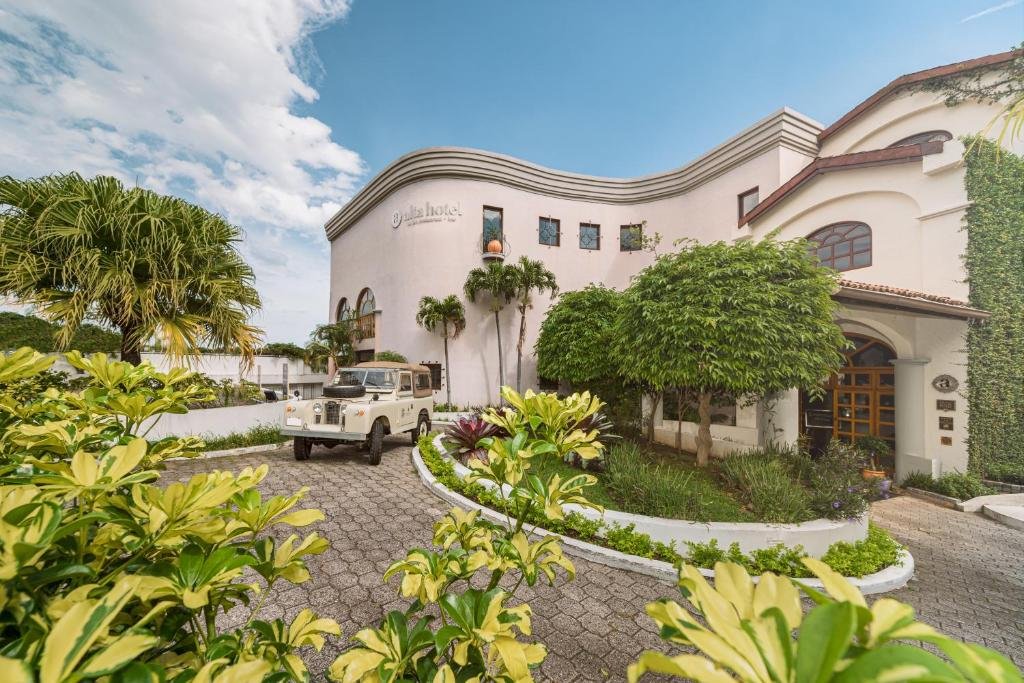
About Alta Las Palomas
Alta Las Palomas occupies a hillside position above the Valle del Sol in Costa Rica, trading the usual resort formula for something rawer: volcano sightlines, coffee-field terraces, and a biodiversity corridor that shifts the visual register with every hour of light. For travelers who measure a property by what it frames rather than what it furnishes, the elevation here does considerable editorial work.
A Property Defined by Altitude and Sightline
There is a particular category of hillside property in Central America that earns its place not through ballroom square footage or branded spa menus, but through the specific quality of what it puts in front of you. Alta Las Palomas belongs to that category. Positioned above the Valle del Sol in the Las Palomas hills outside San José, Costa Rica, the property orients every guest-facing surface toward a panorama that takes in active volcanoes, layered mountain ridges, and the patchwork geometry of coffee cultivation below. At this elevation, the light shifts faster than it does at sea level, and the property's architectural logic appears to have been organized around that fact.
The design approach here reflects a growing current in Latin American hospitality: properties that treat the surrounding environment as the primary design material rather than as backdrop. Where a conventional resort might impose a uniform visual identity across all spaces, Alta Las Palomas works with the topography, using the slope and the exposure to the west to amplify the sunset views that guests consistently cite as the property's central experience. This is architecture as curation of the natural, a methodology that places Alta Las Palomas in a peer set closer to Ambiente, A Landscape Hotel in Sedona or Amangiri in Canyon Point than to the polished international-chain properties that dominate San José's lower elevations.
The Physical Logic of the Space
Costa Rica's premium lodging market has bifurcated in a way that mirrors patterns elsewhere in the Americas. On one side sit the large, internationally branded resorts with comprehensive amenity programs and standardized finishes. On the other sits a smaller cohort of properties that trade on specificity of place, on what you can see and hear and breathe from a particular piece of ground. Alta Las Palomas occupies the latter position. The hills of Las Palomas provide the kind of micro-climate that justifies the altitude gain: temperatures run cooler than the city below, the air carries more moisture, and the biodiversity at this elevation introduces a visual range that shifts from the deep greens of cloud-forest vegetation to the cornflower blues of open sky above the ridge.
That range of color and texture is not incidental to the property's design identity. The chromatic environment at this elevation, what the property's own descriptive record characterizes as a spectrum from velvet greens to cornflower blues, functions as an argument for restraint in the built elements. When the landscape provides this much visual information, the most considered architectural response is to create frames rather than compete. Properties that have understood this logic well, among them Post Ranch Inn in Big Sur and Amangani in Jackson Hole, build reputations that outlast any renovation cycle because the core asset is the view, not the furniture.
Biodiversity as Architectural Context
The hills above San José sit within one of the most species-dense corridors in the Western Hemisphere. Costa Rica contains roughly five percent of the world's known biodiversity within less than 0.03 percent of the planet's land surface, and the Valle del Sol region captures a meaningful cross-section of that density. For a property at this elevation, that ecological context functions as an ambient design layer that no interior designer could replicate or improve upon. The movement of bird species through the canopy, the shift in vegetation as altitude increases, and the visibility of volcanic forms on the horizon together constitute an environmental program that changes by hour and by season.
This is the kind of setting that rewards guests who arrive with some patience for observation. It is less about scheduled activities and more about orientation, about being positioned to receive what the environment offers at the right moment. Sunset at this altitude and westward exposure is a specific atmospheric event, not a general amenity. Properties that have built their identity around comparable environmental specificity, including Auberge du Soleil in Napa with its ridge-line positioning above the valley floor, demonstrate that location precision of this kind creates a durable competitive identity.
Placing Alta Las Palomas in Its Competitive Context
For travelers comparing options in and around San José, the relevant question is what tier of experience the city actually supports at the upper end. The comparison set for Alta Las Palomas is not the urban business hotel or the all-inclusive Pacific coast resort. It sits in a smaller category: hillside properties with environmental credentials and a design philosophy oriented toward place rather than program. Within that category, the Valle del Sol location provides a specific advantage over properties that offer mountain proximity without the valley-floor contrast that makes the elevation legible and meaningful.
Travelers who have stayed at properties like Blackberry Farm in Walland or Sage Lodge in Pray will recognize the underlying logic: the property's value derives from the specificity of its landscape position, not from the density of its amenity stack. That is a particular kind of hospitality proposition that attracts a particular kind of traveler, one who reads a sightline as an amenity in itself. For those travelers, the altitude above the Valle del Sol and the volcanic horizon are the product. For further context on what San José's wider dining and hospitality scene offers, see our full San Jose restaurants guide.
Planning a Stay
Costa Rica's high season runs from December through April, when the dry season delivers the clearest sightlines to the volcanoes and the most reliable sunset conditions. The shoulder months of November and May can offer lower occupancy and a greener visual register, though cloud cover becomes a factor for the long-horizon views. For travelers building a broader itinerary that includes design-led properties in different environments, the editorial comparison set is worth mapping: Rosewood Sand Hill, Bernardus Lodge & Spa in Carmel Valley, and SingleThread Farm Inn in Healdsburg each represent comparable propositions in different geographies, properties where the surrounding land does as much work as the built environment. Booking channels and current rates are leading confirmed directly, as neither a website nor phone contact appears in the current property record. Travelers with access to a travel advisor familiar with the Valle del Sol area will be better positioned to confirm operational details and current room configuration.
Frequently Asked Questions
- What should I expect atmosphere-wise at Alta Las Palomas?
- The atmosphere at Alta Las Palomas is shaped primarily by its elevation above the Valle del Sol. The hillside position delivers cooler temperatures than San José below, open sightlines to volcanic peaks and coffee-field terraces, and a light quality that intensifies dramatically at sunset. The overall register is quiet and environment-forward rather than amenity-driven, placing it alongside hillside properties in the design-led hospitality category. Travelers comparing options in the luxury tier should note that the draw here is the site itself.
- What is the signature room at Alta Las Palomas?
- Specific room categories and configurations are not confirmed in the current property record, so individual suite details cannot be reported with accuracy. What the property's documented identity does confirm is that the westward orientation toward the Valle del Sol and the volcanic ridge is the consistent design priority, which suggests that rooms or terraces with unobstructed sunset exposure represent the leading of the hierarchy. Confirming specific room types directly with the property or via a specialist advisor is advisable before booking.
- What is the main draw of Alta Las Palomas?
- The primary draw is the combination of elevation, orientation, and biodiversity that the Las Palomas hills provide above San José. Volcano sightlines, the patchwork of coffee cultivation in the valley below, and the western exposure that captures Costa Rican sunsets together form the experiential core of the property. This is a property whose identity is defined by what it frames rather than by interior design programming, which places it in a specific niche within Central American premium hospitality.
- Do I need a reservation at Alta Las Palomas?
- Given the property's hillside position and the niche it occupies within the San José area's premium lodging category, advance booking is advisable, particularly during Costa Rica's dry-season high period from December through April when demand for view-oriented properties in the Valle del Sol region is highest. Neither a direct booking website nor a phone number currently appears in the property's public record. Contact via a travel specialist familiar with Costa Rican boutique properties is likely the most reliable path to confirming availability and current rates.
- How does the Valle del Sol location compare to staying in central San José for travelers interested in nature access?
- The Las Palomas hills position Alta Las Palomas within immediate reach of the ecological diversity characteristic of Costa Rica's Central Valley highlands, including bird species and vegetation that do not appear at the lower city elevations. Central San José offers urban convenience but no comparable access to this elevation's biodiversity corridor or its volcanic horizon views. For travelers whose itinerary prioritizes landscape immersion over city-center access, the hillside location represents a meaningfully different proposition from downtown accommodation, though the practicalities of ground transport to the city and to international access points at Juan Santamaría Airport should be confirmed before booking.
Recognized By

Related editorial
- Asia's 50 Best Restaurants 2026: The Chairman and Wing Go 1-2 from the Same BuildingThe Chairman takes No. 1 and Wing climbs to No. 2 at Asia's 50 Best Restaurants 2026. Both operate from the same Hong Kong building. Here's what it means.
- Four Seasons Yachts Debut: 95 Suites, 11 Restaurants, and a March 2026 Maiden VoyageFour Seasons I launches March 20, 2026, with 95 suites, a one-to-one staff ratio, and 11 onboard restaurants. Worth tracking if you want hotel-grade service at sea.
- LA Michelin Guide 2026: Seven New Restaurants from Tlayudas to Uzbek DumplingsMichelin's March 2026 California Guide update adds six LA restaurants and one Montecito newcomer, spanning Oaxacan tlayudas, Uzbek manti, and Korean-Italian pasta.
Save or rate Alta Las Palomas on Pearl
Keep this venue in your Pearl passport, rate it after you visit, and track it alongside every other place you collect.