
Hotel in Rome, Italy
Hotel d\u0027Inghilterra - Starhotels Collezione
150ptsVia Condotti Heritage Positioning

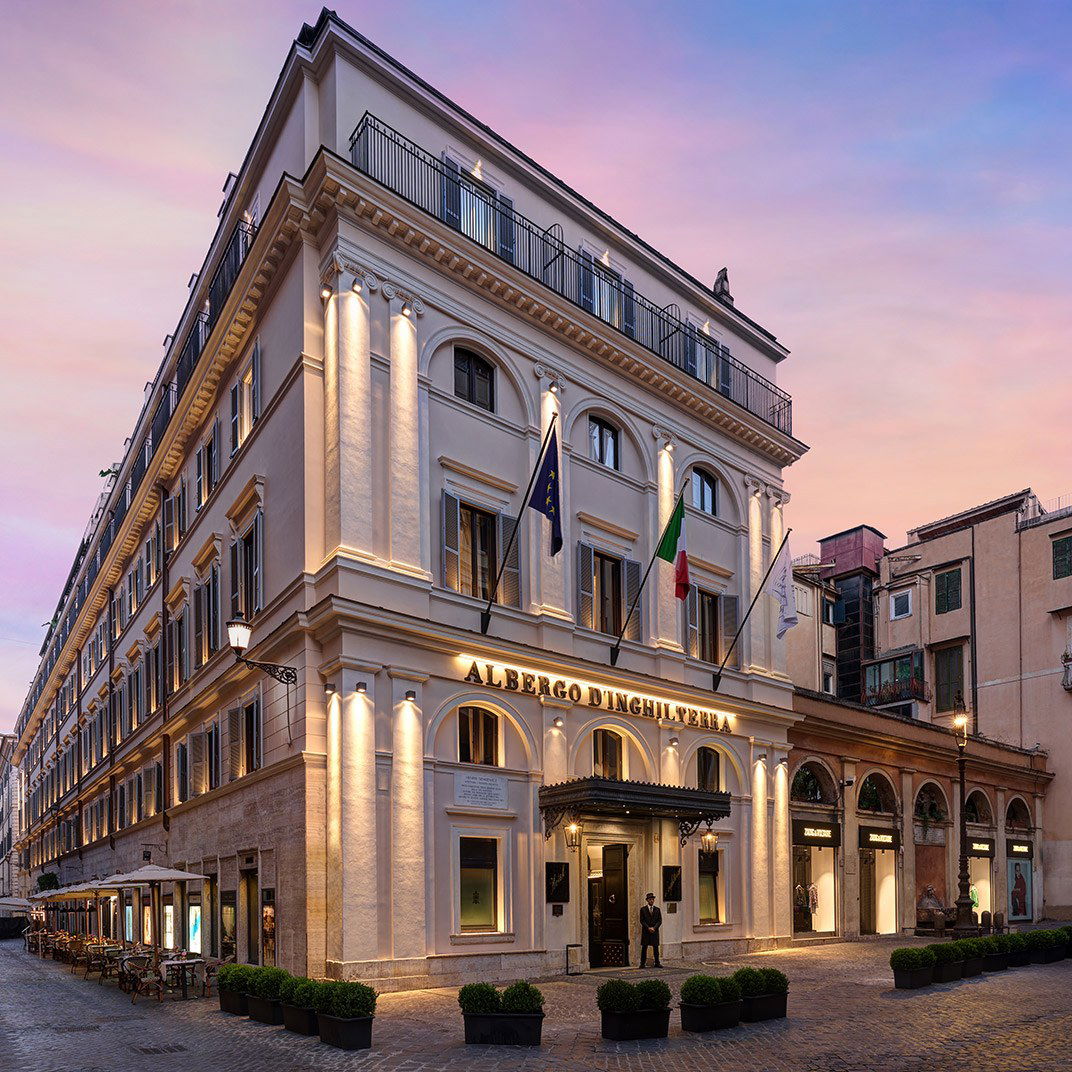
About Hotel d\u0027Inghilterra - Starhotels Collezione
On Via Bocca di Leone, steps from the Spanish Steps, Hotel d'Inghilterra has served as a discreet address for European aristocracy and literary travelers since the 17th century. Carrying Michelin Selected status in 2025, the property belongs to Starhotels Collezione and occupies a distinct position in Rome's luxury hotel tier — historic in character, central in placement, and measured in scale compared to the city's larger palace hotels.
Via Bocca di Leone and the Logic of the Historic Quarter
The approach to Hotel d'Inghilterra sets the terms clearly. Via Bocca di Leone is a narrow street running off Via Condotti — the axis of Rome's luxury retail quarter — and arriving on foot from the Spanish Steps takes under two minutes. That proximity is not incidental. The hotel has occupied this address for centuries, and the street's compressed scale, with its high stone facades and traffic narrowed to pedestrians and the occasional delivery, reads as something closer to a private passage than a public thoroughfare. Rome's luxury hotel market has expanded considerably in recent years, with large-footprint newcomers drawing attention further afield, but this corner of the centro storico has kept a different pace. The neighborhood dictates a certain kind of stay: one that moves on foot, operates at the rhythm of the quarter, and treats the city as a walking map rather than a series of car transfers.
Where the Hotel Sits in Rome's Competitive Tier
Rome's premium accommodation now spans a wide range of formats. At one end sit the large international palace hotels , properties like Hotel Eden and Hassler Roma, which combine high room counts with full amenity programs, restaurant operations, and commanding skyline positions. At the other end, a cluster of smaller, more intimate addresses , Hotel Vilòn, Portrait Roma, and Maalot Roma , offer a residential scale that suits guests prioritizing discretion over spectacle. Hotel d'Inghilterra occupies a middle tier with its own logic: it carries the depth of a genuinely historic structure, operates within the Starhotels Collezione group (which also includes the Savoia Excelsior Palace Trieste), and earned Michelin Selected status in the 2025 hotel guide , a designation that signals consistent delivery of quality rather than a single standout dimension. That positioning places it alongside JK Place Roma and Hotel Locarno in the set of Rome addresses where heritage and human scale carry as much weight as programmatic breadth. The Bulgari Hotel Roma, with its garden and spa infrastructure, represents a different competitive tier entirely.
The Architecture of a Roman Stay: Ritual and Pacing
Staying in a hotel with centuries of continuous occupation shapes the rhythm of a visit in ways that newer properties cannot replicate. The ritual of arrival in a building of this age carries a particular weight , the scale of the public rooms, the layering of renovation over original structure, the way light moves through spaces that were never designed for air conditioning or digital check-in terminals. In Rome's older luxury hotels, breakfast tends to function less as a fuel stop and more as the first formal act of the day, taken in a room with a ceiling that predates the unified Italian state. That framing matters. The pace it sets , deliberate, context-aware, unhurried , tends to extend into the day's movements through the quarter.
The Spanish Steps area rewards this kind of slow orientation. The streets between Via Condotti, Piazza di Spagna, and Via del Babuino constitute one of the densest concentrations of 18th and 19th century Roman civic architecture in the city, and walking them at the hours before the tourist midday surge is a qualitatively different experience from navigating the same routes at noon. Hotels positioned in this quarter, at this price tier, function effectively when guests treat the surrounding streets as an extension of the property's offering rather than simply transit routes to marked sights.
The Literary and Diplomatic Record
Hotel d'Inghilterra's guest record through the 19th and early 20th centuries reads as a partial index of European intellectual and diplomatic movement through Rome. The property served as a preferred address for English and American travelers on extended Italian itineraries , the kind of residency that ran for weeks or months rather than nights, in an era when crossing the Alps was itself a significant undertaking. That history is documented in the hotel's long association with writers, artists, and political figures whose Roman periods are part of the public record. This is not unusual among Rome's oldest hotels , the Hassler Roma carries a comparable archival weight , but the d'Inghilterra's particular concentration on the Anglo-American circuit gives it a distinct cultural register. Understanding that lineage helps to explain the property's continued positioning: it is not marketing itself as a newly designed experience but as an address with a documented place in the city's social history.
Italy's Wider Context for This Category of Stay
The question of what historic-property luxury means in Italy is worth examining against a broader sample. Properties like Aman Venice, operating within a 16th-century palazzo, or Four Seasons Hotel Firenze in a converted Renaissance convent, represent the apex of the category where architectural heritage and international group resources combine at the highest price points. Further along the spectrum, properties like Castello di Reschio in Umbria or Rosewood Castiglion Del Bosco in Montalcino offer estate-scale heritage in rural settings. Urban historic properties occupy their own sub-category, where the building's age competes with and informs the demands of a city-center stay. Hotel d'Inghilterra is firmly in this urban tier, shaped by its address more than its acreage.
For comparison within Italy's coastal and resort register, properties like Il Pellicano in Porto Ercole or Borgo Santandrea on the Amalfi Coast represent a completely different logic , seasonal, scenery-led, often architecturally contemporary despite their landscape settings. The d'Inghilterra's appeal is structurally opposed to that: it is a year-round urban address whose value compounds with the density of Rome's surrounding cultural program rather than the quality of a view or a season.
Planning a Stay: Practical Bearings
Via Bocca di Leone 14 places the hotel within a short walk of the Spanish Steps metro station (Line A), making transfers to Termini and onward rail connections direct. The quarter's concentration of retail, galleries, and restaurants means that most guests operating in this part of Rome will find the surrounding streets self-sufficient for most of a day's program. Given the hotel's position in the Michelin Selected tier for 2025, booking through the Starhotels Collezione platform or a preferred travel agent is the standard approach; the property's recognition in the Michelin guide functions as a quality signal for travelers cross-referencing multiple options across the city. For broader orientation across Rome's dining and cultural program, the EP Club Rome guide maps the key addresses across neighborhoods. Travelers building an extended Italian itinerary might also consider how the d'Inghilterra functions as an anchor point before or after stays at properties like Casa Maria Luigia in Modena or Portrait Milano, which occupy comparable positioning in their respective cities.
Frequently Asked Questions
What is Hotel d'Inghilterra known for?
In Rome's accommodation market, Hotel d'Inghilterra is known primarily for its placement on Via Bocca di Leone , seconds from Via Condotti and the Spanish Steps , and for a documented history as a preferred address for English and American travelers since the 17th century. Its 2025 Michelin Selected status places it within the curated tier of Rome hotels recognized for consistent quality. The property operates within Starhotels Collezione, aligning it with a group that maintains historic urban properties across Italy.
What's the signature room at Hotel d'Inghilterra?
Specific room configurations and categories are not confirmed in our current data. What the property's Michelin Selected standing and historic structure suggest is that rooms in a building of this age and location will vary considerably in character , a function of the original architecture rather than a standardized fit-out. Travelers with specific requirements for outlook, ceiling height, or suite format should confirm directly with the hotel or through a Starhotels Collezione reservations contact before booking. For broader comparison of Rome's luxury room tiers, properties like Bulgari Hotel Roma, JK Place Roma, and Hotel Eden offer useful reference points at different price and scale levels.
Recognized By

More hotels in Rome
- Nerva Boutique HotelNerva Boutique Hotel sits steps from the Imperial Forums on Via Tor de' Conti — a strong location play for travellers who want an independently run base close to ancient Rome without paying five-star palazzo prices. There's no destination restaurant or spa on-site, so guests who want full-service amenities should look at Hotel Eden or JK Place Roma instead. Book here if the address is the point.
- The Fifteen Keys HotelThe Fifteen Keys Hotel on Via Urbana is one of Rome's most intimate boutique options — fifteen rooms in the Monti neighbourhood, with easy booking and a residential feel that larger properties cannot replicate. Best for couples and special occasions. Book direct for the best rate; no loyalty programme applies at this independent property.
- 1880 Atypical Rooms1880 Atypical Rooms on Via Nazionale offers a design-led alternative to Rome's conventional mid-range hotels, with easy availability and a central location that works for both first-time visitors and returns. Wellness and amenity specifics are unconfirmed, so it's better suited to guests prioritising room character over spa depth. Confirm current facilities directly before booking.
Similar venues by awards
Related editorial
- Asia's 50 Best Restaurants 2026: The Chairman and Wing Go 1-2 from the Same BuildingThe Chairman takes No. 1 and Wing climbs to No. 2 at Asia's 50 Best Restaurants 2026. Both operate from the same Hong Kong building. Here's what it means.
- Four Seasons Yachts Debut: 95 Suites, 11 Restaurants, and a March 2026 Maiden VoyageFour Seasons I launches March 20, 2026, with 95 suites, a one-to-one staff ratio, and 11 onboard restaurants. Worth tracking if you want hotel-grade service at sea.
- LA Michelin Guide 2026: Seven New Restaurants from Tlayudas to Uzbek DumplingsMichelin's March 2026 California Guide update adds six LA restaurants and one Montecito newcomer, spanning Oaxacan tlayudas, Uzbek manti, and Korean-Italian pasta.
Save or rate Hotel d\u0027Inghilterra - Starhotels Collezione on Pearl
Keep this venue in your Pearl passport, rate it after you visit, and track it alongside every other place you collect.