
Hotel in Oaxaca City, Mexico
Majagua Boutique Hotel
150ptsColonial Courtyard Restraint

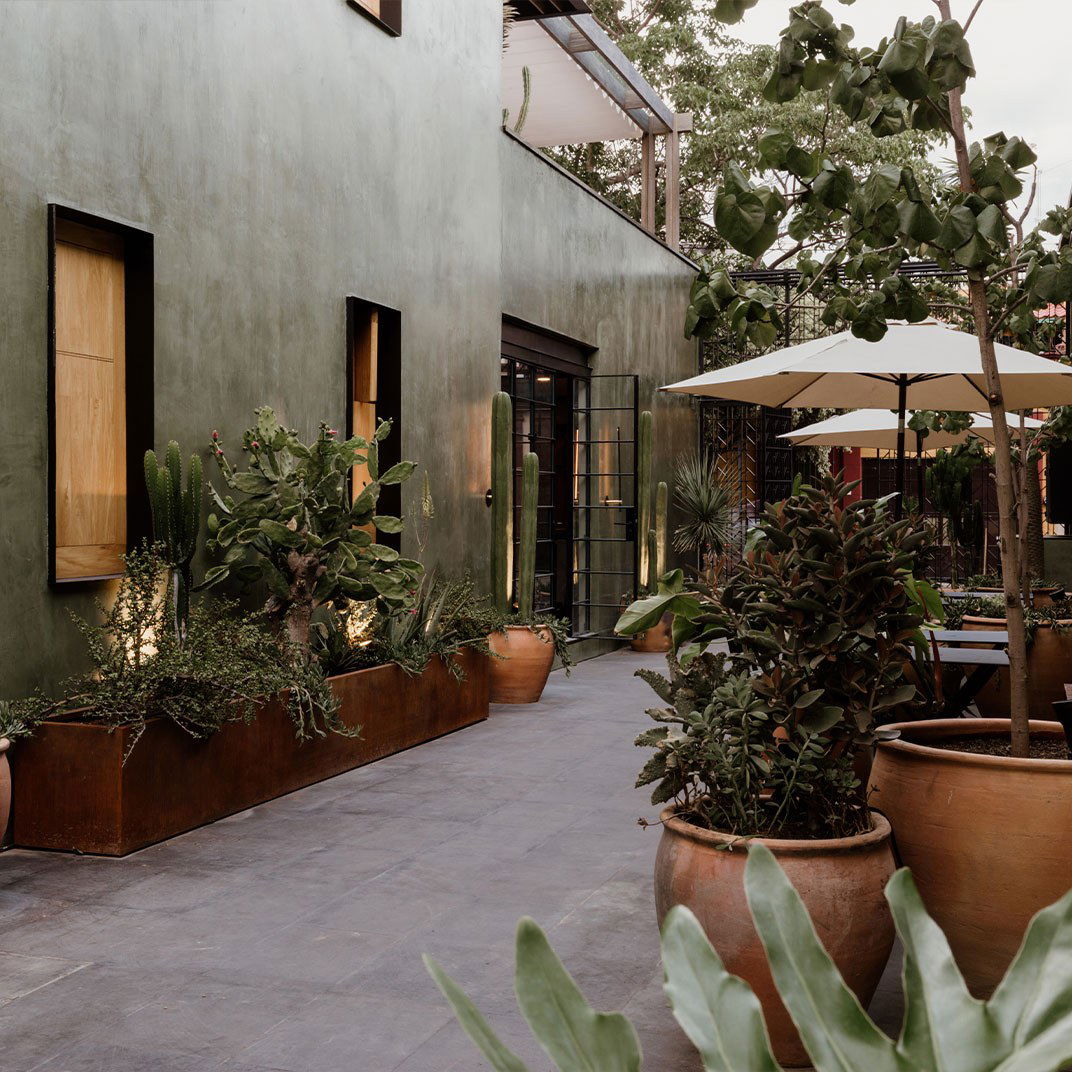
About Majagua Boutique Hotel
Michelin Selected for 2025, Majagua Boutique Hotel occupies a historic address in Oaxaca City's Centro Histórico, positioning it among the city's more considered small-scale stays. The property sits within the design-led boutique tier that has reshaped how travellers engage with Oaxacan heritage architecture. Its compact footprint and central location make it a practical base for the city's cultural and culinary circuits.
Colonial Bones, Contemporary Restraint
Oaxaca City's Centro Histórico is one of Mexico's more architecturally coherent urban cores. The streets around the Zócalo and Santo Domingo are lined with 16th- and 17th-century structures built in cantera verde, the green-tinged volcanic stone quarried from the surrounding valley. These buildings were not designed as hotels. They were designed as convents, merchant houses, and civic structures, and the task of converting them into places of accommodation without gutting their character defines the central challenge of boutique hospitality in this city. Majagua Boutique Hotel, at José María Pino Suárez 519, operates within that tradition. Its address in the historic centre places it within walking distance of the city's principal monuments, markets, and restaurants, and its designation as MICHELIN Selected for 2025 signals a baseline of execution that the guide's hotel inspectors found credible.
The boutique hotel category in Oaxaca has expanded significantly over the past decade, tracking the city's rise as a destination for design-conscious travellers drawn to pre-Hispanic textiles, mezcal culture, and a restaurant scene that has earned international attention. Within that growth, properties have separated into two broad tiers: larger converted colonial mansions with multiple patios and pool facilities, and smaller, more intimate houses with fewer rooms and a tighter editorial identity. Majagua sits in the latter cohort, where the design and spatial experience of each room carries more weight precisely because there are fewer of them. Comparable properties in this tier include Casa Antonieta, Flavia Hotel, and Grana B&B, all of which occupy the same small-footprint niche in the historic centre.
What the Architecture Does
Colonial residential architecture in Oaxaca organises itself around an interior courtyard, or patio, that functions as the social and climatic heart of the building. Thick cantera walls moderate temperature extremes, keeping interiors cool during the dry-season heat and insulated during cooler highland nights. Rooms open onto covered arcades or directly onto the patio rather than facing outward to the street, which gives the interior a quality of enclosure and quiet that no amount of soundproofing in a conventional hotel can replicate. This structural logic is worth understanding because it shapes the experience of staying in any property of this type: the arrival sequence moves from the noise and colour of the street through a narrow doorway into a contained interior world. That transition is the architectural event.
The leading colonial conversions in Oaxaca preserve that transition while updating the interiors to a standard that does not require guests to tolerate discomfort in the name of authenticity. Casa de Siete Balcones Hotel Boutique and Casa Oaxaca Hotel both work this register, pairing pre-Hispanic textile references and local craft with contemporary bathroom finishes and reliable beds. Majagua's Michelin recognition places it in conversation with that peer group, though the specific design choices within the property are better assessed on arrival than at a distance.
The Centro Histórico as Context
A hotel's address in Oaxaca's historic centre is itself a functional argument. The Zócalo, the city's central plaza, is roughly a five-minute walk from most Centro Histórico properties. The Mercado Benito Juárez, where mole pastes, chapulines, and Oaxacan cheese are sold in dense, fragrant stalls, is equally close. The Templo de Santo Domingo, one of the most elaborately decorated baroque church facades in Mexico, anchors the northern end of the pedestrian corridor on Macedonio Alcalá, which concentrates the city's gallery presence, mezcal bars, and higher-end restaurants. For a property on Pino Suárez, all of this is walkable, which eliminates the logistical friction that can erode the quality of a short urban stay.
Oaxaca's restaurant and bar scene has developed considerably since the city entered the international food conversation in earnest around 2015. The tlayuda, the tlayuda's toppings, the seven moles, and the mezcal produced in villages within an hour's drive of the city have all attracted serious food writing and travel journalism. For guests staying in the historic centre, our full Oaxaca City restaurants guide maps those options with more specificity than a hotel stay requires.
Where Majagua Sits in Mexico's Boutique Hotel Spectrum
Mexico's boutique accommodation market now runs from eco-lodges on remote Pacific coastline to hyper-designed urban houses in Mexico City's residential neighbourhoods. At the coastal end, properties like Hotel Esencia in Tulum and Playa Viva in Juluchuca lead with landscape and ecological positioning. At the resort scale, One&Only Mandarina in Riviera Nayarit, Montage Los Cabos in Cabo San Lucas, and Zadun, A Ritz-Carlton Reserve in Los Cabos occupy a high-spend beach and golf category. Colonial-city boutiques like Majagua argue on different terms: heritage architecture, urban access, and cultural proximity rather than private plunge pools and beachfront location.
Within that colonial-city niche, Oaxaca competes with San Miguel de Allende and Mérida for the attention of design-literate travellers. Casa de Sierra Nevada, A Belmond Hotel in San Miguel de Allende and Chablé Yucatán in Mérida represent the anchored, larger-investment end of that spectrum. Oaxaca's smaller boutique properties, Majagua among them, make a more personal argument. The city's craft and food culture is denser and more immediate than in either competitor city, and a small hotel in the historic centre puts guests inside that density rather than at a curated distance from it.
Guests considering smaller neighbouring properties should also look at Casa de las Bugambilias B&B, El Diablo y la Sandia, Libres, and Hotel Azul as direct comparators in the intimate, design-forward category. For those interested in a more rural Oaxacan experience, Casa Silencio in San Pablo Villa de Mitla sits outside the city in the Tlacolula Valley and offers a different spatial register entirely.
Planning Your Stay
Oaxaca City operates on two distinct seasonal rhythms. November, during Día de los Muertos, and July, during the Guelaguetza festival, are the two peak periods when accommodation across the historic centre books out weeks or months in advance. The dry season from October through April is generally considered the most comfortable for weather, with cool evenings and reliable clear days. Booking Majagua well ahead of any festival period is a practical requirement rather than a suggestion. The hotel's address on Pino Suárez places it in the Centro Histórico, reachable by taxi or rideshare from Oaxaca International Airport in approximately 20 to 30 minutes depending on traffic. The property does not publish its phone or booking terms through standard channels, so reservations are leading confirmed through the Michelin guide's partner booking infrastructure or directly via the property's own website.
For travellers building a broader Mexico itinerary around heritage architecture and design, the progression from Oaxaca to Casa Polanco in Mexico City or onward to Maroma in Riviera Maya covers three distinct architectural and experiential registers without repeating the same note. Oaxaca, as the densest of Mexico's cultural urban environments, rewards slowing down: the city is better experienced across four or five nights than two, and a small hotel in the historic centre is the correct instrument for that kind of stay.
Frequently Asked Questions
What is the vibe at Majagua Boutique Hotel?
Majagua sits within the quieter, more considered end of Oaxaca City's boutique accommodation market. As a MICHELIN Selected property for 2025, it occupies the same tier as other small, design-attentive colonial houses in the historic centre, where the atmosphere is defined by the architecture itself: thick stone walls, interior courtyards, and an urban quietness that the street-facing noise of the city rarely penetrates. The Centro Histórico address puts guests close to the Zócalo, the Mercado Benito Juárez, and the Alcalá pedestrian corridor, making it a practical base for the city's cultural and culinary circuits without the scale of a larger resort property.
What room category do guests prefer at Majagua Boutique Hotel?
The specific room categories and configurations at Majagua are not published through standard public channels. As a small boutique property in the MICHELIN Selected tier, the inventory is likely limited enough that room-type selection matters more than at a larger hotel: in properties of this scale, the difference between a courtyard-facing room and a street-level room can be significant in terms of light and noise. Prospective guests should ask directly at booking which rooms open onto the interior patio, as that is typically the most architecturally coherent and quieter option in any converted colonial house in Oaxaca. Comparable properties in the same category, including Casa Antonieta and Flavia Hotel, follow the same spatial logic.
Recognized By

Similar venues by awards
Related editorial
- Asia's 50 Best Restaurants 2026: The Chairman and Wing Go 1-2 from the Same BuildingThe Chairman takes No. 1 and Wing climbs to No. 2 at Asia's 50 Best Restaurants 2026. Both operate from the same Hong Kong building. Here's what it means.
- Four Seasons Yachts Debut: 95 Suites, 11 Restaurants, and a March 2026 Maiden VoyageFour Seasons I launches March 20, 2026, with 95 suites, a one-to-one staff ratio, and 11 onboard restaurants. Worth tracking if you want hotel-grade service at sea.
- LA Michelin Guide 2026: Seven New Restaurants from Tlayudas to Uzbek DumplingsMichelin's March 2026 California Guide update adds six LA restaurants and one Montecito newcomer, spanning Oaxacan tlayudas, Uzbek manti, and Korean-Italian pasta.
Save or rate Majagua Boutique Hotel on Pearl
Keep this venue in your Pearl passport, rate it after you visit, and track it alongside every other place you collect.