
Hotel in Nachikatsuracho U002c Higashimuro Gun, Japan
Kumano-bettei NAKANOSHIMA
150ptsRiver-Set Kii Ryokan

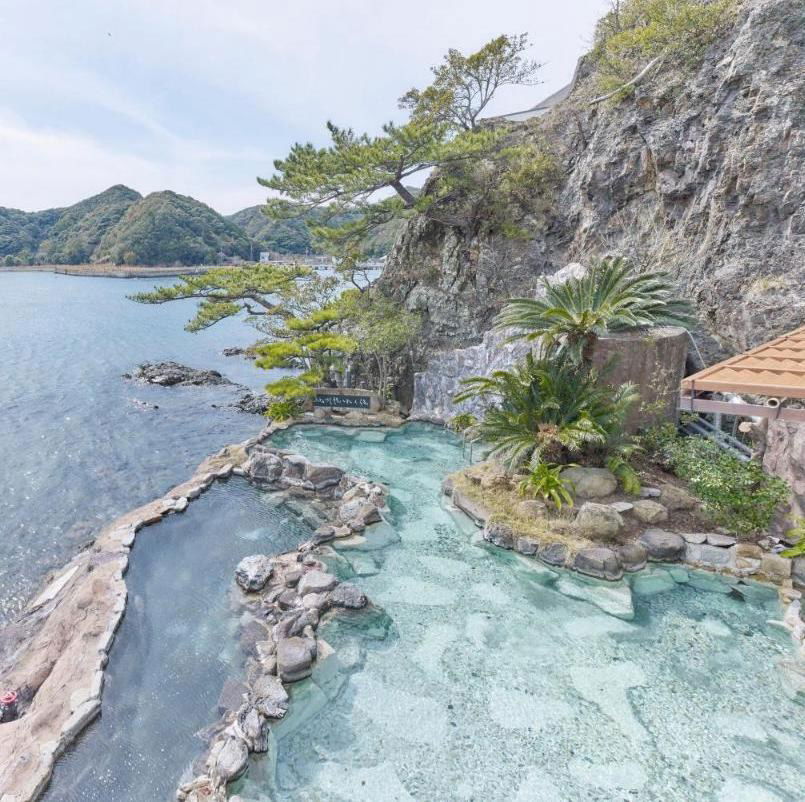
About Kumano-bettei NAKANOSHIMA
A Michelin Selected ryokan set along the Nakatsu River in the Kumano region of Wakayama Prefecture, Kumano-bettei NAKANOSHIMA occupies one of Japan's most architecturally deliberate retreats, where traditional inn structures meet the forested terrain of the Kii Peninsula. The property sits within reach of the UNESCO-listed Kumano Kodo pilgrimage routes, positioning it as a base for serious engagement with one of Japan's most historically layered landscapes.
Where the Kii Peninsula Shapes the Architecture
The Kumano region of Wakayama Prefecture has always been defined by its relationship between built space and elemental landscape. Rivers cut through cedar-covered gorges. Pilgrimage paths thread between grand shrines. The settlements along the Nakatsu River exist in quiet negotiation with that terrain rather than against it. Kumano-bettei NAKANOSHIMA, addressed at 1179-9 Katsuura in Nachikatsuracho, is a product of that negotiation: a ryokan that reads as an architectural argument for how a structure should sit within the Kii Peninsula's forested, river-threaded geography rather than impose upon it.
Arriving at a property in this region involves a longer transit than most premium Japanese inn stays. The Kumano area is deliberately remote, and that remoteness is not incidental to the experience but constitutive of it. The surrounding landscape carries UNESCO World Heritage designation through the Kumano Kodo pilgrimage network, and the property's position near Katsuura means guests move between the inn and those ancient routes as a matter of course. This is not a convenience stop on a city itinerary; it is a destination that requires and rewards commitment to the journey.
Design Logic in a River Setting
Japanese ryokan architecture operates within a tradition that is both highly codified and site-specific. The leading examples in this category, from Gora Kadan in Hakone to Asaba in Izu, achieve their authority by reading the local environment with precision and translating it into spatial decisions: where the bath is positioned relative to the view, how corridors are oriented to frame specific tree lines or water features, what materials are sourced locally versus brought in. Kumano-bettei NAKANOSHIMA applies that logic to a riverside site in one of Japan's most dramatically natural inland corridors.
The NAKANOSHIMA element of the name references the property's relationship to the river island setting, a site type that appears throughout Japanese spatial culture as a place of mediated transition between the ordered and the natural. Positioning a ryokan on or adjacent to such a site carries specific design obligations: views must be earned through thoughtful fenestration, the sounds and movements of water must be incorporated rather than suppressed, and the architecture must accept a degree of seasonal transformation as river levels and surrounding foliage change across the year.
This approach places the property alongside a broader cohort of design-led ryokan that have emerged as a category distinct from both large onsen resort hotels and ultra-minimal boutique inns. Properties like Zaborin in Kutchan and Satoyama-Jujo in Niigata occupy a similar position: architecturally authored, deeply site-specific, and structured around the premise that design and natural setting are not competing priorities but a single continuous argument.
Michelin Selection and What It Signals
Kumano-bettei NAKANOSHIMA holds a Michelin Selected designation in the 2025 Michelin Hotels guide, the entry-level recognition in a tiered system that sits below Michelin Key awards but confirms placement within a quality peer set reviewed by Michelin inspectors. For properties in rural Japan, this designation carries particular weight because the inspected field is smaller and the standards for inclusion are set against a national benchmark rather than a local one.
In the context of the Kii Peninsula and Kumano region specifically, Michelin recognition confirms what the property's location and category already suggest: that this is an inn operating at the level where guests arriving from Kyoto, Tokyo, or internationally can expect standards consistent with the premium end of Japanese hospitality. For comparison, other Michelin Selected and Key properties in Japan's nature-adjacent ryokan category include Fufu Nikko in Nikko, Nishimuraya Honkan in Kinosaki-cho, and Kamenoi Besso in Yufu, each operating within the same framework of traditional inn structure, onsen access, and kaiseki-adjacent dining.
The Kumano Context as Practical Consideration
Understanding this property requires understanding what the Kumano Kodo represents in contemporary Japanese travel. The pilgrimage network, connecting the grand shrines of Hongu, Nachi, and Hayatama, has attracted international walkers since receiving joint UNESCO listing with Spain's Camino de Santiago in 2004. That dual-listing status is notable because it positions Kumano as one of two walking pilgrimage routes on earth with the designation, which has drawn a specific category of international traveler: those who approach Japan through its spiritual and landscape heritage rather than its urban culture.
The Nachi area, where the property is addressed, sits near Nachi Taisha shrine and the adjacent Nachi no Taki waterfall, the tallest single-drop waterfall in Japan at 133 metres. This gives the property an immediate natural landmark of genuine scale within a short distance. Guests who structure their stay around the pilgrimage routes, the falls, and the shrine system are working with a layered itinerary that the property's location actively supports. For broader regional context and planning, see our full Nachikatsuracho, Higashimuro Gun restaurants and travel guide.
Travel logistics to this region require planning. The nearest Shinkansen access is via Shin-Osaka, with onward travel by limited express train to Kii-Katsuura station. Journey times from Osaka are typically two to three hours by rail. Visitors arriving from Tokyo face a longer combined transit unless flying to Nanki-Shirahama Airport, which maintains services from Tokyo Haneda. These are not obstacles but calibration points: the property is positioned for guests who build their itinerary around it rather than adding it as an afterthought.
Positioning Within Japanese Luxury Hospitality
Japan's premium hospitality tier has expanded significantly over the past decade, with major international brands establishing presences in Tokyo and Kyoto alongside long-established Japanese operators. Properties like Bvlgari Hotel Tokyo and HOTEL THE MITSUI KYOTO represent one end of that expansion: urban, design-intensive, internationally branded. The rural ryokan category represents the other: domestically rooted, landscape-dependent, and operating within a hospitality grammar that international brands have not replicated at scale.
Within that rural category, the Kumano Peninsula properties occupy a specific niche: remote enough to require genuine commitment, historically and spiritually layered enough to reward extended engagement, and architecturally shaped by a terrain that few other Japanese inn settings can match. Comparable properties in terms of remote natural positioning include Amanemu in Mie, which similarly draws from the Ise-Shima coastal landscape, and Benesse House in Naoshima, which achieves a different kind of remoteness through its island-art-institution model. Neither replicates what the Kumano setting offers, which is the combination of ancient pilgrimage infrastructure, dramatic inland waterfall landscape, and the particular atmosphere of a region that has drawn Japanese people for spiritual purposes for over a millennium.
Guests who have worked through the standard circuit of design-led Japanese ryokan, including properties in Hakone, Kyoto's mountains, Beppu, or the Izu Peninsula, and who are looking for a stay that extends that engagement into less-frequented terrain will find the Kumano-bettei NAKANOSHIMA's address in Nachikatsuracho to be a logical and well-supported next step. Other properties worth comparing at the planning stage include Fufu Kawaguchiko in Fujikawaguchiko, Sekitei in Hatsukaichi-shi, and Nasu Mukunone in Nasu for a calibrated sense of where this property sits within the national field.
Planning Notes
Booking for Michelin Selected ryokan in Japan's rural prefectures typically runs through the property directly or via specialist reservation platforms; advance booking of several weeks to months is standard for high season, which in the Kumano region concentrates around spring foliage (late March to April) and autumn colour (late October to November). The Kumano Kodo draws walkers year-round, but summer brings significant humidity and rainfall to the Kii Peninsula, which affects both trekking conditions and the general atmosphere of a stay. Winter visits are quieter and involve a different relationship with the landscape: the cedar forests and river valleys carry a different weight in the cold months, and onsen access becomes proportionally more central to the daily rhythm of the property.
Frequently Asked Questions
- What is the general vibe at Kumano-bettei NAKANOSHIMA?
- The property sits within the Kumano region of Wakayama Prefecture, one of Japan's most historically and spiritually weighted landscapes. The atmosphere is governed by the surrounding cedar-forested gorge terrain, the river setting implied by the NAKANOSHIMA address, and the proximity to the UNESCO-listed Kumano Kodo pilgrimage routes. Michelin Selected recognition in 2025 confirms placement at the quality tier of rural Japanese ryokan hospitality. Expect a stay structured around immersion in landscape and traditional inn format rather than urban programming or resort amenities.
- What is the leading accommodation option at Kumano-bettei NAKANOSHIMA?
- Specific room categories and suite configurations are not published in the available data. At properties holding Michelin Selected status within Japan's premium ryokan category, the most refined accommodation typically involves a private onsen bath, direct natural views, and the largest floor plan in the property. Confirming specific suite options directly with the property is advisable before booking, particularly for guests seeking a specific view orientation or bath configuration relative to the river setting.
- What is the defining characteristic of Kumano-bettei NAKANOSHIMA?
- Location, in the most specific sense. The Kumano area is one of few places in Japan where UNESCO World Heritage pilgrimage infrastructure, a major natural landmark (Nachi no Taki waterfall), and a centuries-old shrine network exist within close proximity to a Michelin-recognised inn. Most comparable properties in the premium ryokan category are set in landscapes that are beautiful but less historically weighted. The Kumano setting is both physically dramatic and culturally specific in a way that few other ryokan locations in Japan can match.
Recognized By

Similar venues by awards
Related editorial
- Asia's 50 Best Restaurants 2026: The Chairman and Wing Go 1-2 from the Same BuildingThe Chairman takes No. 1 and Wing climbs to No. 2 at Asia's 50 Best Restaurants 2026. Both operate from the same Hong Kong building. Here's what it means.
- Four Seasons Yachts Debut: 95 Suites, 11 Restaurants, and a March 2026 Maiden VoyageFour Seasons I launches March 20, 2026, with 95 suites, a one-to-one staff ratio, and 11 onboard restaurants. Worth tracking if you want hotel-grade service at sea.
- LA Michelin Guide 2026: Seven New Restaurants from Tlayudas to Uzbek DumplingsMichelin's March 2026 California Guide update adds six LA restaurants and one Montecito newcomer, spanning Oaxacan tlayudas, Uzbek manti, and Korean-Italian pasta.
Save or rate Kumano-bettei NAKANOSHIMA on Pearl
Keep this venue in your Pearl passport, rate it after you visit, and track it alongside every other place you collect.