
Hotel in Mt Sunapee, United States
Hideaway Inn (Mt. Sunapee)
150ptsNew England Quiet-Season Retreat
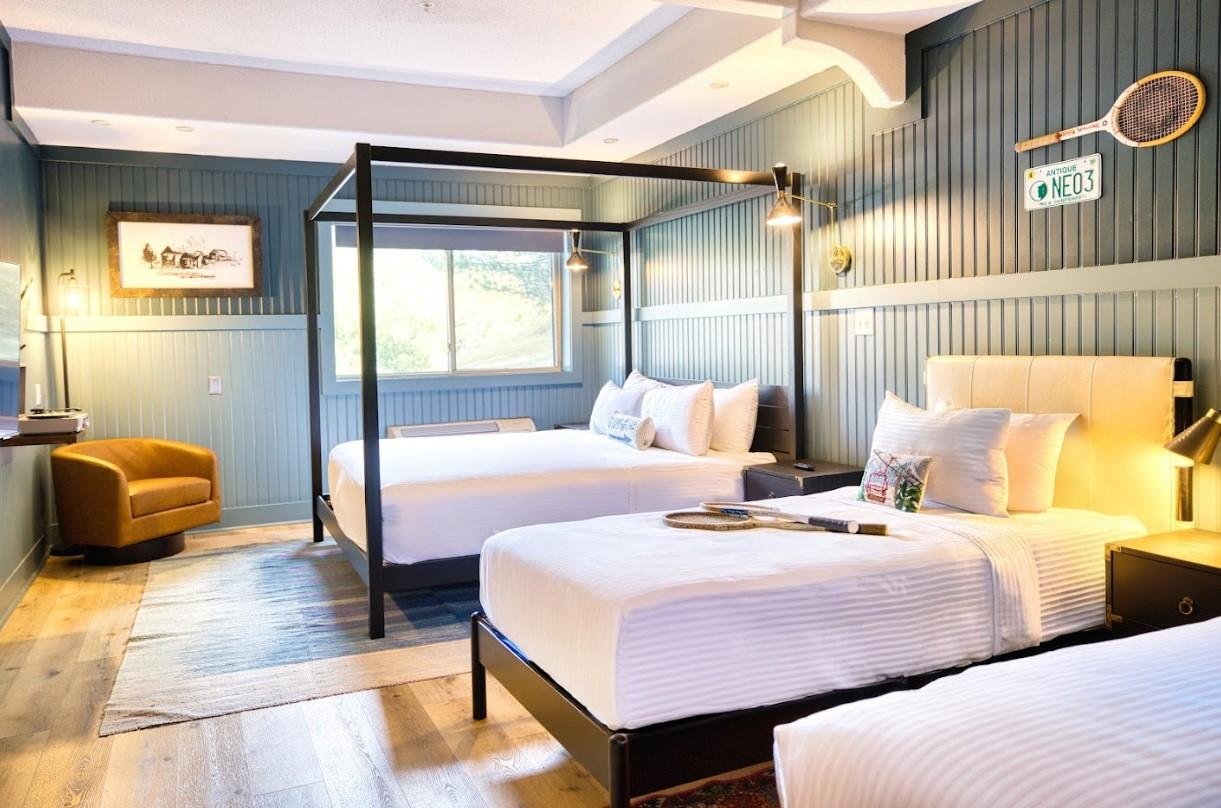
About Hideaway Inn (Mt. Sunapee)
Hideaway Inn sits in the Mt. Sunapee region of New Hampshire, a lake-and-mountain corridor that draws visitors seeking quieter alternatives to the more trafficked resort towns of New England. With limited data in the public record, the property positions itself in a tier of small, independently operated inns that define the character of rural New Hampshire hospitality. Check our full guide for regional context before booking.
What the Mt. Sunapee Region Does to a Certain Kind of Traveller
New Hampshire's Lake Sunapee corridor operates on a register that distinguishes it from the better-publicised resort clusters of New England. Where Stowe draws the ski-and-see crowd and the White Mountains attract the peak-baggers, the Sunapee area has historically held a quieter, more residential appeal: lake communities, foliage seasons that arrive without the traffic of the Kancamagus Highway, and a lodging stock composed largely of small inns and independently run properties rather than branded hotel flags. That character is not accidental. It reflects decades of local preference for a certain scale of development, one in which the physical fabric of the place — clapboard facades, wooded approaches, lake views uninterrupted by signage — remains the primary amenity. Hideaway Inn sits inside that tradition. See our full Mt Sunapee restaurants guide for broader regional orientation before planning a stay.
Architecture and Physical Setting: What Small-Inn Design Signals in This Region
In New England's inn culture, the physical structure of a property is rarely a neutral fact. A converted farmhouse speaks to one set of priorities; a purpose-built lodge to another; a restored Victorian to a third. The region around Mt. Sunapee has seen all three typologies, and the distinctions matter to how a property fits its surroundings. Properties that work with existing vernacular architecture , wood-frame construction, pitched roofs scaled for heavy snowfall, covered porches oriented toward water or treeline , tend to read as more embedded in place than those that impose a contemporary aesthetic onto a landscape expecting otherwise.
Without detailed architectural records in the public database for Hideaway Inn, the safest editorial read is through regional typology. Small inns in the Sunapee area that have sustained operations over multiple decades typically share a design logic oriented toward winter utility and summer openness: rooms that are warm without being overheated, common spaces that function as genuine gathering areas rather than lobbies in the hotel sense, and an exterior relationship to the surrounding landscape that privileges view and access over facade theatre. That kind of low-intervention design philosophy is the dominant mode among the independently operated properties that give this region its character, and it contrasts sharply with the more curated visual identities of properties like Amangiri in Canyon Point or Ambiente in Sedona, where architecture is explicitly the offering.
At the other end of the spectrum, urban properties such as The Fifth Avenue Hotel in New York City and Aman New York deploy design as a primary competitive differentiator in dense markets where the physical environment cannot be the draw. Rural New Hampshire inns operate in the inverse condition: the surrounding landscape does the heavy lifting, and the structure's job is to frame rather than compete with it.
Where Hideaway Inn Sits in the Regional Competitive Set
The lodging market around Mt. Sunapee is not uniform. At the upper end, properties with lake frontage, dedicated spa facilities, or formal dining programs command premium rates and draw from a broader geographic catchment that includes Boston, New York, and Montreal. Below that tier, a larger cohort of independently operated inns and bed-and-breakfasts serves repeat regional visitors, leaf-peepers, and skiers using Sunapee Mountain as a less-crowded alternative to Killington or Stowe.
This structure is worth understanding before booking. Properties like Troutbeck in Amenia or Blackberry Farm in Walland represent the nationally recognised tier of American country-house hospitality, where the full-service model, the land, the food program, and the design all operate at a scale that justifies significant advance planning and rates to match. Hideaway Inn, based on available signals, positions below that bracket , in the tier where the value proposition is proximity to the landscape and a lower-friction experience rather than a comprehensive programmed stay.
For travellers who have used properties like Post Ranch Inn in Big Sur or Amangani in Jackson Hole as reference points, the Sunapee inn tier will feel markedly different in scale and service depth. That difference is not necessarily a shortcoming; it reflects a different use case and a different relationship between guest and place.
Seasonal Logic and When to Go
The Mt. Sunapee region has two peak seasons with distinct characters. Winter brings skiing at Sunapee Mountain, a mid-sized resort with a vertical drop that suits intermediate terrain more than expert runs, and the inn stock fills with weekend visitors from southern New England. Late September through mid-October is the other pressure point: foliage in the Lake Sunapee basin tends to peak slightly earlier than the White Mountains, making it attractive to visitors trying to avoid the most crowded corridors. Shoulder periods, particularly May through early June and November before ski season, offer the quietest conditions and, typically, more accessible booking windows at independently operated properties across the region.
Travellers who prefer the controlled intensity of properties like Four Seasons at The Surf Club in Surfside or the polished year-round programming of Hotel Bel-Air in Los Angeles will find the Sunapee inn experience considerably less structured. Dining options concentrate in New London, Newbury, and the surrounding towns rather than on-property, so self-sufficiency in planning , knowing where dinner is before you arrive , matters more here than at full-service resort properties.
Planning a Stay: What to Know Before You Book
Specific booking details, current rates, and room configurations for Hideaway Inn are not available in the current EP Club database, which means the most reliable path to accurate, up-to-date information is direct contact with the property. For New Hampshire inns in this category, booking windows of two to three weeks ahead are typically sufficient outside peak foliage and holiday ski weekends, when the region fills faster than casual visitors expect. Travellers arriving from Boston can reach the Lake Sunapee area in roughly two hours via I-89, making it accessible as a long weekend destination without the logistics overhead of a longer journey.
Those building a broader New England circuit might also consider how the Sunapee stay fits against other independently scaled properties in the Northeast, including Raffles Boston as an urban anchor or Bernardus Lodge in Carmel Valley as a comparative reference for what the wine-country lodge format looks like at a fuller service level. For reference points at the design-forward end of American boutique hospitality, SingleThread Farm Inn in Healdsburg and Alpine Falls Ranch in Superior occupy a different register entirely, but they help calibrate expectations for what full-program rural hospitality looks like when it is built around a complete experience rather than a base-camp model.
Frequently Asked Questions
- Is Hideaway Inn more low-key or high-energy?
- The Mt. Sunapee region as a whole skews toward quieter, landscape-oriented stays rather than programmed resort energy. Independently operated inns in this area, based on their position in the regional market, typically attract guests looking for direct access to outdoor activity with minimal operational complexity on-property. Hideaway Inn, by name and regional context, aligns with that low-key tier rather than the full-service resort bracket.
- What's the most popular room type at Hideaway Inn?
- Specific room configuration data is not available in the current EP Club database. For inns in the Lake Sunapee corridor, rooms with water or mountain views tend to command the highest demand and book first during foliage and ski peak periods. Contacting the property directly remains the most reliable way to confirm current availability and room categories before committing.
- What is Hideaway Inn leading at?
- Based on its regional positioning within the Mt. Sunapee inn market, the property's primary draw is likely proximity to outdoor access, including Sunapee Mountain skiing in winter and lake recreation in summer, at a more accessible price point than the full-service resort tier. Travellers who want a base rather than a destination unto itself will find that proposition most useful.
- What's the leading way to book Hideaway Inn?
- Direct contact with the property is advisable given that booking platforms and contact details are not confirmed in the current EP Club database. For peak periods, particularly October foliage weekends and holiday ski weeks, booking well in advance is the standard practice across the Mt. Sunapee inn market regardless of which property you choose.
- What's a smart way to approach Hideaway Inn?
- Arrive with dining and activity logistics planned in advance. Unlike full-service properties such as Canyon Ranch Tucson or Kona Village in Kailua Kona, independently operated New Hampshire inns in this tier rarely offer on-property dining at dinner, so knowing the restaurant options in New London or Newbury before arrival makes the stay significantly smoother.
- How does staying at Hideaway Inn compare to other small New Hampshire inns for a ski or foliage trip?
- The Mt. Sunapee corridor offers a less crowded alternative to the White Mountains and Vermont's ski-town circuits, which makes it useful for travellers who want New England seasonal character without the congestion of peak-period destinations like Stowe or North Conway. Hideaway Inn's positioning in this market suggests it functions as a direct base for seasonal outdoor activity rather than a destination with its own draw. Travellers who want more comprehensive on-property programming will find closer comparisons in larger inn-and-spa formats elsewhere in New England.
Related editorial
- Asia's 50 Best Restaurants 2026: The Chairman and Wing Go 1-2 from the Same BuildingThe Chairman takes No. 1 and Wing climbs to No. 2 at Asia's 50 Best Restaurants 2026. Both operate from the same Hong Kong building. Here's what it means.
- Four Seasons Yachts Debut: 95 Suites, 11 Restaurants, and a March 2026 Maiden VoyageFour Seasons I launches March 20, 2026, with 95 suites, a one-to-one staff ratio, and 11 onboard restaurants. Worth tracking if you want hotel-grade service at sea.
- LA Michelin Guide 2026: Seven New Restaurants from Tlayudas to Uzbek DumplingsMichelin's March 2026 California Guide update adds six LA restaurants and one Montecito newcomer, spanning Oaxacan tlayudas, Uzbek manti, and Korean-Italian pasta.
Save or rate Hideaway Inn (Mt. Sunapee) on Pearl
Keep this venue in your Pearl passport, rate it after you visit, and track it alongside every other place you collect.