
Hotel in Mishima City, Japan
Fujisan Mishima Tokyu Hotel
350ptsShinkansen Corridor Basecamp

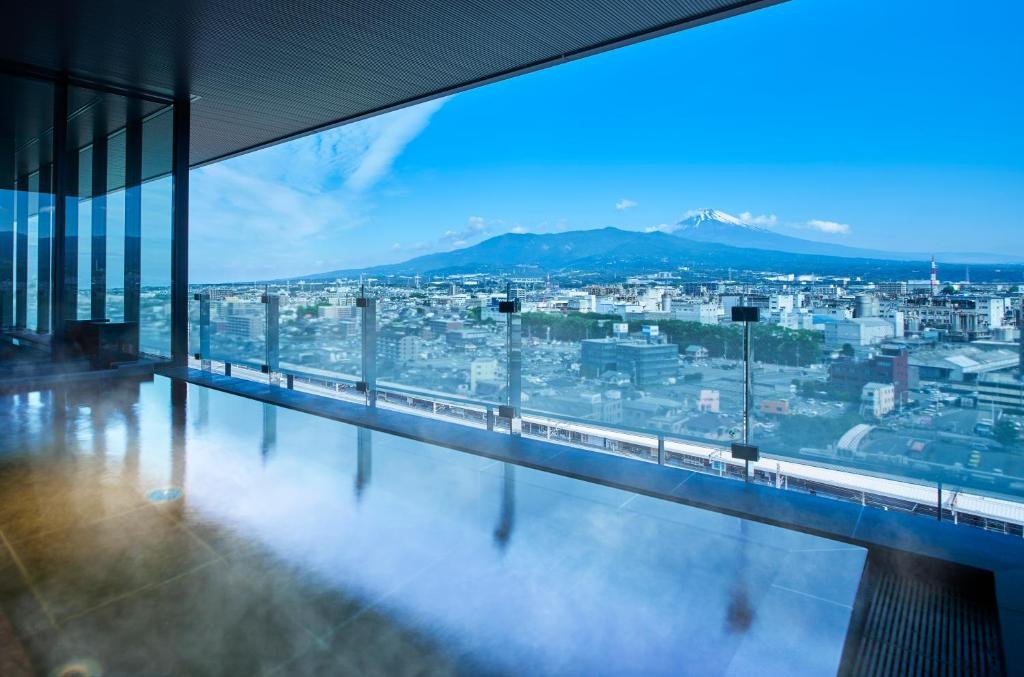
About Fujisan Mishima Tokyu Hotel
Mishima City's largest hotel property sits at the base of the Izu Peninsula corridor, offering 195 rooms positioned between Shinkansen access and the Fuji-Hakone axis. The Tokyu Hotel brand brings reliable business-hotel infrastructure to a city that punches above its size as a transit hub for the wider Shizuoka region.
Where the Fuji Corridor Meets the City Grid
Mishima occupies a precise geographic position that most travelers pass through rather than pause in. The city sits at the northern edge of the Izu Peninsula, where the Tokaido Shinkansen line deposits visitors heading to Hakone, the Izu coast, or the southern flanks of Mount Fuji. Fujisan Mishima Tokyu Hotel reads that geography directly in its orientation: a city-scale property of 195 rooms, located at the Mitowa Mishima complex, designed to serve the full range of traveler types that flow through this corridor. See our full Mishima City restaurants guide for context on what the city offers beyond the hotel door.
The Tokyu Hotels group operates across Japan's major transit and resort nodes, and the Mishima property fits that network logic. Where brands like Bvlgari Hotel Tokyo or HOTEL THE MITSUI KYOTO anchor in prestige city destinations and compete primarily on design distinction and dining credentials, the Tokyu brand's strength lies in operational consistency and strategic placement at connectivity nodes. That is neither a criticism nor a concession — it reflects a different competitive brief, one where the surrounding Fuji-Izu region, not the hotel itself, is the primary draw.
The Architecture of a Transit Hub Hotel
The Mitowa Mishima complex that anchors the hotel is a mixed-use commercial development that functions as Mishima's contemporary civic center. Arriving from Mishima Station, the building presents itself as a modern urban structure integrated into retail and civic infrastructure, a format common in Japan's regional cities where post-bubble redevelopment clustered commercial and hospitality functions into single compounds. The hotel occupies the first floor entrance within that complex, giving it immediate access to the city's pedestrian flow without isolating guests into a sealed resort environment.
This format has a specific advantage for the region's travel pattern. Guests arriving on the Kodama or Hikari Shinkansen services from Tokyo, roughly 45 minutes by fast train, can move from platform to lobby with minimal friction. The same logic applies to guests staging a multi-day itinerary through Shizuoka: Mishima functions as a practical base from which the Izu onsen circuit, Hakone's volcanic landscape, and Fuji's northern approaches are all reachable within an hour. Compare this to more resort-integrated properties like Gora Kadan in Hakone or Asaba in Izu, where the property itself is the destination and the journey out is secondary. At Fujisan Mishima Tokyu Hotel, the inverse applies.
Scale and What 195 Rooms Implies
A 195-room hotel in a city of Mishima's size represents the largest full-service property in the market. That scale signals a broad-market brief: the hotel must serve business travelers, families, tour groups, and independent travelers simultaneously. In Japan's hospitality hierarchy, this positions the Tokyu Mishima property firmly in the urban business hotel tier, a category that prioritizes reliable service, standardized room comfort, and on-site dining over the kind of spatial experimentation or material specificity that defines ryokan culture or design-led boutique properties.
For travelers accustomed to properties like Zaborin in Kutchan or Benesse House in Naoshima, where room count is deliberately restricted to maintain atmosphere, the Tokyu Mishima model operates in a different register. Neither is inherently superior for every use case. A 195-room property with consistent infrastructure often serves the repeat business traveler or the efficiency-focused leisure traveler better than a tightly curated boutique, particularly when the surrounding region offers enough landscape and culture to carry the experiential weight of the trip.
The Shizuoka Prefecture hotel market demonstrates this split clearly. Properties like Fufu Kawaguchiko in Fujikawaguchiko compete on intimate scale and proximity to Fuji's lake district. The Tokyu Mishima property competes on a different axis: city access, room availability, and network reliability for Tokyu loyalty travelers. Both have clear audiences.
Mishima as a Base: The Regional Logic
Understanding why a traveler would choose Mishima at all requires mapping the Fuji-Izu-Hakone triangle. Mishima Station is one of only two Shinkansen stops in Shizuoka Prefecture that also connects directly to the Izu Hakone Railway, giving it a dual-line advantage that places it within reach of Shuzenji, the Izu Peninsula's onsen interior, and the Hakone Tozan route. For travelers building an itinerary that combines bullet-train efficiency with regional depth, Mishima removes the need for a Tokyo return each night.
The city itself has a working identity separate from its transit function. Mishima Taisha, one of the significant Shinto shrines of the Kanto-Tokai region, anchors the historic district. The Genbei River system, fed by groundwater from Mount Fuji's snowpack, runs through the city and supports a watercress-growing tradition specific to this area. These are not manufactured attractions but functional parts of local life that reward the traveler who spends a day rather than just a connection. Properties further down the peninsula, including Atami Izusan Karaku in Atami, serve visitors who have already committed to the resort experience. Fujisan Mishima Tokyu Hotel serves those still moving.
Placing It in the Broader Japan Hotel Conversation
Japan's premium hotel market has expanded substantially since 2018, with international luxury brands including Amanemu in Mie, Halekulani Okinawa, and ENOWA Yufu in Yufu filling the high end of the domestic market. The Tokyu Hotels network occupies a different position in that structure: reliable mid-to-upper midscale, consistently present in the transit and regional city nodes that luxury brands rarely enter. That absence of luxury competition in Mishima City is not a gap in the market so much as a reflection of the city's function. Business travelers, regional tour operators, and transit-focused leisure guests do not require the programming and design investment that drives room rates at Araya Totoan in Kaga or Nishimuraya Honkan in Kinosaki-cho.
Other Tokyu-adjacent or city-transit hotel comparisons internationally, including The Fifth Avenue Hotel in New York City and Aman New York, illustrate how dramatically the same city-anchor brief diverges once design budget and brand positioning diverge. In Mishima, the Tokyu property holds its ground precisely because it is calibrated to what the city asks of it, not what a design-led brand might impose upon it.
Planning Your Stay
Mishima Station is a five-to-ten minute walk or short taxi ride from the Mitowa Mishima complex. Shinkansen connections from Tokyo run multiple times per hour on the Kodama service, making same-day arrival from Tokyo practical for late-afternoon check-in. For onward travel into Izu or toward Hakone, the Izu Hakone Railway departs directly from Mishima Station. Given the hotel's 195-room capacity, room availability is generally more accessible than the limited-key properties that define the Izu and Hakone resort circuit, though peak Fuji-viewing season in late autumn and the Golden Week window in late April and early May will tighten that. Additional regional context for the Shizuoka corridor can be found through properties like Fufu Nikko in Nikko and Bettei Senjuan in Minakami, which operate in comparable regional-hub configurations in other parts of Honshu. For those extending their Japan itinerary further, Azumi Setoda in Onomichi, Jusandi in Ishigaki, Sekitei in Hatsukaichi-shi, Bettei Otozure in Nagato, Beniya Kofuyuden in Awara, and ANA InterContinental Beppu Resort and Spa in Beppu all represent distinct regional anchors worth considering against the Mishima base-camp model. Internationally, Aman Venice illustrates how city-integrated hospitality can operate at the opposite end of the scale and ambition spectrum from a transit-focused regional property like Tokyu Mishima, a useful contrast when calibrating expectations before booking.
Frequently Asked Questions
- What is the vibe at Fujisan Mishima Tokyu Hotel?
- If you are arriving from a major Japanese city and treating Mishima as a staging point for the Izu Peninsula or Hakone, the Tokyu Hotel delivers on efficiency and comfort rather than atmosphere or design. The Mitowa Mishima complex gives the hotel a contemporary commercial-center setting, and with 195 rooms, the property handles mixed traveler types simultaneously. It suits transit-focused itineraries better than destination stays.
- What room should I choose at Fujisan Mishima Tokyu Hotel?
- Specific room categories and configuration data are not published in our database for this property. As a 195-room city hotel operating in a regional transit hub, the standard expectation is a tiered room structure with upper-floor options offering better outlooks. Consulting the hotel directly or booking through the Tokyu Hotels network will give you the most current room-type breakdown and pricing.
- What is the defining thing about Fujisan Mishima Tokyu Hotel?
- Scale and location. At 195 rooms, it is the largest full-service property in Mishima City, and it sits inside the Mitowa Mishima mixed-use complex adjacent to the Shinkansen and Izu Hakone Railway connections. For travelers routing through the Fuji-Izu corridor, that combination of room availability and transit adjacency is the primary argument for choosing this address over smaller options further into the peninsula.
- How hard is it to get a room at Fujisan Mishima Tokyu Hotel?
- With 195 rooms and no published prestige constraints on availability, the Tokyu Mishima property is accessible under most booking conditions. The exceptions are predictable: Golden Week (late April to early May), autumn Fuji-viewing season, and regional festival dates when Mishima Taisha draws visitors from across the region. Outside those windows, last-minute availability is generally workable, which contrasts with the far tighter booking windows at the smaller ryokan and design-boutique properties along the Izu coast.
- Is Fujisan Mishima Tokyu Hotel a good base for day trips to Mount Fuji?
- Mishima Station connects directly to the Izu Hakone Railway and has Shinkansen access, placing Fuji's southern and lake-district approaches within an hour of the hotel. That makes the property a functional base for a Fuji day trip, particularly for travelers who prefer a city-scale hotel infrastructure to the more remote resort-adjacent accommodation options closer to the mountain. The 195-room capacity means room security on return is reliable even during busy Fuji seasons.
Recognized By

Related editorial
- Asia's 50 Best Restaurants 2026: The Chairman and Wing Go 1-2 from the Same BuildingThe Chairman takes No. 1 and Wing climbs to No. 2 at Asia's 50 Best Restaurants 2026. Both operate from the same Hong Kong building. Here's what it means.
- Four Seasons Yachts Debut: 95 Suites, 11 Restaurants, and a March 2026 Maiden VoyageFour Seasons I launches March 20, 2026, with 95 suites, a one-to-one staff ratio, and 11 onboard restaurants. Worth tracking if you want hotel-grade service at sea.
- LA Michelin Guide 2026: Seven New Restaurants from Tlayudas to Uzbek DumplingsMichelin's March 2026 California Guide update adds six LA restaurants and one Montecito newcomer, spanning Oaxacan tlayudas, Uzbek manti, and Korean-Italian pasta.
Save or rate Fujisan Mishima Tokyu Hotel on Pearl
Keep this venue in your Pearl passport, rate it after you visit, and track it alongside every other place you collect.