
Hotel in Marrakech, Morocco
Domaine des Remparts Hotel \u0026 Spa
150ptsDomaine-Scale Seclusion

About Domaine des Remparts Hotel \u0026 Spa
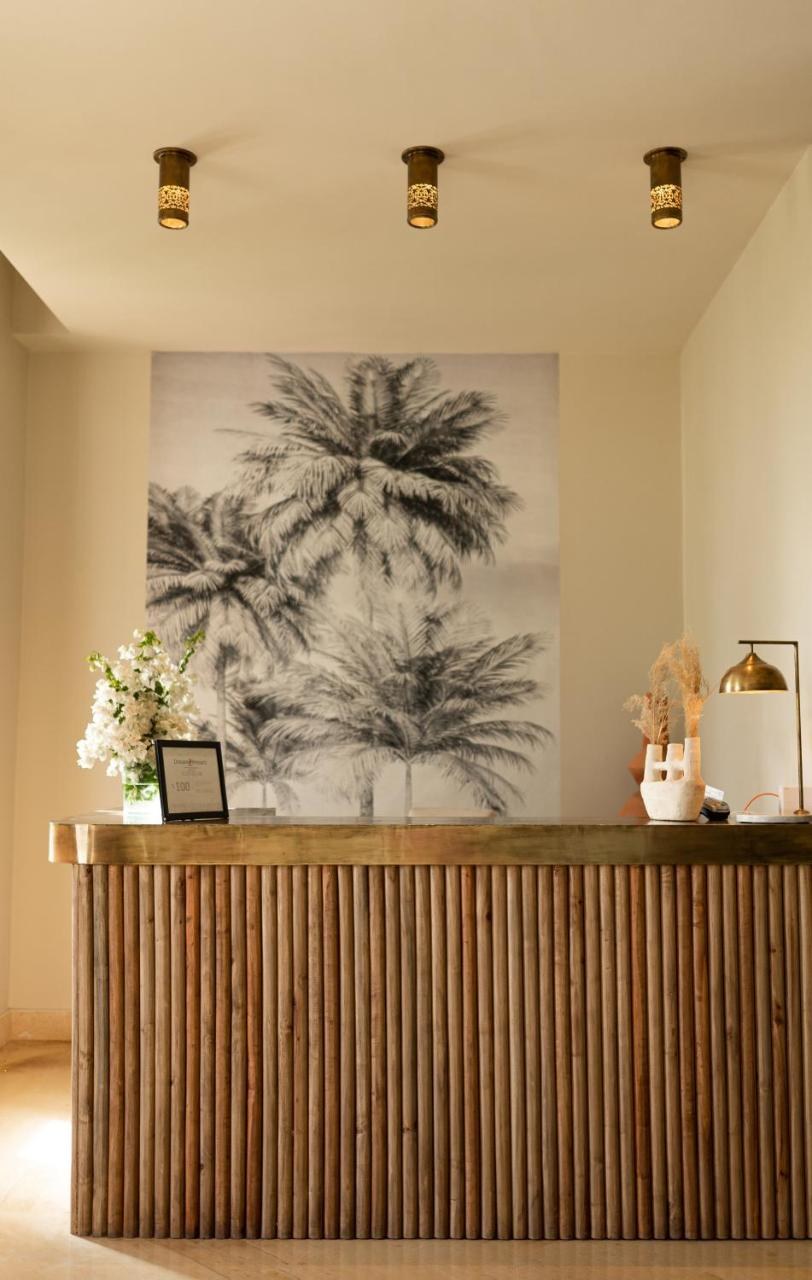
Tucked into La Palmeraie, fifteen minutes from the medina, Domaine des Remparts occupies two hectares of gardens where storks nest in the palms and the city's noise feels naturally distant. The suites vary in character: some have angular rattan bedframes, tasseled throws, and teal floors; others feature floor-to-ceiling botanical murals in ink-sketch monochrome with cream sofas and shaggy rugs. Two pools, a yoga shala, two restaurants, and a spa suit those who find Marrakech's more dramatic riad scene exhausting.
Beyond the Medina Walls: Marrakech's Estate Hotels on the Route de Fès
The road northeast toward Fès carries travellers past one of Marrakech's quieter hospitality traditions: the domaine-style property, where the city's ochre walls give way to walled gardens, olive groves, and the kind of horizontal space that the medina's tight riad format structurally cannot offer. Domaine des Remparts Hotel & Spa sits on this route at the four-kilometre mark, in a category of Marrakech accommodation that positions itself explicitly between the medina's immersive intensity and the Atlas foothills' more remote retreats. For 2025, the Michelin Hotel Guide has listed it among its Selected properties — a designation that places it in a peer group defined by setting, service consistency, and physical character rather than restaurant distinction alone.
The Physical Argument for an Estate Property
Approaching from the city, the shift in register is gradual. The dense commercial texture of the Marrakech periphery thins into wider lots and larger walls. Estate hotels in this corridor tend to organise around grounds rather than a central courtyard, and Domaine des Remparts follows that logic: the property's name references the city's historic ramparts, those twelve kilometres of twelfth-century pisé walls that still largely define Marrakech's outer boundary. The proximity to that architecture is part of the property's spatial identity, connecting it to the Almoravid and Almohad building traditions without requiring the guest to be inside the medina to feel them.
This is a meaningful distinction in the current Marrakech market. The riad format — small, inward-facing, medina-embedded , dominates one end of the accommodation spectrum, represented locally by properties such as Dar Les Cigognes, Dar Darma, Dar Housnia, and Dar Kandi. At the other end, resort-scale properties push further toward the palm groves or the Agafay desert, as seen at BELDI COUNTRY CLUB or Caravan by Habitas Agafay. Domaine des Remparts occupies the middle register: grounds and spa infrastructure, but still within the gravitational pull of the city.
Heritage Context: The Ramparts as Spatial Reference
The ramparts that give the hotel its name are among the most complete medieval defensive walls in North Africa. Constructed primarily under the Almoravid dynasty in the eleventh and twelfth centuries and extended under subsequent rulers, they run in an irregular polygon around the old city, punctuated by gates , Bab Doukkala, Bab El Khemis, Bab Debbagh , each with its own social and commercial history. The Route de Fès exits through the northeast, historically the direction of trade and pilgrimage toward the imperial cities.
Properties that name themselves after this heritage are making a positioning claim as much as a geographic one. In Marrakech, where the palimpsest of dynasties , Almoravid, Almohad, Merinid, Saadian, Alaoui , layers onto every neighbourhood, a hotel's relationship to that history shapes how guests read their surroundings. The domaine format, with its agricultural and residential echoes, fits the extra-muros tradition of Moroccan elite life: the estates and gardens that wealthy Marrakchi families maintained outside the walls as counterpoints to the medina's density. La Mamounia in Marrakesh represents the grand urban version of that tradition; properties along the Route de Fès represent its quieter, more agricultural register.
Where This Sits in Morocco's Wider Hotel Spectrum
Michelin's 2025 hotel selection across Morocco spans a range of formats and price points, from coastal properties like Hilton Taghazout Bay Beach Resort & Spa in Taghazout and Sofitel Tamuda Bay Beach & Spa in Tamuda Bay to desert outposts such as Dar Azawad in M'hamid and Dar Ahlam in Ouarzazate, to Atlantic-facing properties like La Sultana Oualidia in Oualidia and Villa de l'O in Essaouira. Imperial city selections include Riad Mayfez Suites & Spa in Fez and Palais AMANI in Fès. Within this geography, Domaine des Remparts represents Marrakech's estate-hotel category, distinct from both the riad cluster and the mountain lodge tradition of the Atlas foothills, exemplified by Kasbah Tamadot in Asni.
Internationally, the Michelin hotel programme includes selections as varied as The Fifth Avenue Hotel in New York City, Badrutt's Palace Hotel in St. Moritz, and Hôtel de Paris Monte-Carlo in Monte Carlo. The Michelin Selected tier is not a star rating and carries no ranking within a city, but inclusion signals that the property meets editorial criteria for setting, condition, and guest experience reliability.
Seasonality and Timing
Marrakech's climate divides the year into two primary windows and two shoulder periods. October through early December and March through May represent the most temperate bands, when daytime temperatures in the low-to-mid twenties support garden and pool use without the intensity of the July and August high-season heat, which regularly reaches above 38°C. For an estate property where outdoor space is a structural feature of the offering, seasonal timing matters more than it does at a medina riad, where interior architecture provides natural temperature regulation. The cooler months also coincide with lower occupancy across much of the city, which affects both availability and the broader character of the Marrakech stay. Visitors arriving during Ramadan, which moves forward roughly eleven days each year in the Islamic calendar, encounter a different city rhythm: reduced daytime restaurant activity, but heightened evening atmosphere in the medina.
Planning a Stay
Domaine des Remparts is located at kilometre four on the Route de Fès, a clean transfer from Marrakech Menara Airport or the medina by taxi or private car. The address outside the city walls means that medina access requires a vehicle or transfer rather than the walking-distance proximity that a riad in Bab Doukkala or Mouassine would offer. Guests comparing options in the wider Marrakech market might also consider AnaYela, Dar Assiya, or Dar Kandi for a closer-in alternative. The hotel's spa infrastructure makes it a more self-contained stay than most riads, which often rely on the city itself for programming. For the full picture of what Marrakech's hotel and restaurant scene currently offers, see our full Marrakech restaurants guide. Wine and vineyard travellers passing through Morocco's interior may also want to note Château Roslane in Icr Iqaddar or the northern option of Fairmont Tazi Palace Tangier in Tangier as bookends to a longer Moroccan itinerary. For guests also considering Atlantic coastal escapes, Mazagan Beach & Golf Resort in El Jadida rounds out that category. Pricing and room-category data are not currently published through EP Club's database, so direct contact with the property is advised for current rates and availability.
Frequently Asked Questions
- How would you describe the overall feel of Domaine des Remparts Hotel & Spa?
- The property occupies an estate position four kilometres northeast of central Marrakech on the Route de Fès, placing it between the intensity of the medina riad format and the remoteness of Atlas or desert retreats. Its 2025 Michelin Selected designation signals consistency in setting and service. The feel is closer to an agricultural domaine than a city hotel: horizontal space, gardens, and a spa facility that makes the property more self-contained than most Marrakech accommodation at any price point. Guests who want medina immersion should look at riad options; those who want space and quiet within reach of the city will find this format more suited to longer stays.
- Which room category should I book at Domaine des Remparts Hotel & Spa?
- Room category data, including suite configurations, garden-facing rooms, and any villa formats, is not currently in the EP Club database. The Michelin Selected listing confirms the property meets editorial standards for quality, but specific room-tier recommendations require direct verification with the hotel. As a general principle with Moroccan estate properties, rooms or suites with direct garden or terrace access deliver the spatial dividend that distinguishes this format from urban alternatives. It is worth asking about ground-floor access when booking, particularly for families or guests who prioritise pool and garden proximity over upper-floor views.
Recognized By

Similar venues by awards
Related editorial
- Asia's 50 Best Restaurants 2026: The Chairman and Wing Go 1-2 from the Same BuildingThe Chairman takes No. 1 and Wing climbs to No. 2 at Asia's 50 Best Restaurants 2026. Both operate from the same Hong Kong building. Here's what it means.
- Four Seasons Yachts Debut: 95 Suites, 11 Restaurants, and a March 2026 Maiden VoyageFour Seasons I launches March 20, 2026, with 95 suites, a one-to-one staff ratio, and 11 onboard restaurants. Worth tracking if you want hotel-grade service at sea.
- LA Michelin Guide 2026: Seven New Restaurants from Tlayudas to Uzbek DumplingsMichelin's March 2026 California Guide update adds six LA restaurants and one Montecito newcomer, spanning Oaxacan tlayudas, Uzbek manti, and Korean-Italian pasta.
Save or rate Domaine des Remparts Hotel \u0026 Spa on Pearl
Keep this venue in your Pearl passport, rate it after you visit, and track it alongside every other place you collect.