
Hotel in Le Tronchet, France
Hotel de L\u0027Abbaye Le Tronchet - Handwritten Collection
150ptsMonastic Heritage Conversion

About Hotel de L\u0027Abbaye Le Tronchet - Handwritten Collection
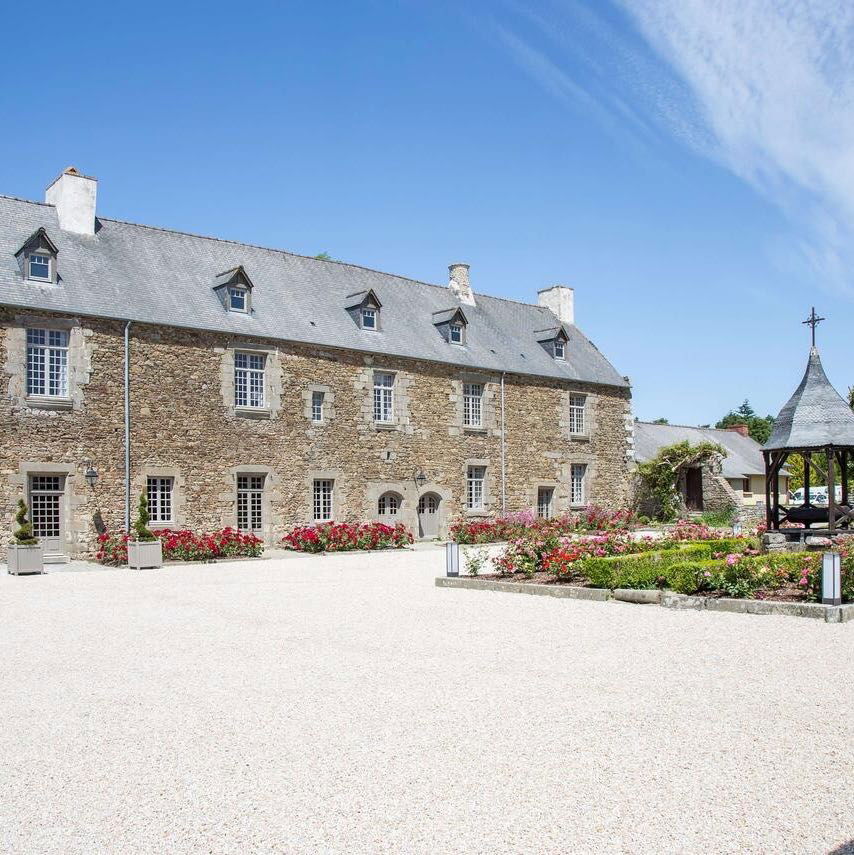
A former Benedictine abbey in the Breton countryside, Hotel de L'Abbaye Le Tronchet carries Michelin Selected status for 2025 and belongs to the Handwritten Collection, a group of characterful independent properties across France. Stone cloisters, monastic architecture, and a setting deep in the Ille-et-Vilaine forest place it firmly in the French heritage-conversion tradition — more contemplative retreat than resort hotel.
Stone, Silence, and the Weight of Benedictine History
France has a long tradition of converting religious architecture into places of hospitality, and the results range from superficially themed renovation to genuinely atmospheric transformation. Hotel de L'Abbaye Le Tronchet sits toward the latter end of that spectrum. The building is a former Benedictine abbey in the Ille-et-Vilaine department of Brittany, and its monastic bones — vaulted stone corridors, courtyard geometry, the particular quality of light that comes through thick-walled apertures — set the tone before a guest has crossed the threshold into a single room.
The Michelin guide selected it for the 2025 edition of its hotels and stays programme, placing it in a cohort of French properties recognized for character and quality rather than sheer scale or brand recognition. That selection matters as a sorting mechanism: the Michelin hotels programme is not a participation exercise, and inclusion reflects a considered editorial judgment about the experience on offer.
What Monastic Architecture Produces in Practice
The heritage-conversion category in French hospitality has a distinct design logic. Ecclesiastical and monastic buildings were constructed for permanence, community, and a deliberate separation from the secular world outside. That means thick limestone walls that regulate temperature passively, spatial hierarchies that feel nothing like a conventional hotel floor plan, and outdoor spaces , cloisters, enclosed gardens, wooded grounds , that function as architectural extensions of the interior rather than afterthoughts.
At Le Tronchet, the abbey's setting within a forested Breton landscape amplifies this effect. The surrounding woodland provides a buffer that most heritage properties in more trafficked areas cannot offer. This is not the kind of conversion property where the historic shell has been dressed with contemporary furniture and left to work as contrast. The architectural identity here is the primary material, and everything else follows from it.
For guests who have stayed at other French converted-estate properties , places like Château du Grand-Lucé in Le Grand-Lucé or La Ferme Saint-Siméon in Honfleur , the specific register at Le Tronchet will feel familiar in category but distinct in character. Monastic architecture produces a different atmosphere than aristocratic château architecture: less ornamental, more austere, with spatial drama that comes from proportion and material rather than decoration.
The Handwritten Collection: What the Brand Signals
The Handwritten Collection is a French group of independent hotels united by character and distinctiveness rather than standardized service protocols. The name signals the editorial premise: properties that feel authored rather than assembled from a brand template. Within that framework, Le Tronchet's abbey setting is a natural fit. The collection positions itself against the international luxury chains , against properties like Le Bristol Paris or Hôtel de Paris Monte-Carlo , not by competing on amenity count or room size, but by offering something those properties structurally cannot: a building with genuine pre-hospitality history and the spatial idiosyncrasy that comes with it.
That's a different value proposition, and it attracts a different traveller. The guest drawn to Le Tronchet is unlikely to be cross-shopping it against Hotel Du Cap-Eden-Roc or Four Seasons Megève. The competitive reference points are other heritage conversions in the French provinces: places like Domaine Les Crayères in Reims, Baumanière Les Baux-de-Provence, or Royal Champagne Hotel & Spa in Champillon , properties where the building and its landscape are as much the product as the rooms and service.
Brittany as Context
Le Tronchet is a small commune in Ille-et-Vilaine, in the northern part of Brittany between Rennes and Mont-Saint-Michel. The region has a distinct culinary and cultural identity , galettes, oysters from the nearby Cancale beds, cider from the Breton apple orchards , and that regional specificity is part of what makes a destination stay here coherent rather than arbitrary. Guests arriving by TGV to Rennes and continuing by car have a journey that frames the transition from urban pace to rural quiet in a way that direct motorway approaches don't.
The broader area around Ille-et-Vilaine rewards slow exploration. The walled city of Saint-Malo is within practical reach, as is the tidal spectacle of Mont-Saint-Michel. For guests whose interest extends to food, the Cancale oyster beds are among the most accessible in France for visitors without specialist contacts, and the Breton coast between Saint-Malo and Dinard operates at a scale that feels manageable rather than overrun. See our full Le Tronchet restaurants guide for eating options in the area.
Where It Sits in the French Heritage Hotel Picture
France's stock of heritage-conversion hotels is extensive, and the range of execution is wide. At the leading of the category, properties like La Bastide de Gordes, Château de la Gaude in Aix-en-Provence, and Villa La Coste in Le Puy-Sainte-Réparade have invested heavily in both the physical fabric and the surrounding programming , art, wine, gastronomy , to create a full-immersion offer. Le Tronchet operates at a different scale and in a different region, but the Michelin Selected designation confirms it clears a threshold of quality that many conversions in the mid-range do not.
For guests planning a Brittany itinerary, the abbey provides a base that combines architectural interest with the practical requirement of somewhere well-maintained and editorially vetted to sleep. It isn't trying to be La Réserve Ramatuelle or Casadelmar. It is a Breton abbey that has become a hotel, and in that specific category, it does what it sets out to do.
Planning Your Stay
Le Tronchet sits roughly 45 minutes by car from Rennes, which has direct TGV connections to Paris Montparnasse. The Handwritten Collection properties tend to attract bookings well ahead during the French summer and around school holiday periods , Breton coastal proximity makes the area popular from late June through August. Booking through the Michelin guide portal or the hotel's own Handwritten Collection listing is the most direct approach. Specific pricing, room configurations, and current availability are leading confirmed at the time of booking, as independent collection properties of this type adjust rates seasonally and room counts are limited by the building's original structure. For guests whose preference runs to quieter periods with full access to the grounds and a less transient atmosphere, the shoulder months of May, early June, and September offer the most settled experience of what monastic architecture actually produces when the building has space to breathe.
For further reference on French heritage hotels in comparable regional settings, the EP Club coverage of Hôtel Chais Monnet & Spa in Cognac, Les Sources de Caudalie in Bordeaux, and Hôtel du Palais in Biarritz provides useful calibration on the range of approaches French regional hospitality takes with historic buildings and distinctive landscapes.
Frequently Asked Questions
- Is Hotel de L'Abbaye Le Tronchet more low-key or high-energy?
- Firmly low-key. The property is a former Benedictine abbey in a forested corner of Ille-et-Vilaine, selected by Michelin for its 2025 hotels programme, and the atmosphere is shaped by its monastic architecture and rural Breton setting. Guests drawn to quieter, contemplative stays will find it well-suited to that preference. It is not a resort-style property with programmed activity.
- What's the most popular room type at Hotel de L'Abbaye Le Tronchet?
- Specific room configuration data is not available in our current records. What the building's monastic origins suggest is that rooms will vary considerably in proportion and outlook depending on their position within the original structure. Rooms in heritage conversions of this type tend to have individual character rather than standardized layouts. Contact the property directly for current availability and to discuss room options before booking.
- What should I know about Hotel de L'Abbaye Le Tronchet before I go?
- The location is genuinely rural, roughly 45 minutes by car from Rennes. A car is practical for exploring the surrounding area, including the Cancale oyster coast, Saint-Malo, and Mont-Saint-Michel. The property holds Michelin Selected status for 2025, which provides a baseline quality assurance. Pricing and specific facilities are leading confirmed directly, as the Handwritten Collection operates its properties with a degree of seasonal flexibility.
- How far ahead should I plan for Hotel de L'Abbaye Le Tronchet?
- The French summer period from late June through August fills quickly for Breton properties, particularly those with Michelin recognition and limited room counts. Booking two to three months ahead for peak summer travel is a reasonable minimum. Shoulder seasons in May, early June, and September are more accessible and, for a property of this atmospheric type, arguably the better time to visit.
Recognized By

Similar venues by awards
Related editorial
- Asia's 50 Best Restaurants 2026: The Chairman and Wing Go 1-2 from the Same BuildingThe Chairman takes No. 1 and Wing climbs to No. 2 at Asia's 50 Best Restaurants 2026. Both operate from the same Hong Kong building. Here's what it means.
- Four Seasons Yachts Debut: 95 Suites, 11 Restaurants, and a March 2026 Maiden VoyageFour Seasons I launches March 20, 2026, with 95 suites, a one-to-one staff ratio, and 11 onboard restaurants. Worth tracking if you want hotel-grade service at sea.
- LA Michelin Guide 2026: Seven New Restaurants from Tlayudas to Uzbek DumplingsMichelin's March 2026 California Guide update adds six LA restaurants and one Montecito newcomer, spanning Oaxacan tlayudas, Uzbek manti, and Korean-Italian pasta.
Save or rate Hotel de L\u0027Abbaye Le Tronchet - Handwritten Collection on Pearl
Keep this venue in your Pearl passport, rate it after you visit, and track it alongside every other place you collect.