
Hotel in Island Of Hawaii, United States
Mauna Lani\u002c Auberge Collection
200ptsLava Coast Seclusion

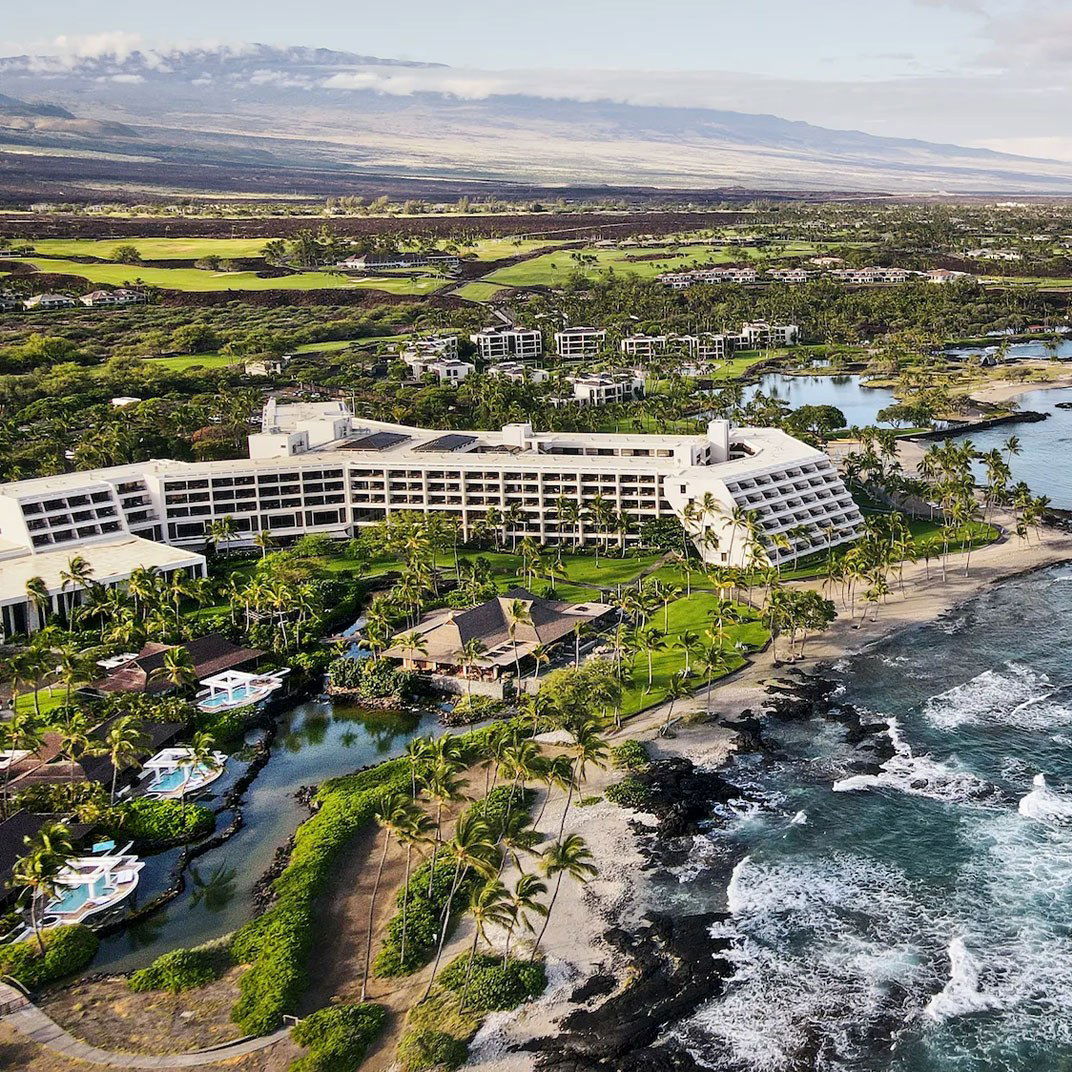
About Mauna Lani\u002c Auberge Collection
Mauna Lani, Auberge Collection holds a 2025 Michelin Key on the Island of Hawaii, placing it in the upper tier of resort properties on the Kohala Coast. The property sits on one of the most historically layered stretches of the Big Island, where ancient fishponds border the lava fields that define this coastline's character. It is the kind of address that rewards guests who understand the difference between a beach resort and a place with genuine geographical and cultural weight.
Lava, Water, and the Architecture of Place
The Kohala Coast does not ease you in. Arriving on the island's northwest shore means crossing miles of hardened lava fields, dark and otherworldly, before the landscape opens onto the resort corridor that runs between Waikoloa and Kawaihae. Among the properties that line this stretch, Mauna Lani, Auberge Collection occupies a site where the built environment is in deliberate conversation with what surrounds it. The grounds incorporate the historic Kalāhuipua'a fishponds, ancient aquaculture systems that predate Western contact on Hawaii by centuries. That proximity shapes the property's spatial logic in ways that no amount of architectural styling could replicate: you are not at a resort that has borrowed a tropical aesthetic, but at one physically rooted in a specific place with a documented past.
The design vocabulary here follows the broader Auberge approach, which tends toward restrained materiality and a preference for open-air transitions over hermetic interior corridors. On a coast defined by trade winds and the visual drama of Mauna Kea rising behind the property, that choice reads less as a stylistic decision and more as a practical acknowledgment of where you are. Covered walkways, open breezeways, and rooms oriented toward the Pacific place the landscape in frame at nearly every turn. The effect is less about decoration than about calibration: how do you build on a site this charged without overwhelming it?
Where Mauna Lani Sits in the Kohala Coast Hierarchy
Kohala Coast has operated as Hawaii's luxury resort corridor for decades, with properties competing across a relatively compressed geographic strip. The competitive set includes the Kona Village, A Rosewood Resort, which positions itself around a reconstructed village aesthetic and deep historical narrative of its own. Further afield on the island, SCP Hilo Hotel represents a different tier entirely, aimed at a more value-conscious and independently minded traveler on the wetter, less resort-developed east side.
Mauna Lani's 2025 Michelin Key recognition places it among a specific cohort: properties where design integrity, service caliber, and site sensitivity collectively meet a threshold that the Michelin hotel program has defined as worthy of distinction. The Michelin Key program, extended to the United States market in recent years, applies the same demand for consistency and earned excellence that the restaurant guide made its standard. Receiving one Key in the Island of Hawaii market, where the property competes against well-funded international brands, carries real comparative weight. It positions Mauna Lani in a peer set that rewards quality over marketing volume.
For reference points elsewhere in the Auberge portfolio and its competitive adjacents: Meadowood Napa Valley and SingleThread Farm Inn in Healdsburg represent how American luxury properties can anchor themselves in place and agricultural specificity. In the Hawaiian context, Mauna Lani pursues a version of that same grounding through cultural heritage rather than food provenance, though the two are not unrelated on an island where the land's history is inseparable from how it was farmed and fished.
The Physical Environment as the Primary Amenity
On the Big Island, the environmental variables are extreme by American resort standards. Elevation changes across the island produce microclimates within short distances. The Kohala Coast operates in a rain shadow, meaning consistent sun on a coast that sits just below the island's volcanic peaks. The lava that frames the resort grounds is not incidental scenery; it is the geological record of the island's ongoing formation, and the contrast between the dark rock and the resort's structured green spaces and ocean access points creates a visual tension that is specific to this location and difficult to replicate elsewhere.
Properties that understand this tend to position their outdoor spaces as the main event, with interior amenities serving as support rather than focus. At Mauna Lani, the beach club, the fishpond trail, and the open grounds function as the actual offering, structured around the site's natural and cultural assets. This approach tracks with how a number of design-led American resorts have evolved: at Amangiri in Canyon Point, the physical range of the Utah desert is the product; at Post Ranch Inn in Big Sur, the coastal ridge defines what the property is. Mauna Lani operates on a comparable logic, anchored in volcanic coastline rather than canyon or cliff.
Planning a Stay: Timing, Access, and Practical Context
The Island of Hawaii sees peak travel during the winter months, particularly December through March, when visitors from the mainland seek consistent warmth. The Kohala Coast's reliable trade wind conditions make it less exposed to the seasonal variation that affects other Hawaiian islands, but demand across the corridor rises sharply in those months and booking lead times extend accordingly. For Michelin Key properties on the coast, early planning is the baseline expectation.
Guests fly into Kona International Airport (KOA), which handles direct flights from major West Coast cities and connecting service from the mainland hubs. The drive up the coast from Kona to the Mauna Lani grounds takes roughly twenty to thirty minutes, passing the lava field landscape that signals the shift from town to resort corridor. Rental cars remain the most practical way to move between the coast, the Waimea highlands, and the island's other distinct zones.
For travelers building a broader Hawaii itinerary, the Big Island's resort coast pairs logically with time in Waimea for ranching and agricultural context, or with the Hilo side for rainforest and botanical contrast. The island's scale, the largest in the Hawaiian chain by landmass, means the driving time between these zones is real and should factor into stay length decisions.
Comparable Michelin-recognized resort experiences on the US mainland, such as Four Seasons at The Surf Club in Surfside or Little Palm Island Resort and Spa in Little Torch Key, involve similar logistical calculus: fly-in access, limited nearby options, and properties where the stay itself is the destination rather than a base for urban exploration. Mauna Lani belongs firmly in that category.
Frequently Asked Questions
- What is the main draw of Mauna Lani, Auberge Collection?
- The property's defining quality is its site: a stretch of Kohala Coast that incorporates ancient Hawaiian fishponds and is framed by lava fields on one side and the Pacific on the other. The 2025 Michelin Key recognition reflects a level of design and service consistency that places it in the upper tier of Big Island properties. Guests who engage with the grounds and cultural heritage of the location tend to find it considerably more layered than a standard beach resort.
- What is the leading room type at Mauna Lani, Auberge Collection?
- Room type selection at Michelin Key Kohala Coast properties generally favors oceanfront or beachfront configurations, where the property's orientation toward the Pacific is most directly experienced. The fishpond-adjacent areas of the grounds offer a different spatial experience, centered on the cultural landscape rather than direct ocean access. Which configuration suits a guest depends on whether the priority is the water views or the historical site character.
- Should I book Mauna Lani, Auberge Collection in advance?
- Yes. Peak season on the Kohala Coast, running roughly from December through March, extends booking windows significantly for Michelin Key properties. The Island of Hawaii draws fewer visitors than Maui or Oahu overall, but the resort corridor is a concentrated market with limited high-caliber inventory. Planning at least three to four months ahead for peak periods is the practical baseline for this tier of property.
- When does Mauna Lani, Auberge Collection make the most sense to choose?
- If the goal is a Big Island stay that combines genuine cultural depth with Michelin-recognized hospitality standards, Mauna Lani is a coherent choice. The Auberge Collection positioning and the Michelin Key signal place it above mid-market resort options and within reach of travelers who would also consider Kona Village, A Rosewood Resort or comparable coast properties. It makes the most sense for guests who want the Kohala Coast's environmental drama without a purely large-brand experience.
- How does Mauna Lani, Auberge Collection connect to the Big Island's cultural history?
- The property's grounds include the Kalāhuipua'a fishponds, which are among the best-preserved examples of traditional Hawaiian aquaculture on the island. These ancient systems, used to cultivate fish for Hawaiian royalty, are a protected cultural heritage site within the resort's footprint. This makes Mauna Lani one of very few Kohala Coast properties where the Michelin Key recognition and a substantive historical site occupy the same address. Guests interested in Hawaiian history will find the fishpond trails meaningful rather than merely decorative.
For a broader view of the island's dining and hospitality options, see our full Island of Hawaii guide. Other Auberge-tier or Michelin-adjacent properties worth comparing across different US destinations include The Fifth Avenue Hotel in New York City, Raffles Boston, The Beverly Hills Hotel in Los Angeles, Troutbeck in Amenia, Sage Lodge in Pray, Canyon Ranch Tucson, Dunton Hot Springs, Washington School House Hotel in Park City, Chicago Athletic Association, 1 Hotel San Francisco, and The Stavrand in Guerneville. For international comparisons in the Michelin hotel framework, Badrutt's Palace Hotel in St. Moritz, Hôtel de Paris Monte-Carlo, and Aman Venice represent the upper reference band. Additional domestic options worth considering include The Hornibrook Mansion Empress of Little Rock.
Recognized By

Related editorial
- Asia's 50 Best Restaurants 2026: The Chairman and Wing Go 1-2 from the Same BuildingThe Chairman takes No. 1 and Wing climbs to No. 2 at Asia's 50 Best Restaurants 2026. Both operate from the same Hong Kong building. Here's what it means.
- Four Seasons Yachts Debut: 95 Suites, 11 Restaurants, and a March 2026 Maiden VoyageFour Seasons I launches March 20, 2026, with 95 suites, a one-to-one staff ratio, and 11 onboard restaurants. Worth tracking if you want hotel-grade service at sea.
- LA Michelin Guide 2026: Seven New Restaurants from Tlayudas to Uzbek DumplingsMichelin's March 2026 California Guide update adds six LA restaurants and one Montecito newcomer, spanning Oaxacan tlayudas, Uzbek manti, and Korean-Italian pasta.
Save or rate Mauna Lani\u002c Auberge Collection on Pearl
Keep this venue in your Pearl passport, rate it after you visit, and track it alongside every other place you collect.