
Hotel in Ishigaki Island, Japan
Fusaki Beach Resort Hotel \u0026 Villas
150ptsYaeyama Beachfront Retreat

About Fusaki Beach Resort Hotel \u0026 Villas
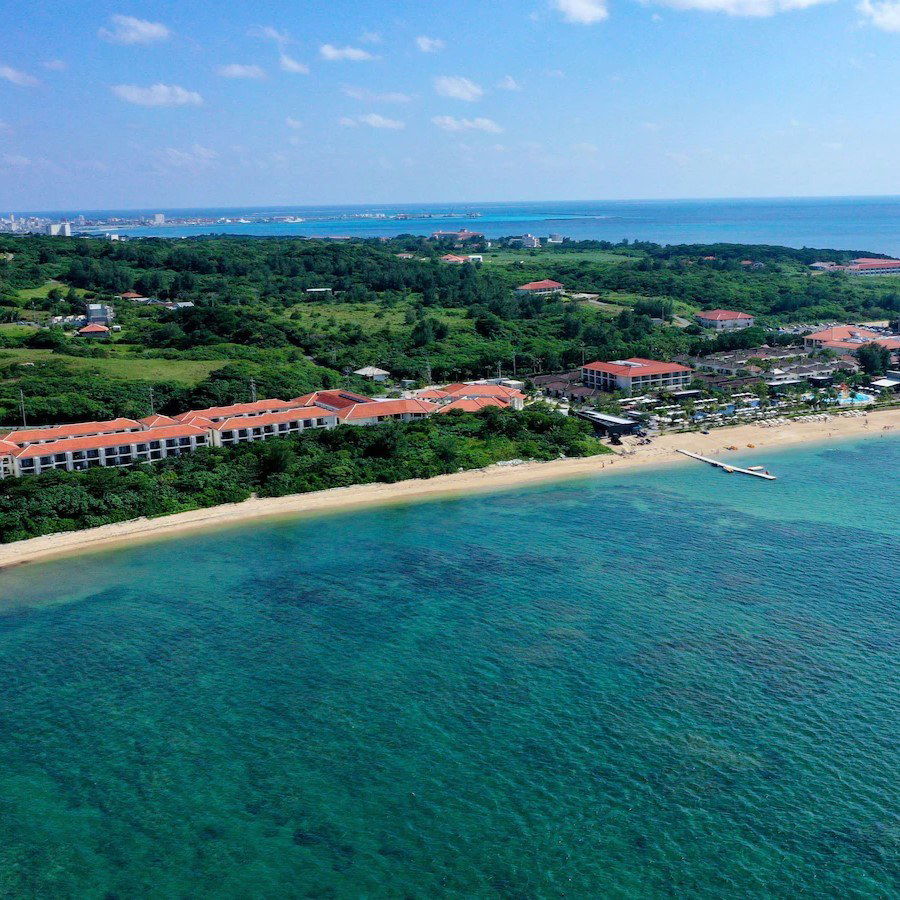
A Michelin Selected resort on Ishigaki Island's western shore, Fusaki Beach Resort Hotel & Villas sits where the East China Sea meets one of the Yaeyama archipelago's most photographed sunset coastlines. The property covers considerable ground, offering both hotel rooms and villa-format accommodation alongside multiple dining outlets that draw on the island's Ryukyuan food traditions. It is among the larger resort addresses on the island, operating at a scale that separates it clearly from Ishigaki's boutique ryokan tier.
Where the Yaeyama Sunset Begins
On Ishigaki Island's western coast, the hour before sunset functions almost as a scheduled event. The sky over the East China Sea shifts through amber and coral in a way that is specific to this latitude, and Fusaki Beach Resort Hotel & Villas sits at one of the island's prime positions to receive it. Guests at the resort's shoreline restaurants and terrace spaces face directly west, with Kohama and Iriomote islands visible on clear evenings as dark silhouettes against the fading light. The physical setting is not incidental to the experience here — it is the organizing principle around which the resort's dining, leisure, and room configuration all orient.
This is worth establishing before anything else because it shapes the entire logic of the property. Fusaki operates as a full-service beach resort at meaningful scale, which places it in a different competitive tier from the smaller, design-intensive addresses that have become more prominent in Okinawa's premium accommodation conversation. Properties like Halekulani Okinawa in Okinawa or Jusandi in Ishigaki occupy a more concentrated, intimate format. Fusaki's proposition is different: resort breadth, beachfront access, and a dining programme extensive enough that guests have genuine variety without leaving the grounds.
The Dining Programme: Ryukyuan Ingredients in a Resort Frame
Michelin's recognition of Fusaki in the 2025 Selected Hotels list signals that the editorial standard applied here goes beyond beach-resort baseline — that at least the accommodation and broader guest experience meet a bar the Guide considers worth noting. For a property of this size on a remote island, that is a meaningful credential. What it does not specify, and what the resort's multi-outlet format makes genuinely interesting, is how the dining programme handles the tension between resort accessibility and the distinct food culture of the Yaeyama islands.
Ishigaki's food identity is grounded in ingredients that have no equivalent elsewhere in Japan. Ishigaki beef, raised on the island and carrying its own brand recognition within Japan's premium wagyu conversation, appears on menus across the island. Sea grapes (umi-budō), goya bitter melon, Okinawan tofu preparations, and the local awamori spirit distilled from long-grain rice are all markers of a regional table with genuine depth. A resort dining programme that takes Yaeyama ingredients seriously has material to work with that mainland Japanese resort food cannot replicate. The question for any property in this position is whether the kitchen uses that advantage or defaults to a more generic resort register.
At resort scale, the answer is typically found across multiple outlets rather than in a single flagship. Fusaki's setup allows guests to move between formats and price points within a single evening, which suits both families with varying preferences and travellers who want to eat lightly after a day on the water. For editorial comparisons further afield, the multi-outlet resort dining model at this scale has parallels with properties like Amanemu in Mie, where the dining programme runs parallel to the broader landscape experience rather than competing with it for attention.
Accommodation: Scale and Configuration
The property spans both hotel-format rooms and villa accommodation, a configuration that signals it is pitching to both couples and family groups. Villa formats at beach resorts in this region typically offer more privacy and independent space, with the trade-off that they sit at a higher price point than standard hotel rooms. On Ishigaki, where the summer season (roughly June through October, with the peak around July and August) brings families from the Japanese mainland alongside international visitors, that flexibility matters operationally.
The island itself is accessible by direct flight from Tokyo, Osaka, and several regional hubs, with Ishigaki Airport sitting close enough to the northern and western resort areas that transfer times are manageable. The western coast where Fusaki sits is a separate character from central Ishigaki city, which handles most of the island's independent restaurant and bar activity. Guests choosing Fusaki are, in effect, choosing the resort experience as their primary frame, with the city available for day visits. That is a different orientation from staying at a smaller property closer to town, like seven x seven Ishigaki or Ishigaki Hills, where the restaurant streets of Misaki-cho and Hamasaki-cho are within easy reach on foot.
Ishigaki in the Wider Japan Resort Picture
Japan's premium resort accommodation has become considerably more varied over the past decade. The ryokan tradition, represented at its highest level by properties like Gora Kadan in Hakone, Asaba in Izu, or Nishimuraya Honkan in Kinosaki-cho, operates on a different philosophy from western-style beach resorts. The kaiseki meal structure, the communal bath ritual, and the futon-and-tatami room configuration are all part of a coherent cultural package. Fusaki sits outside that tradition, offering a beach resort format that is more globally legible but also more directly competitive with resort properties in Southeast Asia and the broader Pacific.
Within the Okinawa and Yaeyama island context, this positions Fusaki alongside resort-format addresses rather than ryokan-format ones. That is not a ranking judgment , the right format depends entirely on what a traveller is after. Someone seeking the immersive cultural compression of a Michelin-recognised ryokan like Kamenoi Besso in Yufu or Zaborin in Kutchan will find a different kind of property. Someone wanting beach access, dining variety, and a westward-facing sunset on an island that still feels genuinely remote from mainland Japan will find Fusaki's offer well-suited.
For context on how urban Japanese luxury compares, properties like Bvlgari Hotel Tokyo in Tokyo and HOTEL THE MITSUI KYOTO in Kyoto occupy the formal city-luxury tier. Fusaki's appeal is almost the opposite of that register: the draw is remoteness, natural light, and the particular quality of the Yaeyama sea.
Planning Your Stay
Ishigaki sees its heaviest visitor traffic between late July and late August, when mainland Japanese school holidays coincide with peak beach season. The shoulder months of May, early June, and October offer calmer conditions and shorter booking lead times, though typhoon season runs from roughly June through October and carries real scheduling risk. The clearest underwater visibility for snorkelling and diving around the Yaeyama reefs tends to appear in the March to May window, before the full heat sets in.
Reservations for villa accommodation at properties of this size should be made well in advance for any summer travel, particularly for families seeking adjacent or connected units. For the dining programme, the sunset-facing outdoor seating positions are among the most requested on the property , guests who want to be seated for the transition from late afternoon light to dusk should enquire about timing when booking. Check Fusaki's official site for current room categories, rates, and package availability, as specific pricing is not reproduced here.
See our full Ishigaki Island restaurants guide for independent dining options beyond the resort grounds.
Frequently Asked Questions
What room category do guests prefer at Fusaki Beach Resort Hotel & Villas?
The villa-format accommodation draws particular interest from guests travelling as families or couples seeking more private space and independent access. Villa categories at beach resorts of this type typically sit above standard hotel rooms in both price and square footage, and Fusaki's spread between the hotel and villa tiers means there are options across a range of group sizes. The Michelin Selected recognition covers the property overall rather than a specific room category.
Why do people go to Fusaki Beach Resort Hotel & Villas?
The primary draw is the combination of beachfront position on Ishigaki's western coast, direct sunset exposure over the East China Sea, and the resort's self-contained dining and leisure offer. Ishigaki itself is the economic and transport hub of the Yaeyama archipelago, and the island's reef systems, including proximity to Kabira Bay and the outer atolls, make it a base for snorkelling and diving. The Michelin Selected status confirms that the property's overall guest experience meets an editorially recognised standard within Japan's accommodation guide.
Do they take walk-ins at Fusaki Beach Resort Hotel & Villas?
As a resort property, Fusaki primarily operates on advance reservations for accommodation. Restaurant walk-ins may be possible during lower-demand periods, but the resort's outdoor dining spaces and sunset-facing tables in particular are likely to have capacity constraints during peak season (July through August) and holiday weekends. Given the island's limited same-day transport options and the property's distance from central Ishigaki city, it is strongly advisable to book accommodation in advance rather than attempting an unannounced arrival. Current availability and booking terms are leading confirmed directly through the resort's official channels.
What makes Fusaki Beach Resort an appropriate base for exploring the wider Yaeyama islands?
Ishigaki's port connections make it the departure point for ferry services to Iriomote, Kohama, Taketomi, and Yonaguni islands, all of which are day-trip or overnight destinations within the Yaeyama chain. Fusaki's position on the western coast places it roughly equidistant between Ishigaki Airport and the port area, making logistics manageable for guests planning island-hopping excursions. The resort's scale means it can accommodate the kind of multi-night stay that makes Yaeyama exploration practical, with dining and facilities to return to after days spent on the outer islands.
Recognized By

Similar venues by awards
Related editorial
- Asia's 50 Best Restaurants 2026: The Chairman and Wing Go 1-2 from the Same BuildingThe Chairman takes No. 1 and Wing climbs to No. 2 at Asia's 50 Best Restaurants 2026. Both operate from the same Hong Kong building. Here's what it means.
- Four Seasons Yachts Debut: 95 Suites, 11 Restaurants, and a March 2026 Maiden VoyageFour Seasons I launches March 20, 2026, with 95 suites, a one-to-one staff ratio, and 11 onboard restaurants. Worth tracking if you want hotel-grade service at sea.
- LA Michelin Guide 2026: Seven New Restaurants from Tlayudas to Uzbek DumplingsMichelin's March 2026 California Guide update adds six LA restaurants and one Montecito newcomer, spanning Oaxacan tlayudas, Uzbek manti, and Korean-Italian pasta.
Save or rate Fusaki Beach Resort Hotel \u0026 Villas on Pearl
Keep this venue in your Pearl passport, rate it after you visit, and track it alongside every other place you collect.