
Hotel Keyforest Hokuto
Kobuchizawa, Hokuto
Hotel in Hokuto, Japan
 Book with Pearl
Why go
Hotel Keyforest Hokuto is worth shortlisting for a quiet, design-led stay in Hokuto, especially for couples or a low-key celebration. Its MICHELIN Guide hotel selection adds credibility, and the easy booking profile makes it less stressful than more competitive countryside retreats. Choose it for privacy and atmosphere, not for big-resort facilities.
About Hotel Keyforest Hokuto
Hotel Keyforest Hokuto is a hotel in Hokuto recognized with a MICHELIN Guide Hotels Selected recognition for 2025. For detailed information about room inventory, facilities, dining, pricing, service style, and booking difficulty, it's best to check directly with the hotel.
Choose it when the basics fit your trip
The strongest reason to shortlist Hotel Keyforest Hokuto is direct: it is a Hokuto hotel recognized in the MICHELIN Guide Hotels Selected list for 2025. If that level of external recognition is useful for planning a stay in Hokuto, the hotel belongs on your list.
For anything more specific, avoid assumptions. Confirm room categories, current rates, meal arrangements, facilities, and policies directly with the hotel before booking, especially if the stay is tied to a special occasion or a tightly planned itinerary.
Easy to compare, but confirm details before booking
Hotel Keyforest Hokuto can be considered alongside other notable stays such as HOSHINOYA Fuji, Tobira Onsen Myojinkan, The Hiramatsu Karuizawa Miyota, BYAKU Narai, and Matsumoto Jujo. Those comparisons are useful for building a shortlist, but they should not replace checking the current details for Hotel Keyforest Hokuto itself.
Use the MICHELIN Guide Hotels Selected 2025 recognition as a quality signal, then confirm the practical points that matter to your trip: availability, room type, dining arrangements, facilities, access, and cancellation terms.
Planning details
- Location
- 10248-16 Kobuchisawacho, Hokuto, Yamanashi 408-0044, Japan
- Website
- keyforesthotel.com
- Phone
- +81 551-36-8755
The take
The Take
The Vibe
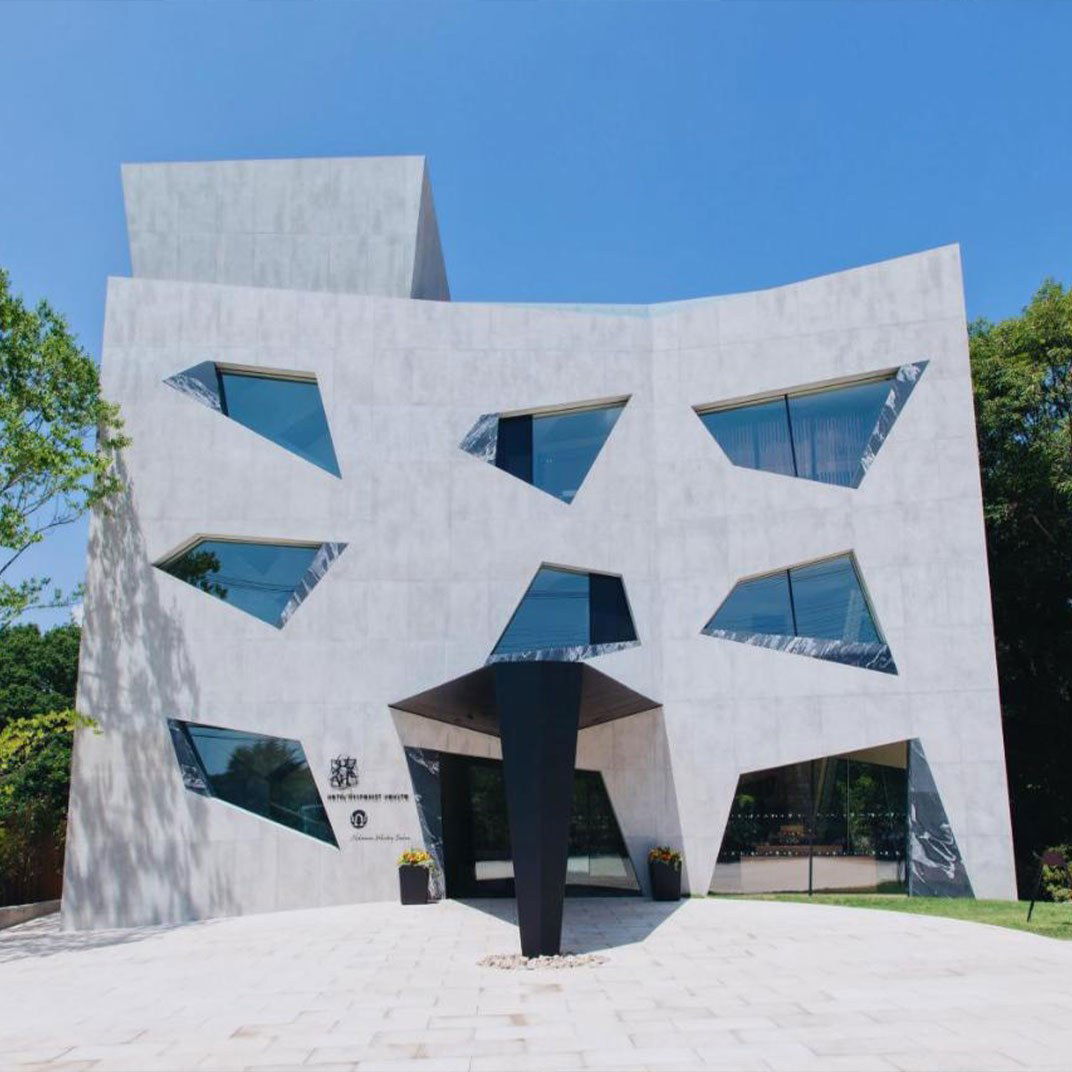
Hotel Keyforest Hokuto presents a quiet, considered retreat that foregrounds its forest setting. Architecture and materials—timber construction, engawa corridors and floor-to-ceiling glazing—are deployed to dissolve the boundary between inside and out, so the experience hinges on light, air and the rhythms of the surrounding larch stands. The tone is restrained rather than decorative: design choices emphasize immersion in landscape and calm, not spectacle. Travelers encounter a serene, intimate atmosphere that favors slow mornings, long views across woods and the kind of attentive minimalism that a Michelin Selected rural property is noted for.
Best For
This property is best for travelers seeking a restorative mountain pause rather than city-style nightlife. It suits weekend escapes, wellness-minded breaks and romantic getaways for people who prize solitude and natural context. The cooler summers and highland location make it appealing to visitors escaping urban heat; its design is tailored to guests who want a close relationship with the surrounding forest—reading by the glazing, walking into larch stands and using the hotel as a quiet base for low-key exploration of the Yatsugatake slopes.
Stay Tips
Book with an eye toward rooms that emphasize the forest-facing architecture—the description highlights engawa corridors and floor-to-ceiling glazing, so request a room that maximizes that interface when you reserve. Plan seasonal travel with the highland climate in mind: elevations keep summers noticeably cooler than Tokyo. Pack layered clothing for cool mornings and evenings. Because the hotel’s appeal is the landscape and architecture rather than urban bustle, allow time in your schedule for slow walks and on-site relaxation rather than a tight itinerary of off-property activities.
Venue details
Ambiance
Modernist concrete structure with sharp angles contrasting forest setting, cozy stylish rooms, panoramic mountain views from rooftop terrace, and serene onsen atmosphere.
Tags
Vibe
Best For
Experience
Amenities
View
Accessibility
About the Stay
- Rooms
- 6
- Check-in
- 15:00
- Check-out
- 11:00
- Property Style
- Modernist Boutique Art and Wellness Resort
- Design Style
- Avant Garde Concrete Architecture Blending Modern and Traditional with Stylish Interiors
Know before you go
Know Before You Go
- Getting there
- 10248-16 Kobuchisawacho, Hokuto, Yamanashi 408-0044, Japan
Planning details
Location
10248-16 Kobuchisawacho, Hokuto, Yamanashi 408-0044, Japan · Directions
Recognition and awards
Also consider
Also Consider
- Tobira Onsen Myojinkan, Notable alternative
- BYAKU Narai, Notable alternative
- Matsumoto Jujo, Notable alternative
- The Hiramatsu Karuizawa Miyota, Notable alternative
- HOSHINOYA Fuji, Notable alternative
Hotel context
How it compares in the Hokuto and mountain-retreat set
Hotel Keyforest Hokuto is the easier, quieter choice if the priority is a design-forward stay in Hokuto without a difficult booking process. Tobira Onsen Myojinkan is the stronger cross-shop for travelers who want a more classic onsen-ryokan feel, while BYAKU Narai is better for a heritage-town stay with a stronger sense of historic setting.
For a more developed hotel experience, Matsumoto Jujo and The Hiramatsu Karuizawa Miyota are better fits if dining and service depth matter more than staying in Hokuto itself. HOSHINOYA Fuji is the more outdoors-focused alternative for travelers who want the trip to revolve around the setting and activity rhythm.
Value depends on the trip brief: choose Hotel Keyforest Hokuto for an easy-to-plan, intimate Hokuto stay; choose Tobira Onsen Myojinkan for onsen tradition; choose The Hiramatsu Karuizawa Miyota for a more polished splurge; choose HOSHINOYA Fuji when the outdoor-retreat format is the point.
Explore Hokuto
Around this place
Discover more on Pearl
Unlock the full Hotel Keyforest Hokuto guide in Pearl, including awards, comparisons, FAQs, planning details, and nearby places.
Compare Hotel Keyforest Hokuto
| Venue | Location | Awards |
|---|---|---|
| Hotel Keyforest Hokuto | Hokuto | 2025 Michelin Selected Hotels |
| Tobira Onsen Myojinkan | Matsumoto | No published awards |
| BYAKU Narai | Narai | 2025 Michelin 1 Key2024 Michelin 1 Key |
| Matsumoto Jujo | Matsumoto | No published awards |
| The Hiramatsu Karuizawa Miyota | Miyota | 2025 Michelin 2 Keys2024 Michelin 1 Key |
| HOSHINOYA Fuji | Fujikawaguchiko | No published awards |


How Hotel Keyforest Hokuto compares with similar nearby venues.
FAQ
Frequently Asked Questions
Do loyalty programs work at Hotel Keyforest Hokuto?
Information on loyalty-program participation is not available. Hotel Keyforest Hokuto is in Hokuto and is listed as MICHELIN Guide Hotels Selected for 2025. If points or status benefits are important, confirm directly with the hotel before booking.
How is the dining at Hotel Keyforest Hokuto?
Specific dining details are not available. Treat meal planning as something to confirm directly with Hotel Keyforest Hokuto before booking. The hotel is in Hokuto and holds MICHELIN Guide Hotels Selected 2025 recognition.
How does Hotel Keyforest Hokuto compare to other notable hotels?
Hotel Keyforest Hokuto can be considered alongside HOSHINOYA Fuji, Tobira Onsen Myojinkan, The Hiramatsu Karuizawa Miyota, BYAKU Narai, and Matsumoto Jujo when building a shortlist. For detailed differences in facilities, dining, room types, or service style, compare current information directly before deciding.
How is the pool and spa at Hotel Keyforest Hokuto?
Pool and spa details are not available. Do not book on wellness-facility assumptions alone; confirm current facilities and access directly with Hotel Keyforest Hokuto. It holds MICHELIN Guide Hotels Selected 2025 recognition.
How is the location of Hotel Keyforest Hokuto?
Hotel Keyforest Hokuto is in Hokuto. More specific address or neighborhood details are not available, so use the hotel's official channels for exact access and arrival information.
When is the best time to book Hotel Keyforest Hokuto?
Specific booking patterns are not available. If your dates are important, check availability directly with Hotel Keyforest Hokuto and confirm current terms before committing. Its MICHELIN Guide Hotels Selected 2025 recognition serves as a quality signal.
Which room category is best at Hotel Keyforest Hokuto?
Room categories and inventory details are not available. Choose only after checking the hotel's current room descriptions, rates, and policies directly. If comparing alternatives, you may also review HOSHINOYA Fuji, Tobira Onsen Myojinkan, The Hiramatsu Karuizawa Miyota, BYAKU Narai, and Matsumoto Jujo.