
Hotel in Hanoi, Vietnam
The Grand Ho Tram
150ptsBeachfront Integrated Scale

About The Grand Ho Tram
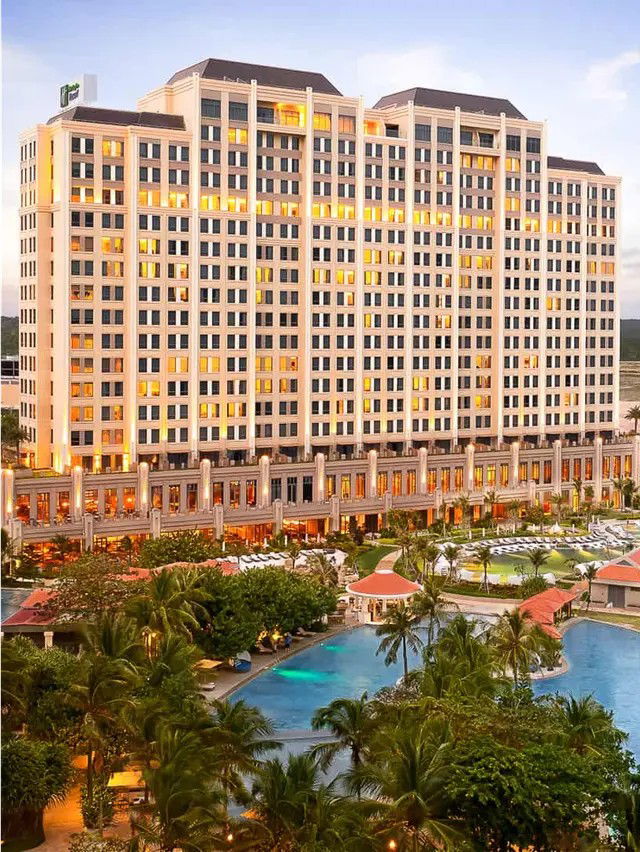
Set on an isolated stretch of Ba Ria-Vung Tau coastline two hours southeast of Ho Chi Minh City, The Grand Ho Tram positions itself as Vietnam's first beachfront integrated luxury resort, combining over 1,200 rooms across three towers with a Greg Norman-designed golf course, a large casino, 17 dining and bar outlets, and a spa. The scale here is deliberately maximalist, built around the idea that guests should have no reason to leave.
Scale and Isolation: What the Ho Tram Coastline Offers That No City Hotel Can
Two hours southeast of Ho Chi Minh City, where the Ba Ria-Vung Tau coastline curves away from the provincial highway, the built environment abruptly shifts. A long, relatively undeveloped beach runs parallel to coastal sand dunes, and The Grand Ho Tram occupies a substantial portion of it. Arriving from the city, the sense of physical separation is pronounced: this is not a resort that happens to be near a beach, but one that has organized itself around the beach as its primary spatial logic. The scale is the first thing you register, and it sets the terms for everything that follows.
Vietnam's resort market has increasingly split between boutique coastal properties, concentrated in areas like Da Nang and Quy Nhon, and large integrated complexes that compete on breadth rather than depth. The Grand Ho Tram belongs firmly to the latter category. With three resort towers, over 1,200 rooms across standard rooms, suites, 164 residences, and 46 private villas, it operates at a volume that places it in a different competitive tier from smaller design-led coastal properties such as Amanoi in Vinh Hy or Anantara Quy Nhon Villas in Quy Nhon. The comparison is not a criticism. Integrated resort formats serve a different demand set, and Ho Tram has built its offer accordingly.
The Physical Container: Architecture, Space, and How the Resort Is Organized
The architecture at The Grand Ho Tram is deliberately monumental. Three towers anchor the property, each oriented to capture East Sea sightlines, and the room interior language across all categories relies on light wood paneling, eye-catching wallpaper inlays, and large windows designed to circulate natural light. The effect is breezy rather than heavy, which matters in this climate. Rooms feel residential in scale rather than compressed, and the cabana rooms with balconies extend that logic further outward toward the beach and gardens.
At the leading of the accommodation tier sit two Emperor Suites in the InterContinental Grand Ho Tram tower, each measuring 3,810 square feet. Wall-to-wall windows provide uninterrupted views across the East Sea, and the format positions these suites in the category of destination rooms rather than simply oversized standards. Private pool villas and family-oriented residences sit at the other end of the spectrum, broadening the property's catchment across solo travelers, couples, and multi-generational groups.
Across the road from the main towers, a 24,756-square-foot clubhouse serves as the architectural anchor for the golf component of the complex. The building is palatial in proportion, and it houses one of the property's dining venues. The Greg Norman-designed golf course, called The Bluffs, occupies the coastal sand dune terrain adjacent to the property. Elevation changes between 16 and 164 feet across the 18-hole layout give the course a topographic drama that is unusual for Vietnam, and the greens play fast. The combination of coastal views and technical difficulty positions The Bluffs as a serious course, not simply a resort amenity.
Entertainment, Gaming, and the Integrated Resort Model
Integrated resort developments in Southeast Asia have followed a recognizable template since the Macau model matured in the 2000s: casino floor, branded hotel, food and beverage cluster, and leisure facilities operating as mutually reinforcing components. The Grand Ho Tram deploys this formula on the Vietnamese coastline. The gaming floor runs 90 live tables and more than 500 electronic game positions, operating on a scale that places it among the larger casino operations in southern Vietnam.
What distinguishes the Ho Tram format from pure casino hotels is the depth of the non-gaming offer. The spa is described as expansive, and the property runs 17 restaurants and bars across the complex. That volume of food and beverage outlets within a single resort is comparable to large integrated properties in the Maldives or Thailand, and it means the dining offer functions as a destination within a destination rather than a supporting amenity. A dedicated Kids' Corner with art supplies, video game stations, and a nap area, plus family karaoke rooms, signals how deliberately the complex has been designed to retain guests on-property across multiple days and multiple activity types.
Vietnam's beachfront resort market has historically concentrated in Da Nang, Phu Quoc, and the Mui Ne peninsula. The Ho Tram strip is a less established circuit, and The Grand Ho Tram has positioned itself as the organizing force for the area rather than a participant in an existing scene. Properties like Asteria Mui Ne Resort in Phan Thiet or Amiana Resort Nha Trang in Nha Trang operate within more developed coastal corridors. Ho Tram's relative isolation is, in this sense, both a logistical constraint and a strategic asset.
Where It Sits in Vietnam's Broader Luxury Hotel Picture
Vietnam's premium hotel offer spans a wide geographic and format range. In Hanoi, the concentration of international-brand city hotels, including Capella Hanoi, JW Marriott Hotel Hanoi, and InterContinental Hanoi Landmark72, operates on entirely different spatial and experiential terms than a beachfront integrated resort. See our full Hanoi restaurants guide for the city's food and hotel context. For coastal luxury in the central and northern regions, properties like Azerai La Residence, Hue in Hue, Banyan Tree Lang Co, and Almanity Hoi An Wellness Resort occupy a more restrained, design-focused niche.
The Grand Ho Tram's natural peer set is large-format southern Vietnam resort complexes and regional integrated resorts. The Google rating of 4.6 across 6,509 reviews is a meaningful signal at that volume: it reflects satisfaction across a broad demographic range, not just a curated audience. For context, maintaining that average across more than six thousand reviews requires consistent operational performance in multiple departments simultaneously, which the scale of this property makes genuinely difficult.
Travelers oriented toward boutique immersion or low-capacity wellness experiences will find the scale here at odds with those priorities. Properties like Dalat Palace Heritage Hotel or Emeralda Resort Ninh Binh deliver a different register entirely. The Grand Ho Tram is for travelers who want a full-service, high-volume resort with multiple entertainment systems operating in parallel, situated on an isolated beach with a serious golf course attached.
Planning Your Stay
The property is located in Phuoc Thuan commune, Xuyen Moc district, Ba Ria-Vung Tau province, approximately two hours southeast of Ho Chi Minh City by road. The most practical access is by private car or resort shuttle from Ho Chi Minh City; Amanaki Saigon Boutique Hotel is a useful city-side base if you are splitting time between the metropolis and the coast. Room categories span from standard ocean-view and garden-view rooms through cabana rooms with balconies, up to private pool villas, family residences, and the two flagship Emperor Suites. The Kids' Corner, pool water slides, and karaoke facilities make the property calibrated for family stays of three or more nights, while the gaming floor and spa work equally well as standalone draws for adult-only visits. With 17 restaurants and bars on-property, guests do not need to leave for dining, which aligns with the resort's positioning as a self-contained destination.
Frequently Asked Questions
How would you describe the overall feel of The Grand Ho Tram?
The Grand Ho Tram reads as a large-scale integrated beach resort rather than a boutique retreat. Three towers, over 1,200 rooms, a casino, 17 food and beverage outlets, and a Greg Norman golf course give it a comprehensive, activity-dense character. It is positioned on an isolated stretch of Ba Ria-Vung Tau coastline two hours from Ho Chi Minh City, which reinforces the sense of a self-contained destination. For travelers comparing it to city-hotel options in Hanoi, like Hilton Hanoi Opera or Hotel de l'Opera MGallery Hanoi, the experiential register is entirely different.
What is the most popular room type at The Grand Ho Tram?
Property offers ocean-view rooms, garden-view rooms, forest-view rooms, and cabana rooms with balconies, alongside private pool villas and family residences. Ocean-view rooms are the most sought-after category at beachfront resorts of this type, given the East Sea orientation. For a distinctly different experience, the two Emperor Suites in the InterContinental tower each span 3,810 square feet with floor-to-ceiling sea views, placing them well above standard suite formats in both scale and sightline quality.
What is The Grand Ho Tram known for?
Grand Ho Tram is identified as Vietnam's first beachfront integrated luxury resort. Its principal draws are the casino floor (90 live tables, 500-plus electronic positions), The Bluffs golf course designed by Greg Norman, a large spa complex, and 17 restaurants and bars. The 4.6 Google rating across more than 6,500 reviews reflects sustained performance across a broad guest mix. Comparable southern Vietnam coastal properties do not replicate the integrated resort format at this scale.
Do they take walk-ins at The Grand Ho Tram?
Walk-in access to resort facilities varies by property policy, which is not confirmed in available data for The Grand Ho Tram. Given the scale of the complex, day-visitor or walk-in arrangements at properties of this type in Vietnam typically require advance coordination, particularly for casino access, spa bookings, and dining at specific restaurants. Direct contact with the property before arrival is advisable. For reference, InterContinental Hanoi Westlake by IHG and Essence d'Orient Hotel and Spa in Hanoi operate booking-dependent spa and dining access as standard practice.
Is The Bluffs golf course at Ho Tram accessible to non-resort guests?
The Bluffs is a Greg Norman-designed 18-hole course with elevation changes between 16 and 164 feet across coastal sand dune terrain, and it functions as a semi-public club in addition to serving resort guests. Tee-time availability for non-staying golfers exists but is subject to resort-guest priority, making advance booking essential, particularly during peak holiday periods. The course's difficulty and coastal topography place it in a different category from standard resort courses across Vietnam.
Recognized By
Related editorial
- Best Fine Dining Restaurants in ParisFrom three-Michelin-star icons to the next generation of Parisian chefs pushing boundaries, these are the restaurants that define fine dining in the world's culinary capital.
- Best Luxury Hotels in RomeFrom rooftop terraces overlooking ancient ruins to Michelin-starred hotel dining, these are the luxury hotels that make Rome unforgettable.
- Best Cocktail Bars in KyotoFrom sleek lounges to hidden speakeasies, Kyoto's cocktail scene blends Japanese precision with global influence in ways you won't find anywhere else.
Save or rate The Grand Ho Tram on Pearl
Keep this venue in your Pearl passport, rate it after you visit, and track it alongside every other place you collect.