
Hotel in Hakonemachi U002c Ashigarashimo Gun, Japan
Hotel Indigo Hakone Gora
150ptsPlace-Rooted Hakone Design

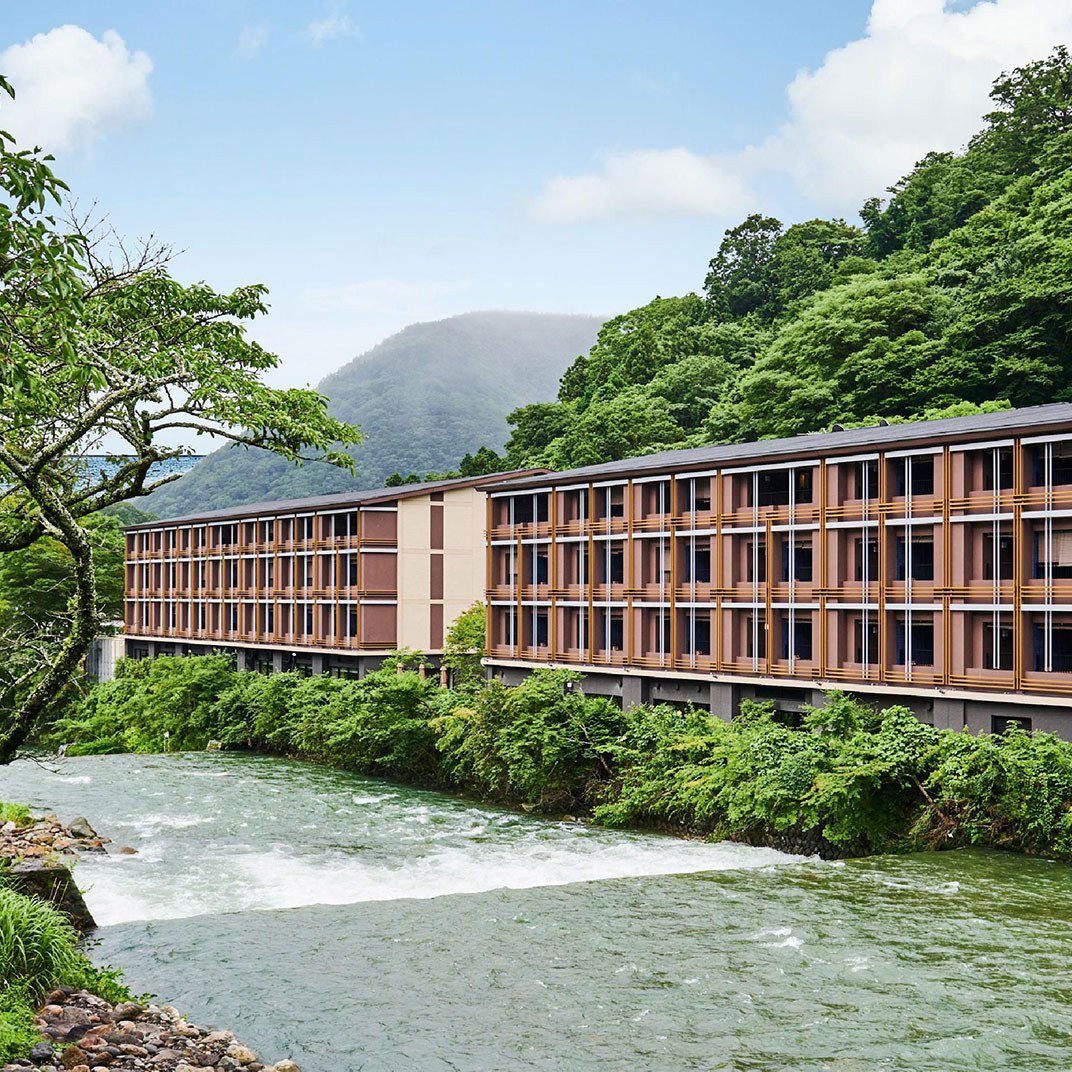
About Hotel Indigo Hakone Gora
A Michelin Selected property in Gora, Hakone's refined inland district, Hotel Indigo Hakone Gora positions the international brand's neighbourhood-story design philosophy within one of Japan's most storied onsen resort traditions. The hotel sits at the intersection of Western-brand familiarity and the region's deep thermal bathing culture, offering a calibrated entry point into Gora's tiered accommodation market.
Gora's Accommodation Tier and Where Hotel Indigo Sits Within It
Hakone's inland resort district of Gora organises itself into a recognisable hierarchy. At the summit sit long-established ryokan with deep historical roots and kaiseki programmes that draw Michelin attention in their own right, properties like Gora Kadan and Matsuzakaya Honten, where the vocabulary is entirely Japanese: tatami, yukata, multi-course seasonal meals served in the room or a dedicated dining hall. Below them, but still inside the premium bracket, sit properties that translate the onsen-resort proposition into a more internationally legible format. Hotel Indigo Hakone Gora occupies that second tier, carrying a 2025 Michelin Selected designation that confirms its standing within the region's vetted accommodation set without placing it in the same competitive conversation as the area's heritage ryokan.
The Michelin Selected designation, applied across the 2025 Hotels & Stays guide, functions as a quality floor rather than a ceiling. It tells a prospective guest that the property clears a threshold of character, comfort, and contextual appropriateness. For a brand hotel operating in a town as specific as Gora, that contextual test matters: Gora is not a generic resort zone. It has a Hakone Tozan funicular, a cluster of serious art museums, and an elevation that keeps it cooler than the lake-edge properties in Hakone-machi. A hotel here has to read the room, and the Michelin signal suggests this one does.
The Room Experience: Design Logic and What the Overnight Actually Delivers
Hotel Indigo as a global brand builds each property around a neighbourhood story, a design brief derived from the specific place rather than a portable corporate aesthetic. That framework, applied to Gora, should theoretically produce rooms that reference the volcanic landscape, the thermal water culture, and the cedar-forest character of this particular corner of Kanagawa Prefecture. The practical question for any guest considering a booking is how fully that intent carries through into the physical overnight experience.
Gora sits at roughly 540 metres elevation, which affects the sensory texture of a stay in ways that lower-altitude Hakone properties don't replicate. Mornings are cooler, the forest is closer, and the light through a window oriented toward the surrounding hills has a quality that shifts with the mist patterns off the volcanic terrain. A room designed to engage that context, rather than seal itself off from it, benefits from that elevation in a way that a standardised international hotel room would not. The degree to which individual room types at Hotel Indigo Hakone Gora deliver on that premise is leading verified through current booking channels, since room-specific configurations and onsen access arrangements are not confirmed in the data available here.
What the brand framework does suggest is a preference for layered material references over generic luxury signifiers. Where a conventional hotel in this tier might default to marble and neutral linen, the Indigo design language typically introduces locally sourced or locally referenced materials, artwork with neighbourhood provenance, and bathroom treatments that acknowledge the thermal-water setting. In an onsen town, the bathroom is rarely incidental: it is often the primary amenity, and the relationship between an in-room private bath or rotenburo (outdoor bath) and the broader communal onsen infrastructure shapes how a guest allocates their time across a stay.
Gora in Relation to Hakone's Wider Accommodation Map
Choosing Gora over other Hakone sub-districts is itself an editorial decision. The lakeside zone around Hakone-machi and Moto-Hakone delivers open water views and proximity to the Hakone Open-Air Museum and the Owakudani ropeway connection, but it operates at a lower elevation and with a higher density of coach-tour infrastructure. Gora is quieter, more concentrated, and more directly tied to the therapeutic ryokan tradition. Properties like Hakone Retreat Villa 1/f and Sengokubara COCON represent different points on Gora's spectrum of design ambition and price positioning, while Hakone Kowakien Tenyu and the Hyatt Regency Hakone Resort and Spa bring large-scale international brand infrastructure to the region. Hotel Indigo slots between those scales: internationally branded but smaller in footprint than the large resort operators, and more design-conscious than a standard business-chain conversion.
For guests arriving from Tokyo, the standard routing runs via the Odakyu Romance Car from Shinjuku to Hakone-Yumoto, then the Hakone Tozan Railway up to Gora station, a journey of roughly 90 minutes each way that functions as a decompression sequence before the stay begins. The address at 924-1 Kiga places the property within easy walking distance of Gora's principal attractions, including the Hakone Open-Air Museum, a 15-minute walk downhill. Booking in advance is advisable for autumn foliage season (mid-October through November) and Golden Week (late April to early May), when Gora's limited accommodation supply compresses against peak demand.
Where Hotel Indigo Fits in Japan's Broader Premium Hotel Conversation
Japan's premium hotel market has split along a clear axis in recent years. On one side sit the ultra-high-end single-concept properties: purpose-built ryokan with decades of accumulated craft, or new-generation luxury addresses like those found in Tokyo and Kyoto, represented by properties such as Bvlgari Hotel Tokyo or HOTEL THE MITSUI KYOTO. On the other sit international-brand hotels that have made serious attempts to embed themselves in a specific Japanese place rather than import a generic luxury grammar. Hotel Indigo's neighbourhood-story model places it in that second camp, where the test is whether the physical property earns its local claim or merely asserts it through decor choices.
The same question arises at rural onsen properties across Japan, from Amanemu in Mie to Zaborin in Kutchan to Fufu Nikko: how does a designed property hold up against the accumulated cultural authority of the traditional ryokan format? At properties like Asaba in Izu or Nishimuraya Honkan in Kinosaki-cho, the answer involves decades of practice and a specific culinary programme. Hotel Indigo Hakone Gora answers it differently, through brand-system design discipline applied to a specific place rather than through historical depth. That is a legitimate approach; it simply serves a different kind of guest, one who values international legibility and modern room infrastructure alongside, rather than instead of, the onsen experience.
For those weighing options across Hakone's full accommodation range, our full Hakonemachi, Ashigarashimo-gun guide maps the wider competitive set. International comparisons for the design-led resort category can be found at properties like Benesse House in Naoshima, Halekulani Okinawa, or Kamenoi Besso in Yufu, each of which demonstrates a different resolution to the same design-versus-tradition tension that defines the category.
Planning a Stay
Hotel Indigo Hakone Gora carries Michelin Selected status for 2025, confirming its position within the vetted tier of Hakone accommodation. The property is located at 924-1 Kiga, Gora, reachable via the Hakone Tozan Railway from Hakone-Yumoto. Prospective guests should book directly through IHG channels or the Michelin Hotels guide to confirm current room configurations, onsen access format, and pricing, none of which are fixed in the data available here. Peak periods (Golden Week and autumn foliage) require advance planning; shoulder-season visits in late spring and early summer offer Gora's forest setting with reduced occupancy pressure.
Frequently Asked Questions
What is Hotel Indigo Hakone Gora known for?
The property holds a Michelin Selected designation in the 2025 Hotels & Stays guide, placing it within Gora's vetted accommodation tier. It operates under the Hotel Indigo brand's neighbourhood-story design model, which anchors each property's visual and material language to its specific location. In Gora's case, that means engaging with the volcanic terrain, thermal-water culture, and cedar-forest character that define this refined sub-district of Hakone. The address at 924-1 Kiga positions it within walking distance of key Gora attractions, including the Hakone Open-Air Museum.
What's the leading room type at Hotel Indigo Hakone Gora?
Specific room configurations, including private onsen bath arrangements, views, and size tiers, are not confirmed in current available data and should be verified directly with the property or through IHG booking channels before committing. As a general principle in Gora's onsen-resort accommodation market, rooms with private outdoor baths (rotenburo) command a premium and sell out earliest, particularly during autumn foliage season. If private thermal bathing access is a priority, confirming availability at the time of booking rather than assuming it is included is advisable.
Recognized By

Similar venues by awards
Related editorial
- Asia's 50 Best Restaurants 2026: The Chairman and Wing Go 1-2 from the Same BuildingThe Chairman takes No. 1 and Wing climbs to No. 2 at Asia's 50 Best Restaurants 2026. Both operate from the same Hong Kong building. Here's what it means.
- Four Seasons Yachts Debut: 95 Suites, 11 Restaurants, and a March 2026 Maiden VoyageFour Seasons I launches March 20, 2026, with 95 suites, a one-to-one staff ratio, and 11 onboard restaurants. Worth tracking if you want hotel-grade service at sea.
- LA Michelin Guide 2026: Seven New Restaurants from Tlayudas to Uzbek DumplingsMichelin's March 2026 California Guide update adds six LA restaurants and one Montecito newcomer, spanning Oaxacan tlayudas, Uzbek manti, and Korean-Italian pasta.
Save or rate Hotel Indigo Hakone Gora on Pearl
Keep this venue in your Pearl passport, rate it after you visit, and track it alongside every other place you collect.