
Hotel in Hakonemachi U002c Ashigarashimo Gun, Japan
Hakone Kowakien Tenyu
150ptsGeothermal Forest Ryokan

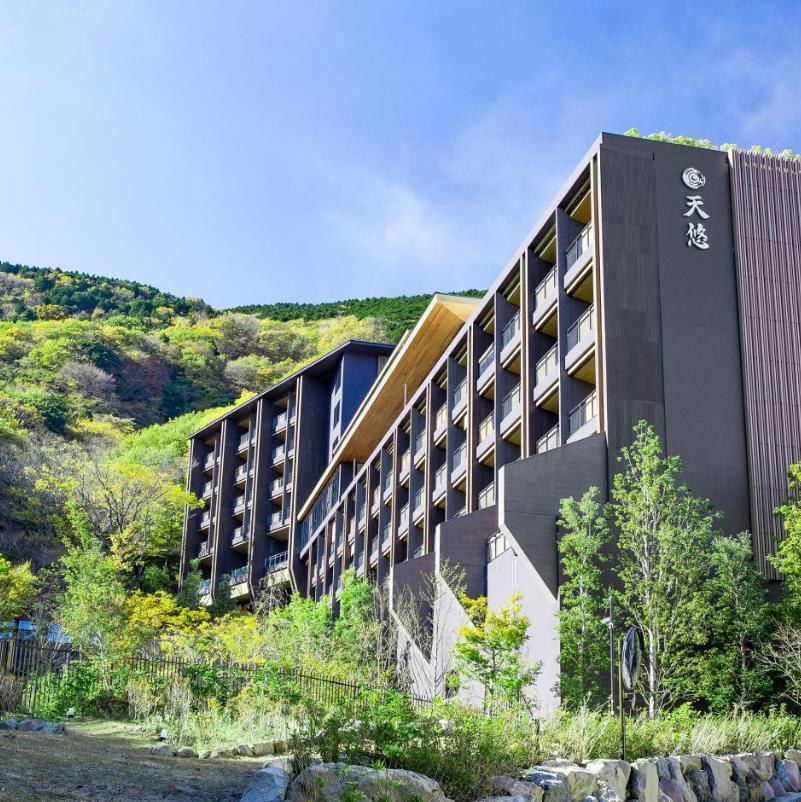
About Hakone Kowakien Tenyu
Hakone Kowakien Tenyu, a MICHELIN Selected property for 2025, sits at Ninotaira in the heart of the Hakone volcanic zone, where the ryokan tradition of forest immersion and thermal bathing reaches one of its more considered expressions. The property draws on the Kowakien estate's deep roots in the area, positioning it within Hakone's upper tier of onsen accommodation alongside peers such as Gora Kadan and Hakone Retreat Villa 1/f.
Where the Hakone Forest Sets the Terms
The approach to Ninotaira, the mid-elevation pocket of Hakone where Hakone Kowakien Tenyu sits, already signals the register of stay ahead. The road narrows as cedar and oak close in, and the sulphurous trace in the air — faint but unmistakable — is the first confirmation that the geothermal activity driving this entire region is not decorative but structural. In Japanese onsen culture, that detail matters: the quality and character of the water defines the hierarchy of a ryokan before the room, the food, or the service enters the conversation.
Hakone occupies a particular position in Japan's premium ryokan geography. Close enough to Tokyo for a two-night escape , Shinjuku to Hakone-Yumoto takes under 90 minutes on the Romancecar limited express , the region has developed a dense cluster of high-end properties that compete on differentiated terms. Some lead with contemporary design, as Hotel Indigo Hakone Gora and nol hakone myojindai do. Others, like Gora Kadan, draw authority from imperial estate history. Tenyu's position within that competitive set is anchored by the Kowakien name, which has maintained a presence in Hakone for generations, and by its 2025 MICHELIN Selected designation , recognition that places it in the same reference tier as properties such as Matsuzakaya Honten and Sengokubara COCON.
Responsible Luxury in a Geothermal Landscape
Across Japan's premium onsen belt, the properties commanding sustained critical attention are increasingly those that treat the natural environment as the primary asset to be protected, not merely consumed. The logic is direct: a ryokan whose business depends on thermal springs, forest air quality, and landscape integrity has an existential interest in the sustainability of those resources. In Hakone's case, that relationship is formalized by the region's status within Fuji-Hakone-Izu National Park , one of Japan's most visited protected areas, where development density and environmental obligations are actively managed.
Tenyu sits within that regulated context. The Kowakien estate's long tenure in the area means the property has operated across multiple generations of evolving environmental standards in a zone where those standards are taken seriously. For guests approaching a stay through the lens of responsible travel, that institutional continuity carries weight. It is a different signal than a recently opened property making sustainability claims as a marketing posture: longevity in a protected national park zone implies a track record of operating within environmental constraints rather than around them.
The wider pattern across Japan's premium ryokan market is relevant here. Properties such as Amanemu in Mie, Zaborin in Kutchan, and Asaba in Izu have each built reputations around the idea that exceptional landscape is not a backdrop but a core deliverable , something the property has an obligation to maintain for guests arriving a decade from now as much as for those arriving this season. Tenyu's address within the Hakone volcanic zone places it naturally inside that framing.
The Onsen Tradition as the Organizing Principle
The ryokan format, as practiced at its more serious end, is built around the bath rather than the room or the restaurant. This is not incidental. The Japanese tradition of communal and private thermal bathing , rotenburo (outdoor) and indoor baths fed by naturally occurring springs , structures the entire rhythm of a stay. Guests arrive, change into yukata, orient themselves around bathing times, and eat kaiseki meals that are calibrated to the body's state after immersion rather than to any independent gastronomic agenda.
In Hakone, the water is characteristically sulphate and chloride rich, the temperature high, and the outdoor bathing experience framed by forest or mountain views depending on elevation. These are not interchangeable conditions. Guests who have stayed at Hakone Retreat Villa 1/f or Hyatt Regency Hakone Resort and Spa will recognize the shared logic: the landscape does significant editorial work, and what differentiates one property from another is largely about how much the design and programming get out of the way and let the setting operate.
Tenyu's placement at Ninotaira gives it a specific relationship to the broader Kowakien grounds, a scale of estate that few Hakone properties can reference. That spatial context , the sense of moving through a landscape rather than occupying a plot within one , is a condition that matters to the onsen experience in ways that room photography rarely captures.
Placing Tenyu in Japan's Broader Ryokan Hierarchy
Japan's premium ryokan circuit now extends from Hakone north to Fufu Nikko, south to Kamenoi Besso in Yufu, and across the archipelago to Nishimuraya Honkan in Kinosaki-cho and Jusandi in Ishigaki. Each operates in a distinct natural register , hot spring versus subtropical coast versus mountain snowfield , and each makes a different argument for why its landscape justifies the price of entry.
Hakone's argument is proximity and density of experience: the art museum circuit (Benesse House in Naoshima is the reference point for art-integrated accommodation elsewhere in Japan, but Hakone's Open Air Museum functions differently, as a landscape intervention rather than a residential gallery), the ropeway views of Owakudani, and the lake crossing with Fuji as backdrop when conditions allow. That program density means a two-night stay carries more logistical weight than a comparable retreat at more isolated properties.
For travelers comparing Tenyu against city alternatives in Japan's luxury accommodation market , Bvlgari Hotel Tokyo or HOTEL THE MITSUI KYOTO, for instance , the relevant distinction is not quality tier but experiential logic. Urban luxury hotels optimize around service density and urban access. The ryokan optimizes around withdrawal, thermal immersion, and landscape. Tenyu's MICHELIN Selected status in 2025 confirms it as a credible entry point into the latter category within one of Japan's most accessible mountain resort zones.
Planning a Stay
Hakone is a year-round destination, though spring (late March to early May) and autumn (mid-October to mid-November) draw the heaviest visitor concentration, with advance bookings for leading properties often filling weeks or months ahead of peak dates. Summer brings humidity but also lush forest depth; winter offers clear Fuji sightlines and less competition for outdoor bath time in cold air. The address at 1297 Ninotaira places Tenyu within the broader Kowakien estate, accessible from Hakone-Yumoto by road; guests arriving from Tokyo typically take the Odakyu Romancecar from Shinjuku, then connect by taxi or shuttle. For comparison properties across the broader Hakone area, see our coverage of Gora Kadan in Hakone and consult our full Hakonemachi, Ashigarashimo Gun restaurants and hotels guide for the wider scene. Internationally, travelers weighing Japan's luxury ryokan circuit against European alternatives might note that properties such as Badrutt's Palace Hotel in St. Moritz or Hôtel de Paris Monte-Carlo operate in a completely different hospitality logic; the ryokan's value is precisely that it does not translate into those terms. For a more recent comparison within Japan's design-led accommodation space, Fufu Kawaguchiko offers a different Fuji-area argument, and Halekulani Okinawa represents Japan's subtropical luxury alternative for those planning a multi-stop itinerary. Also worth noting in the broader context of design-integrated Japanese luxury is Sekitei in Hatsukaichi-shi, which takes a comparable approach to landscape integration in a Hiroshima-adjacent setting. And for those drawn to culturally embedded properties with a different kind of longevity, The Fifth Avenue Hotel in New York City offers a useful international counterpoint on what institutional history means in a hospitality context.
Frequently Asked Questions
What is the main draw of Hakone Kowakien Tenyu?
The property's position within the Kowakien estate at Ninotaira gives it access to Hakone's geothermal springs within a national park setting , the combination of onsen immersion, forest environment, and proximity to Tokyo (under 90 minutes by limited express from Shinjuku) is what places it in Hakone's upper accommodation tier. Its 2025 MICHELIN Selected designation confirms its standing within that competitive set.
Should I book Hakone Kowakien Tenyu in advance?
For peak periods , late March through early May for cherry blossom season and mid-October through mid-November for autumn foliage , early booking is advisable, as Hakone's leading MICHELIN Selected properties fill well ahead of those windows. Outside of peak season, the booking window is typically shorter, but the property's recognition means demand remains consistent. Contact the property directly for current availability, as no online booking channel is listed in our current data.
What is the leading suite or accommodation option at Hakone Kowakien Tenyu?
Specific room categories and suite configurations are not confirmed in our current data. Properties at this tier within the MICHELIN Selected classification in Hakone typically offer private onsen-equipped rooms at the upper end of their inventory, which represent the strongest argument for the price premium. Guests should inquire directly about room-grade options when booking, particularly if access to a private rotenburo bath is a priority.
How does Hakone Kowakien Tenyu compare to other ryokan in the region for travelers interested in a more environmentally grounded stay?
Tenyu's long association with the Kowakien estate, operating within the boundaries of Fuji-Hakone-Izu National Park, gives it a different kind of environmental context than newer boutique properties making sustainability claims from a fresh start. The national park designation imposes development and operational constraints that have shaped the property across multiple decades , a structural form of environmental accountability rather than a programmatic one. Travelers comparing it to peers such as Gora Kadan or Hakone Retreat Villa 1/f should weigh estate scale and institutional tenure alongside design language and room format.
Recognized By

Similar venues by awards
Related editorial
- Asia's 50 Best Restaurants 2026: The Chairman and Wing Go 1-2 from the Same BuildingThe Chairman takes No. 1 and Wing climbs to No. 2 at Asia's 50 Best Restaurants 2026. Both operate from the same Hong Kong building. Here's what it means.
- Four Seasons Yachts Debut: 95 Suites, 11 Restaurants, and a March 2026 Maiden VoyageFour Seasons I launches March 20, 2026, with 95 suites, a one-to-one staff ratio, and 11 onboard restaurants. Worth tracking if you want hotel-grade service at sea.
- LA Michelin Guide 2026: Seven New Restaurants from Tlayudas to Uzbek DumplingsMichelin's March 2026 California Guide update adds six LA restaurants and one Montecito newcomer, spanning Oaxacan tlayudas, Uzbek manti, and Korean-Italian pasta.
Save or rate Hakone Kowakien Tenyu on Pearl
Keep this venue in your Pearl passport, rate it after you visit, and track it alongside every other place you collect.