
Hotel in Hakonemachi U002c Ashigarashimo Gun, Japan
Gora Kadan
600ptsAltitude Ryokan Precision

About Gora Kadan
Gora Kadan holds Three MICHELIN Keys in the 2025 guide, placing it among a small cohort of ryokan that combine kaiseki-rooted hospitality with direct access to Hakone's thermal geography. Positioned above Gora station on a former imperial family site, it competes with properties like Hakone Retreat Villa 1/f and Amanemu rather than the broader onsen hotel market.
What the Address Actually Provides
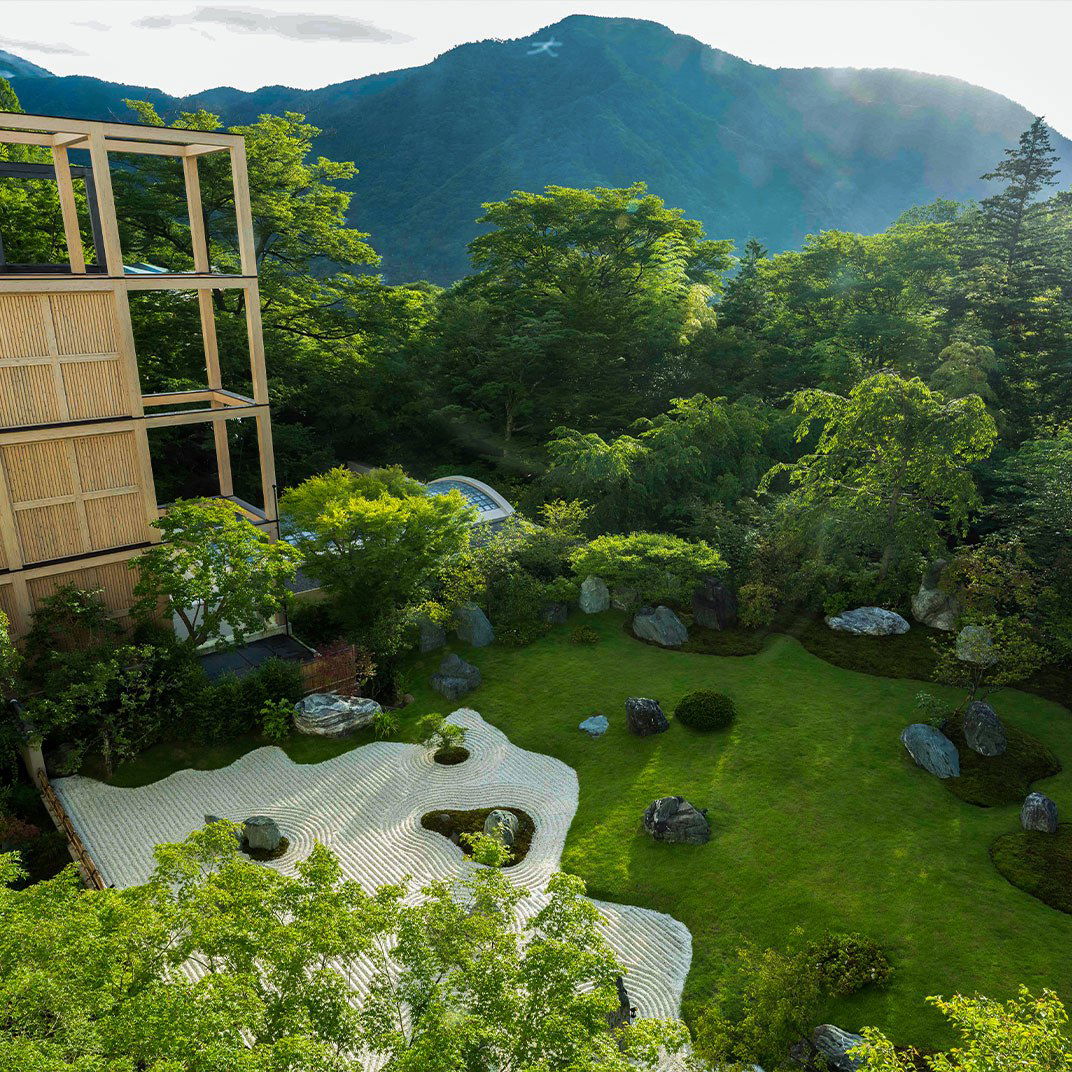
Hakone's ryokan market stratifies sharply by altitude and access. Properties at lower elevations trade on transport convenience; those higher on the caldera's inner slopes trade on something harder to replicate: unobstructed proximity to Owakudani's thermal field and sightlines toward Fuji that clear the treeline on still mornings. Gora Kadan sits at 1,300 Gora, on the upper reaches of the Gora district, occupying land that once served as a detached villa for a branch of the imperial family. That provenance isn't merely historical colour. It shaped the footprint: gardens that predate the hospitality use, stone pathways that belong to the site rather than to a design brief, and a spatial generosity that newer builds in the area cannot replicate without acquiring adjacent land that no longer exists in consolidated parcels.
The Hakone Tozan Railway connects Gora station to Odawara, and from there the Shinkansen links to Tokyo in under forty minutes. The practical consequence is that Gora Kadan sits at the furthest walkable point from the railway terminus while remaining reachable within a half-day from central Tokyo. That positioning defines who stays here: guests who are arriving specifically for the property and the thermal landscape, not those building a point-to-point itinerary around transport hubs.
Three MICHELIN Keys and What That Signal Means
The 2025 Michelin Keys distinction recognises hotels where the overall stay experience reaches the same level of scrutiny applied to the restaurant guide. Three Keys, the programme's ceiling designation, places Gora Kadan in a narrow peer group across Japan. Nationally, properties earning that tier include Amanemu in Mie and a handful of others operating in comparable ryokan and resort formats. Within the Hakone basin itself, no other property in the current EP Club review set holds an equivalent distinction, which places Gora Kadan in a different competitive tier from neighbouring options including Hakone Kowakien Tenyu, Hotel Indigo Hakone Gora, and Hyatt Regency Hakone Resort and Spa.
Keys framework evaluates architecture, service consistency, food quality, and the coherence of the overall stay as a designed experience. For a ryokan, that last criterion is especially weighted: the format bundles arrival ritual, bathing sequence, meal service, and room design into a single hospitality argument, and fragmentation in any element shows clearly. Properties that hold Three Keys have, by the guide's assessment, sustained coherence across all of those vectors rather than excelling in one while tolerating weakness in another.
For comparison across Japan's premium ryokan tier, Asaba in Izu, Zaborin in Kutchan, and Nishimuraya Honkan in Kinosaki-cho operate in the same broad format tradition, each anchored to a distinct thermal geography. Gora's specific asset is its position within a two-hour radius of Tokyo, which makes it the most accessible high-tier ryokan option for short stays departing from the capital.
The Thermal Logic of the Gora District
Hakone's onsen sources vary considerably by location within the national park. The Gora district draws from springs that feed milky-white sulfurous water, a different mineral character from the clear waters found at Yumoto or the reddish iron-rich sources at Dogashima. That distinction matters for guests choosing specifically for the bathing experience rather than for general resort amenity. The water at elevation in Gora has a longer journey through volcanic strata, and the temperature at point of use tends toward the hotter range that traditional onsen practice associates with therapeutic effect.
Gora Kadan's baths operate on a natural flow system tied directly to those springs rather than recycled or temperature-managed water. In a market where that distinction is increasingly rare, it represents a meaningful difference from resort-format competitors that have scaled bathing facilities beyond what their source volume can sustain naturally. Properties like Sengokubara COCON and nol hakone myojindai operate in adjacent valleys with different spring access profiles, making direct comparison of the bathing experience a matter of source geography as much as facility design.
The Kaiseki Frame
Hakone's premium ryokan segment runs kaiseki as the default meal format, but the term covers a wide range of interpretive approaches. At the most conservative end, kaiseki in the Kansai tradition follows strict seasonal sequencing tied to the lunar calendar, with ingredients sourced to reflect that week's specific moment in the year. At a more adaptive end, properties interpret the structure loosely, using the course format as a container for regional ingredients without the seasonal discipline that defines the original form.
The meal service at properties holding Michelin recognition in the ryokan format generally aligns closer to the disciplined end of that spectrum, since the Keys evaluation includes food quality as a weighted criterion. That context positions Gora Kadan's dining as part of the hospitality argument rather than a separable feature. Guests arriving for a single-night stay should factor the meal sequence into arrival timing: kaiseki dinners at properties of this tier typically begin between 18:00 and 19:00 and run two to two-and-a-half hours, which shapes what else the day can contain.
For guests building a broader Japan itinerary that includes urban luxury reference points, Bvlgari Hotel Tokyo and HOTEL THE MITSUI KYOTO in Kyoto represent the city-hotel end of Japan's premium accommodation tier, and pairing either with a Gora stay captures the contrast between urban and thermal-landscape hospitality without requiring more than three or four nights total.
Planning a Stay: Practical Notes
Gora Kadan does not publish room inventory or pricing through open channels included in the current venue database, so rates and availability should be confirmed directly with the property or through a specialist booking service. The high season for Hakone ryokan falls in late October and early November during the koyo (autumn foliage) period and again in late March through April for cherry blossom. Both windows book well in advance across all properties in the district, and Three Keys recognition in the 2025 Michelin guide will likely tighten availability further at this tier. Shoulder season visits in June (during tsuyu, the rainy season) or in January and February offer better availability and, in the case of winter months, the specific pleasure of outdoor bathing against cold air that defines the onsen experience at its most elemental. See our full Hakonemachi, Ashigarashimo-gun guide for broader context on timing and neighbourhood character across the park.
Guests comparing Gora Kadan against other premium thermal destinations in Japan might also consider Fufu Nikko, Kamenoi Besso in Yufu, or Fufu Kawaguchiko for a sense of how the high-tier ryokan format plays across different volcanic geographies. For those benchmarking against international resort properties in the same award tier, Halekulani Okinawa, Badrutt's Palace Hotel in St. Moritz, and Hôtel de Paris Monte-Carlo offer a wider frame of reference for what Three Keys recognition implies at the global scale.
Frequently Asked Questions
What is the main draw of Gora Kadan?
The property's primary case rests on three converging assets: Three MICHELIN Keys recognition in 2025 (the guide's highest hotel distinction), a site with imperial-era gardens and a spatial footprint that newer Hakone properties cannot replicate, and direct access to the Gora district's sulfurous thermal springs. Within a two-hour radius of Tokyo, it occupies the leading of the Hakone ryokan tier in terms of formal recognition, and its address on the upper Gora slope provides both the thermal access and the sightline conditions that define the leading of what Hakone's volcanic geography offers. Comparable properties at equivalent award levels, such as Amanemu or Benesse House in Naoshima, require longer travel from Tokyo, which makes Gora Kadan the most accessible property at this tier for short departures from the capital.
What room should I choose at Gora Kadan?
Specific room categories and inventory details are not available in the current venue database, so we cannot make a verified recommendation by room type. As a general principle in the premium ryokan format, rooms with private rotenburo (outdoor baths) command a premium and represent a meaningfully different stay from those relying solely on shared facilities. At properties holding Michelin's Three Keys distinction, private-bath rooms typically account for a minority of total inventory and book earliest. Confirming directly with the property which rooms face the garden or carry private thermal access is advisable before finalising a booking, particularly for visits during the koyo and cherry blossom peaks. The Hakone Retreat Villa 1/f offers a villa-format alternative in the same district for guests prioritising private-structure accommodation over a traditional room-within-inn layout.
Recognized By

Related editorial
- Asia's 50 Best Restaurants 2026: The Chairman and Wing Go 1-2 from the Same BuildingThe Chairman takes No. 1 and Wing climbs to No. 2 at Asia's 50 Best Restaurants 2026. Both operate from the same Hong Kong building. Here's what it means.
- Four Seasons Yachts Debut: 95 Suites, 11 Restaurants, and a March 2026 Maiden VoyageFour Seasons I launches March 20, 2026, with 95 suites, a one-to-one staff ratio, and 11 onboard restaurants. Worth tracking if you want hotel-grade service at sea.
- LA Michelin Guide 2026: Seven New Restaurants from Tlayudas to Uzbek DumplingsMichelin's March 2026 California Guide update adds six LA restaurants and one Montecito newcomer, spanning Oaxacan tlayudas, Uzbek manti, and Korean-Italian pasta.
Save or rate Gora Kadan on Pearl
Keep this venue in your Pearl passport, rate it after you visit, and track it alongside every other place you collect.