
Barnett Hill
Surrey Hills, Guildford
Hotel in Guildford, United Kingdom
 Book with Pearl
Why go
Barnett Hill is the sensible Guildford-area choice when countryside calm and value matter more than resort-scale facilities. Its MICHELIN Guide Hotels Selected recognition gives it credibility, but the strongest booking case is rate-dependent: choose it when it prices below Surrey's bigger country-house hotels and you do not need a spa-led stay.
About Barnett Hill
Barnett Hill is a hotel in Guildford with a smart-casual dress code and MICHELIN Guide, Hotels Selected recognition for 2025.
If you are comparing stays, keep the decision grounded in the facts you can check for your own dates. Barnett Hill can be compared with nearby or regional options such as Aviator Hotel, Beaverbrook Surrey, Coworth Park, Coworth Park, Dorchester Collection, and Pennyhill Park, but specific facilities, rates, and booking terms should be checked directly before you commit.
Pick it for hotel recognition, not assumed extras
The clearest signal for Barnett Hill is its MICHELIN Guide, Hotels Selected recognition in 2025. That supports treating it as a serious hotel option in Guildford, while leaving practical details such as restaurant style, spa setup, room count, price point, and service format to be checked before booking.
Set expectations accordingly. Use the MICHELIN hotel selection as one factor, then check the practical details that matter for your trip directly with the hotel or booking channel. The dress code is smart casual, which is useful to know when planning what to pack.
When the rate is right, the booking case is strong
The booking case depends on your date-specific price, availability, and the facilities you personally need. Avoid assuming extras such as a particular dining program, wellness offering, loyalty structure, or transport advantage unless they are listed for your booking.
For comparison, consider Barnett Hill alongside Aviator Hotel, Beaverbrook Surrey, Coworth Park, Coworth Park, Dorchester Collection, and Pennyhill Park. Other dining and hotel options in Guildford can also help you decide whether Barnett Hill is the best fit for your itinerary.
Quick reference: choose Barnett Hill if you want a Guildford hotel with MICHELIN Guide hotel selection and a smart-casual dress code; check prices, facilities, dining details, and arrival logistics before booking.
Planning details
- Location
- Blackheath Ln, Wonersh, Guildford GU5 0RF, United Kingdom
- Website
- alexanderhotels.co.uk/barnett-hill
- Phone
- +44 1483 893361
The take
The Take
The Vibe
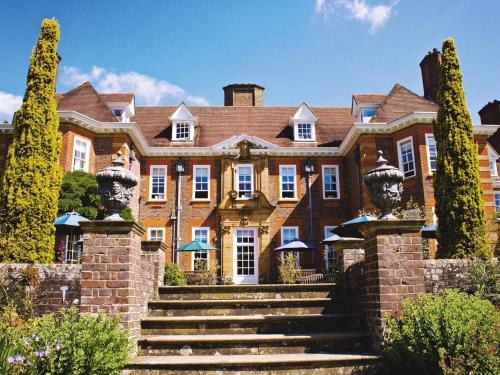
Barnett Hill reads primarily as an architectural experience: an Edwardian manor where the building itself is the main attraction. The hotel foregrounds Arts and Crafts sensibilities — craft, local materials and a deliberate relationship between interior and garden — while operating within a formal, late‑Victorian compositional language. The approach through managed grounds primes arrival, and the estate’s setting in the Surrey Hills Area of Outstanding Natural Beauty makes the landscape part of the design narrative. The overall effect is a scenic, classic country house that leans toward elegant, historically grounded hospitality rather than fashionable whimsy.
Best For
This property is best for travellers who prize architecture and place as much as creature comforts. Barnett Hill suits weekend escapes and short stays from London for guests who want a country‑house proposition — generous grounds, considered Edwardian interiors and a clear connection between house and garden. It appeals to design‑minded visitors, history buffs interested in late‑Victorian/Edwardian domestic architecture, and anyone seeking a quieter, scenic retreat in the Surrey Hills rather than a bustling contemporary hotel experience.
Venue details
Ambiance
Spacious, quiet rooms with tasteful designer furnishings, modern en-suite bathrooms, and serene garden views, offering a peaceful retreat from city noise.
Tags
Vibe
Best For
Experience
Amenities
View
Accessibility
About the Stay
- Rooms
- 56
- Check-in
- 15:00
- Check-out
- 11:00
- Property Style
- Contemporary Country House Hotel in Historic Mansion
- Design Style
- Contemporary Design Led with Chic Designer Furnishings
Know before you go
Know Before You Go
- Getting there
- Blackheath Ln, Wonersh, Guildford GU5 0RF, United Kingdom
Planning details
Location
Blackheath Ln, Wonersh, Guildford GU5 0RF, United Kingdom · Directions
Recognition and awards
Also consider
Also Consider
- Aviator Hotel, Notable alternative
- Beaverbrook Surrey, Notable alternative
- Pennyhill Park, Notable alternative
- Coworth Park, Dorchester Collection, Notable alternative
- Coworth Park, Notable alternative
Hotel context
How Barnett Hill compares in Surrey
Barnett Hill is the value play against Beaverbrook Surrey, Pennyhill Park, and Coworth Park, Dorchester Collection. Choose Barnett Hill if the priority is a quieter Guildford-area base and easier booking rather than a resort-style stay. If the trip is built around spa time, a bigger luxury setup, or a more polished special-occasion feel, Pennyhill Park or Coworth Park will usually justify the upgrade when rates are close.
Aviator Hotel is the sharper choice for airport-adjacent business travel and a more contemporary hotel feel, while Barnett Hill works better for guests who want countryside atmosphere near Guildford. Beaverbrook Surrey is the stronger pick for a more theatrical country-house break; Barnett Hill is the more restrained option when price-to-quality matters.
For readers who cannot book Barnett Hill, cross-shop Pennyhill Park for spa-led stays or Coworth Park for a higher-touch countryside hotel. Stay with Barnett Hill when the rate gap is clear and the plan is simple: sleep well, stay near Guildford, and avoid paying for amenities that are not central to the trip.
Explore Guildford
Around this place
Discover more on Pearl
Unlock the full Barnett Hill guide in Pearl, including awards, comparisons, FAQs, planning details, and nearby places.
Compare Barnett Hill
| Venue | Location | Awards |
|---|---|---|
| Barnett Hill | Guildford | 2025 Michelin Selected Hotels |
| Aviator Hotel | Farnborough | No published awards |
| Beaverbrook Surrey | Leatherhead | 2026 Virtuoso Luxury Hotel Collection2026 Mr & Mrs Smith Luxury HotelsLeading Hotels of the World 20262026 La Liste Top HotelsConde Nast Gold List 20262025 Michelin 2 Keys |
| Pennyhill Park | London | 2026 Forbes Recommended2025 Forbes Recommended |
| Coworth Park, Dorchester Collection | Berkshire | 2026 Forbes 4-StarStar Wine Lists 20262026 La Liste Top HotelsConde Nast Gold List 20262026 Mr & Mrs Smith Luxury Hotels2025 Forbes 4-Star2025 Michelin 2 Keys |
| Coworth Park | Ascot | No published awards |







How Barnett Hill Guildford compares with similar nearby venues.
FAQ
Frequently Asked Questions
Is Barnett Hill good for business travel?
Barnett Hill may work for a Guildford stay. If business-travel facilities, transport convenience, or meeting services matter, check them directly before booking and compare Barnett Hill with options such as Aviator Hotel.
How is the dining at Barnett Hill?
Barnett Hill has MICHELIN Guide, Hotels Selected recognition for 2025. Treat that as hotel recognition rather than a statement about a particular restaurant experience; other dining in Guildford can be compared separately.
What is check-in like at Barnett Hill?
For check-in, ask Barnett Hill about arrival times, access details, transport arrangements, and any special requirements before travelling.
How is the pool and spa at Barnett Hill?
If wellness facilities are important to your stay, check the current pool and spa offering directly before booking and compare with options such as Pennyhill Park or Coworth Park.
Do loyalty programs work at Barnett Hill?
If loyalty-program participation, points earning, or elite benefits matter, check the booking channel or the hotel directly and compare with another option such as Aviator Hotel.
Which room category is best at Barnett Hill?
Choose based on the room details and price shown for your dates, and compare Barnett Hill with options such as Coworth Park, Dorchester Collection if you are considering a different style of stay.