
Hotel in Ginoza U002c Kunigami Gun, Japan
THE HIRAMATSU HOTELS \u0026 RESORTS Ginoza
200ptsNorthern Okinawa Seclusion

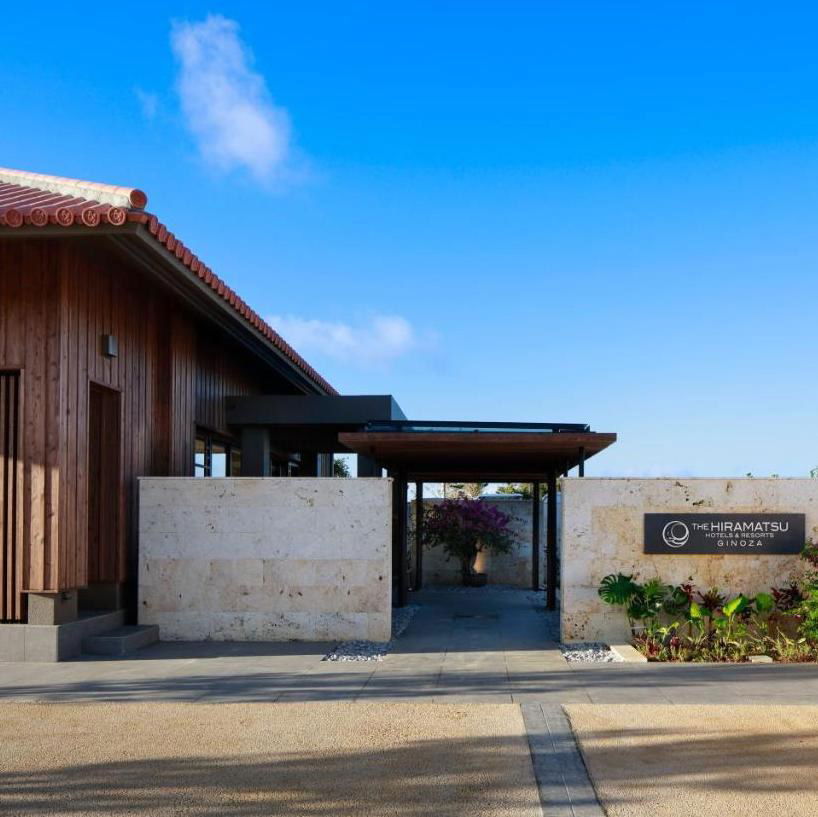
About THE HIRAMATSU HOTELS \u0026 RESORTS Ginoza
Awarded One MICHELIN Key in 2025, THE HIRAMATSU HOTELS & RESORTS Ginoza occupies a stretch of northern Okinawa's Kunigami coast where forest and reef sit within a short distance of each other. The Hiramatsu group's approach to hospitality favours deliberate restraint over resort spectacle, positioning this property in the smaller, design-conscious tier of Okinawan luxury.
Where Northern Okinawa's Landscape Shapes the Architecture
Most luxury hospitality in Okinawa gravitates south, clustering around Naha's urban infrastructure or the developed resort corridors of Onna and Chatan. Ginoza sits further north in Kunigami-gun, in a section of the island where the canopy is denser, the coastline less developed, and the visual register considerably quieter. That geographic positioning is not incidental to how THE HIRAMATSU HOTELS & RESORTS Ginoza reads as a property. The surrounding environment does much of the design work, and the architecture responds to that rather than competing with it.
The Hiramatsu group operates in a niche that a small number of Japanese hospitality brands have refined over the past two decades: low-key, high-finish properties where the emphasis falls on craftsmanship, material quality, and spatial restraint rather than on amenity counts or lobby theatrics. Compared with larger resort footprints along the Okinawan coast, including properties such as Halekulani Okinawa, this approach yields something considerably more contained, and deliberately so.
The Physical Space and Design Logic
Japan's One MICHELIN Key designation, awarded to THE HIRAMATSU HOTELS & RESORTS Ginoza in 2025, is granted to hotels that achieve a high standard of quality across architecture, design, and guest experience in aggregate. The award signals that the property cleared Michelin's threshold in those combined categories, placing it alongside a select group of properties that have earned that recognition in Japan. In that framework, design is not a decorative consideration but part of the core evaluation.
The tension that many resort properties struggle to resolve in subtropical coastal settings is the relationship between interior and exterior. The Hiramatsu group's design approach, consistent across its portfolio, tends to resolve this through material continuity and sightline management rather than through dramatic architectural gesture. The effect at Ginoza is a sense of spatial calm that aligns with the wider regional character of northern Okinawa, an area where the pace is slower and the visual environment less interrupted than the island's resort-heavy south.
Properties in this tier within Japan, including Zaborin in Kutchan, Gora Kadan in Hakone, and Asaba in Izu, share a design sensibility in which the local environment is treated as the primary aesthetic reference point. The architecture does not impose a distinct identity so much as it frames and interprets what surrounds it. The Ginoza property operates within that same logic.
Ginoza and the Northern Okinawa Context
Okinawa's culinary and hospitality identity is increasingly bifurcated. The south, anchored by Naha and the Onna resort strip, attracts the widest visitor volume and the largest international hotel brands. Northern Okinawa, including the Kunigami district where Ginoza sits, draws a smaller, more deliberate traveller audience. The Yanbaru forest region that defines much of northern Okinawa earned UNESCO World Natural Heritage status in 2021, and the surrounding ecology has become a stronger point of reference for properties in the area.
The address at 1425 Matsuda places the property within Ginoza village, accessible from Naha by expressway in roughly an hour to ninety minutes depending on traffic, or from Naha Airport via the same route. Travellers using Okinawa's public transit network should budget more time and consider car hire for practical convenience given the limited bus frequency in Kunigami-gun. For guests arriving from Tokyo or Osaka, Naha Airport receives direct flights from both cities, making the island accessible before the final northward drive.
The contrast with the island's major resort destinations is sharper than the distance suggests. Where properties further south sit in dense hospitality clusters with competing restaurants, beach clubs, and retail, northern Okinawa offers a quieter framework with access to the Yanbaru coastline, mangrove forests, and a pace of travel closer to what Japan's inland ryokan tradition provides. Jusandi in Ishigaki operates in a comparable coastal-retreat register on one of the Ryukyu island chain's southern outposts, and the two properties serve a similar reader profile despite the geographic distance.
Situating Hiramatsu in Japan's Premium Hotel Tier
Hiramatsu group sits in a distinct lane within Japanese luxury hospitality: privately operated, with a small portfolio, and focused on food-and-wine-led experiences at its restaurant properties and on quiet environmental immersion at its resort properties. This positions it differently from the international luxury brands operating in Japan, such as Bvlgari Hotel Tokyo, and differently again from the historic ryokan tradition represented by Nishimuraya Honkan in Kinosaki-cho. The Ginoza property occupies a space somewhere between those two poles: modern in its design language, but grounded in site-specificity rather than brand spectacle.
For comparison across Japan's broader design-led hotel tier, properties earning One MICHELIN Key in 2025 include a range of formats from urban addresses like HOTEL THE MITSUI KYOTO to nature-embedded retreats such as Amanemu in Mie. The Ginoza property sits at the nature-embedded end of that spectrum, with the surrounding Kunigami environment functioning as the primary draw rather than the hotel's urban proximity or cultural-heritage access.
Those weighing alternatives in the island-resort register within Japan might also consider GOTO RETREAT by Onko Chishin in the Goto Islands, or Benesse House in Naoshima, where art infrastructure replaces natural landscape as the defining context. For a mountain-forest register, Higashiyama Niseko Village in Hokkaido offers a contrasting seasonal proposition. Each of these properties makes a different argument for why environment and design should function together, and Ginoza's argument is rooted in the particular ecology of northern Okinawa.
Our full Ginoza, Kunigami-gun guide covers further context on the area's character and what to expect at this end of the island.
Planning Your Stay
THE HIRAMATSU HOTELS & RESORTS Ginoza holds One MICHELIN Key status as of 2025, and properties at this recognition level within Japan's premium tier typically carry occupancy patterns that reward early booking, particularly over Okinawa's peak season from late spring through summer and during the Golden Week holiday period in late April and early May. The Hiramatsu group does not publish its booking infrastructure on widely distributed third-party platforms in the way that larger international chains do; approaching the property directly, or through a travel specialist familiar with the Japanese boutique hotel market, is the more reliable route for securing availability and understanding current pricing and package structure.
Guests travelling to Okinawa for the first time should note that the prefecture's climate runs warm and humid for a longer portion of the year than mainland Japan, with the rainy season arriving in May and typhoon activity peaking between July and October. Northern Okinawa, where Ginoza sits, shares this seasonal pattern, and the Yanbaru forest is at its most atmospheric in the quieter shoulder periods outside of peak summer. For those considering Japan's broader high-end hotel circuit alongside a Ginoza stay, properties including Fufu Nikko, Fufu Kawaguchiko, and Kamenoi Besso in Yufu offer complementary registers across different regional environments.
Frequently Asked Questions
- What should I expect atmosphere-wise at THE HIRAMATSU HOTELS & RESORTS Ginoza?
- The atmosphere is calibrated for quiet rather than activity. Northern Okinawa does not have the dense resort infrastructure of the island's south, and the property's One MICHELIN Key recognition in 2025 reflects a design and hospitality approach built around restraint. Guests arriving expecting high-animation resort programming will find a different register here: the environment outside the property is as much a part of the experience as what sits within it. The setting in Kunigami-gun positions this as a stay for those who want access to the Yanbaru coast and forest without the resort corridor traffic.
- What room should I choose at THE HIRAMATSU HOTELS & RESORTS Ginoza?
- Specific room configuration data is not available in the current record. Given that the property earned One MICHELIN Key recognition partly on the basis of design and spatial quality, the general guidance at properties in this category is to prioritise rooms with direct environmental exposure, whether to coastline or forest, over rooms optimised for interior amenity. Consulting the Hiramatsu group directly at the time of booking will yield the most reliable room-by-room guidance.
- What should I know about THE HIRAMATSU HOTELS & RESORTS Ginoza before I go?
- The property sits in Ginoza village in Kunigami-gun, northern Okinawa, roughly an hour or more from Naha Airport by road. It holds One MICHELIN Key status as of 2025. Public transport in this part of the island is sparse; a rental car is the most practical option for most guests. The wider Kunigami district, including the Yanbaru UNESCO World Natural Heritage area, is the primary context for the stay, so building time into the itinerary to engage with the surrounding environment meaningfully is worth planning for in advance.
- How hard is it to get in to THE HIRAMATSU HOTELS & RESORTS Ginoza?
- Phone and website details are not available in the current record. Properties at this level within the Hiramatsu group tend to have a limited number of rooms and a guest profile that plans well in advance, particularly for peak Okinawa travel periods in spring and summer. Approaching via a Japan-specialist travel agent or directly through the Hiramatsu group's central reservations is the most reliable path. Golden Week and the Okinawan summer peak are the periods where lead time matters most.
- Is THE HIRAMATSU HOTELS & RESORTS Ginoza the only Hiramatsu property in Okinawa?
- Based on current records, the Ginoza property is the Hiramatsu group's recognised hotel presence in the Okinawan archipelago. The group operates across multiple Japanese regions, with each property anchored to a specific environmental or cultural context rather than functioning as an interchangeable brand unit. The Ginoza property is the group's argument for what northern Okinawa's Kunigami district offers as a setting, and its 2025 One MICHELIN Key recognition places it alongside a small set of design-led Japanese properties that have cleared Michelin's combined threshold for architecture, design, and guest experience.
Recognized By

Related editorial
- Asia's 50 Best Restaurants 2026: The Chairman and Wing Go 1-2 from the Same BuildingThe Chairman takes No. 1 and Wing climbs to No. 2 at Asia's 50 Best Restaurants 2026. Both operate from the same Hong Kong building. Here's what it means.
- Four Seasons Yachts Debut: 95 Suites, 11 Restaurants, and a March 2026 Maiden VoyageFour Seasons I launches March 20, 2026, with 95 suites, a one-to-one staff ratio, and 11 onboard restaurants. Worth tracking if you want hotel-grade service at sea.
- LA Michelin Guide 2026: Seven New Restaurants from Tlayudas to Uzbek DumplingsMichelin's March 2026 California Guide update adds six LA restaurants and one Montecito newcomer, spanning Oaxacan tlayudas, Uzbek manti, and Korean-Italian pasta.
Save or rate THE HIRAMATSU HOTELS \u0026 RESORTS Ginoza on Pearl
Keep this venue in your Pearl passport, rate it after you visit, and track it alongside every other place you collect.