
Fontevraud L’Hôtel
Fontevraud-l'Abbaye
Hotel in Fontevraud-l'Abbaye, France
 Book with Pearl
The Read
Abbey Immersion Stay
Price
$200–300per night
Why go
Fontevraud L'Hôtel is the right choice if the trip is built around Fontevraud-l'Abbaye and a quieter Loire base matters more than a long list of resort amenities. Its Michelin 1 Key recognition gives it a useful quality signal, but the booking case is location-led: choose it for atmosphere and context, not for price certainty or a clearly published facilities checklist.
About Fontevraud L’Hôtel
Should you book Fontevraud L'Hôtel? Consider it if you specifically want to stay in Fontevraud-l'Abbaye and are comparing options by essential fit rather than assumed amenities. The key facts are clear: the venue is in Fontevraud-l'Abbaye, has a smart-casual dress code, and holds Michelin 1 Key recognition from 2024.
Because detailed room, dining, wellness, price, and service specifics can affect the decision, the safer recommendation is to treat Fontevraud L'Hôtel as a shortlist candidate to confirm directly before booking. In practice, that means using the location and recognition as a starting point, not as a complete booking brief. If your decision depends on a particular facility, room type, meal service, or rate structure, verify those details with the hotel before you commit.
Choose it for a Fontevraud-l'Abbaye hotel shortlist
The strongest hook is recognition: Fontevraud L'Hôtel is listed with a Michelin 1 Key in 2024. That makes it relevant for travelers who want a recognized hotel in Fontevraud-l'Abbaye, especially if they are narrowing choices by independently visible signals rather than by vague impressions. Even so, the recognition should not be used as a substitute for checking the practical details that matter to your stay.
The dress code is smart casual, which gives at least some guidance on the tone to expect when you are packing and planning. Beyond that, avoid assuming a specific restaurant format, spa setup, pool, room count, service style, or price point without checking directly. Those details should remain open questions rather than implied promises. Pick it when the location and recognition match your needs; look elsewhere or ask follow-up questions if the trip depends on particular facilities.
Where it fits in a hotel search
For travelers researching Fontevraud-l'Abbaye as part of a wider trip, Fontevraud L'Hôtel belongs on the shortlist for the town. Its role in that search is clearest when you are looking for a recognized place to stay in Fontevraud-l'Abbaye and are willing to do the final due diligence yourself. If you are comparing styles of stay, consider it alongside Château d'Artigny, Domaine de la Soucherie, Hotel Chateau de Verrieres & Spa Chateau Hotel Saumur, LABE, and Logis Hôtel Demeure de la Vignole, while checking each venue's current details directly.
That comparison process matters because the essentials of a good choice are often personal: one traveler may care most about location, another about the room category, and another about dining, wellness, or the total cost of the stay. Treat Fontevraud L'Hôtel as a careful pointer rather than a full endorsement of every possible expectation. Use it to identify the property, then confirm the details that would affect your actual booking.
The practical verdict is simple: shortlist Fontevraud L'Hôtel if you want a Michelin 1 Key hotel in Fontevraud-l'Abbaye and are comfortable confirming specifics before committing. If your choice depends on amenities, pricing, dining, or room details, do not assume them from reputation alone. The best fit is a traveler who values the essentials and is prepared to ask the hotel direct questions before making a final decision.
Quick reference: Michelin 1 Key in 2024; smart-casual dress code; located in Fontevraud-l'Abbaye; confirm current practical details before booking.
Inside Fontevraud L’Hôtel
Planning details
- Location
- 38 Rue Saint-Jean de l'Habit, 49590 Fontevraud-l'Abbaye
- Website
- fontevraud.fr/fontevraud-lermitage/lhotel-de-fontevraud-lermitage
- Phone
- +33 2 46 46 10 10
The take
The Take
The Vibe
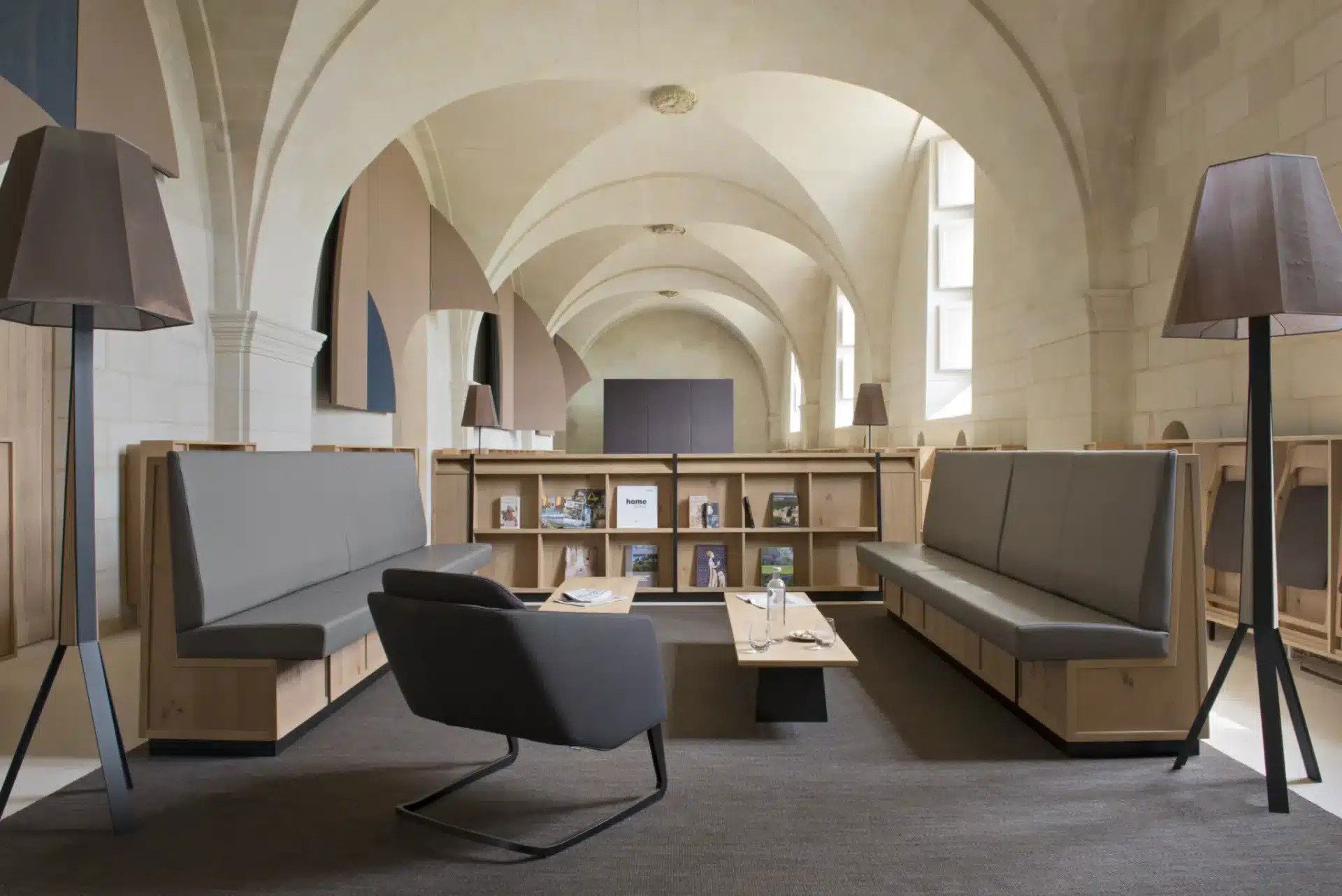
Fontevraud L’Hôtel centers the building itself as the principal attraction: guests live inside a medieval priory where stone, light and silence define the stay. Mornings and evenings fall across Romanesque apses and cloistered walks, and, once the day-trippers have gone, the priory settles into a quiet, intimate calm. The property reads more like a preserved cultural inhabitant than a conventional hotel, so the experience feels measured and contemplative—elegant without fuss, and quietly immersive for anyone who comes to appreciate architecture, provenance and the particular stillness of a nine‑century place.
Best For
This hotel suits travelers who prioritize history and atmosphere over resort amenities. It is ideal for couples seeking a quiet, romantic escape, for design‑minded guests interested in staying inside a registered historic monument, and for culturally focused visitors who plan to explore the abbey and cloisters at leisure. The property is less appropriate for guests expecting nightlife, spa programming or bustling hotel amenities; instead it rewards visitors who value evenings in a serene, architecturally significant setting and who are prepared to arrive with the intent to linger after the day crowds leave.
Stay Tips
Book an overnight stay rather than a day visit to experience the priory after the daytime crowds depart—the description highlights the long evening light and the particular nighttime calm. Reserve well ahead during peak visitor seasons, and ask the hotel about room placement or access to the priory courtyard, cloister walks and kitchen garden if those elements matter to you. Expect a stay focused on the building and grounds rather than on resort facilities; plan arrival and dining timing to coincide with evening light if you want the most atmospheric moments.
Venue details
Ambiance
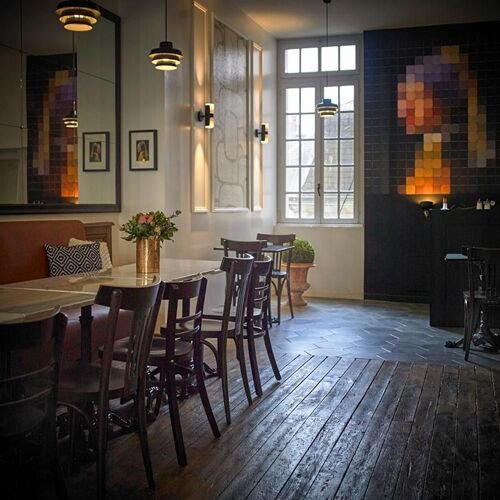
Contemporary minimalist design integrated into historic abbey architecture, with serene garden views and refined, peaceful atmosphere despite some guests noting design prioritized over comfort.
Tags
Vibe
Best For
Experience
Amenities
View
Accessibility
About the Stay
- Rooms
- 54
- Check-in
- 16:00
- Check-out
- 12:00
- Property Type
- Heritage hotel
- Property Style
- Contemporary Design Hotel Integrated Into a Historic 12th Century Benedictine Abbey, Blending Monastic Heritage with Modern Minimalist Aesthetics.
- Design Style
- Modern Minimalist with Historic Architectural Elements, Featuring Soundproofed Rooms, Clean Lines, and Curated Contemporary Art Throughout the Property.
- Spa
- Yes
- Families
- Welcome
- Cancellation
- Moderate
Know before you go
Know Before You Go
- Getting there
- 38 Rue Saint-Jean de l'Habit, 49590 Fontevraud-l'Abbaye
Planning details
Location
38 Rue Saint-Jean de l'Habit, 49590 Fontevraud-l'Abbaye · Directions
fontevraud.fr/fontevraud-lermitage/lhotel-de-fontevraud-lermitage
Recognition and awards
Also consider
Also Consider
- Logis Hôtel Demeure de la Vignole, Notable alternative
- Hotel Chateau de Verrieres & Spa Chateau Hotel Saumur, Notable alternative
- Château d'Artigny, Notable alternative
- LABE, Notable alternative
- Domaine de la Soucherie, Notable alternative
Hotel context
How it compares nearby
Choose Fontevraud L'Hôtel over Logis Hôtel Demeure de la Vignole if the stay needs to feel anchored in Fontevraud-l'Abbaye rather than simply near the area. Logis Hôtel Demeure de la Vignole is the more value-oriented cross-shop for travelers who care less about recognition and more about a practical Loire base.
Hotel Chateau de Verrieres & Spa Chateau Hotel Saumur and Château d'Artigny are better fits for readers who want the classic château-hotel mood and a more explicitly leisure-led stay. Fontevraud L'Hôtel makes more sense when the abbey-town setting is the point; those two are stronger cross-shops when the hotel itself needs to carry more of the trip.
LABE and Domaine de la Soucherie are worth checking if the priority is a simpler base or a wine-country feel. For booking difficulty, assume the recognized address will need earlier planning than the more functional alternatives, especially for preferred dates; if availability is tight, start with Domaine de la Soucherie for a more wine-focused fallback or Hotel Chateau de Verrieres & Spa Chateau Hotel Saumur for a broader hotel-style substitute.
Explore Fontevraud-l'Abbaye
Around this place
Discover more on Pearl
Unlock the full Fontevraud L’Hôtel guide in Pearl, including awards, comparisons, FAQs, planning details, and nearby places.
Compare Fontevraud L’Hôtel
| Venue | Location | Awards |
|---|---|---|
| Fontevraud L’Hôtel | Fontevraud-l'Abbaye | 2026 Michelin 1 KeyMichelin 1 Key 20252025 Michelin 1 Key2024 Michelin 1 Key |
| Logis Hôtel Demeure de la Vignole | Montsoreau | No published awards |
| Hotel Chateau de Verrieres & Spa Chateau Hotel Saumur | Orléans | No published awards |
| Château d'Artigny | Montbazon | 2025 Gault & Millau Exceptional Hotel |
| LABE | Tours | No published awards |
| Domaine de la Soucherie | Beaulieu Sur Layon | No published awards |


How Fontevraud L'Hôtel compares with similar nearby venues.
FAQ
Frequently Asked Questions
When is the best time to book Fontevraud L'Hôtel?
Book once your dates are fixed if you specifically want Fontevraud L'Hôtel. It held Michelin 1 Key recognition in 2024, and current availability and booking conditions should be confirmed directly with the hotel.
How is the pool and spa at Fontevraud L'Hôtel?
How is the location of Fontevraud L'Hôtel?
Fontevraud L'Hôtel is in Fontevraud-l'Abbaye. If you are comparing it with a different style of stay, Hotel Chateau de Verrieres & Spa Chateau Hotel Saumur is another option to review separately.
Do loyalty programs work at Fontevraud L'Hôtel?
Do not choose Fontevraud L'Hôtel on the basis of loyalty-program benefits unless the hotel or booking channel confirms the current terms for your reservation.
Which room category is best at Fontevraud L'Hôtel?
Choose only after checking the hotel's current room descriptions, rates, and cancellation terms directly.
How does Fontevraud L'Hôtel compare to other places to stay?
Pick Fontevraud L'Hôtel if you want a Michelin 1 Key hotel in Fontevraud-l'Abbaye. Château d'Artigny, Logis Hôtel Demeure de la Vignole, Domaine de la Soucherie, LABE, and Hotel Chateau de Verrieres & Spa Chateau Hotel Saumur are useful comparison points, but check each venue's current location, services, and booking details separately.