
Hotel in Cincinnati, United States
21c Museum Hotel\u002c Cincinnati
150ptsArt-Integrated Adaptive Reuse

About 21c Museum Hotel\u002c Cincinnati
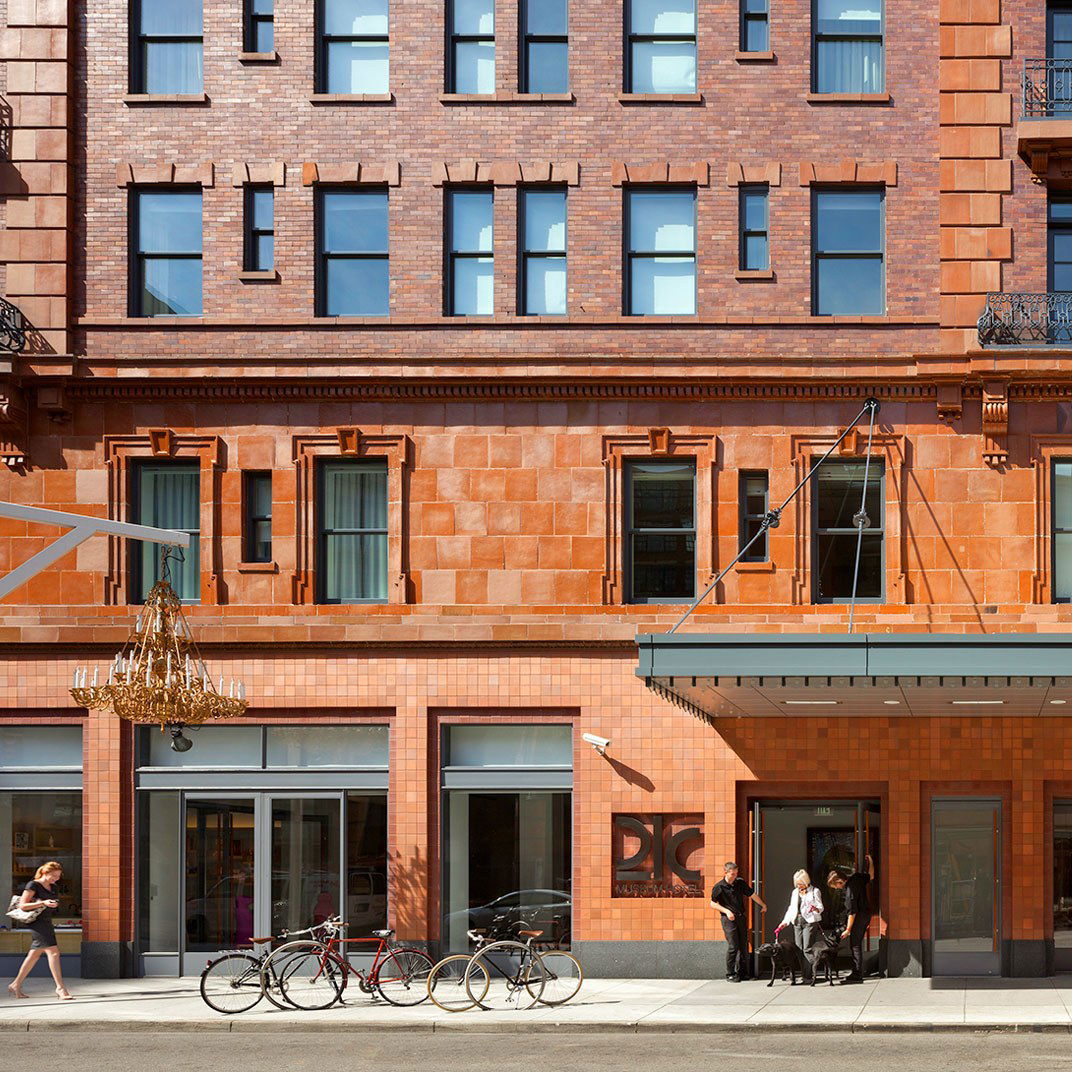
A Michelin Selected hotel occupying a converted 19th-century warehouse in downtown Cincinnati, 21c Museum Hotel integrates a functioning contemporary art museum into its guest floors, corridors, and public spaces. The format places it in a distinct tier among Cincinnati's hotel options, where art programming depth and adaptive-reuse architecture define the stay as much as the room itself.
Where the Building Argues Back
Downtown Cincinnati's Walnut Street corridor has been reshaped over the past two decades by adaptive-reuse investment, and few properties make that argument as visibly as 21c Museum Hotel. The building at 609 Walnut Street is a converted 19th-century warehouse, and the decision to preserve its industrial bones while threading contemporary art throughout every corridor, lobby, and public level produces an environment that resists the standard hotel grammar of hushed neutrality. Arriving here, guests enter something closer to a functioning museum that also happens to have rooms upstairs — a distinction that sounds promotional but is structurally accurate. The 21c brand, which operates properties across several American cities, developed this hybrid format as its core identity, and the Cincinnati outpost carries a 2025 Michelin Selected designation that places it within the curated tier of the city's accommodation options.
Architecture as Program
The adaptive-reuse approach taken here reflects a broader pattern in American mid-market cities, where historic warehouse and commercial stock has become the preferred substrate for design-led hospitality. In cities like Chicago — where properties such as the Chicago Athletic Association have made a similar argument through preserved athletic-club architecture , the existing structure carries as much weight as any interior intervention. At 21c Cincinnati, the original masonry and structural elements set a visual register that contemporary art and installation work responds to rather than overrides.
The museum component is not a lobby display case. Rotating exhibitions occupy dedicated gallery spaces integrated into the hotel floor plan, meaning guests pass through curated programming as part of ordinary movement between rooms and public areas. This format distinguishes the property from hotels that hang art as decoration. The programming here is institutional in character: the 21c brand commissions and loans works at a scale consistent with a regional contemporary art institution, and the Cincinnati location benefits from a city that already has serious museum infrastructure in the Cincinnati Art Museum and the Contemporary Arts Center, both of which provide a local audience with calibrated expectations.
Position in the Cincinnati Hotel Market
Cincinnati's Michelin Selected hotel tier sits alongside a small group of properties with distinct identities. The Lytle Park Hotel, Autograph Collection occupies the historic luxury end of the market near the Ohio riverfront. Symphony Hotel and Vivaldi's Restaurant operates as a boutique property with a food-forward program. The Summit Hotel represents the design-hotel category at a different scale. Within that peer set, 21c's differentiation comes from the museum format specifically: the programming commitment means the property shifts character with each major exhibition rotation, giving repeat visitors a reason to re-engage with the space.
Against a national peer set, 21c Cincinnati competes with properties that have built identities around a single non-hospitality discipline. Troutbeck in Amenia does this through literary and cultural history. SingleThread Farm Inn in Healdsburg does it through agriculture and cuisine. 21c does it through contemporary visual art, and the model requires genuine institutional investment to function , a low-budget version of the same concept would read as pretension rather than program.
The Conversion Logic
Warehouse conversions carry inherent spatial advantages for the museum-hotel hybrid: high ceilings accommodate large-format and installation work that purpose-built hotel rooms cannot. The Cincinnati building's floor plates, typical of 19th-century commercial construction, allow for gallery-scale rooms adjacent to lodging corridors without the architectural gymnastics required in tighter urban buildings. This is the structural reason why adaptive-reuse warehouse stock has become the preferred format for the 21c brand across its portfolio, and why the Cincinnati property works as a physical argument for the concept rather than merely a branded execution of it.
For travelers comparing this to resort-scale art experiences , properties like Amangiri in Canyon Point, where landscape and architecture are the artistic statement, or Post Ranch Inn in Big Sur, where the natural environment dominates , 21c Cincinnati represents a deliberately urban, interior-focused version of the same instinct to make the physical environment do intellectual work. The ambition here is concentrated into a downtown block rather than spread across a landscape.
Planning a Stay
The hotel sits at 609 Walnut Street in Cincinnati's downtown core, within walking distance of the city's main cultural institutions and the Over-the-Rhine neighborhood, which has the densest concentration of 19th-century Italianate architecture in the United States and a restaurant and bar scene that has matured considerably over the past decade. For travelers building a wider itinerary, our full Cincinnati restaurants guide maps the dining options across neighborhoods. Booking the hotel directly through the 21c website is the standard route; the property's Michelin Selected status means it appears in Michelin's curated hotel guide for reference and comparison.
Travelers arriving from cities with deeper luxury hotel inventories , those choosing between this and, say, The Fifth Avenue Hotel in New York City or Raffles Boston , should frame the comparison correctly. 21c Cincinnati is not competing on traditional luxury metrics like butler service or historic-brand prestige. It competes on the coherence and depth of its art programming, the quality of its adaptive-reuse architecture, and the density of cultural engagement per square foot. That is a different value proposition, and it suits a different kind of traveler: one for whom the building itself is a primary interest rather than a backdrop.
For those calibrating against other art-integrated or design-led properties in the American hotel market, reference points include 1 Hotel San Francisco on sustainability-led design, or Dunton Hot Springs in Dunton on experiential specificity in a historic built environment. Each represents a different answer to the same question: what should a hotel be about, beyond accommodation? At 21c Cincinnati, the answer has been consistent across the brand's history , contemporary art, housed in buildings that have already proven they can survive.
Frequently Asked Questions
- Is 21c Museum Hotel Cincinnati more low-key or high-energy?
- It occupies a middle register. The art installations and rotating exhibitions generate genuine visual intensity, and the public spaces attract a local audience beyond hotel guests, which keeps the ground floor active. The guest room floors, by contrast, operate at the quieter end of the downtown hotel experience. The overall atmosphere is engaged and culturally charged rather than conventionally buzzy, and the Michelin Selected designation reflects a hospitality standard that prioritizes coherence over spectacle.
- What's the leading suite at 21c Museum Hotel Cincinnati?
- Specific suite configurations and pricing are not available in our current data. The 21c brand typically offers penthouse-level suites in its larger properties, with art installations integrated into the room itself rather than confined to corridors. For current availability and suite details, the hotel's direct booking channel is the reliable source. The property's position in the Michelin Selected tier suggests room quality consistent with that designation, but suite-specific details should be confirmed directly.
- What's the standout thing about 21c Museum Hotel Cincinnati?
- The integration of a functioning contemporary art museum into the hotel's physical structure is the defining feature. This is not art-as-decoration: the 21c brand operates institutional-scale exhibition programming, and the Cincinnati property benefits from both the brand's curation infrastructure and a local arts scene with genuine critical mass. The Michelin Selected designation in 2025 confirms the property's standing within the curated tier of Cincinnati's hotel market.
- Do they take walk-ins at 21c Museum Hotel Cincinnati?
- The museum galleries at 21c properties are generally accessible to non-guests during public hours, which is part of the brand's model of integrating into the local cultural life of each city. For hotel rooms, advance booking is advisable given the property's Michelin Selected status and limited inventory as a boutique-scale property. Specific walk-in policies and hours are leading confirmed directly with the hotel, as these can vary by season and exhibition calendar.
Recognized By

Similar venues by awards
Related editorial
- Asia's 50 Best Restaurants 2026: The Chairman and Wing Go 1-2 from the Same BuildingThe Chairman takes No. 1 and Wing climbs to No. 2 at Asia's 50 Best Restaurants 2026. Both operate from the same Hong Kong building. Here's what it means.
- Four Seasons Yachts Debut: 95 Suites, 11 Restaurants, and a March 2026 Maiden VoyageFour Seasons I launches March 20, 2026, with 95 suites, a one-to-one staff ratio, and 11 onboard restaurants. Worth tracking if you want hotel-grade service at sea.
- LA Michelin Guide 2026: Seven New Restaurants from Tlayudas to Uzbek DumplingsMichelin's March 2026 California Guide update adds six LA restaurants and one Montecito newcomer, spanning Oaxacan tlayudas, Uzbek manti, and Korean-Italian pasta.
Save or rate 21c Museum Hotel\u002c Cincinnati on Pearl
Keep this venue in your Pearl passport, rate it after you visit, and track it alongside every other place you collect.