
InterContinental Chongqing Raffles City
Yuzhong District, Chongqing
Hotel in Chongqing, China
 Book with Pearl
The Read
Sky-Bridge Hospitality
Why go
Book InterContinental Chongqing Raffles City if you want a polished Yuzhong riverfront base with a 2025 Michelin 1 Key signal and less tolerance for commute friction. The value depends on room choice: pay more only for a view, lounge access, workspace, or family-useful space you will actually use.
About InterContinental Chongqing Raffles City
InterContinental Chongqing Raffles City is a Chongqing hotel option with Michelin 1 Key recognition for 2025 and a smart-casual dress code. Evaluate it as a Chongqing stay anchored by that hotel accolade, and check room, facility, dining, and service details directly with the hotel before booking.
For planning, confirm current room types, amenities, dining options, and booking conditions directly with the hotel before committing. The strongest reason to shortlist InterContinental Chongqing Raffles City is its 2025 Michelin 1 Key; details such as specific views, lounge benefits, restaurant formats, family facilities, or business services should not be assumed.
Book for a confirmed Michelin-recognized Chongqing hotel
This hotel is best considered by travelers who want a Chongqing base with Michelin 1 Key recognition in 2025. If your decision depends on particular facilities, room layouts, on-site dining, or activity options, verify those details with the property before booking.
For comparison, Banyan Tree Chongqing Beibei and Pushine Jinfoshan Resort are other named options to consider. If your trip also includes Chengdu, InterContinental Century City Chengdu, InterContinental Chengdu Global Center, and Chengdu Expo Waterfall - MGallery may be useful comparison points.
The room-category decision needs current hotel confirmation
The hotel's 2025 Michelin 1 Key recognition gives useful reassurance that InterContinental Chongqing Raffles City has a place in Michelin's hotel selection. It does not, by itself, tell you which room advantage, service format, dining program, or facility detail will matter most for your stay. Before paying for an upgrade, check directly what that category includes and whether it changes the stay in a way you will actually use.
Dining should also be confirmed with the hotel rather than assumed from the venue name or award status. For a practical booking decision, weigh the Michelin 1 Key, the Chongqing location, and the smart-casual dress code, then verify all trip-specific details through official channels.
Planning details
- Location
- NO, 2 长江滨江路渝中区400010
- Website
- ihg.com/intercontinental/hotels/us/en/chongqing/chghb/hoteldetail
- Phone
- +86 23 8988 8888
The take
The Take
The Vibe
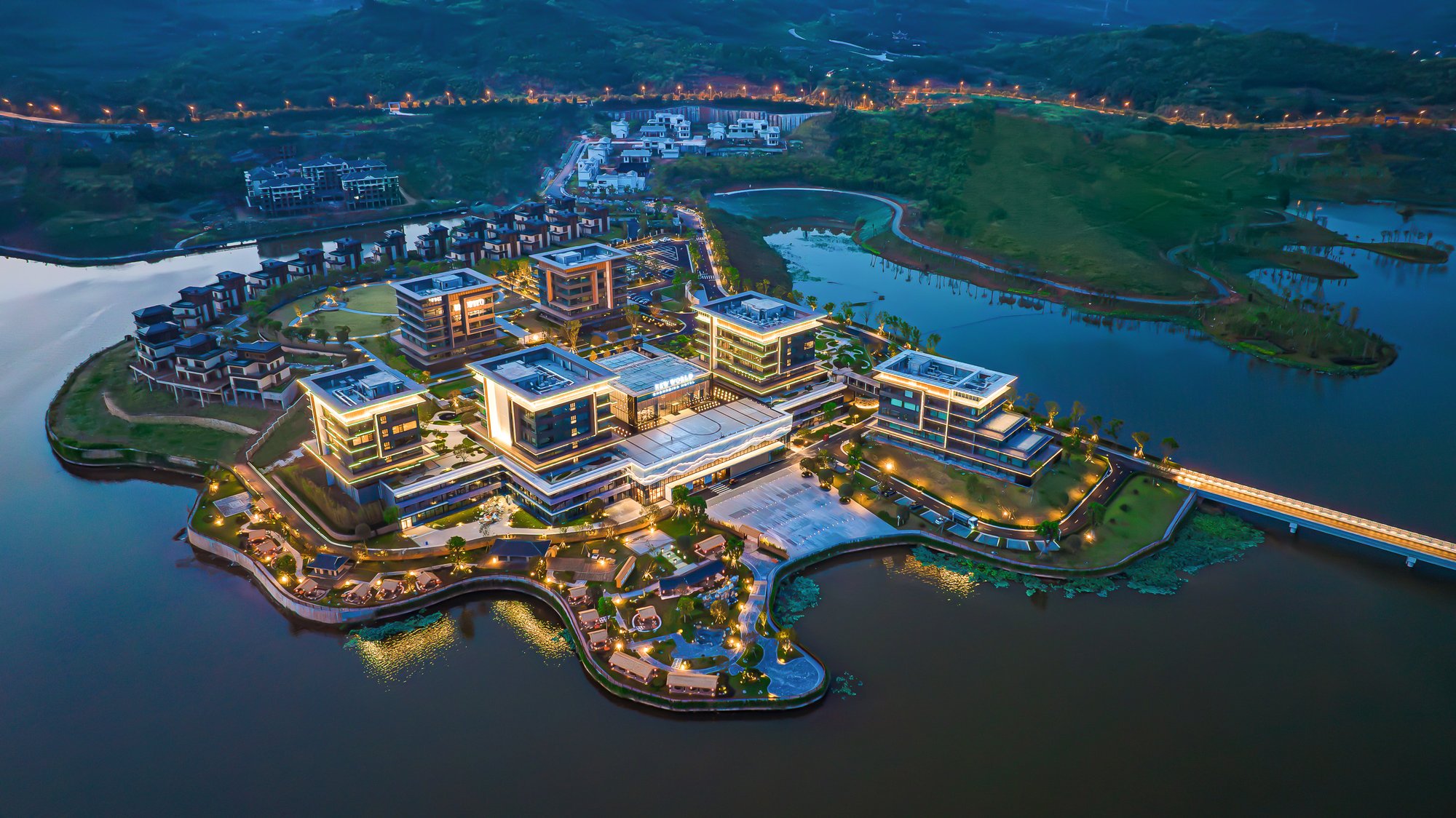
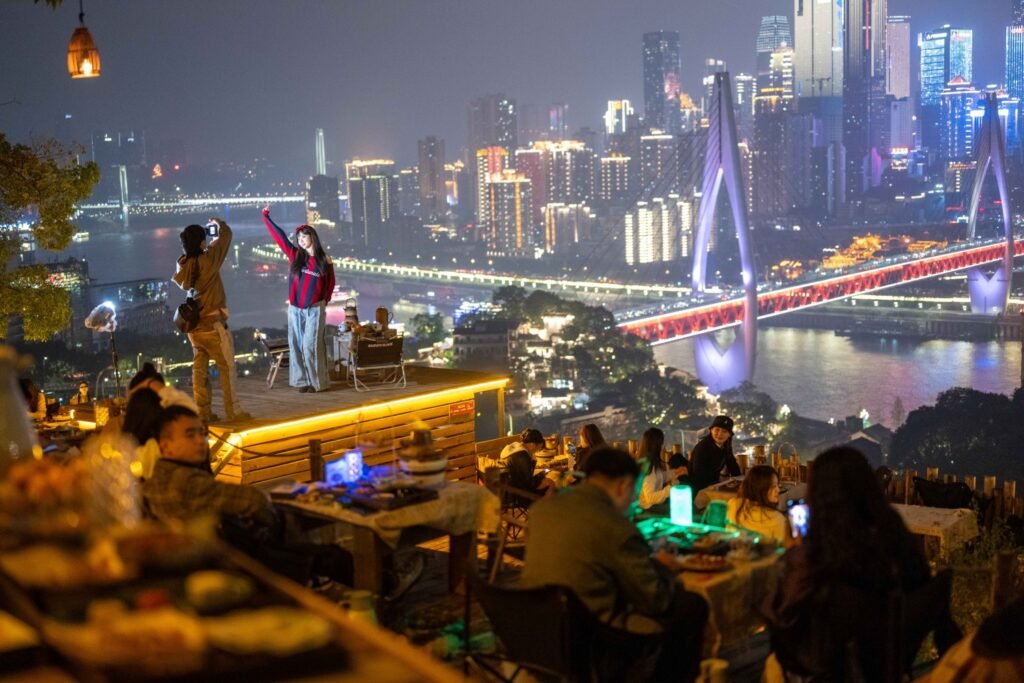
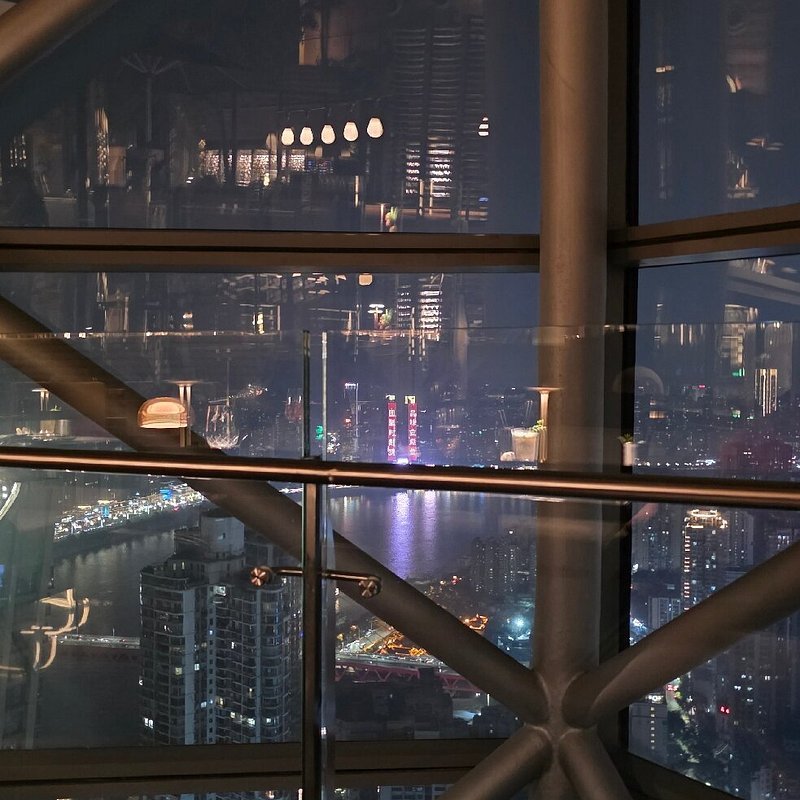
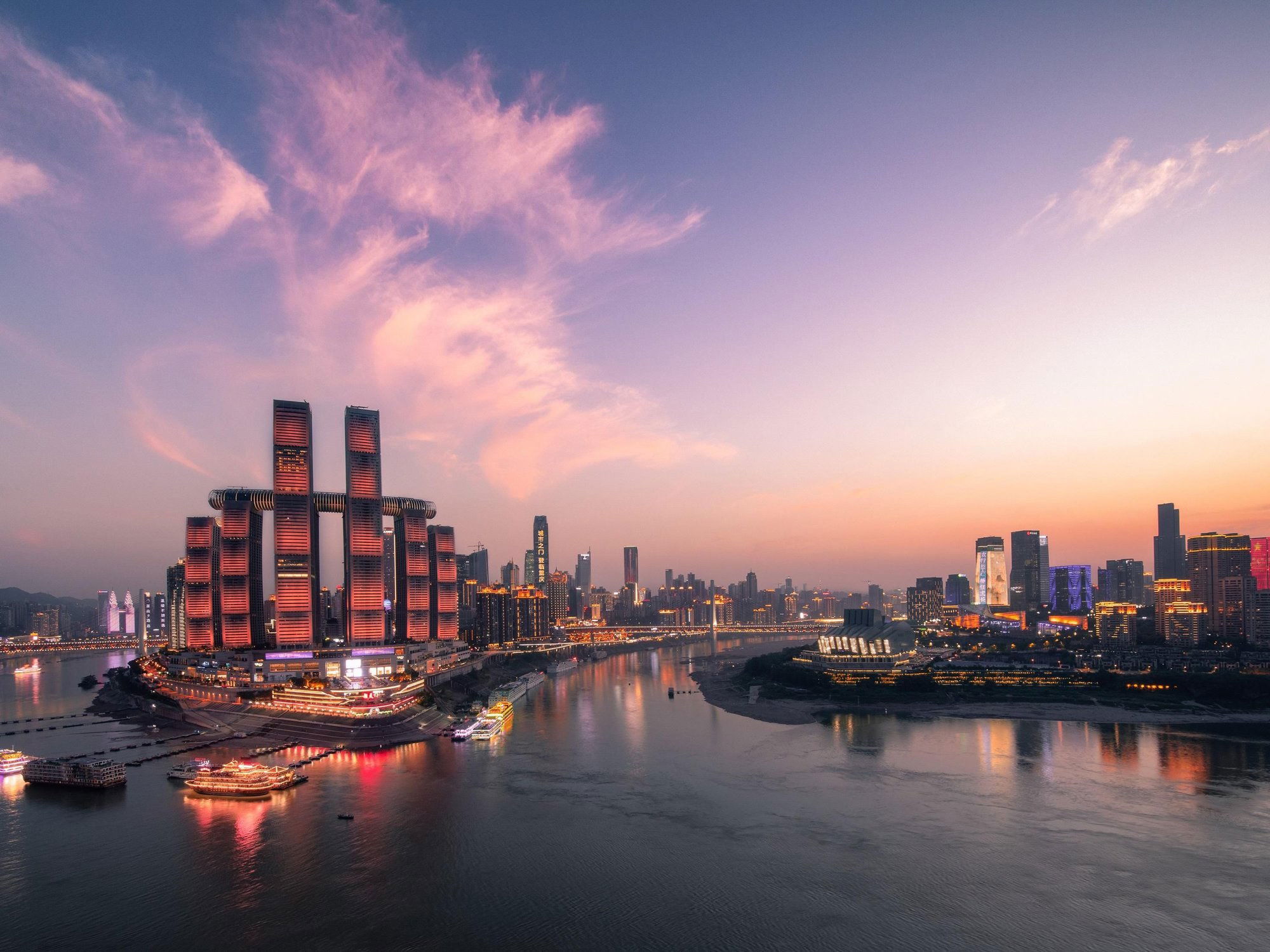
InterContinental Chongqing Raffles City reads like a piece of city-making: a hotel integrated into the Crystal, a curved glass sky bridge that elevates both arrival and dining into a spectacle. The property leverages Chongqing’s dramatic topography—towers that breach the cloud line, fog in the valleys and a perch above the confluence of two rivers—to make the view central to the experience. Interiors and food-and-beverage outlets are staged within that glass ribbon, so stays feel simultaneously architectural and cinematic. Guests encounter a high-design, landmark setting where panorama and building form are as much the point as the service.
Best For
This hotel is best for travelers who prize dramatic views and architecture as part of their stay. Because the lobby, restaurants and bars unfold inside the suspended Crystal, the property suits guests who want a self-contained dining programme paired with sweeping vistas of the Yuzhong peninsula and river confluence. It also works well for business travelers and couples who need a convenient base within a mixed-use complex but expect elevated design and memorable outlooks. The location and sky-bridge reception make the hotel particularly appealing for anyone seeking a visually striking Chongqing experience.
Venue details
Ambiance
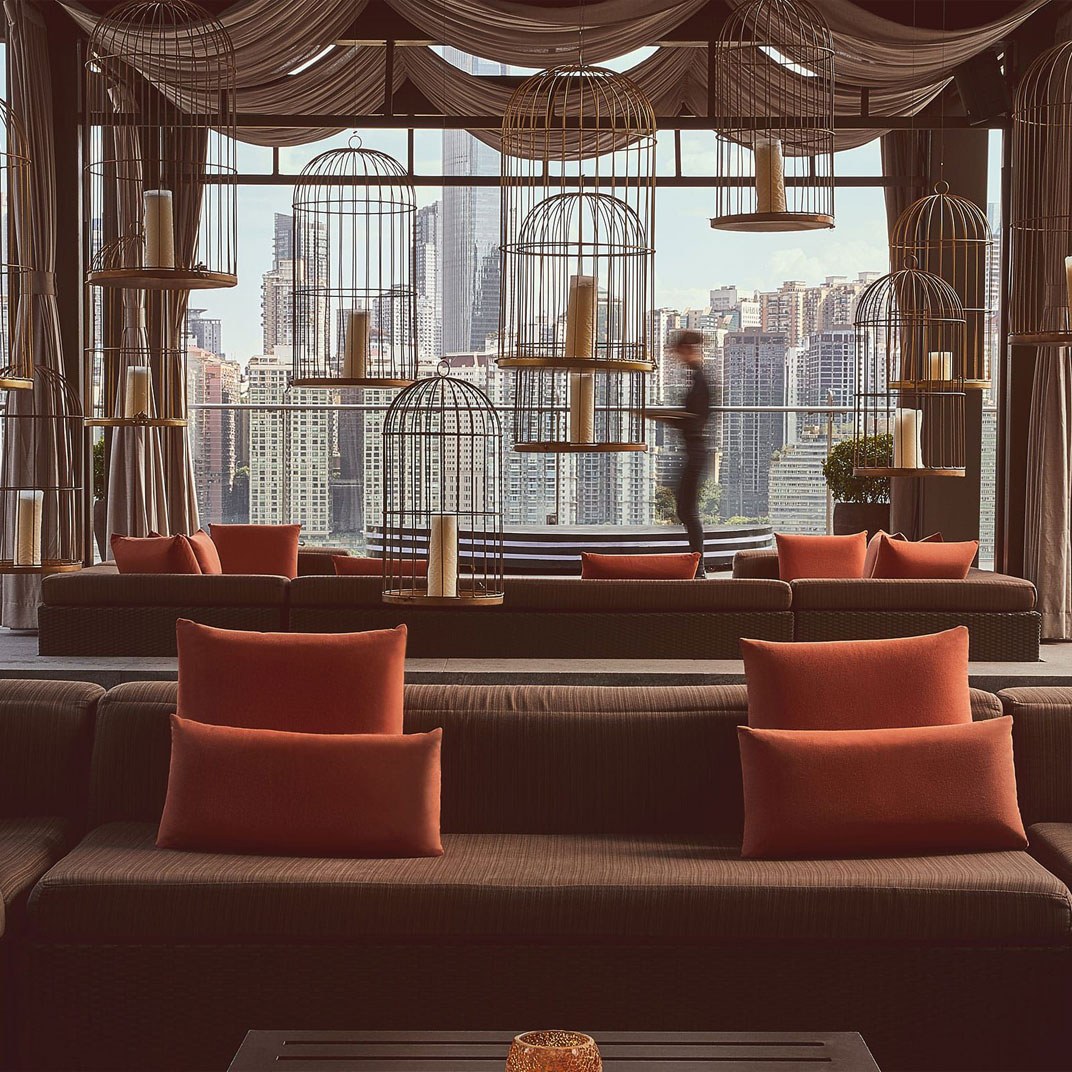
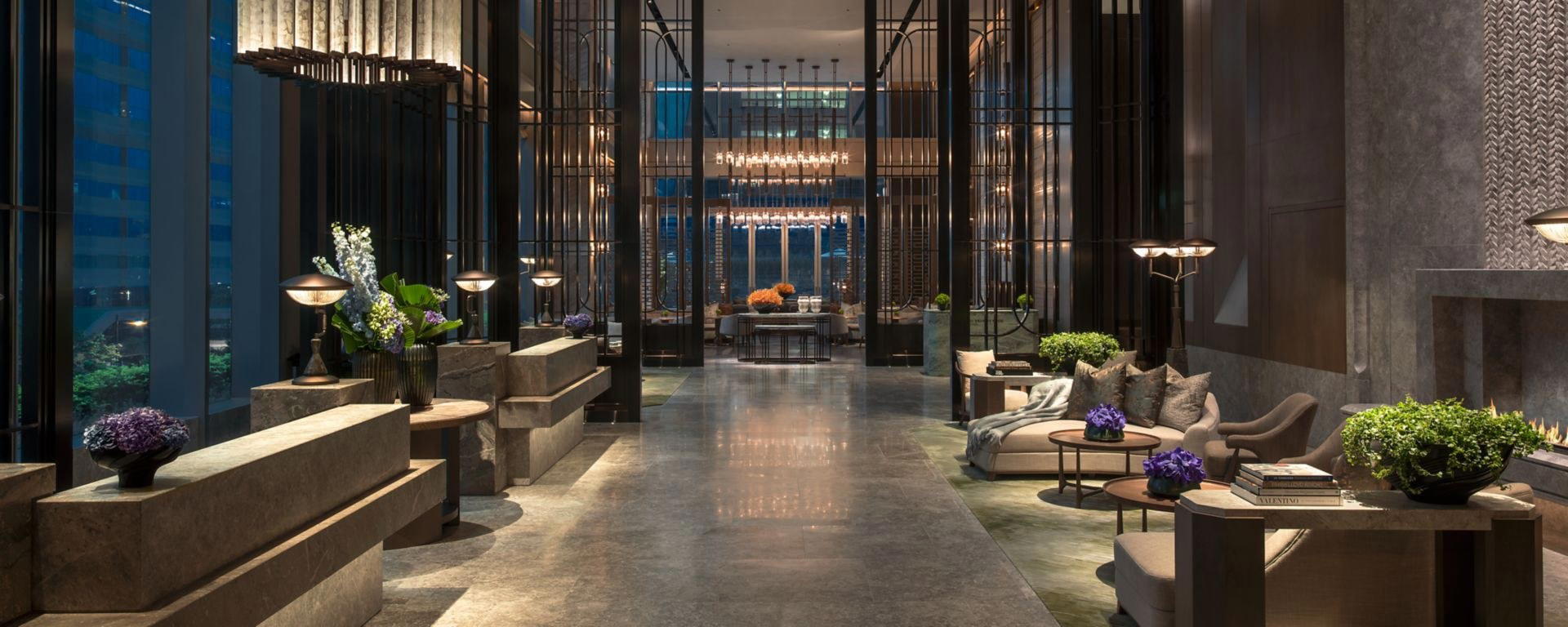
Bright and modern subtropical forest-inspired lobby with fresh flowers, elegant nautical aesthetics blending streamline features and Chinese motifs, offering stunning city and river vistas.
Tags
Vibe
Best For
Experience
Amenities
View
Accessibility
About the Stay
- Rooms
- 380
- Check-in
- 15:00
- Check-out
- 12:00
- Property Style
- Iconic Horizontal Skyscraper with Skybridge Lobby at 250m Height
- Design Style
- Contemporary Nautical Aesthetics with Chinese Motifs and Streamline Features
- Airport Transfer
- Available
- Pool
- Yes
- Spa
- Yes
- Families
- Welcome
Know before you go
Know Before You Go
- Getting there
- NO, 2 长江滨江路渝中区400010
Planning details
Location
NO, 2 长江滨江路渝中区400010 · Directions
ihg.com/intercontinental/hotels/us/en/chongqing/chghb/hoteldetail
Recognition and awards
Also consider
Also Consider
- Pushine Jinfoshan Resort, Notable alternative
- Banyan Tree Chongqing Beibei, Notable alternative
- InterContinental Century City Chengdu, Notable alternative
- InterContinental Chengdu Global Center, Notable alternative
- Chengdu Expo Waterfall - MGallery, Notable alternative
Hotel context
How it compares in Chongqing and nearby Chengdu
Choose InterContinental Chongqing Raffles City over Pushine Jinfoshan Resort if the trip is city-first. The InterContinental is the stronger business and short-stay choice because the Yuzhong address reduces transit drag; Pushine makes more sense when the goal is a slower resort stay outside the center.
Banyan Tree Chongqing Beibei is the better cross-shop for travelers who want a quieter, retreat-led mood and do not need to be in central Chongqing every day. InterContinental Chongqing Raffles City is the more practical pick for meetings, dining plans, and first-time city logistics, especially when booking difficulty makes early room-category selection important.
Against the Chengdu peers, InterContinental Century City Chengdu, InterContinental Chengdu Global Center, and Chengdu Expo Waterfall - MGallery, the decision is city-driven rather than brand-driven. Stay in Chongqing if the itinerary is built around Chongqing; choose the Chengdu options only when the meetings, flights, or dining plans are there. For value, compare the room benefit you are actually getting, not just the flag on the building.
Explore Chongqing
Around this place
Discover more on Pearl
Unlock the full InterContinental Chongqing Raffles City guide in Pearl, including awards, comparisons, FAQs, planning details, and nearby places.
Compare InterContinental Chongqing Raffles City
| Venue | Location | Awards |
|---|---|---|
| InterContinental Chongqing Raffles City | Chongqing | 2026 Michelin 1 KeyMichelin 1 Key 20252025 Michelin 1 Key |
| Pushine Jinfoshan Resort | Chongqing | Leading Hotels of the World 2026 |
| Banyan Tree Chongqing Beibei | Chongqing | 2026 Michelin 1 Key2025 Michelin 1 Key |
| InterContinental Century City Chengdu | Chengdu | No published awards |
| InterContinental Chengdu Global Center | Chengdu | No published awards |
| Chengdu Expo Waterfall - MGallery | Chengdu | No published awards |


How InterContinental Chongqing Raffles City compares with similar nearby venues.
FAQ
Frequently Asked Questions
Is InterContinental Chongqing Raffles City family-friendly?
Specific family facilities or services should be checked directly with the hotel. It is a Chongqing hotel with a Michelin 1 Key in 2025, but families should check room configurations, amenities, and child-related policies before booking. Banyan Tree Chongqing Beibei is another Chongqing option to compare.
When is the best time to book InterContinental Chongqing Raffles City?
If your dates are fixed, confirm availability and room-category details directly with the hotel. The Michelin 1 Key (2025) makes it a notable Chongqing hotel to consider, but booking windows and rate patterns should be checked for your travel dates. Pushine Jinfoshan Resort is another option to compare.
Is InterContinental Chongqing Raffles City good for business travel?
For business travel, evaluate meeting spaces, work amenities, and transport considerations directly with the property. The hotel is in Chongqing and has a Michelin 1 Key for 2025. Compared with Banyan Tree Chongqing Beibei, it should be evaluated on current official details rather than assumptions.