
Hotel in Carry-le-Rouet, France
Bleu Hôtel \u0026 Spa
175ptsCôte Bleue Coastal Retreat

About Bleu Hôtel \u0026 Spa
Carry-le-Rouet sits at the quieter western edge of the Côte Bleue, where limestone calanques meet the Mediterranean without the crowds of Cassis or Marseille's tourist circuit. Bleu Hôtel & Spa holds a Michelin Selected distinction for 2025, placing it among a tier of French coastal properties where design coherence and setting specificity matter as much as headline amenities. For travellers positioning along the Provençal coast, it reads as a considered alternative to the larger resort formats further east.
The Côte Bleue Register: Where Bleu Hôtel & Spa Sits
The stretch of coastline between Marseille and Martigues operates on a different register from the Riviera corridor. Here, the calanques are limestone rather than glamour, the fishing ports are still functional, and the village of Carry-le-Rouet draws a largely French clientele who know the Côte Bleue as something distinct from the Côte d'Azur. Properties in this zone face a particular editorial question: are they retreat hotels that use the coast as backdrop, or are they genuinely integrated into the character of the place? Bleu Hôtel & Spa, addressed at 1 Boulevard des Moulins, positions itself at the edge of that question.
The hotel earned a Michelin Selected distinction in the 2025 guide, which places it in a curated tier below Michelin's starred hotel designations but meaningfully above the unvetted mass of coastal accommodation. Michelin Selected status, across the French coastal category, tends to correlate with properties that demonstrate design or service coherence rather than sheer scale. In a town of Carry-le-Rouet's size, that signal carries weight: it confirms the property against an international editorial standard rather than relying on local reputation alone.
Design Logic on the Provençal Coast
Coastal hotel design in Provence has split into roughly two camps over the past decade. One group leans into maximalist Riviera vernacular: terracotta, wrought iron, grand staircases, the visual grammar of the grand hotel tradition that properties like Le Negresco in Nice or Hôtel du Palais in Biarritz represent at their most complete. The other group, increasingly influential, works with restraint: local materials, a palette drawn from the immediate landscape, and spaces that frame views rather than compete with them. The name Bleu Hôtel & Spa gestures toward the latter orientation, aligning itself chromatically with sea and sky rather than with the ochre-and-terracotta vocabulary of inland Provence.
The Côte Bleue's own colour palette reinforces this. The limestone cliffs carry a blue-grey cast in morning light, the Mediterranean reads almost cobalt in summer, and the pine scrub on the headlands softens the transitions. A hotel that works with this rather than against it makes a specific architectural argument: that the setting is the primary amenity, and that the building's job is to make that setting legible from as many vantage points as possible. Properties like La Réserve Ramatuelle further east along the coast, or Casadelmar in Porto-Vecchio, have demonstrated that this restraint-led approach can command serious positioning even without the grand hotel heritage. Bleu Hôtel & Spa operates in that same conceptual territory, at a more accessible scale.
The Spa Proposition in the Côte Bleue Context
Spa integration has become a meaningful differentiator among mid-to-upper tier French coastal hotels. The market has moved past the basic thalassotherapy model that defined seaside wellness in the 1990s and early 2000s, toward more considered programs that connect treatments to local ingredients, water sources, or traditions. The Côte Bleue has a legitimate claim to thalassotherapy heritage, given the quality of the Mediterranean water in this less-industrialised stretch between Marseille and the Étang de Berre. A hotel that names the spa as part of its core proposition, as Bleu Hôtel & Spa does in its title itself, is making a commitment to that amenity as structural rather than supplementary. For context, properties like Royal Champagne Hotel & Spa in Champillon and Hôtel Chais Monnet & Spa in Cognac have shown how effectively a spa can define a hotel's competitive identity when placed at the centre of the offer rather than appended to it.
Carry-le-Rouet as a Base: The Practical Geography
Carry-le-Rouet sits approximately 30 kilometres west of Marseille by road, accessible via the A55 autoroute or the slower D5 coastal route, which passes through Sausset-les-Pins and the calanque villages. The town itself is small: a working port with a weekly market, a handful of restaurants oriented toward seafood and the bouillabaisse tradition of the wider Marseillais coastline, and walking access to protected coastal paths. The Côte Bleue marine park, established in 1983, governs the offshore zone and limits certain fishing and anchoring activities, which has preserved the underwater environment to a degree unusual this close to a major urban port. For a hotel guest, this translates to a coast that feels measurably less pressured than the stretches around Cassis or the Calanques National Park access points further east.
Marseille's infrastructure makes Carry-le-Rouet more accessible than its village scale might suggest. Marseille-Provence Airport handles direct flights from most major European hubs, and the rail connection from Marseille Saint-Charles reaches nearby Carry-le-Rouet station on the regional Côte Bleue line, a 45-minute journey that itself runs along the coastal cliff edge. Day-trip access to Marseille's MuCEM, the Vieux-Port, and the Panier quarter is direct, which means the hotel functions as a quieter residential base for guests who want city access without city-centre noise. Browse our full Carry-le-Rouet restaurants guide for the broader dining context around the town.
Positioning Among French Coastal Hotels
The French luxury coastal hotel market stratifies sharply. At the headline tier sit properties like Hotel Du Cap-Eden-Roc in Cap d'Antibes, The Maybourne Riviera in Roquebrune-Cap-Martin, and Château de la Chèvre d'Or in Èze, all of which combine Riviera prestige, commanding views, and multi-generation reputations. Below that, a larger cohort of Michelin-vetted properties occupies the space where design quality and setting access justify serious consideration without the headline price structures of the grand Riviera names. Bleu Hôtel & Spa operates in this middle register, where the Michelin Selected credential functions as the primary external quality signal. Inland Provence comparisons are also useful: Villa La Coste and Château de la Gaude in Aix-en-Provence represent the design-led Provençal property model applied to vineyard and garrigue settings; Bleu Hôtel & Spa applies comparable logic to the coastline further south. Other regional reference points include Hôtel & Spa du Castellet in Le Castellet and Baumanière Les Baux-de-Provence in Les Baux, both of which demonstrate how Provence-region properties build reputations on setting specificity as much as on amenity lists. For those comparing across broader French regions, La Bastide de Gordes, Domaine Les Crayères in Reims, and Les Sources de Caudalie in Bordeaux offer useful benchmarks for what Michelin-endorsed French hotel experiences look like outside the coastal Provençal context. For those considering further afield, Le Bristol Paris sets the standard for the Michelin palace tier, while properties like La Ferme Saint-Siméon in Honfleur and Château du Grand-Lucé illustrate how the Michelin Selected tier functions across different French regional contexts.
Planning Your Stay
Summer on the Côte Bleue runs hot and dry from late June through early September, with sea temperatures reaching their warmest in August. The shoulder months of May, June, and September offer the combination of stable weather and reduced visitor volume that typically suits travellers who prioritise the coast without the peak-season density. The Michelin Selected designation applies to the 2025 guide cycle. Direct booking through the property at 1 Boulevard des Moulins, Carry-le-Rouet is the standard approach, though specific booking methods are not confirmed in our current data. For those building a broader French itinerary, the hotel pairs logically with time in Marseille, the Camargue to the west, or the Alpilles and Luberon inland.
Frequently Asked Questions
What should I expect atmosphere-wise at Bleu Hôtel & Spa?
The atmosphere at Bleu Hôtel & Spa reflects the particular character of the Côte Bleue rather than the grander, more performance-oriented tone of the main Riviera circuit. Carry-le-Rouet is a working fishing port with a year-round French clientele, which sets a quieter register than Saint-Tropez or Cannes. The Michelin Selected distinction for 2025 indicates a property that meets a defined quality threshold in design or service, but the dominant atmosphere will be shaped by the coastal setting and the town's unhurried pace. Guests who come for spectacle may find the scale modest; those who come for access to the Côte Bleue marine environment and a credentialled base on a less-trafficked stretch of the Provençal coast will find it well-calibrated to that purpose.
Which room offers the leading experience at Bleu Hôtel & Spa?
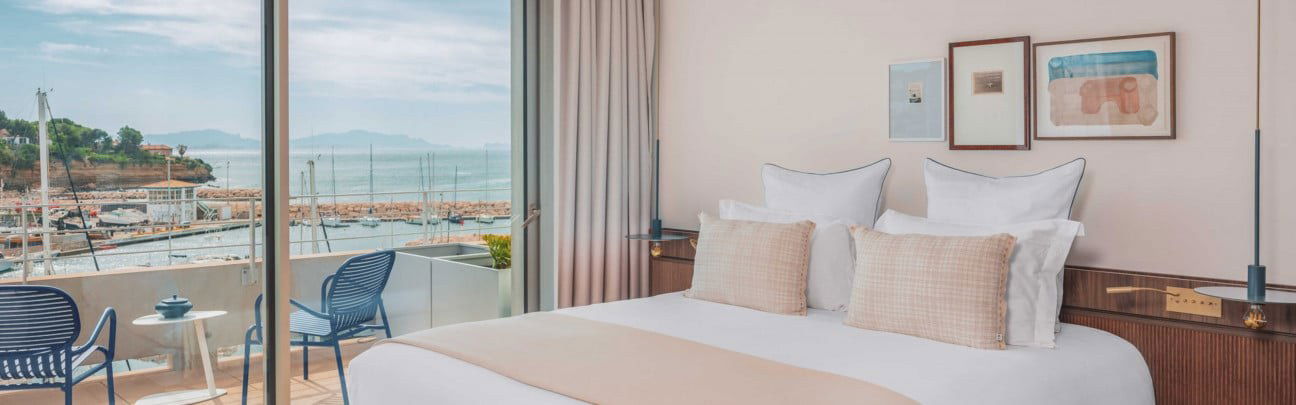
Room-specific data is not available in our current records. As a general principle at coastal Provençal properties of this type, rooms with direct sea orientation or terrace access to the waterfront tend to justify any premium over courtyard or road-facing options, particularly given the quality of light on the Côte Bleue in morning hours. The Michelin Selected designation speaks to the property's overall standard, but room-by-room guidance should be confirmed directly with the hotel at the time of booking.
Why do people go to Bleu Hôtel & Spa?
The combination of Michelin Selected status, a coastal location on the less-visited Côte Bleue, proximity to Marseille, and an integrated spa offer positions the hotel for a specific type of traveller: one who wants a vetted French coastal experience without the price and crowd structure of the main Riviera destinations. Carry-le-Rouet itself draws visitors interested in the calanques, the marine park, and the Provençal fishing-port tradition. The hotel provides a quality-assured base for that access, with the spa component adding a wellness dimension that suits guests planning multi-night stays.
Recognized By

Related editorial
- Asia's 50 Best Restaurants 2026: The Chairman and Wing Go 1-2 from the Same BuildingThe Chairman takes No. 1 and Wing climbs to No. 2 at Asia's 50 Best Restaurants 2026. Both operate from the same Hong Kong building. Here's what it means.
- Four Seasons Yachts Debut: 95 Suites, 11 Restaurants, and a March 2026 Maiden VoyageFour Seasons I launches March 20, 2026, with 95 suites, a one-to-one staff ratio, and 11 onboard restaurants. Worth tracking if you want hotel-grade service at sea.
- LA Michelin Guide 2026: Seven New Restaurants from Tlayudas to Uzbek DumplingsMichelin's March 2026 California Guide update adds six LA restaurants and one Montecito newcomer, spanning Oaxacan tlayudas, Uzbek manti, and Korean-Italian pasta.
Save or rate Bleu Hôtel \u0026 Spa on Pearl
Keep this venue in your Pearl passport, rate it after you visit, and track it alongside every other place you collect.