
Hotel in Assignan, France
Château \u0026 Village Castigno
200ptsVillage-Scale Estate Hospitality

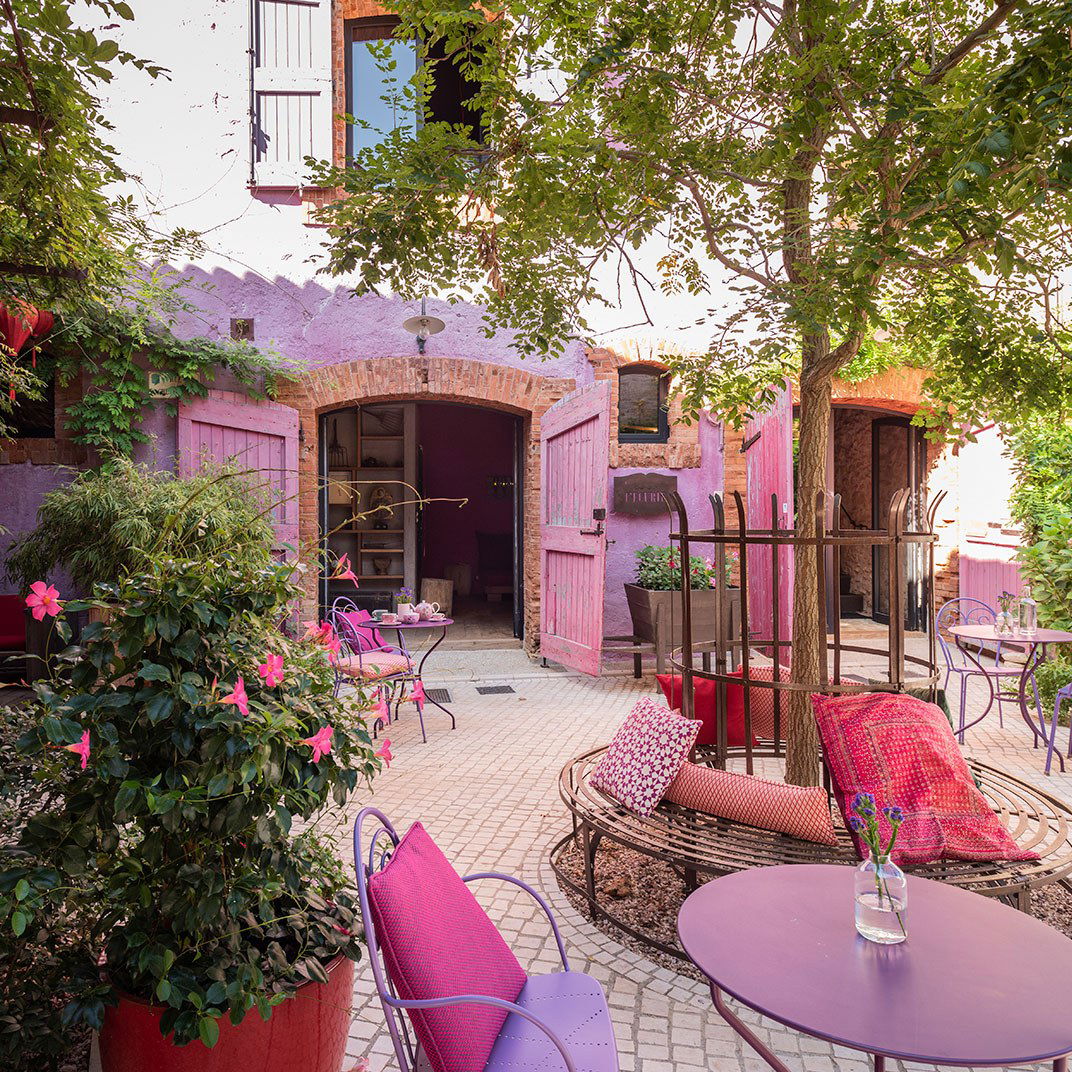
About Château \u0026 Village Castigno
A One Michelin Key property in the medieval village of Assignan, deep in the Saint-Chinian appellation of the Languedoc, Château & Village Castigno occupies a restored estate where the architecture reads as the primary experience. The surrounding vineyards and stone buildings place it firmly in the wine-country retreat category, at a remove from the Riviera circuit and closer in spirit to Provence's quieter estate hotels.
Stone, Silence, and the Saint-Chinian Hills
There is a category of French property that earns its reputation not through a city address or a famous neighbouring coastline, but through the quality of its physical intervention in a specific rural place. Château & Village Castigno, at 9 avenue de Saint-Chinian in the village of Assignan, belongs to that category. The Hérault département sits in the lower half of the Languedoc arc, where the garrigue scrubland gives way to vine-covered hillsides and the pace of daily life has not been recalibrated for tourism. Arriving in Assignan — a commune of fewer than 300 inhabitants — clarifies immediately that this is not a property built on proximity to an airport or a beach. The draw is the place itself.
Michelin awarded Castigno one Key in its 2025 hotels guide, placing it among a selective cohort of French properties recognised for the quality of their built environment and guest experience rather than for restaurant distinction alone. That designation carries weight in the Saint-Chinian wine country, where the hospitality infrastructure thins out quickly beyond Béziers. For context on the broader French hotel field holding Michelin Keys, properties such as Le Bristol Paris and Hotel Du Cap-Eden-Roc anchor the upper end of that recognition system; Castigno operates in a different register, closer to the design-led rural estate model than to grand urban palace hotels.
An Entire Village as the Architectural Unit
The most distinctive characteristic of properties in this format is the scale of the physical project: rather than a single château building with outbuildings converted to ancillary use, Castigno takes the village itself as the architectural unit. The intervention involved the restoration of multiple stone structures within Assignan, creating accommodation distributed across what reads as a coherent settlement rather than a discrete resort compound. This approach aligns with a strand of French rural hospitality that treats the village fabric as both the amenity and the product, a model that distinguishes it from the single-building château hotel format represented by properties like La Bastide de Gordes in Provence or Château du Grand-Lucé in the Loire.
The stone construction vocabulary of the Languedoc, low-slung buildings in pale limestone and darker schist depending on the subsoil, gives the village a visual coherence that larger, purpose-built resort developments cannot replicate. The terroir-driven aesthetic here is not metaphorical: the same geology that defines the Saint-Chinian appellation's wines , its mix of schist and limestone soils , surfaces in the building materials and walls of the village itself. Design decisions that read as atmospheric are, in this context, also geological statements.
Approach places Castigno in a niche peer set within French wine-country hotels. Les Sources de Caudalie near Bordeaux and Royal Champagne Hotel & Spa in Champagne both occupy vineyard settings where the property's relationship to a specific wine culture forms the core of the guest proposition. At Castigno, that relationship is to the Saint-Chinian appellation, one of the Languedoc's more structured AOCs, known for reds built on grenache, syrah, and mourvèdre with significant variation depending on whether the vines sit on schist or limestone terrain. See our full Assignan restaurants and hotels guide for additional context on the area's dining and wine scene.
Estate, Vineyard, and What the Setting Delivers
Languedoc's hospitality identity has traditionally been underserved relative to its wine production scale. The region generates more wine by volume than any other in France, yet its hotel infrastructure has lagged behind Burgundy, Bordeaux, and the Rhône Valley in attracting the kind of estate-led, design-conscious properties that wine tourism now demands. Castigno fills a gap in that geography: a property where the vine-to-cellar relationship is embedded in the stay rather than offered as an excursion. For comparison, Villa La Coste in the Aix-en-Provence wine country positions art and architecture as co-equals to viticulture; Castigno's emphasis appears to sit closer to the wine estate itself, with the village fabric as its built expression.
Properties at this tier in remote wine regions attract a specific traveller profile: those who book well ahead, travel independently rather than through large tour operators, and treat the property as the primary destination rather than a base for regional sightseeing. The practical logistics reinforce this: Assignan lies approximately 30 kilometres northwest of Béziers, which has a TGV-connected station with links to Montpellier and Barcelona. The drive from Béziers to the village takes under 40 minutes, and from Montpellier airport the transfer is around an hour. This is not a property you drift into casually; the location requires commitment, and the visit is structured accordingly.
For guests travelling between multiple wine-country properties across the south of France, Castigno fits logically into a circuit that might also include Hôtel & Spa du Castellet near Bandol, La Réserve Ramatuelle on the Saint-Tropez peninsula, or Baumanière Les Baux-de-Provence further east. The tone shifts considerably across those stops: from Riviera-adjacent luxury toward something more agricultural, more austere in the leading sense, as you move into the Languedoc interior.
Planning Your Stay
Castigno's location in the Hérault means the warmest window for visiting runs from late April through October, with July and August bringing heat that concentrates outdoor activity in the morning and evening hours. The surrounding Saint-Chinian wine route is accessible by car, with domaines ranging from small family producers to larger AOC-certified estates. The village address , 9 avenue de Saint-Chinian , places it at the northern edge of Assignan, within walking distance of the village core. Booking is leading approached directly through the property; the size of the operation and the Michelin Key recognition mean that peak-season availability narrows quickly, particularly for longer stays. The full Castigno listing on EP Club provides updated availability and booking details.
Travellers who find the rural Languedoc format too remote but want comparable wine-estate integration elsewhere in France might consider Domaine Les Crayères in Reims for Champagne-country context, or Hôtel Chais Monnet & Spa in Cognac for a converted production-facility format. For those travelling further afield, The Maybourne Riviera and Château de la Chèvre d'Or in Èze represent the Riviera's upper tier. Beyond France, Badrutt's Palace Hotel in St. Moritz and Hôtel de Paris Monte-Carlo anchor the broader European luxury hotel conversation, though they operate in a different register entirely from a restored Languedoc village estate.
Frequently Asked Questions
- What's the vibe at Château & Village Castigno?
- The property sits in the medieval village of Assignan in the Saint-Chinian wine appellation of the Languedoc, roughly 30 kilometres northwest of Béziers. The atmosphere is rural and wine-estate-focused rather than resort-driven: stone architecture, vineyard surroundings, and a pace calibrated to the agricultural rhythms of the region. The Michelin One Key recognition in 2025 signals a standard of hospitality experience that sits above the generic chambres d'hôtes circuit, without adopting the scale or amenity density of a large hotel group property.
- What's the leading suite at Château & Village Castigno?
- Specific suite names and configurations are not publicly detailed in available data at time of publication. The property's village format, with accommodation distributed across restored stone structures, suggests that the premium rooms are likely those with the most direct relationship to the château building or with the leading orientation over the vineyards. Contacting the property directly will give the clearest picture of current room grades and availability, particularly for multi-night bookings during the peak summer season.
- What's Château & Village Castigno leading at?
- The property's Michelin One Key status and its distinctive whole-village restoration format indicate that its strongest attribute is architectural and experiential coherence: a stay that places guests inside a working wine-country village rather than adjacent to one. For travellers whose priority is wine-territory immersion in the Languedoc, particularly the Saint-Chinian appellation, Castigno occupies a position with few direct regional competitors at this standard of recognition.
Recognized By

Related editorial
- Asia's 50 Best Restaurants 2026: The Chairman and Wing Go 1-2 from the Same BuildingThe Chairman takes No. 1 and Wing climbs to No. 2 at Asia's 50 Best Restaurants 2026. Both operate from the same Hong Kong building. Here's what it means.
- Four Seasons Yachts Debut: 95 Suites, 11 Restaurants, and a March 2026 Maiden VoyageFour Seasons I launches March 20, 2026, with 95 suites, a one-to-one staff ratio, and 11 onboard restaurants. Worth tracking if you want hotel-grade service at sea.
- LA Michelin Guide 2026: Seven New Restaurants from Tlayudas to Uzbek DumplingsMichelin's March 2026 California Guide update adds six LA restaurants and one Montecito newcomer, spanning Oaxacan tlayudas, Uzbek manti, and Korean-Italian pasta.
Save or rate Château \u0026 Village Castigno on Pearl
Keep this venue in your Pearl passport, rate it after you visit, and track it alongside every other place you collect.