

ESPACIO The Hakone Geihinkan Rin-Poh-Ki-Ryu
Miyanoshita, Ashigarashimo-Gun
Hotel in Ashigarashimo-Gun, Japan
 Book with Pearl
The Read
Cable-Car Arrival Ryokan
Why go
Book ESPACIO The Hakone Geihinkan Rin-Poh-Ki-Ryu for a controlled Hakone retreat, not a convenience-first work trip. Its Michelin 1 Key and Leading Hotels of the World recognition make it a serious luxury choice, but the hard booking profile means first-timers should plan early and compare it carefully with Gora Kadan, Hakone Gora Karaku, and Hotel Indigo Hakone Gora.
About ESPACIO The Hakone Geihinkan Rin-Poh-Ki-Ryu
ESPACIO The Hakone Geihinkan Rin-Poh-Ki-Ryu is a luxury hotel in Ashigarashimo-Gun with two recognition points: a Michelin 1 Key in 2025 and Leading Hotels of the World membership in 2025. Those are meaningful external signals for travelers who want some independently visible context before shortlisting a stay. Beyond this recognition, public-facing specifics such as room inventory, dining format, service style, pricing, and detailed location should be confirmed directly with the property before booking, especially if those details will shape the success of the trip.
For travelers comparing premium stays in the area, ESPACIO The Hakone Geihinkan Rin-Poh-Ki-Ryu is a high-end Ashigarashimo-Gun option with hotel recognition, rather than a property defined by claims about amenities, dining, or room categories. That distinction matters: recognition can help place the hotel in a luxury set, but it should not be treated as a substitute for current, property-specific information.
Choose it for hotel recognition
The clearest reason to consider ESPACIO The Hakone Geihinkan Rin-Poh-Ki-Ryu is its recognition: Michelin 1 Key in 2025 and Leading Hotels of the World membership in 2025. Taken together, those signals support its positioning as a premium hotel and make it a natural candidate for travelers building a refined Ashigarashimo-Gun itinerary. However, this recognition does not speak to specific claims about cuisine, views, room count, services, or on-property programming. Travelers should check these details directly with the property.
Before committing, confirm the practical details that matter for your stay directly with the venue, including current availability, rates, dining arrangements, and any service needs. This is particularly important for travelers with firm expectations around the shape of the stay. For a broader scan before committing, use our full Ashigarashimo-Gun hotels guide; if the trip is food-led instead, start with our full Ashigarashimo-Gun restaurants guide.
Planning details
- Location
- 72 Miyanoshita, Hakone, Ashigarashimo District, Kanagawa 250-0404
- Website
- houoh.jp
- Phone
- +81 460-87-9200
The take
The Take
The Vibe
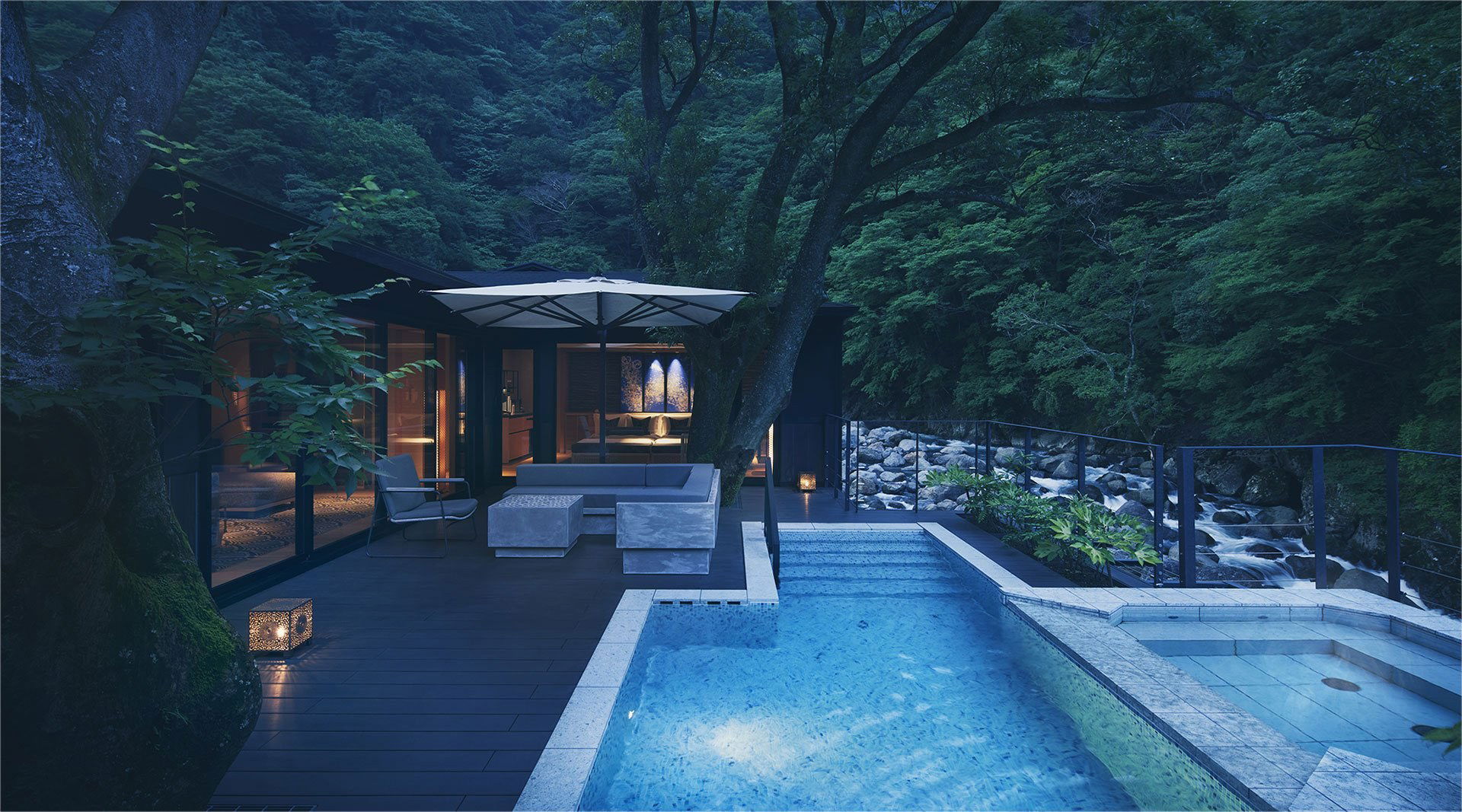
ESPACIO The Hakone Geihinkan Rin-Poh-Ki-Ryu reads as a deliberately quiet, tradition-forward retreat. The descent by cable car through cedar and bamboo functions as a designed transition from the everyday to a secluded valley-floor environment. With just nine villas, the property prioritizes material integrity and craft—kumiko woodwork and lacquer are invoked as core elements—rather than scale or amenity breadth. The tone is considered and composed: the onsen tradition is treated as architecture, and spaces are arranged to emphasize seclusion and the cultural references that define this kind of specialist ryokan experience.
Best For
This property is best for couples and travelers seeking seclusion and an architecturally minded onsen experience—honeymooners, anniversary celebrants, and those on romantic getaways will find its intimate nine-villa format well matched to private, ceremonial stays. It also suits guests pursuing a restorative wellness retreat who value quiet, traditional craft and an immersive mountain-valley setting. Because the property is positioned against a small peer set of specialist ryokan and villa properties, it works for travelers who prioritize cultural integrity and material detail over broad resort programming.
Stay Tips
Rooms are extremely limited—there are only nine villas—so book well in advance, especially for weekend stays from Tokyo or peak travel dates. Note the descent to the valley by cable car; access is part of the arrival experience and may affect luggage/arrival logistics. The property sits at a luxury price point (the description cites $2,685 per night), so expect a highly curated, low-capacity offering rather than extensive public facilities. Compare availability and dates with nearby specialist ryokan mentioned in the brief if flexible timing is possible.
Venue details
Ambiance
Tranquil and serene atmosphere surrounded by nature, with soundproofed rooms, murmuring river sounds, and mystical Ghibli-esque tranquility featuring traditional Japanese materials like kumiko wood and lacquer.
Tags
Vibe
Best For
Experience
Amenities
View
Accessibility
About the Stay
- Rooms
- 9
- Check-in
- 15:00
- Check-out
- 11:00
- Property Style
- Exclusive Private Villa Retreat with Artist Crafted Interiors and 700 Year Old Hot Springs.
- Design Style
- Modern Japanese with Traditional Craftsmanship, Kumiko Wood, Plasterwork, and Mythical Deity Motifs.
Know before you go
Know Before You Go
- Getting there
- 72 Miyanoshita, Hakone, Ashigarashimo District, Kanagawa 250-0404
Planning details
Location
72 Miyanoshita, Hakone, Ashigarashimo District, Kanagawa 250-0404 · Directions
Recognition and awards

Also consider
If this is unavailable, try Gora Kadan for a more established ryokan-style luxury stay, or Hotel Indigo Hakone Gora if the trip needs easier logistics and a more familiar hotel setup.
Hotel context
ESPACIO The Hakone Geihinkan Rin-Poh-Ki-Ryu is the splurge-leaning choice in this Hakone set, especially for travelers who want a quieter, more controlled stay and are willing to deal with harder booking. Gora Kadan is the cleaner cross-shop if the priority is classic ryokan atmosphere with a known luxury profile, while Hakone Gora Karaku is easier to justify for travelers who want a polished resort feel without making the whole trip revolve around the property.
For value and simplicity, Hotel Indigo Hakone Gora is the safer move, particularly for business travelers who want fewer formalities and a more familiar hotel rhythm. Hakone Kowakien Tenyu fits travelers who want a larger resort-style stay, while Nazuna Hakone Miyanoshita is the better comparison for a smaller, more intimate Hakone trip.
The practical verdict: choose ESPACIO The Hakone Geihinkan Rin-Poh-Ki-Ryu when scarcity, privacy, and a high-end retreat matter more than flexible logistics. Choose Hotel Indigo Hakone Gora for the easier work-trip base, Gora Kadan for traditional ryokan appeal, and Hakone Gora Karaku when the group wants resort comfort with less booking friction.
Explore Ashigarashimo-Gun
Around this place
Discover more on Pearl
Unlock the full ESPACIO The Hakone Geihinkan Rin-Poh-Ki-Ryu guide in Pearl, including awards, comparisons, FAQs, planning details, and nearby places.
Compare ESPACIO The Hakone Geihinkan Rin-Poh-Ki-Ryu
| Venue | Location | Awards |
|---|---|---|
| ESPACIO The Hakone Geihinkan Rin-Poh-Ki-Ryu | Ashigarashimo-Gun | Leading Hotels of the World 20262025 Michelin 1 KeyMichelin 1 Key 2025 |
| Nazuna Hakone Miyanoshita | Hakone | No published awards |
| Gora Kadan | Hakone | 2026 Relais Chateaux Hotels2026 La Liste Top Hotels2025 Relais Chateaux AwardMichelin 3 Keys 20252025 Michelin 3 Keys2024 Michelin 3 Keys |
| Hakone Gora Karaku | Hakone | 2025 Michelin 1 Key2024 Michelin 1 Key |
| Hotel Indigo Hakone Gora | Hakonemachi, Ashigarashimo Gun | No published awards |
| Hakone Kowakien Tenyu | Hakonemachi, Ashigarashimo Gun | No published awards |



How ESPACIO The Hakone Geihinkan Rin-Poh-Ki-Ryu compares with similar nearby venues.
FAQ
Frequently Asked Questions
Is ESPACIO The Hakone Geihinkan Rin-Poh-Ki-Ryu family-friendly?
Information on family suitability is not detailed here. The property is in Ashigarashimo-Gun and has Michelin 1 Key recognition for 2025, plus Leading Hotels of the World membership for 2025. Families should confirm room setup, child policies, and services directly with the property. Hakone Kowakien Tenyu is another nearby option to compare.
Which room category is best at ESPACIO The Hakone Geihinkan Rin-Poh-Ki-Ryu?
Room-category details are not provided, so there is no basis for naming a best room type. Ask the property directly about current room categories, layout, views, occupancy, and availability before choosing. For travelers who want to compare a different hotel style, Hotel Indigo Hakone Gora is another option to review.
How does ESPACIO The Hakone Geihinkan Rin-Poh-Ki-Ryu compare to nearby hotels?
ESPACIO The Hakone Geihinkan Rin-Poh-Ki-Ryu has Michelin 1 Key recognition in 2025 and Leading Hotels of the World membership in 2025. This recognition serves as a key comparison point. Travelers may also compare it with Gora Kadan, Hakone Gora Karaku, Hakone Kowakien Tenyu, Hotel Indigo Hakone Gora, and Nazuna Hakone Miyanoshita depending on their priorities.
Is ESPACIO The Hakone Geihinkan Rin-Poh-Ki-Ryu good for business travel?
Information on business-travel suitability is not detailed here. Key details include its Ashigarashimo-Gun location, Michelin 1 Key recognition in 2025, and Leading Hotels of the World membership in 2025. Confirm work-related needs such as desk setup, connectivity, meeting support, and transport directly with the property. Hotel Indigo Hakone Gora is another option to compare.