Den,1 located in the JIA building in Jingumae, Shibuya-ku, is one of the harder bookings in Japan, not because the system is opaque, but because demand from both domestic diners and international visitors consistently outpaces what a room that size can absorb. The restaurant does not publish a fixed reservation-release window. Contact them early, be flexible on dates, and treat any specific drop-time advice you read online as unverified.
Why Den's Seats Are So Contested
Den holds two Michelin stars and has appeared on Asia's 50 Best Restaurants list, which means it draws a global audience competing for a room whose seat count the restaurant does not publish. Confirm capacity directly with the venue. The kitchen sits outside the strict formality of traditional kaiseki: the food is playful, seasonal, and Japanese in its bones, but the tone is warm and the room is not stiff. That combination of critical credibility and accessible atmosphere is rare enough that the restaurant attracts both serious food travelers and Tokyo regulars, compressing demand into a very small physical space.
The restaurant's profile has grown steadily since its Jingumae opening, and international press coverage has made it a fixture on Tokyo restaurant shortlists. The room hasn't grown, but the audience has.
When Den Takes Reservations, and What the Restaurant Does Not Publish
Den does not publish a standardized reservation-release schedule in the way that a Tock-based restaurant might open a booking window at a fixed time. Reservations open eight weeks in advance and are taken only by phone. The restaurant does not accept online reservations or reservations from third parties.1 Phone lines are open 12:00 to 17:00 Monday through Saturday1 at +81-3-6455-5433.2
The specific advice you'll find on food forums, "email three months out," "they open on the first of the month", is anecdotal and should not be treated as policy. The restaurant does not publish a fixed release time beyond the two-month phone booking window; confirm the current process directly with the venue before planning around any specific timing.
The Best Channels for Booking Den, Ranked
Direct phone call (the primary route).Reservations are accepted only by telephone; no online booking platforms, agencies, or intermediaries are recognized.2 Call during the published phone hours with your preferred dates, party size, and flexibility range. Note that reservations are only accepted for parties of up to four people.2A reservation is only confirmed when the diner receives a confirmation email from the restaurant,2 do not treat a verbal agreement as a confirmed booking.
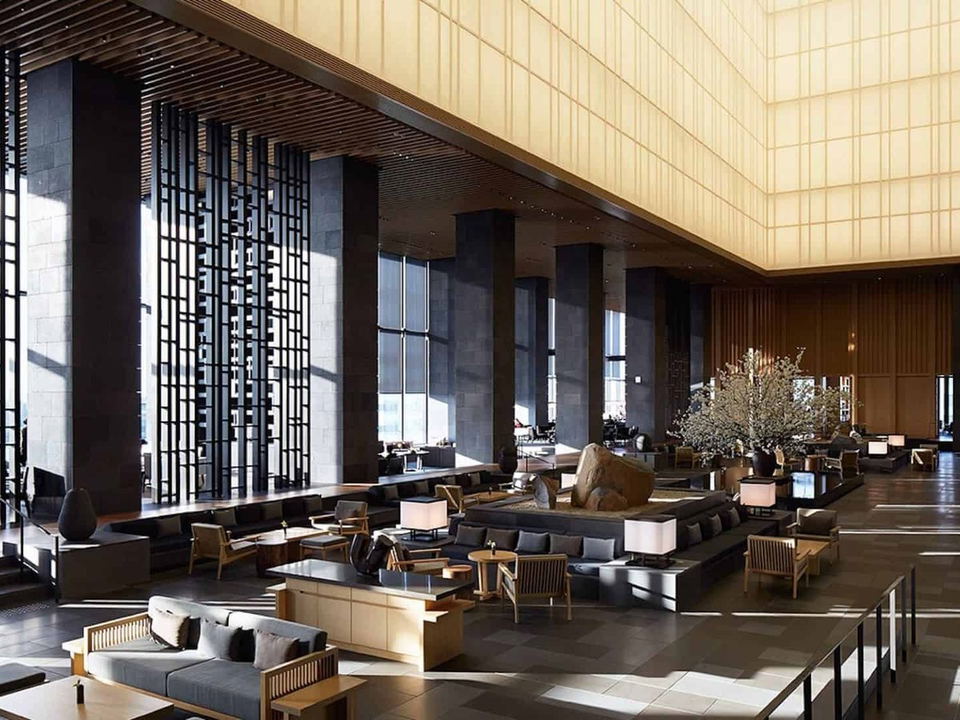
Concierge at a Tokyo luxury hotel. If you're staying at a property with a strong concierge desk, The Peninsula Tokyo, Aman Tokyo, or the Park Hyatt, the concierge team will have an existing relationship with Den's reservations contact. This is the practical tradeoff: you pay a premium for the hotel stay, but the concierge route often yields a confirmed table faster than a cold call, particularly for short-notice travel. For guests already booking a high-end Tokyo hotel, this is the path of least resistance.
Specialist travel agents and dining concierge services. Services that focus on Japan restaurant access maintain relationships with Den and can secure reservations as part of a broader Tokyo itinerary. This adds cost (fees vary by service and are not published in any verified source consulted here), but it is a realistic option for travelers who want the table confirmed before flights are booked.
Walk-in. Den is not a walk-in restaurant in any practical sense. Arriving without a reservation is not a strategy worth building a trip around.
Cost Breakdown: What You Pay at Each Step
The tasting menu starts from $110.3 Confirm the current menu price directly with the restaurant when you call, it is standard practice for Den to communicate pricing at the time of booking.
If you route through a luxury hotel concierge, the incremental cost is absorbed into your hotel rate rather than charged separately. Specialist dining concierge services charge fees that vary and are not published in any verified source consulted here, ask for a fee disclosure before engaging.
On cancellations: same-day cancellations or reductions in party size are charged the full prix-fixe price.2Cancellations or reservation changes must be made no later than two days before the reservation date; for Monday reservations, changes must be called in by Saturday.2
Inside Den: The Counter, the Pacing, and What the Kitchen Actually Serves
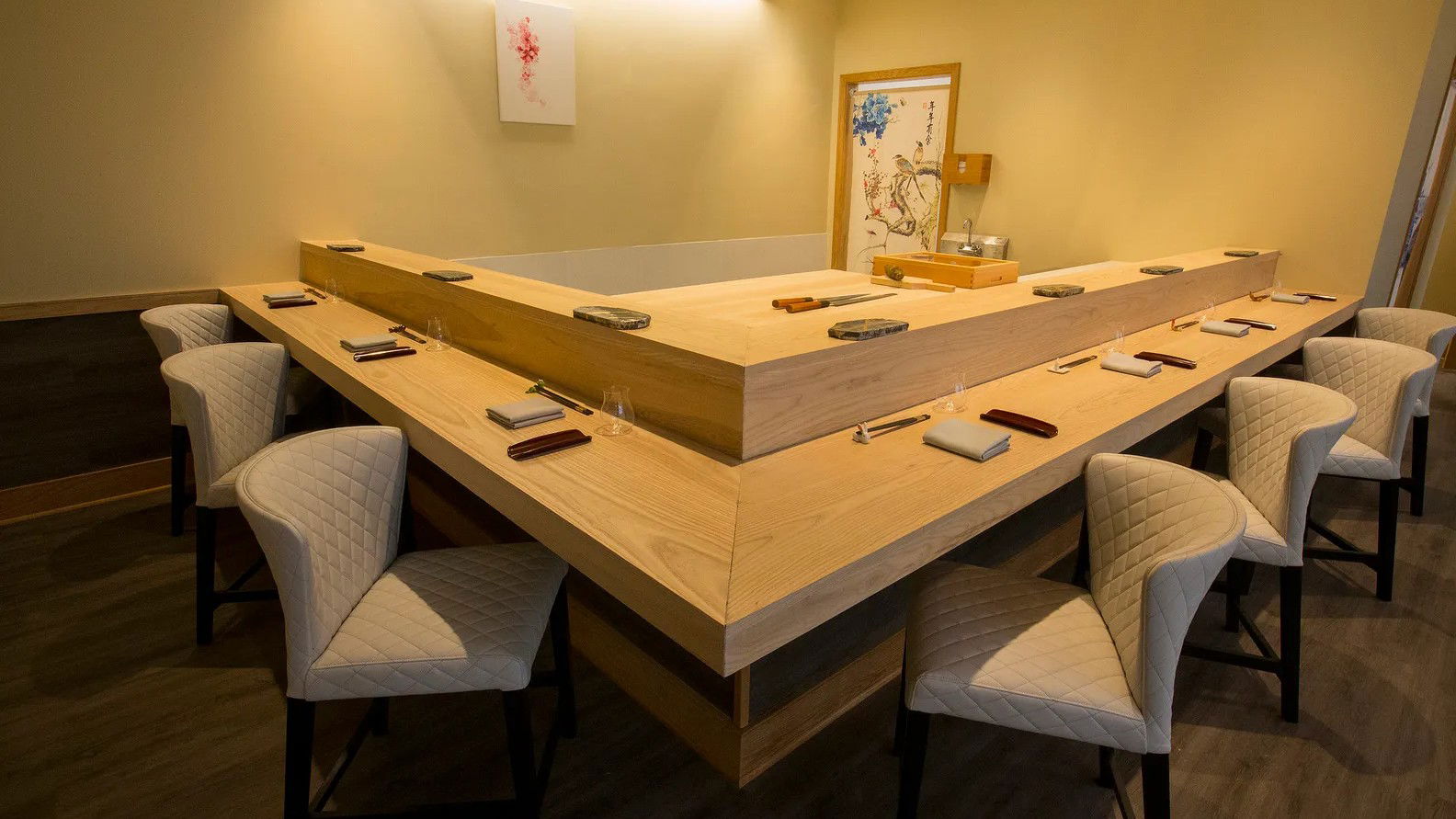
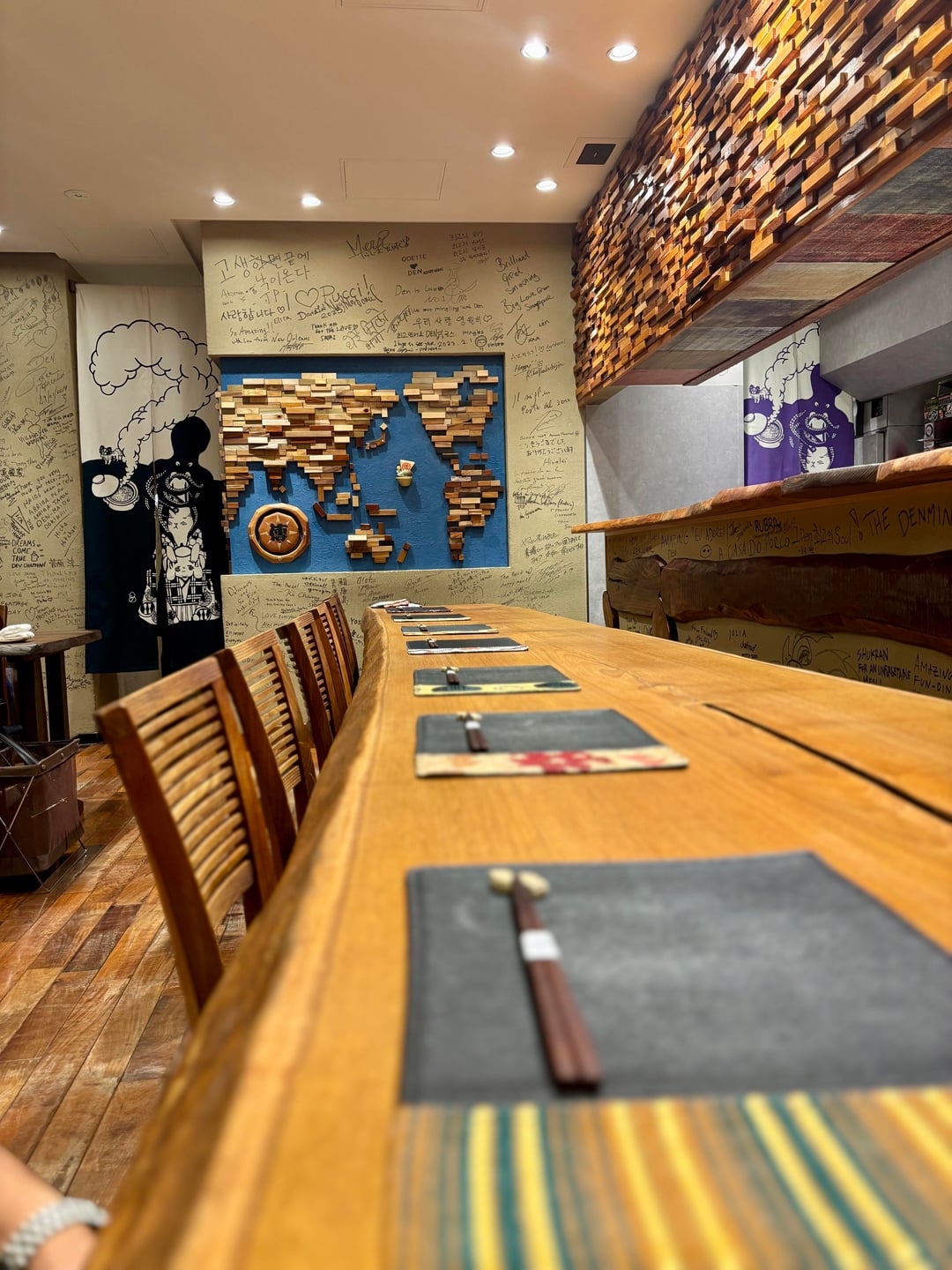
Den's dining room is small and deliberately informal by the standards of Tokyo's top-tier restaurants. The atmosphere is closer to a lively neighborhood restaurant than to the hushed reverence of a traditional kaiseki house. The kitchen is known for being present and engaged with the room, this is not a kitchen that stays invisible behind a pass.
The food is seasonal Japanese cooking with a sense of humor. Den is known for dishes that subvert kaiseki conventions: the "Dentucky Fried Chicken", a piece of fried chicken stuffed with glutinous rice, has become one of the most photographed dishes in Tokyo, arriving in a miniature takeout box. The menu changes with the seasons, and the format is a set tasting course rather than à la carte. The restaurant does not publish meal duration; confirm pacing expectations when you book.
The wine and sake list is serious without being encyclopedic. The room is not formal about dress, though most guests arrive in smart casual. The experience is closer to Florilège or Sézanne in register, technically accomplished, internationally aware, and not interested in making you feel like you're in a museum, than to the strict formality of a traditional kaiseki counter like Kichisen or Mizai.
For international visitors, the language barrier is minimal. With reservations booking two months in advance, the team starts working on preparations from the first phone call,4 the omotenashi approach means the kitchen is already thinking about your visit before you arrive. The menu is typically available in English at the table.
Strategy: How to Improve Your Odds at Den
Call early and be specific about flexibility. Offering several date options across a two-week window is easier for the restaurant to accommodate than a single fixed date. If you have a hard travel itinerary, say so, the restaurant can sometimes work around constraints if you're transparent about them. Reservations can be made up to two months in advance,2 so that is the earliest you can call.
Use your hotel concierge as a first call, not a fallback. If you're staying at a Tokyo property with a serious concierge desk, contact them before you call the restaurant directly. Concierge relationships with high-demand restaurants are built on volume and trust; a concierge request often moves faster than a cold inquiry from an unknown caller.
Den is open for dinner Monday through Saturday3 and closed on Sundays.1 Lunch seatings at high-demand Tokyo restaurants are consistently easier to book than dinner. If your goal is to eat this kitchen's food, lunch is a legitimate and often underused route.
Check cancellation availability closer to your dates. Cancellations do open up in the weeks before a date, the restaurant does not publish a specific cancellation window, but asking to be notified and following up as your travel dates approach is a practical tactic.
The time-vs-money tradeoff, plainly stated: the patient route is calling two months out, which costs nothing beyond the meal itself. The faster route is a luxury hotel concierge or specialist dining fixer, which costs the premium of the hotel stay or a service fee but compresses the uncertainty. For a trip where Den is the anchor reservation, the faster route is worth the premium.
Den vs. Comparable Tokyo Tasting Counters: Access and Format
| Restaurant | Booking Difficulty | Booking Channel | Tasting Menu From | Formality | Michelin Stars |
|---|---|---|---|---|---|
| Den | High | Phone only (no online, no third parties) | From $1103 | Relaxed | 2 |
| Florilège | High | Direct / concierge | N/A | Relaxed-modern | 2 |
| Sézanne Very high Direct / Four Seasons concierge N/A Polished 3 | |||||
| Sazenka | Very high | Introduction / concierge | N/A | Formal | 3 |
| Harutaka High Direct / concierge N/A Formal 3 |
Note: star counts and booking channels for comparator venues are drawn from publicly reported figures and should be confirmed with each venue, as they are subject to change.
Realistic Alternatives If Den Is Fully Booked
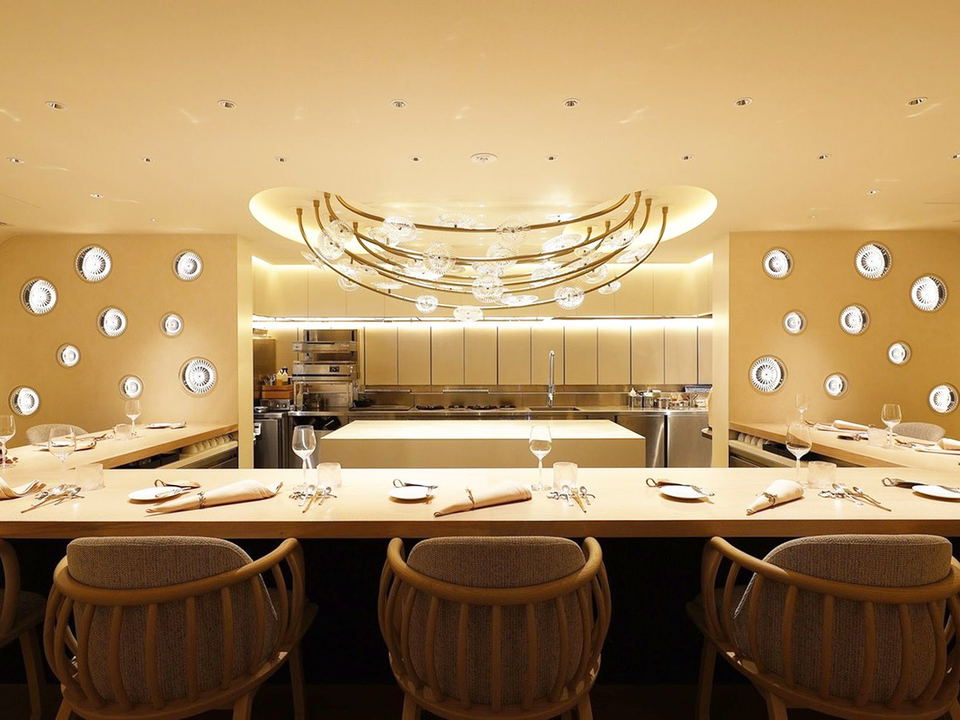
Florilège (Minami-Aoyama). The closest peer to Den in register: two Michelin stars, a playful approach to French-Japanese cooking, a room that doesn't take itself too seriously. Booking difficulty is comparable, but the concierge route works here too. If Den is the target and Florilège is the fallback, you're not settling.
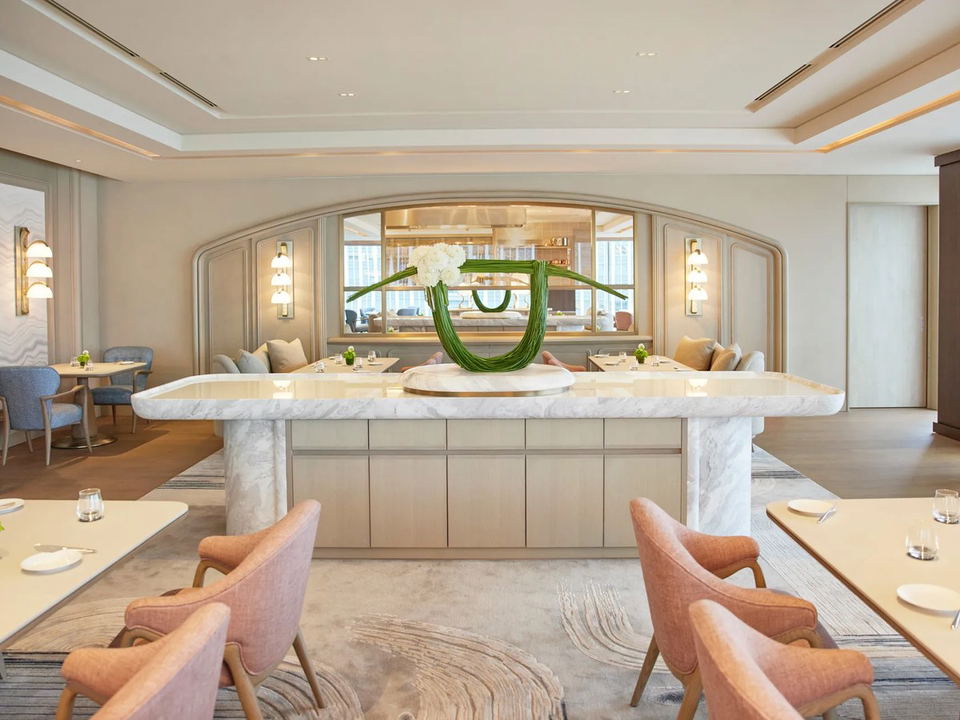
Sézanne (Four Seasons Marunouchi). The three-star French counter inside the Four Seasons is easier to access if you're a hotel guest or booking through the Four Seasons concierge network. The tone is more polished than Den, the food is technically precise, and the room is smaller. Better for a formal occasion; less suited to the playful-dinner energy Den delivers.
Harutaka (Ginza). A three-Michelin-star sushi counter in Ginza that scratches a different itch, omakase sushi rather than kaiseki-adjacent tasting, but it operates in the same tier of Tokyo dining and is bookable through similar channels. Worth considering if your interest is in the quality of the meal rather than specifically in this kitchen's style.
Lunch at Den itself. Worth restating as a standalone alternative: if dinner is unavailable, ask specifically about lunch availability. The room, the kitchen, and the approach are the same.
Who Should Chase This Reservation, and Who Should Skip It
Den is the right call for food travelers who want a technically serious Tokyo meal without the formality of a traditional kaiseki house. If you follow the World's 50 Best, track Michelin announcements in Asia, and want to eat food that is genuinely playful rather than reverential, this is a high-priority booking. It is also well-suited to mixed groups where not everyone is a dedicated food obsessive, the warm room and accessible tone make it easier for non-specialists than a strict kaiseki counter would be.
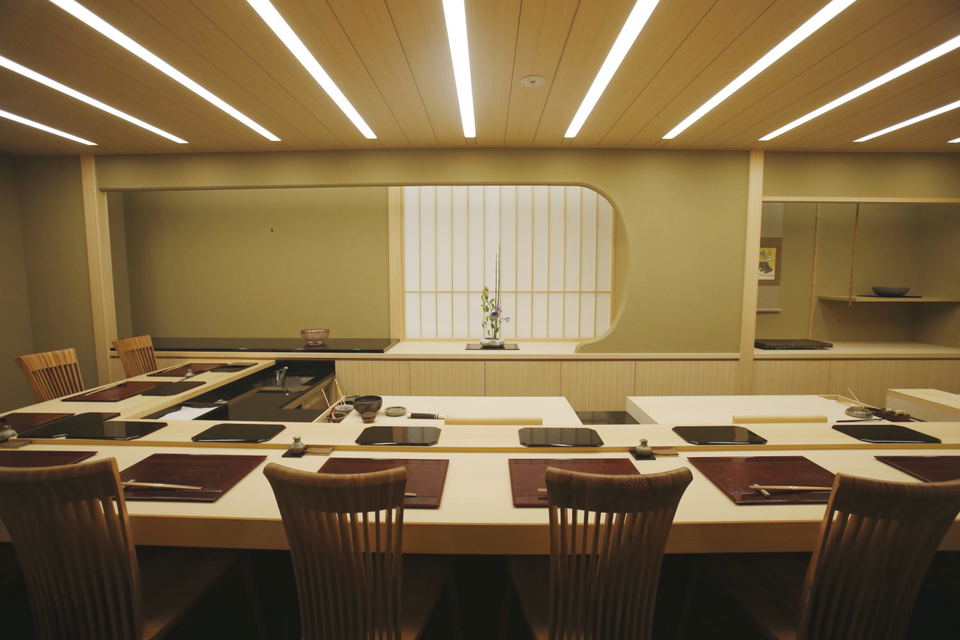
Skip the chase if your Tokyo trip is short and Den is a speculative add-on rather than a planned anchor. The booking effort is real, and if you're not willing to call two months out or engage a concierge, you will not get a table. It is also not the right choice if you specifically want the full traditional kaiseki experience, for that, Kichisen or Mizai are the appropriate targets, with the understanding that access there is considerably harder.
The Verdict: Is Den Worth the Booking Effort?
Yes, and the effort is lower than the restaurant's reputation suggests, provided you approach it correctly. Den is not a lottery-system booking or an invitation-only room. Reservations are accepted only by telephone, with no online platforms or intermediaries recognized,2 which means the access problem is real but solvable with lead time, a phone call during Tokyo business hours, and genuine flexibility on dates.
The meal itself delivers on the reputation. The kitchen is technically accomplished and genuinely fun, which is a combination that Tokyo's top tier does not always offer. Two Michelin stars and a consistent Asia's 50 Best presence are the credential signals, but the more useful signal is that the room is full of people who are clearly having a good time, not a common feature at this level.
The allocation of effort is simple: if Den is a priority, call at the two-month mark and use your hotel concierge as a parallel channel. If it's a secondary target, ask about lunch. The concierge route at a top Tokyo hotel is the single most reliable path for international visitors who want the table confirmed before they land. For most travelers, that is the right trade, the premium of a strong hotel stay buys certainty, and certainty is what makes a trip built around a restaurant reservation actually work. Den rewards the traveler who plans around it; the traveler who hopes to figure it out on arrival will find the room already full.
Frequently Asked Questions
How far in advance can I call Den to request a reservation?
Den accepts reservations up to two months in advance, and reservations are taken only over the phone. Traveler accounts suggest calling as early as that window allows for the best availability, but the restaurant does not publish a fixed release schedule beyond this. Contact the restaurant directly to ask about current availability.
Does Den accept reservations from international visitors who don't speak Japanese?
Yes. Den is accustomed to international guests and accepts English-language inquiries by phone. The team is experienced with non-Japanese-speaking diners, and the menu is typically available in English at the table.
Can you walk into Den without a reservation?
In practice, no. With consistent demand from both domestic and international diners, Den does not operate as a walk-in venue. Arriving without a reservation is not a reliable strategy and is not recommended as a primary plan.
Is Den's lunch service at the Jingumae location easier to book than dinner?
Lunch seatings at high-demand Tokyo restaurants are generally easier to secure than dinner, and Den is no exception by most accounts. If your dinner inquiry is unsuccessful, asking specifically about lunch availability is a practical and often underused alternative that puts you in the same room with the same kitchen.
What is the cancellation policy at Den, and is there a deposit?
Same-day cancellations or reductions in party size are charged the full prix-fixe price. Cancellations or changes must be made no later than two days before the reservation date; for Monday reservations, changes must be called in by Saturday. The restaurant does not publish a deposit structure in any verified source consulted here, confirm prepayment requirements directly when you book.