
Bar in Tokyo, Japan
Hainanese Chicken Rice Azabujuban Main Shop
100ptsSingaporean Poached Precision
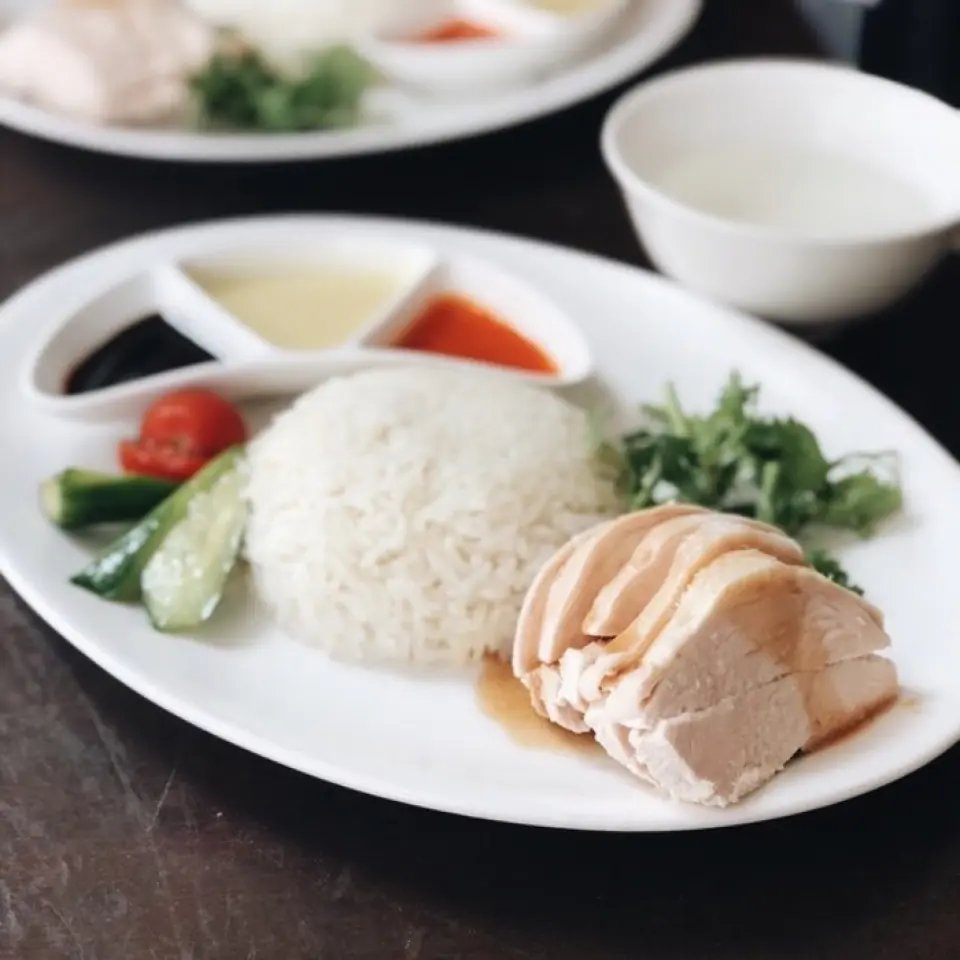
About Hainanese Chicken Rice Azabujuban Main Shop
A quietly serious outpost for Hainanese chicken rice in Azabujuban, occupying a ground-floor space behind the Chūgin Mansion in Minato's Roppongi district. The kitchen centres on a dish that Singapore and Malaysia have spent generations debating, transplanted to one of Tokyo's most internationally attuned neighbourhoods. Straightforward to miss, deliberate to seek out.
Southeast Asian Precision in a Tokyo Side Street
Azabujuban sits at an odd intersection in Tokyo's dining geography: it is residential enough to feel local, yet internationally porous in a way that Ginza or Shibuya rarely manages. Embassies and long-term expatriate communities have shaped its food scene for decades, which is why the neighbourhood produces pockets of Southeast Asian cooking that hold up to serious scrutiny. The Hainanese Chicken Rice Azabujuban Main Shop occupies a ground-floor unit tucked behind the Chūgin Mansion on Roppongi 6-chome — a location that rewards those who are already looking, rather than those passing through.
Hainanese chicken rice as a category occupies a particular position in the canon of Asian comfort food. It arrived in Singapore and Malaysia with Hainanese emigrants in the late nineteenth and early twentieth centuries, and the dish spent the following century being argued over: which fat is correct for cooking the rice, how the skin should sit against the flesh, which of the three condiments — chilli sauce, ginger paste, dark soy , should arrive at the table and in what proportions. In Tokyo, where precision is rarely treated as optional, the dish finds a sympathetic home. The city's long engagement with ramen and soba has built an audience that understands obsessive attention to a single ingredient as the entire point, not a limitation.
A Dish That Requires No Cocktail Programme to Justify Itself
The editorial assignment here asks for a frame built around drinks and bartender vision, and the honest answer is that a Hainanese chicken rice shop in Azabujuban is not playing that game. The drink at the table , whether tea, Singha, or a light lager suited to the clean, poached flavours of the chicken , is functional rather than conceptual. Tokyo's genuine cocktail architecture sits elsewhere: Bar Benfiddich works with homemade bitters and botanical distillates in Shinjuku; Bar High Five in Ginza operates within a classical Japanese bartending tradition that prizes temperature control and dilution above all else; Bar Orchard Ginza and Bar Libre each represent Tokyo's commitment to a serious, technically literate bar culture that has been recognised internationally for years.
That context matters here because it clarifies what the Azabujuban Main Shop is not competing for. The drink you order at a chicken rice counter is incidental. The technical focus goes into the bird and the rice , the temperature of the poaching liquid, the resting of the skin, the fat ratio in the grain. These are the equivalent concerns, just applied to a different craft tradition. Readers who want to combine a meal here with serious drinking are better served treating them as separate stops, not a single destination.
The Neighbourhood Context
Azabujuban station is served by both the Toei Ōedo Line and the Tokyo Metro Namboku Line, making it accessible from Roppongi, Shinjuku, and the central Marunouchi axis without much inconvenience. The main shopping street runs from the station toward the old neighbourhood shrine, lined with the mix of Japanese specialty shops and imported food stores that has defined the area for a generation. The Chūgin Mansion location places the restaurant slightly off that commercial strip, on a quieter block where the signage does not advertise itself aggressively. This is typical of Tokyo's more neighbourhood-rooted restaurants, where the address functions as a filter.
Japan's broader bar culture across the country , from Bar Nayuta in Osaka to Bee's Knees in Kyoto to Lamp Bar in Nara , tends to favour restraint and specificity over volume and variety. That same sensibility appears in the city's food culture. A shop that does one dish is not a concept, it is a practice. The Azabujuban Main Shop fits that pattern: a name that describes what it serves, a location that assumes you already know why you are coming.
Seasonal Considerations
Tokyo's humidity peaks between June and September, and those are, for obvious physiological reasons, also the months when a bowl of clean poached chicken over fragrant rice makes the most direct argument for itself. The dish is light enough to work in heat, savoury enough to satisfy, and accompanied by enough aromatics , ginger, sesame, the deep soy on the side , that it does not feel stripped down. Autumn, when the city cools sharply and neighbourhood restaurants fill with regulars who have returned from summer travel, is an equally well-timed visit. The area around Azabujuban sees noticeably less tourist traffic outside of the summer festival season near the shrine.
For international visitors building a Tokyo itinerary around food, our full Tokyo restaurants guide covers the city's dining register across price points and categories. Those travelling further afield to compare Japan's bar and casual dining culture will find relevant parallels at Yakoboku in Kumamoto, anchovy butter in Osaka, and Kyoto Tower Sando for reference points on how Japanese venues in this casual-to-specialist tier position themselves. Those travelling to the Pacific more broadly may find a useful comparison in the restrained precision of Bar Leather Apron in Honolulu, where a similar philosophy of doing one thing at a high standard defines the room.
Planning Your Visit
The address , 6 Chome-11-16 Roppongi, Minato City, ground floor behind Chūgin Mansion , is precise enough to navigate with a mapping application, but the building is not prominently signed from the main road. Arriving via the Namboku Line (Azabujuban Station, Exit 4) and walking toward Roppongi-dori places you within a short walk. No phone number or website is available in the public record, which suggests walk-in is the operative booking method. Hours and price range are not confirmed in available data; arriving during a standard lunch or early dinner window (noon to two, six to eight) reflects how most small Tokyo neighbourhood restaurants of this type operate, but verification on arrival is advisable. The seat count is not documented, and given the location in a residential building unit, the room is likely small enough that timing matters more than most visitors expect.
Frequently Asked Questions
- What should I drink at Hainanese Chicken Rice Azabujuban Main Shop?
- Hainanese chicken rice is a dish built around clean, precise flavours , poached chicken, fragrant rice cooked in stock, and a trio of dipping condiments. The drink pairing that holds up leading is something neutral and cold: a light lager, iced jasmine tea, or a simple Singha-style beer. Tokyo's serious cocktail programming lives at dedicated bars like Bar High Five and Bar Benfiddich , treat this stop as the food chapter and plan drinks separately.
- What's the main draw of Hainanese Chicken Rice Azabujuban Main Shop?
- The draw is the dish itself, placed in a city that rewards single-minded cooking with serious audiences. Azabujuban's internationally attuned resident population has supported specialty Southeast Asian kitchens for years, and a venue named after one dish in a neighbourhood like this signals a degree of confidence in product rather than concept. No Michelin recognition appears in the available record, and pricing is unconfirmed, which puts this in the neighbourhood-regular tier rather than the destination-dining tier , which, for this category of food, is often the more credible position.
- Do I need a reservation for Hainanese Chicken Rice Azabujuban Main Shop?
- No phone number, website, or booking platform appears in the available public record for this venue. Given the residential building location and the likely small room size, walk-in is the practical approach. If the kitchen is at capacity, the wait is manageable; if it is closed, there is no advance way to confirm hours through official channels. First-time visitors in Tokyo unfamiliar with this type of neighbourhood operation should treat it as an exploratory stop rather than an anchor booking.
- How does Hainanese chicken rice in Tokyo compare to the Singapore or Malaysian original?
- The dish as prepared in Tokyo tends to reflect Japanese cooking's structural preference for precise temperature control and clean presentation, which aligns well with the Singaporean approach's emphasis on silky poached skin and separate condiments. What differs is context: in Singapore and Malaysia, chicken rice is street-level, high-volume, and fiercely competitive across hawker centres. In Tokyo, a shop like the Azabujuban Main Shop operates more as a neighbourhood specialist, serving a customer base that includes both Japanese regulars and expats with a direct regional reference point. Neither is more authentic , they represent the same dish filtered through different hospitality cultures.
More bars in Tokyo
- 8bit Cafe8bit Cafe in Shinjuku is Tokyo's retro gaming bar — a fun, low-pressure stop that works best as an early-evening warm-up rather than a serious cocktail destination. Walk-ins are easy and the crowd is casual and young. Go for the atmosphere, not the bar program, and plan to move on to somewhere like Bar Benfiddich for the serious drinking.
- A10A10 is a basement bar in Ebisu West, Shibuya — a neighbourhood that signals a drinks-serious crowd over a nightlife-first one. Booking difficulty is low, making it accessible for first-timers, but confirm capacity and hours directly before visiting. Best suited to small groups of two to four looking for a considered, low-noise drinking environment in one of Tokyo's more relaxed upscale pockets.
- Ahiru StoreAhiru Store is a relaxed neighbourhood wine bar in Tomigaya, Shibuya, suited to unhurried evenings and easy to book when busier Tokyo bars are full. The atmosphere stays calm and conversational, making it a practical choice for explorers who want a quieter, more residential side of Tokyo's drinking scene rather than a polished Ginza experience.
Related editorial
- How travel will be redefined by 2040The Death of Tourism as We Know It: Why 2040 Will Demand a Completely Different Kind of Traveler Let me be direct: the version of travel most of us grew up dreaming about — cheap flights, crowded lan
- Asia's 50 Best Restaurants 2026: The Chairman and Wing Go 1-2 from the Same BuildingThe Chairman takes No. 1 and Wing climbs to No. 2 at Asia's 50 Best Restaurants 2026. Both operate from the same Hong Kong building. Here's what it means.
- Four Seasons Yachts Debut: 95 Suites, 11 Restaurants, and a March 2026 Maiden VoyageFour Seasons I launches March 20, 2026, with 95 suites, a one-to-one staff ratio, and 11 onboard restaurants. Worth tracking if you want hotel-grade service at sea.
Save or rate Hainanese Chicken Rice Azabujuban Main Shop on Pearl
Keep this venue in your Pearl passport, rate it after you visit, and track it alongside every other place you collect.