
Bar in Rome, Italy
Open Baladin
100ptsCraft-Beer-First Rome
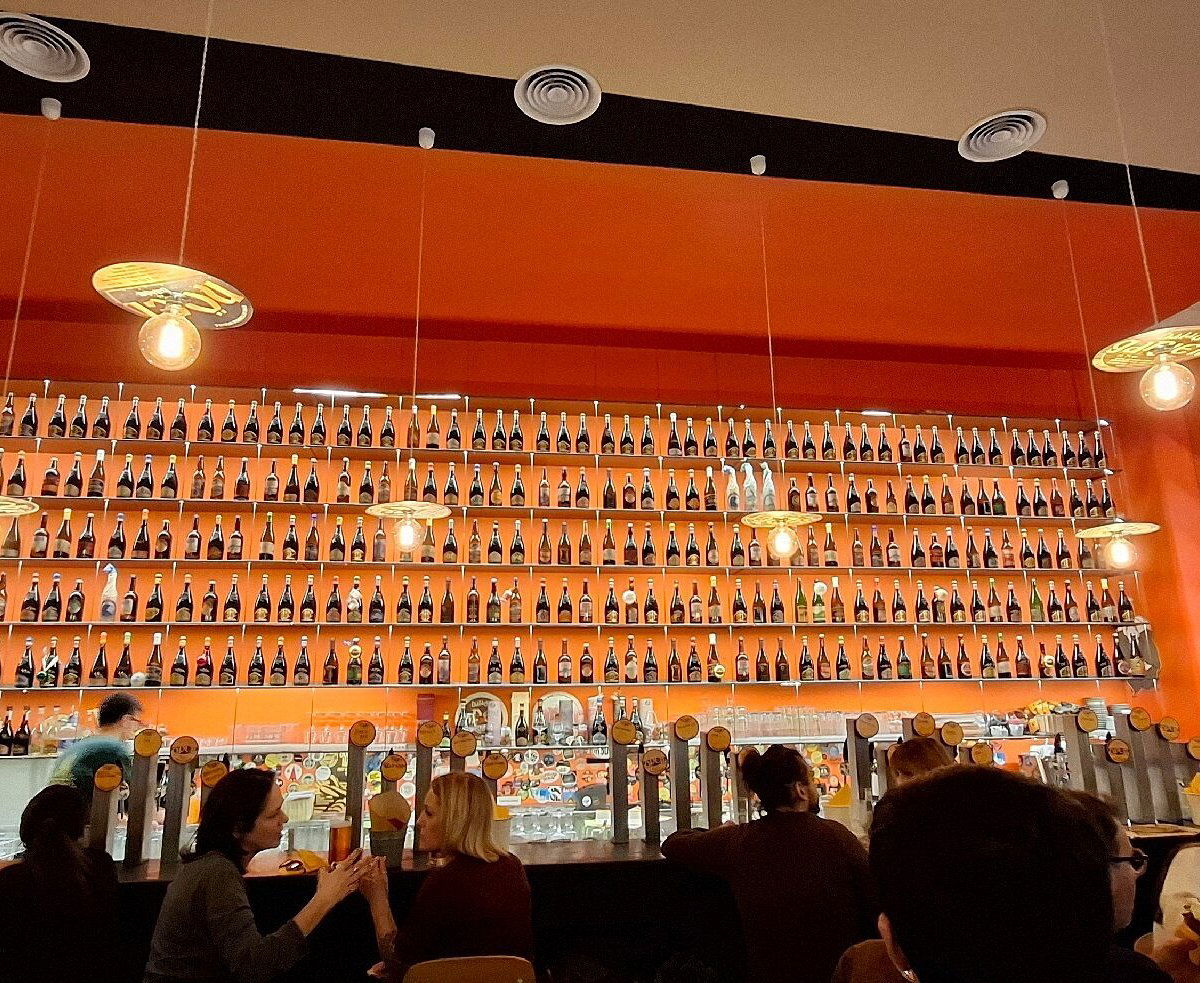
About Open Baladin
On a narrow street in the historic centre, Open Baladin is Rome's most committed craft beer address, drawing locals and the beer-curious alike to a rotating tap list anchored in the Baladin brewery's catalogue. Less cocktail bar, more neighbourhood taproom with serious credentials: the Baladin name has defined Italian artisan beer culture for three decades, and this Rome outpost carries that weight without the reverence.
Via degli Specchi is the kind of street that Rome does quietly well: close enough to Campo de' Fiori to feel central, removed enough from the tourist drag that the crowd outside Open Baladin skews local. The bar opens onto the street in warmer months, and the rhythm of the place — groups clustering around trestle-style tables, glasses of amber and dark ale catching the light, a low-level hum of conversation that doesn't require you to shout — is less destination venue than functioning neighbourhood institution. This is not a cocktail bar in the Roman sense, and it makes no attempt to be one.
Beer as the Anchor, Not the Afterthought
Rome's drinking culture has historically been wine-first, with craft beer occupying a secondary position well into the 2000s. What Baladin did , and the brand's founder Teo Musso is credited across the Italian food press with almost single-handedly shifting that dynamic , was treat beer with the same producer-driven seriousness that Italian wine had always commanded. By the time the Rome location on Via degli Specchi opened, the Baladin name already carried two decades of credibility from its Piedmontese base. Open Baladin sits in that lineage, offering a tap list that pulls from the brewery's core range alongside rotating selections from other Italian and international craft producers.
That approach places Open Baladin in a different competitive bracket from Rome's cocktail-led bars. Drink Kong, Patrick Pistolesi's technically rigorous cocktail program in the Esquilino neighbourhood, attracts a similar educated-drinker crowd but operates in a different register entirely. Jerry Thomas Speakeasy occupies the theatrical, reservation-only end of Rome's bar spectrum. Open Baladin's peer set is defined not by cocktail technique but by producer provenance and the seriousness with which the staff discuss what's on tap.
The Neighbourhood Dynamic
The bar's role as a gathering point for the surrounding streets is worth taking seriously as a category distinction. Rome's historic centre is not short of bars, but many of them serve their neighbourhood function at the level of espresso and aperitivo rather than as an evening destination in their own right. Open Baladin operates on a different clock: it draws people for sustained drinking sessions, for groups who want to work through a flight of styles, and for the kind of regulars who have a preferred pour and know the staff by name. That social architecture is closer to what you'd find in a well-run British pub or a Belgian bruin café than to anything in the standard Roman bar taxonomy.
For context across Italy's bar culture, the neighbourhood-taproom model appears in various forms: Enoteca Storica Faccioli in Bologna performs a similar function for natural wine, while Al Covino in Venice anchors its neighbourhood through a curated wine and cicchetti format. The common thread is a committed product focus combined with a genuinely local clientele rather than a tourist-facing one.
What the Format Means in Practice
Open Baladin operates on a self-service logic that keeps things informal: you order at the bar, you carry your glass back to wherever you've found a seat, and the interaction is transactional in the pleasantest possible sense. Food is part of the offer , the bar has long served a range of burgers and bar food that pairs with the beer list rather than functioning as a standalone dining proposition. This distinguishes it from the aperitivo-snack model that defines places like Freni e Frizioni in Trastevere, where the food is a means of extending the drink rather than a considered pairing exercise.
Across Italy's drinking culture more broadly, the idea of food-as-beer-accompaniment rather than beer-as-food-accompaniment remains a meaningful distinction. Open Baladin's approach , build the food list around what complements the tap selection , reflects a maturity in the Italian craft beer market that wasn't present fifteen years ago. The same shift is visible in cities like Bologna and Turin, where standalone beer bars with serious food programs have moved out of the novelty bracket into the category of reliable neighbourhood institutions.
Placing Open Baladin in Rome's Bar Spectrum
Rome's bar scene has developed considerably in the past decade. The cocktail-forward tier is well-represented: Boeme has brought a contemporary spirits program to the city, while the hidden-entrance format of Jerry Thomas continues to draw drinkers who want theatre alongside technique. Open Baladin sits outside that trajectory, neither chasing cocktail credentials nor positioning itself as a specialist spirits destination. What it offers instead is continuity: a reliable house of call for the neighbourhood, a place that was doing serious beer before the current craft wave made that fashionable, and a product offer anchored in one of Italy's most credible brewing operations.
That positioning has analogues in other cities and bar cultures. 1930 in Milan operates in a very different register , reservation-only, intensely theatrical , but both venues share a commitment to product provenance that lifts them above the generic aperitivo bar category. Further afield, Bar Leather Apron in Honolulu demonstrates how producer-focused drink programs can build a loyal regular base outside the major cocktail capitals; Open Baladin makes the same argument for beer in a wine-dominant city. Gucci Giardino in Florence and L'Antiquario in Naples represent the luxury end of Italian bar culture; Lost and Found in Nicosia shows a different Mediterranean take on the serious neighbourhood bar. Open Baladin's value proposition is more democratic than any of those, and deliberately so.
Planning Your Visit
Open Baladin is on Via degli Specchi 6 in the historic centre, a walkable distance from Campo de' Fiori and the Largo di Torre Argentina. The bar draws a mixed crowd through the early evening aperitivo window, then settles into a more sustained drinking pace as the night progresses; arriving mid-evening on weekdays tends to give you more room than a Friday or Saturday night, when the outdoor space fills quickly. No booking is required for walk-ins, which is consistent with the informal neighbourhood bar model. For a broader picture of where Open Baladin fits within Rome's drinking and dining options, see our full Rome restaurants and bars guide.
Frequently Asked Questions
- Is Open Baladin more formal or casual?
- Open Baladin sits firmly at the casual end of Rome's bar spectrum. It operates as a walk-in neighbourhood taproom: no dress code, no reservations required, and a self-service model at the bar. By comparison, cocktail venues like Jerry Thomas Speakeasy require advance booking and operate a more structured format. Open Baladin's pricing reflects its accessible positioning, and the crowd on any given night is a mix of local regulars and visitors who have sought it out for the beer program rather than for a special-occasion atmosphere.
- What's the signature drink at Open Baladin?
- The draw is the Baladin-brewery tap list rather than any single house creation. Baladin is one of Italy's founding craft breweries, and the Rome bar carries the core range alongside rotating guest taps. Among the brewery's catalogue, styles like Isaac (a wheat beer brewed with coriander and orange peel) and Super (an amber ale) have been part of the Baladin identity for years and represent the range's most recognisable entries for newcomers.
- What's the standout thing about Open Baladin?
- The strongest argument for Open Baladin is the depth of its beer provenance in a city where wine has always dominated. The Baladin brewery has operated since the mid-1990s and carries genuine credibility in Italian craft beer , the Rome bar is an extension of that production identity rather than a standalone concept. In practical terms, it offers a seriousness of product that is difficult to find elsewhere in the historic centre, at a price point that keeps it accessible to the neighbourhood rather than positioning it as a destination for special occasions only.
- Should I book Open Baladin in advance?
- Advance booking is not part of the format. Open Baladin operates as a walk-in bar, consistent with its neighbourhood-taproom identity. Weekday evenings are more relaxed than the weekend, when demand for outdoor seating is higher. The absence of a reservation system is a deliberate structural choice that keeps the bar accessible to regulars and spontaneous visitors alike, rather than a limitation.
- Does Open Baladin carry beers from producers other than Baladin brewery?
- Yes. While the Baladin brewery catalogue forms the backbone of the tap and bottle list , which is itself a meaningful anchor given Baladin's standing as one of Italy's most recognised craft producers , Open Baladin has historically rotated in selections from other Italian and international craft breweries. This makes it a useful stop not just for Baladin's own range but for a broader survey of where Italian artisan beer has moved over the past decade, placing it in a similar curatorial position to what a good independent wine bar does for regional Italian producers.
Related editorial
- Asia's 50 Best Restaurants 2026: The Chairman and Wing Go 1-2 from the Same BuildingThe Chairman takes No. 1 and Wing climbs to No. 2 at Asia's 50 Best Restaurants 2026. Both operate from the same Hong Kong building. Here's what it means.
- Four Seasons Yachts Debut: 95 Suites, 11 Restaurants, and a March 2026 Maiden VoyageFour Seasons I launches March 20, 2026, with 95 suites, a one-to-one staff ratio, and 11 onboard restaurants. Worth tracking if you want hotel-grade service at sea.
- LA Michelin Guide 2026: Seven New Restaurants from Tlayudas to Uzbek DumplingsMichelin's March 2026 California Guide update adds six LA restaurants and one Montecito newcomer, spanning Oaxacan tlayudas, Uzbek manti, and Korean-Italian pasta.
Save or rate Open Baladin on Pearl
Keep this venue in your Pearl passport, rate it after you visit, and track it alongside every other place you collect.