
Bar in New York City, United States
Hutong New York
100ptsNorthern Chinese Midtown Counter
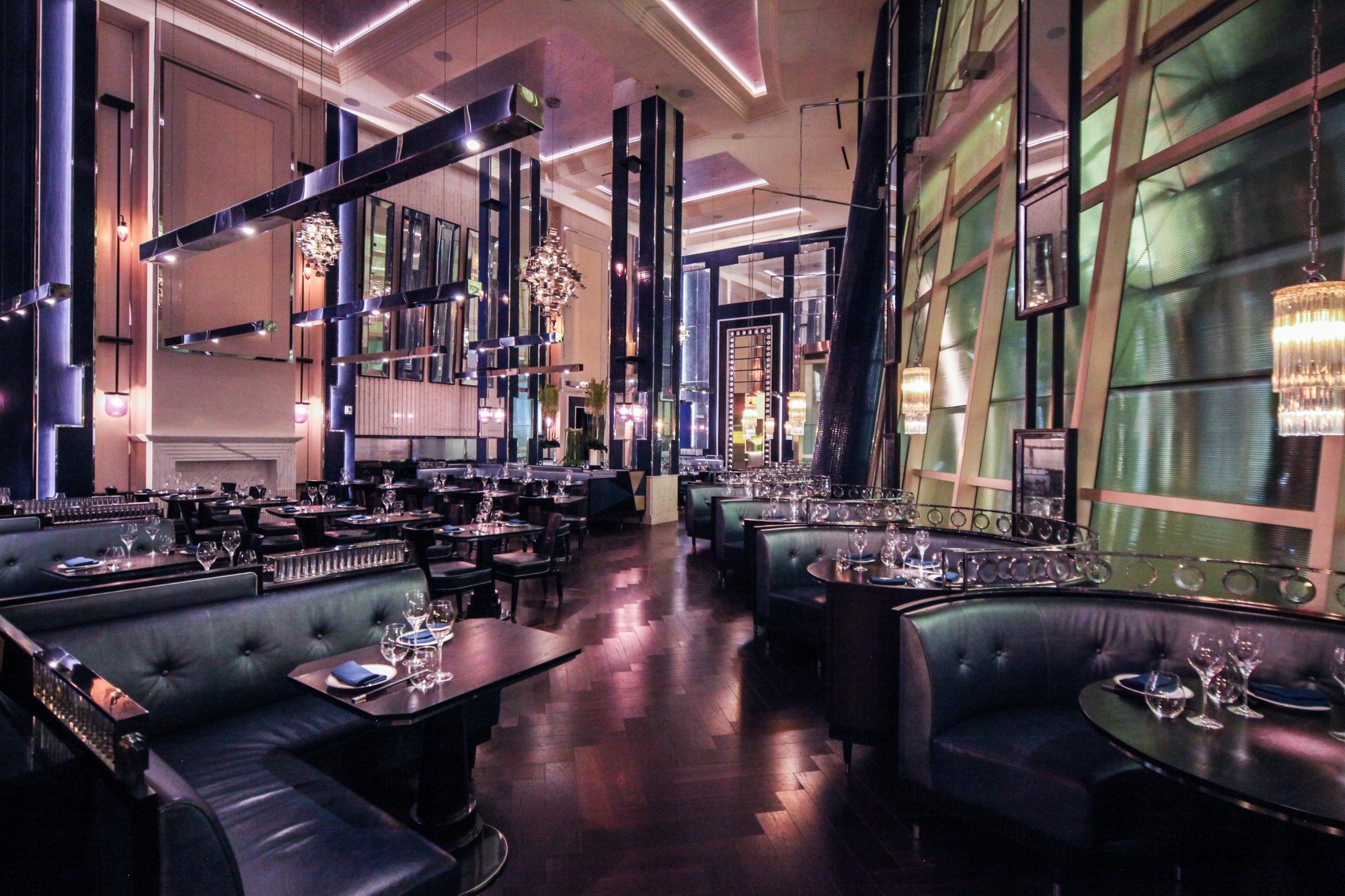
About Hutong New York
Hutong New York occupies a discreet address inside Beacon Courtyard at 731 Lexington Avenue, bringing northern Chinese cooking to Midtown Manhattan. The restaurant sits within a broader wave of serious Chinese dining that has reshaped New York's expectations of the cuisine, moving well past the standardized Americanized formats that dominated the city for decades. For visitors seeking regional Chinese cuisine with substance, this is a meaningful entry point into that conversation.
Northern Chinese Cooking in Midtown Manhattan
The stretch of Lexington Avenue around 59th Street has long been dominated by hotel dining rooms and quick-service chains calibrated for office workers and Bloomingdale's shoppers. Hutong New York sits inside Beacon Courtyard at 731 Lexington Ave, a setting that requires a degree of intention to reach — you are not stumbling in from the sidewalk. That physical remove from street-level foot traffic places it in a category of Midtown restaurants where the room does some of the filtering work, drawing guests who have already decided, rather than passersby who wander in on impulse.
Hutong's home city is London, where the brand established itself as one of the more serious outposts of northern Chinese cooking outside of mainland China. The New York location carries that lineage into a market where the prevailing Chinese dining conversation has historically centered on Cantonese tradition and the downtown dim sum circuits. A restaurant grounded in the cooking of northern China, and specifically in the Peking and Sichuan registers that define Hutong's menu architecture, occupies a distinct position in that conversation.
The Northern Chinese Tradition and What It Demands
Northern Chinese cuisine — built on wheat rather than rice, shaped by colder climates and proximity to Mongolia , reads differently from the Cantonese cooking that dominated early Chinese immigration to New York. Where Cantonese technique prizes delicacy and quick wok heat, the northern tradition emphasizes slow braises, roasted meats, dan dan preparations, and the deep application of chili bean pastes and fermented aromatics. The kaoya tradition of Peking duck, with its ceremonial table-side carving and the ritual assembly of pancakes, hoisin, and scallion, is among the most recognizable expressions of this school.
In New York, restaurants committed to this register have historically been fewer and more geographically scattered than their Cantonese counterparts. The Flushing corridor in Queens remains the primary address for northern Chinese cooking at scale, from hand-pulled noodle houses to lamb skewer stalls. A Midtown address serving this tradition draws a different customer profile entirely, one that is often encountering the food in a more formal register for the first time.
The Sustainability Frame: Sourcing Discipline in a High-Cost Market
Midtown Manhattan is an expensive operating environment. Food cost pressures at this address often push kitchens toward commodity sourcing and away from the kind of relationship-based procurement that smaller downtown restaurants can sustain. The question of how a northern Chinese kitchen at this price point and location handles sourcing is not incidental , it shapes the integrity of what arrives at the table.
Northern Chinese cooking, when executed with fidelity to its source tradition, relies on ingredients that are either difficult to source at quality in the United States or require specific preparation methods that resist shortcutting. The fermented black bean pastes, the aged vinegars from Shanxi province, the Sichuan peppercorn quality that determines whether the mala sensation reads as numbing complexity or raw heat , these are not interchangeable with generic substitutes. Kitchens that source these components with discipline produce food that reads as coherent; those that substitute produce food that reads as approximation.
The broader trend in premium Chinese dining in American cities has moved toward transparency about sourcing, particularly as a growing number of diners arrive with reference points from travel to China or from specialist restaurants in cities like San Francisco and Los Angeles. New York's Chinese dining scene has followed this pattern, with a cohort of restaurants in the $80-to-$150 per person range positioning against sourcing credibility and culinary precision rather than against price alone. Hutong's London lineage places it in conversation with that cohort.
Where Hutong Fits in New York's Chinese Dining Conversation
New York has a working hierarchy of Chinese dining options, from the $15 hand-pulled noodle counter in Flushing to the $250 Cantonese tasting menus that have appeared in recent years. The middle tier, where a serious kitchen operates at $80 to $120 per person without apology, is where most of the interesting creative tension sits. This is the tier occupied by restaurants that can afford quality sourcing, run disciplined kitchens, and attract guests who are not primarily price-sensitive.
Hutong's Midtown address places it in a geographic peer set that includes the hotel-adjacent Chinese restaurants that have proliferated in the 50s and 60s along the avenues. But its lineage , a London original that earned recognition as one of the more serious northern Chinese operations outside Asia , aligns it with a different competitive set in terms of ambition and kitchen discipline. That gap between geographic proximity and actual peer comparison is worth understanding before booking. You are not eating at a hotel Chinese restaurant that happens to have a London address in its history. You are eating at a restaurant whose frame of reference is the northern Chinese cooking tradition itself.
For comparison across the broader New York bar and dining scene, our full New York City restaurants guide maps the current landscape. For cocktail programs that pair well with spice-forward menus, Superbueno, Amor y Amargo, Angel's Share, and Attaboy NYC each represent distinct approaches to the cocktail program. Across the country, the commitment to sourcing discipline and program depth is visible in operations like Bar Leather Apron in Honolulu, Jewel of the South in New Orleans, Julep in Houston, Kumiko in Chicago, ABV in San Francisco, and Allegory in Washington, D.C. Internationally, The Parlour in Frankfurt on the Main offers a European parallel in terms of program seriousness.
Know Before You Go
- Address: Inside Beacon Courtyard, 731 Lexington Ave, New York, NY 10022
- Access: Enter via Beacon Courtyard , the restaurant is not directly street-facing on Lexington Ave
- Nearest subway: Lexington Av/59 St (N, W, R, 4, 5, 6 lines)
- Booking: Contact details not currently listed , check current reservation availability directly through Beacon Courtyard
- Dress code: Not specified; the Midtown address and price point suggest smart casual at minimum
- Price range: Not listed; northern Chinese restaurants at this address tier typically run $80–$130 per person with drinks
Frequently Asked Questions
What do regulars order at Hutong New York?
Hutong's menu is grounded in northern Chinese cooking, which means Peking duck preparations and Sichuan-inflected dishes are the anchor categories. The Peking duck service, a ceremonial centerpiece of the northern Chinese table, is the dish most consistently cited in reference to Hutong's London original and is the logical starting point for a first visit. Sichuan mapo tofu and dan dan noodles fill out the spice-forward register.
What makes Hutong New York worth visiting?
The case for Hutong is primarily one of category: northern Chinese cooking at a serious Midtown address, with a London original as its reference point, fills a gap in New York's Chinese dining options that is not otherwise well-served between Flushing's casual noodle houses and downtown Cantonese tasting menus. If the northern Chinese register is what you are specifically looking for in a formal setting, the alternatives within Manhattan are limited.
How hard is it to get in to Hutong New York?
Phone and booking details are not currently listed publicly for the New York location. The safest approach is to contact Beacon Courtyard directly or check for reservation availability through a booking platform. Walk-in availability at Midtown restaurants in this price range varies considerably by day and time, with weekday lunches generally more accessible than weekend dinner service.
Does Hutong New York's Midtown location differ meaningfully from its London original?
The London Hutong, located on the 33rd floor of The Shard, built part of its reputation on the combination of northern Chinese cooking and a panoramic city view. The New York location at Beacon Courtyard operates in a different physical register entirely, situated at street level within a commercial courtyard rather than at elevation. The kitchen tradition and menu architecture remain consistent with the Hutong identity, but the experiential frame is distinct from the London flagship.
More bars in New York City
- (SUB)MERCER(SUB)MERCER occupies a basement address on Mercer Street in SoHo, positioning it as a deliberate destination rather than a drop-in. The subterranean format tends to keep ambient noise lower than street-level alternatives, making it a reasonable call for groups of four or more. Book ahead for weekends and confirm group capacity directly with the venue.
- 1 OR 81 OR 8 on DeKalb Avenue is a low-key Fort Greene bar that works best for two people on a weeknight when the room is quiet enough for conversation. Walk-ins are easy, no advance planning required. If a specialist cocktail program is your priority, Attaboy or Amor y Amargo offer more defined experiences — but for a neighbourhood drink without the fuss, this delivers.
- 230 Fifth Rooftop Bar230 Fifth is the easiest rooftop bar in Midtown to walk into, and the Empire State Building views justify the trip. The crowd skews groups and tourists, and the drinks are solid rather than craft-focused. Go early on a weekday for the best version of the experience; after 9 PM on weekends it tips firmly into party-group territory.
- 4 Charles Prime Rib4 Charles Prime Rib is a compact, reservation-required West Village dining room built around a focused prime rib format. It works well for dates and pairs but is too small for groups of four or more. Booking is easy relative to Manhattan peers, and the narrow menu signals a kitchen that executes one thing consistently well.
- 44 & X Hell's KitchenA low-key Hell's Kitchen neighborhood bar-restaurant that earns its place for easy weeknight dates and pre-theatre dinners. Booking is simple, the room is intimate enough for conversation, and there's no dress pressure. Not a cocktail destination, but a reliable, pressure-free option in Midtown West when you want comfort over spectacle.
- 58-22 Myrtle Ave58-22 Myrtle Ave is a low-key Ridgewood neighborhood spot that rewards return visits more than first impressions. Easy to get into, with no reservation headaches, it suits regulars looking for an unpretentious room rather than a structured cocktail program. If a strong drinks list or kitchen ambition matters to you, look to Attaboy or Amor y Amargo instead.
Related editorial
- Hwaro NYC Tasting Menu: $295, 22 Seats, Hidden Inside a SteakhouseChef Sungchul Shim's 22-seat Korean fine dining counter inside Gui is one of NYC's most personal — and most carefully considered — tasting menus at $295.
- Asia's 50 Best Restaurants 2026: The Chairman and Wing Go 1-2 from the Same BuildingThe Chairman takes No. 1 and Wing climbs to No. 2 at Asia's 50 Best Restaurants 2026. Both operate from the same Hong Kong building. Here's what it means.
- Four Seasons Yachts Debut: 95 Suites, 11 Restaurants, and a March 2026 Maiden VoyageFour Seasons I launches March 20, 2026, with 95 suites, a one-to-one staff ratio, and 11 onboard restaurants. Worth tracking if you want hotel-grade service at sea.
Save or rate Hutong New York on Pearl
Keep this venue in your Pearl passport, rate it after you visit, and track it alongside every other place you collect.